secondhand home sales

Second-Hand Home Sales Lead Thailand’s Real Estate Market Recovery

CHIANG RAI – Thailand’s housing market is finally showing signs of stability after a tough period. However, the path to full recovery looks very different from what experts originally expected.

According to the Housing Finance Association, ordinary buyers are driving this gradual rebound by choosing second-hand homes instead of newly launched projects. This major shift makes perfect sense when you look at current economic conditions.

Everyday buyers face shrinking purchasing power and extremely tight family budgets. Consequently, basic affordability has replaced speculative investment as the main reason people buy property today.

Key Takeaways

  • The Thai property market is slowly stabilizing, though the overall recovery will remain gradual.
  • Second-hand homes now account for 67% of housing transfers, easily beating new developments.
  • Buyers prefer existing homes due to lower prices, established neighborhoods, and immediate move-in readiness.

Why Buyers Now Prefer Second-Hand Homes

Second-hand homes fit perfectly with what modern buyers truly need today. These older properties naturally offer much lower price tags than brand new buildings. Furthermore, they are located in well-established neighborhoods and allow buyers to move in right away.

Before the pandemic, people often bought homes off-plan to secure a good deal. That risky trend has faded because buyers now want total certainty before signing contracts. Today, purchasers strongly prefer completed homes where they can inspect the actual living spaces first.

This extra caution stems from a strong desire to avoid costly construction delays. Completed homes also allow buyers to get their mortgage approved right before the transfer. This straightforward approach removes a lot of stress and financial uncertainty from the buying process.

The numbers show a dramatic change in how people shop for real estate. Almost two decades ago, new homes completely dominated the local property market by accounting for 62% of transaction value. Today, that market balance has entirely flipped in favor of older, pre-owned properties.

Recent data from the first quarter of 2026 confirms this massive market shift. According to a recent report by the Bangkok Post, second-hand homes now represent a striking 67% of all residential transfers. This leaves newly built homes capturing only a small 33% share of the current market.

The total value gap between old and new properties has also closed significantly. Existing homes now account for 48% of the total transfer value across the nation. In cities like Bangkok, the listed value of used homes has jumped substantially, as noted by Nation Thailand.

How Real Estate Developers Must Adapt

Real estate developers must quickly change their business plans to survive this market shift. They need to align their new building projects with what everyday buyers actually want and can afford. Relying on hopes of a sudden market boom is no longer a safe or effective business strategy.

Industry experts clearly suggest that projects aimed at actual home residents will do best. Builders should focus heavily on practical room sizes, fair pricing, and nearly finished houses. These practical types of homes will easily outperform risky speculative projects in the coming years.

Finally, major demographic changes are playing a huge role in the modern property market. Thailand currently has an aging population, and new households are forming at much slower rates. Developers must deeply rethink their home designs and pricing strategies to meet these new societal needs.

The Thai housing market has stabilized, but the days of rapid growth have officially ended. Moving forward, the industry must rely on genuine home seekers rather than wealthy investors. For many young families, an affordable second-hand home is now the most sensible choice available.

The government continues to support the property market through helpful fee reductions and relaxed loan rules. These positive measures certainly help reduce the heavy financial burden on new home buyers. However, buyers remain very careful about taking on too much long-term household debt.

Ultimately, this gradual shift creates a healthier and more sustainable real estate environment overall. It forces construction companies to compete on real value rather than just flashy marketing promises. As the market slowly recovers, the humble second-hand home will undoubtedly remain the undisputed star.

Trending News:

Phuket Real Estate Market 2026: Hot Areas, Price Signals, Buyer Checks

Thailand’s Sweeping Billion Baht Crackdown on Foreign Property Nominees


Similar Posts

  • | | |

    Filipinos helped build UAE’s nuclear plant. PH talent may soon do the same back home.

    ‘80% of the people who built that nuclear facility are Filipinos,’ NAPOCOR head Koko Nograles says of the Barakah Nuclear Energy Plant. ‘That should remind us of something important – that the Filipino can do nuclear.’

  • |

    Pakistan inflation falls to 9.2% in July 2026: PBS

    Pakistan’s annual inflation eased to single digits in July 2026, with the latest official figures showing a noticeable decline in price growth compared to the previous month. However, economists cautioned that inflationary pressures have not disappeared, as higher fuel costs and other economic challenges continue to weigh on the outlook. According to data released by the Pakistan Bureau of Statistics (PBS) on Monday, the Consumer Price Index (CPI) recorded an annual inflation rate of 9.2% in July 2026. The reading marked a significant decline from 11.1% in June, although it remained considerably higher than the 4.1% recorded in July 2025. On a monthly basis, consumer prices increased by 1.2% during July, reversing the 0.3% decline witnessed in June. In comparison, monthly inflation had risen by 2.9% in July last year. Urban and rural inflation The PBS data showed that inflation in urban areas slowed to 8.7% year-on-year in July, down from 11.2% in June. During the same month last year, urban inflation had stood at 4.4%. Month-on-month, urban prices climbed 1.2%, compared to a 0.5% decline in June and a 3.4% increase recorded in July 2025. Meanwhile, rural inflation also moderated, with the annual rate easing to 9.9% in July from 10.9% a month earlier. Rural inflation had been 3.5% in the corresponding month of last year. On a monthly basis, rural prices increased by 1.2%, compared with no change in June, while July 2025 had witnessed a 2.2% monthly increase. Government projects inflation to remain elevated The Finance Division had earlier projected inflation to remain between 9% and 10% in July, warning that rising international oil prices could continue to exert pressure on domestic prices. The ministry’s latest economic outlook also highlighted concerns over external investment, noting that Pakistan’s foreign direct investment (FDI) fell by 33.9% during the last fiscal year, declining from $2.48 billion in FY2024-25 to $1.64 billion in FY2025-26. SBP keeps policy rate unchanged Last week, the State Bank of Pakistan’s Monetary Policy Committee maintained the benchmark policy rate at 11.5% during its first monetary policy meeting of the new fiscal year. Speaking after the decision, SBP Governor Jameel Ahmad said inflation was expected to decline in July and expressed optimism that it would gradually move towards the central bank’s target. He said the State Bank expects inflation to settle within the upper end of its 5-7% target range by the close of the current fiscal year. Analysts see base effect behind slowdown Market analysts had largely anticipated inflation returning to single digits in July, though many argued that the improvement was mainly due to favourable statistical base effects rather than a broad-based easing in price pressures. Analysts at Ismail Iqbal Securities estimated July inflation at 9.3%, saying the decline reflected comparison with a higher base from the previous year rather than a sustained reduction in inflationary momentum. Similarly, JS Global projected headline inflation at 9.1% for July, indicating that while inflation has eased, underlying economic pressures continue to pose risks for the months ahead. The latest inflation reading provides some relief for consumers and policymakers, but economists believe the path ahead will depend on global commodity prices, exchange rate stability, energy costs and the government’s fiscal management during the current financial year.

  • |

    PSX jumps 2,700 points on Trump-Iran talks news

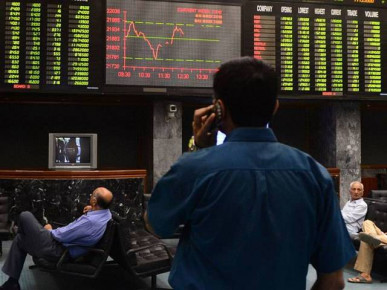
    The first trading session of August brought renewed optimism to the Pakistan Stock Exchange (PSX), where investors returned with aggressive buying, driving the benchmark KSE-100 Index sharply higher. The bullish momentum followed US President Donald Trump’s announcement regarding the commencement of talks with Iran, a development that boosted investor confidence and eased concerns over escalating geopolitical tensions. During early trading, the KSE-100 Index surged by 2,708 points, climbing to 178,802 points as buying activity intensified across several major sectors. Market participants attributed the rally to improved global sentiment, with hopes that diplomatic engagement between Washington and Tehran could reduce regional tensions and support international financial markets. Analysts said investors responded positively to the possibility of a more stable geopolitical environment, which could help stabilize global energy prices and encourage foreign investment in emerging markets, including Pakistan. Strong buying interest was witnessed in leading banking, energy, cement, and fertilizer stocks, contributing to the market’s upward trajectory. Despite the robust performance of the PSX, Asian equity markets presented a mixed picture. Japan’s benchmark Nikkei Index declined by 1.5 percent amid continued investor caution, while South Korea’s Kospi recorded a steeper fall of 5.25 percent, reflecting selling pressure in major technology and export-oriented shares. In contrast, Hong Kong’s Hang Seng Index remained in positive territory, posting a modest gain of 0.1 percent as investors welcomed signs of easing geopolitical uncertainty.

  • Singapore’s Global Talent Push: ONE Pass Holders Double in Two Years

    BANGKOK – Singapore has significantly ramped up its push to attract the best minds in the world. The city-state has more than doubled the number of high-earning foreign professionals holding a special work visa since its launch. The number of Overseas Networks and Expertise (ONE) Pass holders jumped to 8,500 by December 2025. This is […]

  • |

    Pakistan, Belarus agree to expand agricultural trade through online B2B platforms

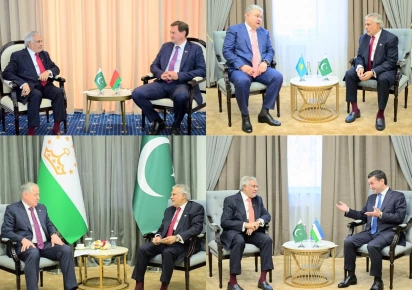
    ISLAMABAD: Pakistan and Belarus have agreed to strengthen agricultural and food-sector cooperation by facilitating online business-to-business (B2B) engagements between companies from the two countries. The understanding was reached during a meeting between Federal Minister for National Food Security and Research Rana Tanveer Hussain and Belarusian Deputy Minister of Agriculture and Food Yakovchits Aleksander. The discussions focused on expanding bilateral trade, improving business-to-business connectivity and creating new opportunities for cooperation in agriculture and food-related sectors. Under the proposed initiative, businesses and relevant organisations from Pakistan and Belarus will be encouraged to participate in online B2B meetings. The sessions are expected to connect exporters, importers and other industry stakeholders and help them explore potential commercial partnerships. The two countries identified a number of products with potential for increased bilateral trade, including seafood, citrus fruits, mangoes, fruit puree, potatoes, seeds and dairy products. Greater business connectivity in these areas could help companies explore new markets and diversify trade opportunities. Focus on Agricultural Exhibitions Pakistan and Belarus also agreed to encourage greater participation by businesses and agricultural stakeholders in food exhibitions, trade fairs and other industry events held in both countries. Such events will provide companies with opportunities to showcase their products, establish business contacts, develop partnerships and explore investment opportunities. The initiative is also expected to help strengthen direct commercial links between businesses operating in the agricultural and food sectors. The two sides further agreed to facilitate reciprocal visits by agricultural trade and business delegations. These exchanges are aimed at encouraging investment, sharing technical expertise and identifying areas where companies and institutions from both countries can work together. Cooperation in Fish Farming The meeting also discussed prospects for cooperation in fisheries, particularly fish farming and aquaculture. Both sides agreed to promote the exchange of knowledge, technology and best practices in the sector. Cooperation in this area could support the adoption of modern aquaculture techniques while providing opportunities for technical collaboration and investment. The initiative is expected to contribute to the development of more efficient fish-farming practices and strengthen cooperation between relevant institutions and businesses in Pakistan and Belarus. Proposal for Agricultural Machinery Testing Centre During the meeting, Rana Tanveer Hussain proposed the establishment of a universal agricultural machinery testing facility or centre at the Pakistan Agricultural Research Council (PARC), with financial and technical assistance from Belarus. The proposed centre would provide a platform for testing agricultural machinery and assessing its suitability for use in Pakistan’s farming sector. The Belarusian side took note of the proposal and agreed to examine the initiative further. As part of the process, the two sides agreed to conduct a detailed assessment of the proposed facility. This will include identifying the machinery and equipment required for the centre and evaluating locations suggested by Pakistan for establishing machinery testing stations. Pakistan and Belarus also agreed to facilitate exchange visits by highly qualified technical experts by the end of 2026. The visits are expected to help specialists assess technical requirements, exchange expertise and explore practical mechanisms for implementing the proposed cooperation. Pakistan Seeks Practical Outcomes Rana Tanveer Hussain emphasised the need to transform bilateral cooperation into practical commercial, technological and institutional results. He said Pakistan was interested in expanding its engagement with Belarus in emerging areas of agriculture and food security, while creating greater opportunities for farmers, businesses, investors and technical experts. The minister highlighted the importance of stronger institutional and private-sector linkages to ensure that agreements between the two countries translate into tangible economic benefits. Both sides expressed satisfaction with the growing cooperation between Pakistan and Belarus and reaffirmed their commitment to expanding collaboration in agriculture, food trade, fisheries, technology and agricultural machinery.

Leave a Reply

Your email address will not be published. Required fields are marked *