beyond riba reconstruction

Beyond Riba: Reconstruction of Just Financial Orde…

The preceding five parts of this series have argued that elimination of riba cannot be achieved by changing the vocabulary of finance. We began with definition, moved to creation of money, separated transaction deposits from investment capital, examined productive finance based on ownership and genuine risk, and then placed Bait-ul-Mal, waqf, zakat and qard hasan within a wider system of social protection.

The final question is no longer conceptual. It is legislative. Pakistan now has a date. The Constitution (Twenty-sixth Amendment) Act, 2024 substituted Article 38(f) with the direction to “eliminate riba completely before the first day of January, two thousand twenty-eight”. The constitutional deadline reinforces the Federal Shariat Court’s 2022 judgment in the Riba cases, reported as PLD 2023 FSC 47. The problem is that a deadline does not itself create a new financial order.

The Finance Division’s Post-2027 Financial System in Pakistan contains useful work on Sukuk, liquidity facilities, legislation, safety nets, technology and capacity building. It nevertheless remains a strategy, not a Prohibition of Riba law.

More importantly, some of its transitional assumptions sit uneasily with the word “completely”. Majority foreign-owned institutions may decide voluntarily whether to convert; conventional obligations contracted before the deadline may continue according to their terms until maturity; and fresh foreign financing is contemplated through Shariah-compliant modes subject to availability of reasonable options.

These concerns are understandable from the perspective of financial stability. They cannot become permanent legal exceptions. Pakistan therefore needs an umbrella Prohibition of Riba Act, enacted well before the constitutional cut-off, accompanied by consequential federal and provincial amendments [Who will draft Riba Prohibition Law? Minute Mirror, April 7, 2026]. Its first task must be the one identified in Part I: define what is prohibited.

The law should distinguish a loan or debt carrying a stipulated increase because of time from lawful consideration arising from genuine sale, lease, service, partnership or productive risk. Courts and regulators should be empowered to examine connected contracts as one economic arrangement. A murabaha, ijarah, musharakah or Sukuk should not become immune from scrutiny merely because recognised Islamic terminology appears in its documents.

The second requirement is a clear cut-off rule. No bank, financial institution, government agency or other regulated person should be permitted to originate a new interest-bearing financial contract in Pakistan after December 31, 2027. The prohibition must be activity-based, not ownership-based.

A transaction cannot change its constitutional character because shareholders of the institution happen to be foreign. This is also the weakness we identified earlier in examining the Government’s strategy paper.

Existing liabilities require different treatment. Pakistan cannot simply repudiate sovereign bonds, multilateral obligations or private contracts. That would replace one problem with default, litigation and financial isolation.

The law should instead require a complete register of every conventional obligation extending beyond the cut-off: principal, return, maturity, governing law, creditor, refinancing possibility and proposed conversion date. Contracts capable of consensual refinancing should be converted. Those that cannot immediately be altered should continue only under a transparent transitional schedule with definite sunset dates, rather than receiving an indefinite exemption merely because they were signed before 2028.

The third issue concerns money itself. Part II argued that commercial-bank money creation is not automatically riba. The power to create purchasing power through credit is nevertheless too important to remain outside reform.

Parliament should require a time-bound examination of sovereign transaction money, reserve arrangements and separation of monetary creation from productive financial intermediation. This question should be decided upon economic evidence and institutional consequences, not theological assertion.

Part III then demonstrated why payment accounts and investment accounts require legal separation. Money held for immediate payment and nominal safety should not be treated as risk capital. Funds deliberately invested for commercial return should carry transparent exposure to the enterprises and assets from which that return arises. Deposit protection against institutional failure must similarly be distinguished from a State guarantee against every commercial investment loss.

The fourth area is productive finance. The law should protect genuine murabaha, ijarah, salam, istisna, musharakah, mudarabah and other permissible arrangements while prescribing minimum standards of ownership, possession, disclosure and risk. Shariah audit should examine economic substance rather than merely documentation.

Taxation must also become neutral. Equity participation, leasing and genuine asset transactions should not suffer additional fiscal costs merely because legislation was historically designed around conventional debt. Public finance cannot remain outside this discipline.

Government should not treat Sukuk merely as a technique for reproducing conventional borrowing against whatever public assets can be placed in a registry. The official strategy itself proposes an Assets Registry Company and expanded hybrid Sukuk issuance. Sovereign instruments must confer genuine economic rights and corresponding responsibilities rather than provide documentary assets solely to support a predetermined financial return.

Fiscal reform is inseparable from elimination of riba. No monetary arrangement can remain sound where governments continuously borrow merely to finance structural deficits.

Monetary policy requires the same intellectual honesty. The Government’s strategy envisages Shariah-compliant open-market operations, standing facilities and liquidity arrangements. These are necessary developments, but changing contractual forms will not be enough if their sole objective becomes mechanical reproduction of the existing interest-rate corridor.

SBP ultimately needs a transparent post-riba monetary framework explaining liquidity creation and absorption, lender-of-last-resort assistance, foreign-exchange operations and monetary transmission. The fifth element takes us beyond banking altogether.

Part V argued that riba flourishes not only because creditors seek gain but also because human beings are compelled by need. A successful transition must therefore strengthen Bait-ul-Mal, professionally governed public waqf lillah, independently administered zakat and revolving qard hasan funds. Essential healthcare, education, disability support and subsistence during genuine incapacity should never become markets for financial extraction.

Local cooperative institutions should provide the bridge from protection to participation. The lesson drawn from Rabobank was not that Pakistan should import a Dutch banking model. It was that communities can mobilise their resources and build productive institutions from below.

Properly regulated cooperatives can gradually shift economic power away from patrons and concentrated financial interests towards citizens themselves.

Governance is consequently as important as Shariah nomenclature. Pakistan requires consistency across banking, securities, takaful, pensions and public finance. A national Shariah authority may provide that consistency, but its standards and decisions must be published, reasoned and subject to independent audit and legal scrutiny. No closed clerical, governmental or banking group should possess unaccountable authority to declare its own financial products compliant.

The Finance Division says the amendments so far identified in banking laws are “minor in nature”. That description understates the task. Pakistan is attempting to transform the legal foundations of banking, public debt, monetary operations, investment, insurance, pensions and social finance while preserving financial stability. This requires coordinated primary legislation, not scattered amendments drafted independently by regulators. The transition should therefore be phased, but the prohibition cannot be optional.

Gradualism concerns the method. January 1, 2028 concerns the destination. This series began by asking what riba means. It ends by asking what kind of society its elimination should produce.


If Pakistan reaches 2028 with the same concentration of economic power, the same dependence upon sovereign debt, the same citizens forced to borrow for survival and the same guaranteed returns merely wrapped in new contracts, the constitutional promise will have been honoured in form and defeated in substance.

A just financial order requires something larger: money accountable to society, investment connected with productive activity and genuine risk, communities capable of financing themselves, and public institutions ensuring that basic human need never becomes an opportunity for exploitation. That would be reconstruction, not relabelling.

[Concluded]

_______________________________________________________________________

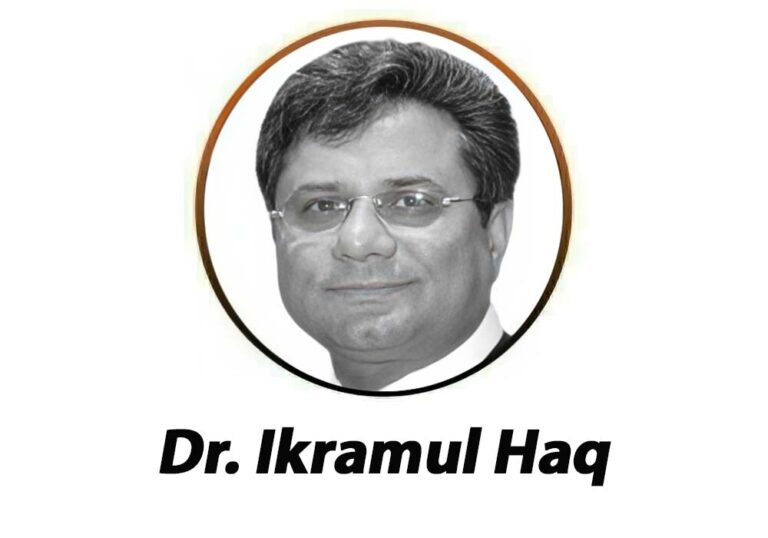
Dr. Ikramul Haq, Advocate Supreme Court, Adjunct Faculty at Lahore University of Management Sciences (LUMS), member Advisory Board and Visiting Senior Fellow of Pakistan Institute of Development Economics (PIDE), holds an LLD in tax laws. He was full-time journalist from 1979 to 1984 with Viewpoint and Dawn. He also served Civil Services of Pakistan from 1984 to 1996.
Similar Posts

  • Beyond Riba: Reconstruction of Just Financial Orde…

    The preceding part of this series examined a question ordinarily left outside discussions on riba: who should create money? It argued that commercial-bank money creation is not, by itself, riba, but that the power to create purchasing power through credit is a matter of public importance requiring transparency, restraint and accountability. One possible reform is to separate transaction money, fully backed by sovereign money, from funds deliberately committed for investment. That proposition leads to an even more fundamental question. What exactly is a bank deposit? The answer appears obvious only because modern banking has merged several economically different relationships into the same institution. A person places salary in a current account because it must be available tomorrow morning. Another person places accumulated savings with a bank hoping to earn a return over five years. A business maintains money for payroll and suppliers. An investor deliberately commits capital to a project knowing that commercial gain is accompanied by the possibility of loss. Calling all these balances “deposits” conceals distinctions that become crucial in a financial order seeking to eliminate riba. There is a basic difference between money and investment. Money held for payment performs the functions of medium of exchange and store of nominal value. Its owner expects Rs.100 deposited today to remain Rs.100 tomorrow and to be transferable on demand. Investment capital performs another function. It is consciously placed in productive activity in expectation of gain and consequently bears the possibility of commercial loss. One cannot logically demand both absolute safety and entrepreneurial return from the same contractual relationship unless somebody else is made to carry the risk. Islamic jurisprudence recognised these distinctions long before modern banking. Funds entrusted purely for safekeeping can constitute amanah. A trustee does not own them and is not ordinarily liable for loss occurring without negligence or misconduct. Where fungible money is transferred to another person with authority to use it and an obligation to return its equivalent, the relationship acquires the character of qard, or loan. State Bank of Pakistan’s own glossary reflects precisely this reasoning. It describes an amanah as property held in trust and states that current accounts may initially be regarded as trust deposits. Once a bank obtains authority to use current-account funds in its business, however, the relationship becomes a loan because the bank must repay the full amount. This point deserves much greater attention. If a bank accepts Rs.100,000 from a customer, is free to use that money for its own financing operations and remains legally bound to repay Rs.100,000 whenever demanded, the customer is not bearing an investment risk. Whatever terminology appears on the account-opening form, economically the bank has received financing from the customer. No difficulty necessarily arises if the customer receives nothing beyond repayment of the amount advanced. The difficulty arises when banking system treats this repayable-at-par money simultaneously as the raw material from which additional financing and monetary claims can be generated. Part II suggested one possible solution: transaction accounts should be treated entirely differently. A current account used for wages, household expenditure, business payments and ordinary transfers should represent protected transaction money. If such balances are fully backed by sovereign money or central-bank reserves, they need not be exposed to the bank’s commercial financing decisions. The account holder would possess money, not an investment claim upon the success of a bank. The bank would provide custody, payments, transfers, cards, digital access and settlement services. It could legitimately charge transparent fees for those services. What it would not receive is free investment capital merely because citizens require access to a payment system. The consequences are significant. Fully backed transaction accounts would remain available on demand and at par. They would not earn an investment return because their owners have assumed no investment risk. Nor would their repayment depend upon the quality of the bank’s commercial portfolio. This is not merely a theological distinction. Modern central banking itself recognises the peculiar character of bank deposits. The Bank of England recently described commercial-bank deposits as liabilities used as money, expected to be redeemable at par on demand and relied upon as a safe store of value. It contrasted them with investment products whose values fluctuate and whose losses are borne by investors. A riba-free financial system should take that distinction seriously. The second category would consist of genuine investment accounts. Here the relationship is entirely different. A customer does not merely park money awaiting payment instructions. He consciously makes capital available for investment and accepts that lawful profit cannot be separated completely from commercial risk. Mudarabah provides one classical framework. One party supplies capital and the other enterprise and expertise. Profit is divided according to an agreed ratio; financial loss, in the absence of negligence or breach by the manager, falls upon the provider of capital. SBP itself explains Islamic investment deposits on this basis: the depositor acts as rabb-ul-maal and the bank as mudarib. Restricted mudarabah allows the investor to specify where the funds may be deployed; unrestricted mudarabah gives the bank wider investment authority. The principle is straightforward. If the depositor wants profit because capital is being employed commercially, the depositor must understand what capital is doing and what risk attaches to it. This is where present banking practice requires closer examination. Islamic banks commonly pool deposits, calculate weighted-average yields and distribute profits under elaborate regulatory rules. SBP presently prescribes profit-distribution arrangements for savings depositors, including minimum distribution requirements linked to the weighted-average gross yield of the institution. It also permits additional hiba in specified circumstances. These measures protect customers against inequitable allocation of profits by banks. Their consumer-protection purpose is understandable. At the same time, an increasingly managed and smoothed return can create in the depositor’s mind an expectation remarkably similar to a conventional savings rate. The crucial question is not whether the return happens to fluctuate by a few basis points. It is whether the depositor actually bears the economic character of an investor. An investment account should identify the pool in

  • Pakistan’s ‘battery revolution’ needs market…

    Pakistan’s electricity sector is witnessing a quiet revolution. Between January 2024 and June 2026, the country imported more than 6 GWh of lithium-ion batteries, with monthly imports rising to 652 MWh in April 2026, according to the latest commentary by the Policy Research Institute of Market Economy (PRIME). The data confirms what many consumers already know: battery storage is rapidly becoming an integral component of Pakistan’s emerging distributed energy system. Against this backdrop, the proposal reportedly advanced by the Adviser to the Power Division, Syed Faizan Ali, to introduce Time-of-Use (ToU) net billing with an additional compensation of Rs18–22 per kWh for electricity discharged between 5 pm and 10 pm deserves serious attention. It represents one of the first attempts by policymakers to recognise battery storage as an active participant in the electricity market rather than merely a backup power source. PRIME has welcomed this initiative in its recent Prime Comment #44, “Turning Pakistan’s Battery Boom into a Grid Asset”, arguing that battery storage can transform millions of privately owned batteries into valuable grid resources capable of reducing evening peak demand and improving overall system efficiency. The think tank also reminds readers that in its April 2026 Prime Plus edition, PRIME  had advocated accelerated investment in Battery Energy Storage Systems (BESS) as part of Pakistan’s response to regional geopolitical tensions and growing concerns over energy security. The proposal is intellectually attractive. It recognises a simple economic truth: electricity stored during periods of abundant solar generation becomes considerably more valuable when discharged during the evening peak. Properly designed price signals can therefore encourage consumers to invest in storage while simultaneously reducing pressure on the national grid. The underlying economics are difficult to dispute. The policy conclusions, however, deserve far closer scrutiny. Pakistan’s electricity crisis has never been merely a shortage of technology. It has always been a crisis of institutions. For decades, governments have attempted to resolve structural failures through new incentives while leaving untouched the governance failures that created those problems in the first place. Capacity payments, guaranteed returns, fuel subsidies, cross-subsidies, circular debt financing and administratively determined tariffs all originated as seemingly sensible policy responses. Over time, they evolved into a complex web of distortions that now define Pakistan’s power sector. The battery revolution should not become the latest chapter in this history. The most immediate question concerns the proposed compensation itself. Every additional rupee paid for exported battery electricity ultimately has a source. If the payment is financed through higher consumer tariffs, ordinary electricity users subsidise battery owners. If financed through public resources, taxpayers assume another fiscal obligation. Unless the proposed payment reflects demonstrable savings through lower capacity utilisation, reduced reliance on expensive peaking generation, avoided transmission investments and lower fuel imports, it risks becoming another subsidy disguised as reform. The second issue concerns Pakistan’s peculiar electricity economics. The country simultaneously suffers from surplus installed generation capacity and shortages during particular hours of the day. Consumers continue paying enormous capacity charges even when power plants remain idle. Before introducing payments for battery discharge, policymakers should demonstrate whether distributed storage actually reduces these fixed obligations or merely shifts electricity from one time period to another while capacity payments continue unchanged. This distinction is fundamental. If batteries merely redistribute electricity without lowering total system costs, consumersmay simply end up paying twice: once for idle generating plants and again for battery incentives. PRIME’s analysis correctly highlights the dramatic increase in battery imports. Nevertheless, imports alone cannot determine public policy. Customs statistics reveal the volume of batteries entering Pakistan but not how they are ultimately deployed. Many imported batteries are likely destined for residential solar systems, telecommunications infrastructure, commercial backup systems, electric vehicles and industrial facilities rather than grid-support applications. Policy requires greater precision. Residential battery storage serving a single household differs fundamentally from utility-scale storage capable of providing ancillary grid services. The regulatory treatment, compensation mechanisms and operational obligations cannot be identical. Perhaps the most important omission concerns the electricity market itself. Time-of-Use pricing presupposes the existence of a reasonably competitive electricity market where prices reflect actual system conditions. Pakistan, however, continues to operate largely through administratively determined tariffs, long-term power purchase agreements and regulatory pricing decisions. Introducing another administratively determined premium without competitive price discovery risks creating fresh opportunities for regulatory arbitrage instead of improving market efficiency. The proposal also raises important questions of distributive justice. Battery storage remains concentrated among relatively affluent households and commercial consumers who have already invested in rooftop solar systems. Additional payments for exported electricity may transfer resources from ordinary grid-dependent consumers to wealthier “prosumers” capable of producing electricity themselves. A sound public policy must ask not only whether incentives improve efficiency but also who ultimately pays for them. Fiscal sustainability presents another challenge. Pakistan’s public finances remain under extraordinary pressure. Circular debt continues to impose significant costs upon the national exchequer while electricity subsidies consume scarce fiscal space. Every new incentive introduced into the power sector should be accompanied by transparent estimates of its medium-term fiscal consequences. Without such analysis, even economically desirable policies may produce unsustainable budgetary commitments. The environmental dimension deserves equal attention. Large-scale deployment of lithium-ion batteries inevitably raises questions concerning recycling, disposal, fire safety and hazardous waste management. Pakistan presently lacks a comprehensive legal and regulatory framework governing battery end-of-life management. Encouraging rapid battery adoption without simultaneously addressing environmental responsibilities merely postpones another policy problem for the future. Cybersecurity also enters the equation. As distributed storage becomes increasingly integrated with smart meters, digital communication systems and automated dispatch mechanisms, cybersecurity standards become an essential component of electricity regulation rather than an afterthought. The broader lesson extends beyond batteries. Pakistan’s remarkable solar revolution demonstrates that citizens and businesses are increasingly solving their own energy problems because the formal electricity system has become prohibitively expensive and unreliable. International observers have correctly described this transformation as one of the world’s most significant examples of consumer-led energy transition rather than state-led planning. Public policy should seek to complement—not constrain—this transition. However, complementing it

  •  The Pakistan We Still Have to Build

    Every 14 August, Pakistan awakens to the familiar colours of green and white. Flags appear on buildings, national songs fill the air, children dress in traditional colours, and speeches once again remind the nation of the sacrifices that accompanied independence. Yet Independence Day is not merely an occasion to celebrate the Pakistan we inherited; it is an opportunity to ask a more demanding question: What have we done with the Pakistan that was entrusted to us? On 14 August 1947, independence transformed millions of lives. Pakistan emerged from one of the most extraordinary political movements of the twentieth century, carrying the hopes of Muslims of the subcontinent for political security, social justice, dignity and the freedom to shape their collective future. Nearly eight decades later, the country possesses a substantial population, strategic importance, nuclear capability, a young generation, a resilient economy and a remarkable human resource. But the distance between Pakistan’s original aspirations and its contemporary realities remains a serious national question. The first mistake would be to interpret patriotism as silence about national shortcomings. Genuine patriotism requires the courage to identify weaknesses as well as the wisdom to recognise achievements. A country cannot strengthen itself by denying its problems. Nor can it progress through perpetual pessimism. Pakistan’s challenge in 2026 is therefore to move beyond both exaggerated self-congratulation and destructive cynicism. The political history of Pakistan demonstrates the consequences of institutional instability, confrontation and the excessive personalisation of politics. Governments have changed, political alliances have shifted, constitutions have been amended, and civilian and non-civilian institutions have repeatedly struggled over the appropriate boundaries of authority. The result has often been a political culture in which winning power becomes more important than strengthening institutions. This is particularly dangerous for a federation as diverse as Pakistan. Punjab, Sindh, Khyber Pakhtunkhwa, Balochistan, Gilgit-Baltistan and the regions of Azad Jammu and Kashmir possess distinct histories, cultures and political concerns. National unity cannot be imposed through administrative uniformity. It must be constructed through justice, representation, constitutionalism and an equitable distribution of opportunity. The recent political and social tensions surrounding Azad Jammu and Kashmir offer another reminder that national integration cannot depend exclusively upon slogans. Reports of violent protests, deaths and political grievances in the region demonstrate how quickly unresolved questions of representation, economic opportunity and political legitimacy can become matters of national concern. At the same time, the ongoing electoral process indicates that democratic participation remains an important mechanism through which political differences can be addressed. The lesson for Pakistan is broader than any particular political dispute: the federation becomes stronger when citizens believe that institutions listen to them. Religion presents another essential dimension of Pakistan’s identity. The country was created in the name of a political and social vision deeply connected with the religious consciousness of the Muslims of the subcontinent. But Islam cannot be reduced to national symbolism, political slogans or ceremonial references. Its deeper teachings demand justice, honesty, compassion, accountability, dignity and responsibility. The Qur’anic concept of Ummah is fundamentally connected with moral solidarity. It does not mean that differences disappear; rather, it teaches that human beings and communities are bound by principles of justice and mutual responsibility. The Qur’an repeatedly places justice at the centre of social life. Consequently, a religiously inspired Pakistan should not merely ask whether society looks Islamic from the outside. It should ask whether the weak receive justice, whether public resources are protected from corruption, whether the powerful are accountable, whether minorities live with dignity, and whether the poor have meaningful opportunities to improve their lives. Pakistan’s constitutional framework itself reflects this relationship between Islamic values and democratic citizenship. The Objectives Resolution, incorporated into the Constitution, describes democracy, freedom, equality, tolerance and social justice as principles to be observed, while also affirming the rights of minorities to freely profess and practise their religions and develop their cultures. This constitutional balance is important because religious identity and citizenship should not be presented as competing ideas. A confident Islamic state does not need discrimination to demonstrate its faith. It demonstrates its moral strength through justice. Protection of minorities is not a concession to another culture; it is part of the constitutional and ethical responsibility of the state. Pakistan’s social crisis, meanwhile, is perhaps more complicated than its political crisis. Millions of Pakistanis continue to demonstrate extraordinary resilience, entrepreneurship and generosity. Pakistani professionals have achieved distinction around the world, while ordinary citizens routinely support relatives, neighbours and communities in times of hardship. Yet social inequality, unemployment, educational disparities, population pressure, inflationary pressures and unequal access to healthcare continue to limit the potential of a large part of the population. The most important national resource is not the country’s geography, minerals or strategic position. It is its people. A nation with a young population cannot afford an education system that merely produces certificates. Pakistan needs education that produces critical thinkers, scientists, entrepreneurs, skilled workers, ethical professionals and responsible citizens. Artificial intelligence is rapidly transforming economies and professions, making it even more urgent for Pakistan to reform its educational priorities rather than simply expand enrolment. The same principle applies to women and young people. A country cannot speak convincingly about development while large sections of its human capital remain underutilised. Pakistan’s future competitiveness will depend increasingly upon the quality of its education, digital capacity, scientific research, vocational training and entrepreneurial ecosystem. Independence also has an international dimension. Pakistan’s geography has historically placed it at the intersection of major geopolitical interests. Its relationship with China, Saudi Arabia, Türkiye, the Gulf states, the United States, Europe, Afghanistan and other regional partners reflects the complexity of its strategic environment. But the strongest foreign policy is ultimately built upon domestic strength. Economic stability, political credibility, social cohesion and institutional continuity provide a stronger foundation for diplomacy than dependence upon temporary geopolitical alignments. National security, therefore, should be understood in a broader sense. A secure Pakistan is not merely one with strong borders and capable armed forces. It is also a Pakistan where a child can

  • Change we must

    In a world driven by technology, only change is permanent. Change we must, but how? Transition from one system to another is perhaps the biggest challenge that we have not been able to cope with. Half-baked solutions with underage players cannot deliver. Reminds me of Einstein’s famous quote: “We cannot solve our problems with the same thinking we used when we created them.” Steve Jobs, one of the greatest technologists of the 21st century, went even further by saying: “Either lead or get out of the way.” A few years back I was doing some research on universities and their impact on setting the course of nations. Syed Ahmed Khan’s Aligarh Muslim University stood out. It produced the Change Managers who not only led the freedom movement but also had the capacity to sustain it. The Islamic Republic of Pakistan (IRP) desperately needs such individuals who can understand and then manage the needful. In the year 1875 he founded the MAO College (Mohammadian Anglo Oriental College) which later grew into a university in the year 1920. He passed away in 1898 but the institution grew. Later on, Allama Iqbal led the movement, and finally it was Muhammad Ali Jinnah who succeeded in carving a new homeland in August 1947 for the Muslims of the Indian Subcontinent. Unfortunately, he did not live long enough to lay the foundations of the new state, but he did leave clear guidelines for the inherited establishment to follow (Armed Forces, Bureaucracy). After taking over in October 1999, Pervez Musharraf created a think tank called the National Reconstruction Bureau (NRB). Headed by Lt. Gen. Tanvir Naqvi, it was located in the Chief Executive (CE) secretariat. The task was to design and execute political and administrative reforms in the country. I was invited to give my input. Naqvi Sb was very confident about delivering meaningful change. His main focus was on devolution of power. As a student of management, I asked him a simple question: “Who will implement his plan?” Bureaucracy, of course, was his quick reply. He did not have an answer to my second concern: “Why will they implement a plan which reduces their power?” He then decided to get rid of me by saying if I wanted to discuss implementation details, I should go to the third floor to the CE’s office. Finally, he stepped down and was replaced by a young novice who lacked the experience and clout to deliver meaningful change. Then there was another initiative called the National Commission for Human Development (NCHD), led by a pediatrician from a small town in Oregon. The worthy Dr assured the CE that he would manage funds from abroad while the local expenses were to be provided by the Government of Pakistan (GOP). Various centers were established across the country and staff recruited. While GOP provided the internal resources, the external help never came despite fundraising efforts abroad. The CE was convinced that the two sectors were well covered, but they were not. Finally, NCHD became a liability and was shut down and the staff laid off. During my term as Chairman, Pakistan Science Foundation (PSF), I lobbied for technocrats to head technical ministries, which was not well received by the powers that be. Commercialization and application of research is the biggest challenge faced by the R&D sector of the country. When I was denied an extension after the completion of my term, I paid a farewell visit to the Secretary MOST (Ministry of Science and Technology). It was a friendly meeting; the Secretary appreciated my work but complained that I did not follow his guidelines. While leaving, he pointed at the board where the names of his predecessors were written. I still remember his words: “Only our names make it here.” He did not like my spontaneous response: “Time will tell,” and it did. My lobbying prevailed; a retired Chairman of PAEC (Pakistan Atomic Energy Commission) replaced him. Though he had no commercial background, I decided to guide and support him. He recommended major investments in creating public sector entities like HMC III, run by PAEC, for meeting their equipment needs. At best, only pilot plants were viable for transfer of technology from laboratory to industry. He was unable to get the funds. As such, his term ended with no major breakthrough, and business as usual continued. Pakistan has a federal structure of governance. Federating units are diverse with differing needs. I am in favor of devolution, but the task on hand is not simple. The forces of status quo are too entrenched. Change Managers are needed at all levels. Complexities have to be understood and managed. There has to be consensus on the road map. Islamabad has an archive of failed plans. The same mistakes should not be repeated again. The first challenge is to find qualified individuals with solid re-engineering experience to lead the crusade. Einstein and Jobs were two brilliant brains of their times; we must value their outlook to move forward and avoid chaos and confusion. Oversimplification of the task at hand must be avoided.

  • Riyadh’s Strategic Triangle: Security, Stabi…

    The visit of Pakistan’s Prime Minister and Chief of Defence Staff to the Kingdom of Saudi Arabia on 6–7 August 2026 was officially presented as a meeting with Crown Prince Mohammed bin Salman (MBS), accompanied by the performance of religious rituals in Islam’s holy cities. Yet, diplomacy is often conducted between the lines rather than in official communiqués. French newspapers, Indian news agencies, and Israeli media all reported that Pakistan, Türkiye, and Saudi Arabia were working toward a defence agreement expected to be signed on Friday. While no official confirmation has emerged, the reports have generated an important strategic debate. If such an agreement is indeed under discussion, what is its real agenda? Would it amount to a military alliance, and if so, against whom would it operate? More fundamentally, why would Pakistan and Türkiye, both facing considerable economic pressures, seek to enter such an arrangement? Or are we witnessing the gradual birth of a new regional security architecture in the vacuum created by the declining American military footprint in the Middle East, with Pakistan assuming an anchoring role?   The first narrative comes from Pakistan. Political analyst Parveen Sawamy argues that Pakistan is gradually emerging as the principal anchor of a broader Muslim strategic framework. According to this view, Islamabad has evolved from being merely a facilitator of dialogue to becoming a mediator and now potentially a guarantor of regional security. Among the members of the OIC, Pakistan enjoys a unique diplomatic position. It maintains working relations with almost every important regional actor, consistently supports the Palestinian cause, and remains outside the circle of states that have normalized relations with Israel. This balanced diplomacy provides Islamabad with credibility across the Muslim world.   Pakistan also possesses one of the most experienced armed forces in the Islamic world, capable of contributing to Gulf security should regional circumstances demand it. At the same time, Washington may not necessarily oppose such a role, particularly given the perception that General Asim Munir enjoys constructive relations with the Trump administration. Pakistan’s geographic proximity to Iran further strengthens its credentials, allowing it to maintain channels of communication with Tehran while preserving strategic partnerships with Gulf monarchies. If Islamabad succeeds in converting this diplomatic leverage into economic opportunity, a defence understanding with Riyadh and Ankara could mark the beginning of a new Muslim security framework based on deterrence, mediation, and regional peace rather than confrontation.   The second narrative revolves around Türkiye. President Recep Tayyip Erdoğan, despite facing domestic economic challenges, brings decades of NATO experience, an advanced defence industry, and diplomatic flexibility. Türkiye remains a NATO member, maintains dialogue with the United States, preserves working relations with Israel, and simultaneously engages actively with Asian and Muslim nations. Such strategic diversity enables Ankara to serve as a bridge between competing geopolitical camps.   From Türkiye’s perspective, participation in a trilateral framework would capitalize on its military technology and defence manufacturing capabilities while expanding economic cooperation with Pakistan and Saudi Arabia. Ankara also offers valuable diplomatic experience and could serve as a neutral venue for negotiations during future regional crises. If such cooperation enjoys quiet support from Washington, Türkiye would strengthen both its strategic autonomy and its influence across the Muslim world.   The third and perhaps most decisive narrative belongs to Saudi Arabia. Crown Prince Mohammed bin Salman (MBS) seeks durable security guarantees to preserve investor confidence in Vision 2030 and mega-projects such as NEOM. Economic transformation cannot succeed without regional stability. Recent conflicts have exposed the vulnerability of Gulf infrastructure to missile and drone attacks, prompting Riyadh to reassess its long-term security strategy. MBS increasingly recognizes that American military bases alone cannot guarantee the Kingdom’s security in an era of rapidly changing regional dynamics.   Pakistan and Türkiye therefore emerge as relatively affordable yet credible strategic partners. Saudi energy sustains both economies, while Islamabad and Ankara can provide military expertise, training, and strategic reassurance. More importantly, MBS appears less interested in confronting Iran through perpetual military rivalry than in managing competition through diplomacy backed by credible deterrence. If this approach succeeds, it could reduce regional tensions while safeguarding Saudi Arabia’s ambitious economic transformation.   Whether the reported defence agreement materializes or remains diplomatic speculation, the convergence of Pakistan, Türkiye, and Saudi Arabia reflects an important geopolitical trend. All three states require economic stability, strategic autonomy, and a more reliable regional security framework. Their interests intersect around the need to protect trade, investment, energy infrastructure, and political stability. If this strategic triangle evolves into a formal partnership, its true success will not be measured by the strength of its military capabilities but by its ability to prevent conflict, encourage dialogue, and foster prosperity. In a region long defined by rivalry, the most enduring alliance may ultimately be the one built not for war, but for peace.

  • Shah Abdul Latif Bhittai: A Multifaceted Poet

    Shah Abdul Latif Bhittai was one of the most multifaceted poets of the subcontinent. The scope of his poetry covers various areas such as peace, humanity, humility, spirituality, patriotism, patience, struggle, and many other important aspects of human life. The light of his poetry reaches the minds and souls of people belonging to different walks of life. Latif was born in a period when Persian was the official language and was also the language of poetry and other means of expression. However, he broke the chains of tradition, put aside the fear of social conventions, and used Sindhi instead of Persian as the medium of his poetry. His narrative reinforces the idea that one should prefer native and indigenous languages to foreign ones, because one’s identity and cultural association are linked with indigenous languages. He does not mean to disrespect Persian; rather, he intends to reinforce the significance of native languages. Patriotism was one of the important themes of Latif’s poetry. Sur Marvi is a testament to his inner feelings about the homeland and the deep love attached to it. According to the story, when Marvi was allegedly kidnapped by Umar, the ruler of the time, and brought to his grand palace, she rejected the luxuries and comforts of the palace. Instead, she requested Umar to return her to Malir, her homeland. Marvi tells Umar that if she dies in imprisonment, her dead body should be sent back to her beloved parents, ancestors, and the land of Malir. Even after her demise, reaching her homeland would bring comfort and peace to her soul. She wishes to be buried among the fragrant herbs and plants of her beloved land. This symbolises love, simplicity, and attachment to the homeland and its people. It shows that despite achieving all worldly luxuries and privileges, a person with a true conscience desires to return to their native land. For Latif, love for the homeland is more than a feeling or a sense of belonging. It is an attachment to one’s identity, culture, and indigenous roots. Therefore, Marvi does not care about worldly luxuries but desires to return to Malir, which may be simple but possesses natural beauty, pure love, and the affection of relatives and fellow beings. For Marvi, her homeland Malir is superior and matchless. In Sur Sarang, Latif discusses rain and the prosperity that follows rainfall through agriculture, irrigation, and the grazing of domestic animals and livestock. Latif describes Thar as a thirsty land that has always longed for rain and showers because the sustainability of Thar depends upon rainfall. The dark clouds over Thar bring excitement and happiness, not only to the poor people but also to their livestock. For the rain-thirsty region of Thar, rain indicates the hope of prosperity. After rainfall, lands are cultivated, animals are kept in homes, and people experience prosperity. This reflects the deep association between humans and nature and shows how people keep high hopes from natural blessings such as rain. Latif’s poetry does not only confine itself to love, peace, and patriotism; patience, humanity, self-surrender, and contentment with minimum means are also significant themes of his poetry. He emphasises the purity and piousness of the inner soul and encourages people to sacrifice worldly desires to elevate their inner selves. During the British era, many British officers posted in Sindh recognised the greatness of Shah Abdul Latif’s poetry and paid tribute to him. Writers and scholars such as H.T. Sorley considered him one of the great poets of the world. Through their contributions, they tried to promote and spread Latif’s message of love, peace, humanity, brotherhood, and tolerance. They observed that although Latif’s poetry apparently covers regional issues and feelings, its thoughts and expressions are universal and comparable with the works of internationally recognised poets. While talking about the concept of the Lord, Latif explains that apparently there seems to be one palace having hundreds of thousands of doors and countless windows. Wherever one looks, one can see the presence of the Lord. This indicates that God is omnipresent and can be seen through different forms of His creation and symbols. One of the fundamental aspects of Latif’s poetry is real love and the approach towards the Creator. According to Latif, the initial step to achieve this elevated spiritual status is to become humble, submissive, caring, and kind towards people living on earth. He believes that in order to have access to God, one has to brush aside worldly desires and become humble and devoted. His poetry also contains messages of hope, patience, courage, and adventure. Latif says that those who have the courage and determination to cross rivers of difficulties and hardships will ultimately reach their destination. In his poetry, the river symbolises obstacles and difficult situations that a person faces while struggling to achieve success. Those who are brave enough to face the horrifying waves of difficulties can ultimately cross the river and achieve their goals. Latif also emphasises avoiding excessive desires of the material world. According to him, the way to spiritual elevation is to remain humble, kind, and caring towards the creatures of the Lord. His poetry teaches people that life is temporary and that one must play one’s role positively in this world to achieve success in the spiritual world. Sur Samundi is another important chapter of Latif’s poetry. In this Sur, Latif depicts the life of marine traders, their economic struggles, social issues, and the feelings of their loved ones when these sailors travel through deep seas and remain away from their homes for many months. In this chapter of his poetry, Latif observes that people of the olden days were involved in trade and commerce and lived prosperous lives. These mariners travelled to far off areas and traded various valuable items, including diamonds, pearls, and jewels. They left the comforts and luxuries of their homes because they preferred trade and adventure to a comfortable life. Latif not only highlights the success and struggles of these traders but also

Leave a Reply

Your email address will not be published. Required fields are marked *