awardwinning ghost school
| |

Award-winning ‘Ghost School’ denied cinema cer…

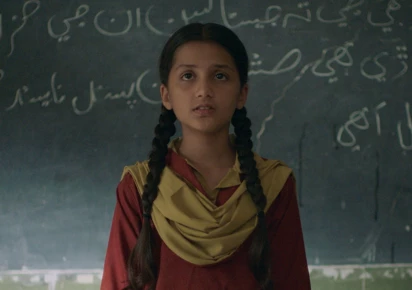
British-Pakistani filmmaker Seemab Gul’s award-winning film Ghost School has been denied certification by the Sindh Board of Certification, preventing its theatrical release in the province where the film is set.

The decision has sparked discussion about artistic expression, girls’ education and the portrayal of social issues through cinema.

Gul has appealed to the Sindh Board to reconsider its decision. She said the film was made from a child’s perspective and aims to encourage audiences to think about education and the challenges faced by children.

The filmmaker said she had asked the board to explain the reason for refusing certification but had not received an explanation.

Despite the decision in Sindh, Ghost School has already gained recognition at several international film festivals.

The film won the Best Director award at the UK Asian Film Festival. It also premiered at the Toronto International Film Festival, where it received a nomination in a major competition category.

It was later screened at the Red Sea Film Festival in Jeddah. The film also received an honourable mention at the Indian Film Festival of Los Angeles and secured a special award at the Asian, African and Latin American Film Festival.

The film follows 10-year-old Rabia, who tries to understand why the only school in her rural village has stopped operating.

Through the young girl’s journey, the story examines barriers to girls’ education, resilience and problems within publicly funded schools.

The film focuses on the issue of so-called “ghost schools”. These are schools that exist officially but are no longer functioning properly as educational institutions.

Gul explained that some such schools were never fully completed. They may lack basic facilities such as doors, windows, water, electricity or gas.

In other cases, she said, schools were completed and teachers initially worked there, but operations eventually stopped.

The filmmaker described the issue as a serious challenge in Pakistan, where millions of children remain outside the formal education system.

Gul said the film was not intended simply to highlight a problem. Instead, she wanted to tell the story through a child’s eyes and encourage discussion about access to education.

The refusal to certify the film in Sindh has therefore raised broader questions about whether filmmakers should be able to explore sensitive social issues through cinema.

Gul has urged the provincial certification authority to review its decision and allow audiences to watch the film.

Similar Posts

  • | |

    Imran Ashraf breaks silence on AI death hoax

    Pakistani actor Imran Ashraf has reassured his fans that he is alive and in good health after fake, AI-generated videos claiming that he had died began circulating on social media. Ashraf addressed the rumours through an Instagram story, making it clear that reports of his death were completely false. He said he was “absolutely fine” and remained alive, while also asking his followers to remember him in their prayers. The clarification came after several manipulated videos appeared online showing seemingly authentic clips of journalists and celebrities announcing that the actor had died. The fabricated reports reportedly claimed that Ashraf had suffered a heart attack. One TikTok account shared multiple AI-generated videos featuring digitally recreated versions of well-known personalities, including actor Bilal Abbas, former cricketer Shahid Afridi and journalist Mansoor Ali Khan. Another fabricated video even appeared to depict a funeral for the popular television host and actor. The incident has once again highlighted the growing problem of artificial intelligence being used to create convincing but completely false celebrity news. Such videos can quickly spread across social media before users have an opportunity to verify their authenticity. Ashraf is also not the first Pakistani celebrity to become the target of false death reports. Singer Tahira Syed faced a similar situation in June when rumours of her death circulated online. She later posted a video confirming that she was alive and well and urged people to verify information before sharing it. Actor Tauseeq Haider also became the subject of AI-generated misinformation when fabricated images circulated claiming that he had married actor Farah Saadia. The two actors jointly rejected the claim and humorously said they were still happily single, while asking the creators to send them wedding gifts if they were going to continue the story. The spread of such fabricated content has raised concerns about the misuse of AI tools to imitate real people and create misleading narratives. With digitally generated videos becoming increasingly realistic, celebrities and public figures are facing greater difficulty in controlling false information about themselves.

  • | |

    Kangana Ranaut attacks Gen Z protesters, targets young women

    Actress and BJP Member of Parliament Kangana Ranaut has sparked widespread outrage after sharing a series of inflammatory Instagram Stories targeting the Gen Z-led Cockroach Janta Party movement, which has been demanding accountability over exam paper leaks that rocked India’s education system. Her remarks, which took direct aim at young women protesters and described them in deeply offensive terms, have drawn sharp condemnation from across the country. The political context for her comments is significant. The CJP protests, which began in New Delhi and spread to other cities, were triggered by widespread allegations of paper leaks in competitive examinations. The movement gained considerable momentum after Education Minister Dharmendra Pradhan resigned, intensifying public debate around the protesters’ demands for systemic reform and accountability. Ranaut chose not to address those demands. Instead, she used her platform to launch a sweeping attack on the character of the people participating in the protests. “They don’t do this at the cost of their parents or families,” she wrote. “Here is a new generation of so-called westernised Indian women. I call them generational gutter. Some of them have nothing to offer to the system. They are not good at studies but they are so ugly and corrupt that they can’t be home makers either. But they probably flaunt their freedom to have drugs, drinks or endless body counts.” She went on to specifically criticise young Hindu women whom she accused of aspiring to a form of independence they had not earned. “Most appalled is the behaviour of young Hindu women who want to imitate the lives of independent career women, without earning that freedom,” she said. “Women who are truly independent, they make rebellious choices, bold opinions, unconventional career moves and they take accountability for their actions.” She also addressed those who had faced physical confrontations during the protests, framing the violence as a natural consequence of their own behaviour. “Protesters who are getting beaten and abused on the roads by the common people because of their filthy and abusive roles, must understand that once you post, you will be criticised and once you damage public property, the public will damage you.” She concluded with a statement she presented as philosophical but which read to many as dismissive. “Now is not a time to cry. If you receive the opposite reaction, it is due to cause and effect. You will understand soon if you have not already.” The remarks have landed with considerable force at a moment when Indian celebrities are already divided over whether and how to support the CJP movement. While figures including Diljit Dosanjh, Arijit Singh and actor Imran Khan have expressed solidarity with the protesters, Ranaut has positioned herself firmly on the opposite side, in a manner that has gone well beyond political disagreement into personal attack. The language she used about young women in particular has drawn the most intense criticism, with many pointing out the specific ugliness of describing protesting citizens in the terms she chose.

  • | |

    Maya Jama unveils stunning honey blonde makeover d…

    Maya Jama is proving once again that she knows how to make a statement. The Love Island host surprised fans by debuting a dramatic new hairstyle, swapping her signature brunette locks for warm honey blonde highlights in the middle of the hit ITV dating show’s latest season. The fresh makeover quickly became the talk of social media, with fans praising the television star’s bold new look.  The 31-year-old presenter revealed the transformation in a series of photos shared on Instagram on Friday. Maya styled her newly highlighted hair in loose beach waves, pairing the fresh look with a white racer tank top and snake-print trousers. Showing off her playful personality, she captioned the post, “Who is sheee,” joking that even she was surprised by the dramatic change.  The makeover marks a noticeable departure from the dark brunette hairstyle that has become one of Maya’s signature beauty trademarks throughout her time hosting Love Island. While she has experimented with fashion and makeup over the years, her latest hair transformation is one of her boldest style changes to date, instantly catching the attention of fans and celebrity followers alike.  Maya has become known for delivering unforgettable fashion moments throughout the current season of Love Island. From glamorous evening gowns to vintage-inspired outfits, the presenter has consistently impressed viewers with her style choices. Earlier this week, she drew comparisons to music icon Cher after wearing a figure-hugging bodysuit during one of the show’s episodes, further cementing her reputation as one of British television’s best-dressed personalities.  Her latest makeover also comes as reports continue to suggest that Maya’s career is expanding beyond Love Island. In addition to hosting the hugely popular reality series, she has been filming Celebrity Traitors UK and is set to make her acting debut in Guy Ritchie’s upcoming Netflix series The Gentlemen. Industry speculation has also linked her with a possible hosting role on The Voice UK, highlighting her growing influence across British television.  Since taking over as host of Love Island in 2023, Maya has become one of ITV’s biggest stars, earning praise for her confidence, charisma, and effortless screen presence. Whether she’s introducing dramatic villa twists or setting new fashion trends, she continues to capture viewers’ attention each week.  As the current Love Island season heads toward its finale, Maya Jama’s honey blonde transformation has added another memorable moment to an already eventful summer. Judging by the enthusiastic response online, fans are more than ready to embrace her latest era—proving that, whether brunette or blonde, Maya Jama remains one of television’s brightest style icons.

  • | |

    Iran’s parliament backs bill criminalizing c…

    Iran’s parliament approved the general framework of a bill Sunday that would make it a crime to give interviews or engage in other communication with media outlets considered hostile to the Islamic Republic, including American or Israeli outlets and any media funded by either country, according to Iran’s Shargh newspaper. Osman Salari, a member of parliament’s judicial and legal commission, said individual provisions within the bill, which aims to counter what officials describe as foreign intelligence influence, still require separate debate and approval. He told the Mizan news agency that details reported so far about the bill should not be treated as final. Under the proposed legislation, interviews or participation in discussions with media deemed hostile would be banned outright, with violations carrying prison terms ranging from six months to two years. Interviews with other foreign media outlets would require advance notification to the intelligence ministry, while any contact with foreign embassies, offices of foreign organizations or other non Iranian institutions, conducted without notification and written permission from the foreign ministry, would draw fines and the loss of certain social rights. The bill would also increase penalties for economic crimes carried out under the direction or supervision of foreign actors, prohibit sharing information with foreigners without intelligence ministry approval, and limit scientific cooperation with foreign institutions to those on an approved list. It would further criminalize policy or legislative proposals made under the direction of foreign intelligence services if such proposals are found to harm Iran’s security or independence, with penalties reaching up to 30 years in prison. Cases brought under this provision would fall under the jurisdiction of Iran’s Revolutionary Courts. Parliament will now review the bill article by article. Once lawmakers approve a final text, the legislation must still pass review by the Guardian Council before it can take effect as law. This is not the first time Iran has moved to criminalize cooperation with foreign entities. A law passed in 2025, following a 12 day war with Israel, introduced harsher penalties for alleged cooperation with hostile states. Earlier this month, Iranian photojournalist Yalda Moaiery was sentenced to 15 years in prison under that law over accusations that included giving interviews to media considered hostile and supplying photographs to organizations linked to the United States and Israel.

  • |

    Textile industry urges govt to end transport strike, warns of export disruptions

    ISLAMABAD: Pakistan’s textile industry has called on the government to take immediate measures to resolve the ongoing goods transporters’ strike, warning that a prolonged suspension of freight services could disrupt export shipments, restrict the supply of cotton and affect the operations of textile mills across the country. The All Pakistan Textile Mills Association (APTMA) has formally approached Federal Minister for Communications Abdul Aleem Khan, seeking urgent government intervention to restore the movement of goods and industrial cargo. According to the association, the All Pakistan Goods Transport Ittehad began an indefinite strike on August 8, creating significant logistical challenges for export-oriented industries, particularly the textile sector. APTMA Chairman Kamran Arshad said the strike had severely affected the availability of vehicles and containers required for transporting textile-related cargo. Export consignments awaiting shipment, imported cotton arriving through ports and locally purchased cotton being transported from markets to textile mills have all been affected by the disruption. The association said the lack of transportation was creating difficulties at multiple stages of the textile supply chain. Export containers cannot be moved efficiently, while imported raw materials face delays in reaching manufacturing facilities. At the same time, locally sourced cotton is also experiencing transportation constraints. APTMA cautioned that the timing of the strike was particularly concerning because cotton inventories at textile mills were already at relatively low levels following the end of the cotton season. Any prolonged interruption in the movement of cotton, it said, could eventually affect manufacturing activity as mills depend on a steady supply of raw materials to maintain production. The association warned that a slowdown in textile production could have broader economic consequences, including delays in export orders, disruption to employment and reduced foreign exchange earnings. Pakistan’s textile sector remains one of the country’s most important export-oriented industries, generating a significant share of the country’s foreign exchange through shipments of garments, textiles, yarn, fabrics and other related products. Industry-wide logistical problems could therefore have repercussions beyond individual mills and exporters. APTMA noted that the textile industry had faced similar transportation disruptions in the past, resulting in delays in export consignments, additional financial costs and interruptions to factory operations. The association stressed that cargo movement is an essential component of export activity and that any prolonged blockage could make it more difficult for exporters to meet delivery schedules agreed with international buyers. It urged the Communications Ministry to facilitate the immediate movement of essential industrial cargo while efforts continue to settle the dispute between transporters and the government. APTMA specifically called for priority arrangements for export containers, imported cotton and other raw materials, as well as locally procured cotton destined for textile mills. The association maintained that ensuring uninterrupted logistics was essential not only for the textile industry but also for protecting Pakistan’s export commitments and broader economic activity. APTMA has consequently appealed to the government to intervene on an urgent basis and establish arrangements that would allow the movement of critical industrial and export cargo until the transporters’ strike is brought to an end.

  • |

    CTD arrests two suspected RAW terrorists in Okara

    The Counter-Terrorism Department (CTD) has arrested two suspected terrorists allegedly linked to India’s intelligence agency, Research and Analysis Wing (RAW), during an intelligence-based operation in Okara. According to CTD officials, the suspects, identified as Abdul Aziz and Wilayat Shah, are residents of Peshawar, Khyber Pakhtunkhwa. During the operation, authorities recovered four kilograms of explosive material, three improvised explosive devices (IEDs), and three Kalashnikov rifles from their possession. Officials said the suspects allegedly planned to carry out terrorist activities in the Sahiwal and Okara districts. The CTD launched the operation after receiving intelligence about their alleged activities and detained both suspects before they could execute their plans. The department has started further investigations to determine the suspects’ alleged links, identify their network, and establish whether they had planned attacks on specific targets in the region.

Leave a Reply

Your email address will not be published. Required fields are marked *