awardwinning ghost school
| |

Award-winning ‘Ghost School’ denied cinema cer…

British-Pakistani filmmaker Seemab Gul’s award-winning film Ghost School has been denied certification by the Sindh Board of Certification, preventing its theatrical release in the province where the film is set.

The decision has sparked discussion about artistic expression, girls’ education and the portrayal of social issues through cinema.

Gul has appealed to the Sindh Board to reconsider its decision. She said the film was made from a child’s perspective and aims to encourage audiences to think about education and the challenges faced by children.

The filmmaker said she had asked the board to explain the reason for refusing certification but had not received an explanation.

Despite the decision in Sindh, Ghost School has already gained recognition at several international film festivals.

The film won the Best Director award at the UK Asian Film Festival. It also premiered at the Toronto International Film Festival, where it received a nomination in a major competition category.

It was later screened at the Red Sea Film Festival in Jeddah. The film also received an honourable mention at the Indian Film Festival of Los Angeles and secured a special award at the Asian, African and Latin American Film Festival.

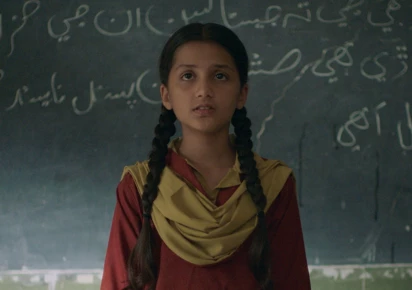
The film follows 10-year-old Rabia, who tries to understand why the only school in her rural village has stopped operating.

Through the young girl’s journey, the story examines barriers to girls’ education, resilience and problems within publicly funded schools.

The film focuses on the issue of so-called “ghost schools”. These are schools that exist officially but are no longer functioning properly as educational institutions.

Gul explained that some such schools were never fully completed. They may lack basic facilities such as doors, windows, water, electricity or gas.

In other cases, she said, schools were completed and teachers initially worked there, but operations eventually stopped.

The filmmaker described the issue as a serious challenge in Pakistan, where millions of children remain outside the formal education system.

Gul said the film was not intended simply to highlight a problem. Instead, she wanted to tell the story through a child’s eyes and encourage discussion about access to education.

The refusal to certify the film in Sindh has therefore raised broader questions about whether filmmakers should be able to explore sensitive social issues through cinema.

Gul has urged the provincial certification authority to review its decision and allow audiences to watch the film.

Similar Posts

  • | |

    NCCIA launches probe into social media campaign ag…

      The National Cyber Crime Investigation Agency (NCCIA) has launched an investigation into an alleged social media campaign aimed at damaging the reputation of Sindh Senior Minister Sharjeel Inam Memon and his son. According to NCCIA officials, the agency has received a formal complaint from Sharjeel Inam Memon regarding the alleged defamatory content circulating on various social media platforms. The complaint was received by the Deputy Director of the NCCIA’s Karachi Zone, who has initiated the process of investigating the matter. Officials said the agency is currently working to identify individuals allegedly involved in operating social media accounts, creating content and disseminating posts that are claimed to have harmed the reputation of the senior provincial minister and his son. The investigation will focus on tracing the origin of the posts, identifying the people responsible for creating and publishing the material, and determining how the content was circulated and amplified across social media platforms. NCCIA officials said the agency has contacted around 10 major social media platforms, including Facebook, WhatsApp, X, and Instagram, as part of its investigation. The platforms have reportedly been asked to provide relevant information about the accounts and individuals involved in spreading the alleged defamatory posts. The agency has also sought details of accounts that allegedly played a role in making the posts viral. Investigators are attempting to determine whether the content was originally posted by a particular account and subsequently shared or promoted by other users. In addition, the NCCIA has requested data relating to social media accounts from which the allegedly objectionable posts were later deleted. Officials are seeking information that could help investigators identify the users behind such accounts, even where the original content is no longer publicly available. The development comes amid growing concerns over the use of social media platforms to circulate unverified, misleading or allegedly defamatory material against public figures. With social media allowing information to spread rapidly across multiple platforms, cybercrime investigators increasingly rely on digital records and platform data to trace the origins of online content. The NCCIA’s investigation is expected to examine the digital trail associated with the alleged campaign, including the accounts involved in creating, sharing and circulating the material. Investigators may also examine the extent to which the content was distributed and whether multiple accounts were coordinated in spreading it. The complaint reportedly alleges that the social media campaign was intended to damage the honour and reputation of Sharjeel Inam Memon and his son. However, the allegations remain part of the ongoing investigation, and any responsibility for the content will ultimately depend on the findings of the relevant authorities. The agency’s request for information from social media platforms is aimed at obtaining additional evidence that could assist in identifying the people behind the accounts and determining the circumstances surrounding the creation and distribution of the posts. The NCCIA has not yet disclosed the identities of any suspects or announced arrests in connection with the case. Further action is expected after investigators receive and analyse the requested information from the social media platforms. The case highlights the increasing role of cybercrime authorities in addressing complaints involving online harassment, defamation and the alleged misuse of social media. The investigation will determine whether the content in question violated relevant laws and whether those responsible can be identified and proceeded against under the applicable legal framework.

  • | | | |

    Petrol down to Rs336.03, diesel to Rs392.38

    The federal government has announced a slight reduction in the prices of petrol and high-speed diesel for the next fortnight. According to a notification issued by the Petroleum Division, the price of high-speed diesel has been reduced by Rs0.66 per litre. Following the latest revision, the new price of diesel has been fixed at Rs392.38 per litre. The government has also lowered the price of petrol by Rs0.12 per litre. After the reduction, the new retail price of petrol now stands at Rs336.03 per litre. The revised fuel prices came into effect after the issuance of the official notification by the Petroleum Division. Petrol is widely used by private vehicles, motorcycles and small transport operators across the country, while high-speed diesel is mainly consumed by heavy transport, agricultural machinery and industrial sectors. Any change in fuel prices directly affects transportation costs, production expenses and the overall cost of living. Although the latest reduction is modest, it provides some relief to consumers and businesses that rely on petroleum products for their daily operations. The government reviews petroleum prices periodically, taking into account fluctuations in international oil markets, exchange rate movements and applicable taxes and levies before announcing revised rates. The latest adjustment reflects the government’s routine fuel price review mechanism.

  • | | |

    Iran-linked hackers shut UK power plant for four d…

    LONDON: Hackers linked to the Iranian regime reportedly forced a small British power-generating facility to shut down for four days last month in what could be the first known successful cyberattack of its kind against a UK energy site. The incident, reported by The Telegraph, has raised fresh concerns about the ability of state-linked cyber groups to move beyond digital intrusion and cause disruption to physical infrastructure. However, British officials stressed that the affected facility was small and that the wider electricity system was never at risk. The identity and location of the facility have not been disclosed for security reasons. According to reports, staff spent several days working to restore the plant and return its systems to normal operation. The attack did not cause any significant impact on Britain’s overall electricity generation or supply. A government source described the facility as extremely small compared with the capacity of the national grid and said it did not fall within the category of major generators required to report certain cyber incidents. Despite the limited disruption, the incident has attracted attention because of what it demonstrates about the evolving cyber threat. If confirmed, it would represent a significant step for hackers associated with Iran, showing that they were able to penetrate an energy facility and temporarily interrupt its operations. The precise method used to gain access to the plant has not been publicly disclosed. Nor has the British government formally attributed the attack to a specific Iranian hacking group. The National Cyber Security Centre, which works with organisations to protect critical infrastructure, declined to comment on the individual incident. British authorities have nevertheless taken the incident seriously. Government officials reportedly briefed senior executives at power companies and provided advice on how operators should respond to the growing threat of cyberattacks. The incident comes amid heightened concern in Western countries over cyber operations linked to Iran, Russia, China and North Korea. British cybersecurity officials have repeatedly warned organisations to strengthen their defences as geopolitical tensions increase. The attack also reportedly occurred around the same period as cyber incidents targeting water infrastructure in several US states, although the relationship between the incidents has not been established publicly. For Britain’s energy sector, the episode serves as a warning even though the national grid remained unaffected. Smaller generators and industrial facilities can still provide potential entry points for attackers seeking to test their capabilities. The immediate disruption may have been limited, but the incident has intensified scrutiny of Britain’s energy cybersecurity. Authorities now face the challenge of ensuring that a temporary shutdown at a small facility does not become a blueprint for attacks against larger and more strategically important infrastructure.

  • | |

    Ali Khursheedi calls for transparent probe into Mi…

      Sindh Assembly Opposition Leader Ali Khursheedi has called for a transparent investigation into the Mir Raza case, saying that hundreds of similar incidents have taken place in Karachi and that the authorities must take effective steps to address the situation. Speaking to the media in Karachi, the Muttahida Qaumi Movement (MQM) leader said that the Mir Raza case was not an isolated incident. He stressed the need for a transparent and impartial inquiry so that the facts could be established and those responsible could be held accountable. “Hundreds of cases like the Mir Raza case have occurred,” Khursheedi said, adding that a transparent investigation would be necessary to determine what had happened. He also questioned the performance of the Sindh government and urged people in Karachi to assess whether the provincial government was actually delivering on its responsibilities. The opposition leader said that the concerns of Karachi’s residents should be taken seriously, particularly in relation to law and order, governance and the protection of citizens. He questioned whether the people of Karachi believed that the provincial government was working effectively for the city. Khursheedi also commented on an incident that recently took place in the Bahadurabad area. He described the incident as unfortunate and said that it was not appropriate. However, he declined to discuss the matter in detail, saying that questions regarding the issue should be directed to the party leadership. “I am a worker, and you should ask the leadership these questions,” he told reporters when asked about the Bahadurabad incident. The MQM leader further expressed frustration over what he described as the continued deterioration of Karachi. He said that the situation had gone too far and that a stop must now be put to the problems facing the city. Khursheedi alleged that Karachi was being systematically damaged through what he described as a “system” of poor governance and mismanagement. He called for an end to practices that, in his view, were contributing to the decline of the city and affecting the daily lives of its residents. The opposition leader’s remarks come amid renewed concerns over security, governance and accountability in Karachi following the Mir Raza case. The incident has attracted attention and prompted demands for a thorough investigation into the circumstances surrounding the death. Khursheedi maintained that the authorities should not treat such cases as isolated incidents. Instead, he called for broader measures to improve law and order and ensure that citizens receive justice when serious incidents occur. He also emphasized the importance of transparency in investigations, particularly in cases that generate public concern. According to him, an impartial investigation could help establish the facts, restore public confidence and ensure accountability. The opposition leader’s criticism also reflects broader political tensions between the Sindh government and opposition parties over the administration of Karachi. Opposition leaders have frequently raised questions about the city’s governance, public services and law-and-order situation. Khursheedi said that Karachi’s residents should ultimately judge the performance of the provincial government based on their everyday experiences. He suggested that the condition of the city itself provides an indication of whether the government is fulfilling its responsibilities. Calling for immediate action, he said that “enough is enough” and that the deterioration of Karachi could not continue indefinitely. He urged authorities to take concrete steps to improve governance, investigate serious cases transparently and prevent further incidents from occurring. The MQM leader’s statements have added to calls for accountability and a transparent investigation into the Mir Raza case, while also highlighting wider concerns about Karachi’s governance and security situation.

  • | |

    Government raises petrol price despite global decl…

    The federal government has increased the price of petrol by Rs4.45 per litre, despite a reported decline in international petroleum prices, according to a notification issued by the Ministry of Energy. The revised fuel prices will come into effect from August 6, 2026. The latest notification states that the new prices have been determined in line with the pricing mechanism recommended by the Oil and Gas Regulatory Authority (OGRA) and approved by the federal government. Under the revised rates, the price of petrol has increased from Rs328.56 to Rs333.01 per litre, representing an increase of Rs4.45 per litre. The decision comes only a day after the government had announced lower fuel prices for August 5. In contrast, the price of high-speed diesel (HSD) has been reduced by Rs2.00 per litre. Following the reduction, the retail price of diesel has declined from Rs385.86 to Rs383.86 per litre, providing limited relief to transport operators and commercial users who rely heavily on diesel. According to government sources, the increase in petrol prices is linked to adjustments in the petroleum levy. The government has reportedly increased the petroleum levy on high-speed diesel by Rs1.44 per litre, raising it from Rs70.86 to Rs72.30 per litre. Officials say such adjustments form part of the government’s broader fiscal strategy while maintaining the petroleum pricing framework. The announcement has drawn attention because global crude oil prices have softened in recent weeks, leading many consumers to expect a reduction in domestic fuel prices. However, local retail fuel prices are influenced by several factors in addition to international oil prices, including exchange rate fluctuations, taxes, petroleum levy, transportation costs, and other government-imposed charges. The revised fuel prices are expected to affect transportation expenses, logistics costs, and overall inflation, as petrol remains a key commodity for private motorists and commercial activities across Pakistan. The government had previously announced reduced prices for August 5, lowering petrol by Rs3.39 per litre and high-speed diesel by Rs4.07 per litre. However, the latest notification revises those rates, resulting in a fresh increase in petrol prices while providing only a modest reduction in diesel prices. The new pricing structure will remain in effect until the government announces its next scheduled review of petroleum product prices.

  • Thai Opposition Prepares No-confidence Debate Amid Corruption Allegations

    BANGKOK, Thailand — The Thai opposition is actively preparing to launch a no-confidence debate against the government upon the reconvening of parliament, warning that a series of escalating corruption scandals could trigger severe political consequences for the ruling administration, the Bangkok Post reported. Anutin Charnvirakul Secures Second Term as Thailand’s 32nd Prime Minister Opposition leader […]

Leave a Reply

Your email address will not be published. Required fields are marked *