drought reveals naziera
|

Drought reveals Nazi-era warships in Danube

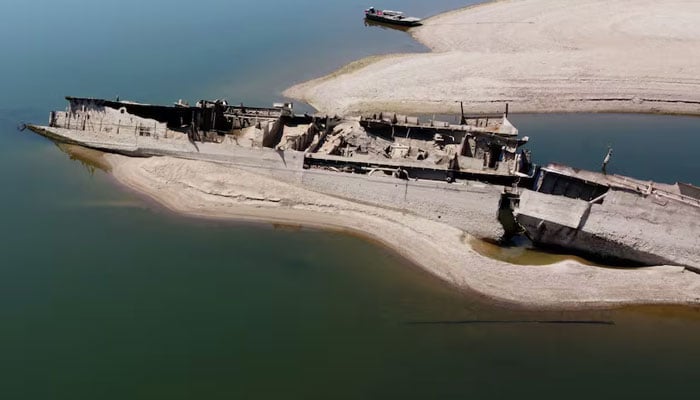
Severe heat and prolonged drought across Europe have caused the Danube River to fall to record-low levels, exposing the wreckage of German warships that sank during World War II.

The wrecks have emerged near the border between Serbia and Romania, offering a rare glimpse into one of the lesser-known chapters of the war. The vessels sank in 1944, when Nazi Germany attempted to prevent advancing Soviet forces from moving further west along the Danube.

According to foreign media reports, German forces deliberately scuttled dozens of warships in the river as Soviet troops advanced through Eastern Europe. The wrecks remained hidden beneath the water for decades, but the dramatic decline in the Danube’s water level has now brought parts of the vessels back into view.

The discovery highlights the wider impact of Europe’s increasingly severe heat and drought conditions. With water levels dropping sharply, the Danube has exposed not only historic shipwrecks but also other submerged remains that normally stay hidden beneath the river.

The newly visible wrecks are drawing attention from historians and researchers, while also underscoring how extreme weather can unexpectedly reveal traces of the past.

Similar Posts

  • |

    Brazil’s Lula announces fourth-term campaign…

    Brazilian President Luiz Inacio Lula da Silva has launched his campaign for a fourth term at a Workers’ Party convention in Sao Paulo, confirming it would be his final bid for office. Centring his platform on global affairs and national defence, the 80-year-old leader pledged to increase military spending and protect the country’s vast rare earth mineral reserves. He warned foreign powers that Brazil would not permit nations like China, France, or the United States to access these resources without respecting territorial sovereignty. Lula currently holds a slight lead in opinion polls against his likely main challenger, Senator Flavio Bolsonaro.

  • | |

    France wildfires force 150,000 to evacuate amid he…

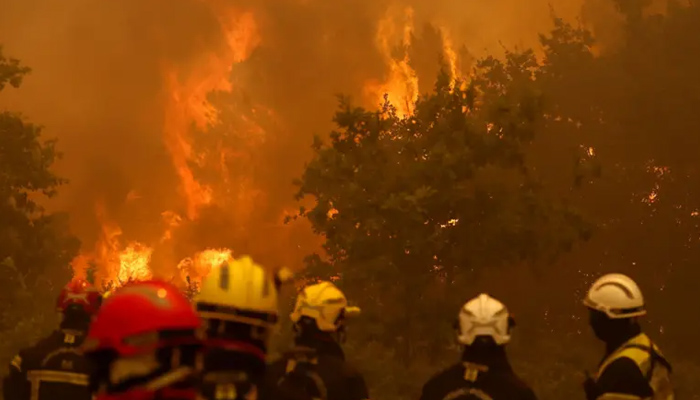
    A relentless heatwave has triggered massive wildfires across southwestern France, forcing around 150,000 people to evacuate as flames swept through forests and threatened homes in one of the country’s most popular tourist destinations. French authorities ordered the complete evacuation of Cap Ferret, a renowned coastal resort, after fast-moving fires engulfed nearly 47,000 acres of forest. Officials said more than 100 homes had been damaged as firefighters continued battling the blaze under extreme weather conditions. The rapidly spreading fire has prompted an extensive emergency response, with President Emmanuel Macron directing the French military to assist firefighting teams in containing the flames and protecting nearby communities. The crisis has also spread beyond France. In neighboring Spain, authorities declared the country’s first-ever national emergency over a wildfire near Madrid, highlighting the growing impact of the ongoing heatwave across southern Europe. According to media reports, the Spanish wildfire has destroyed more than 43 homes, while approximately 19,000 residents living in mountainous areas west of Madrid were ordered to evacuate. More than 2,000 emergency personnel, supported by 10 firefighting aircraft, have been deployed to contain the flames. Officials warned that soaring temperatures, dry vegetation and strong winds have created ideal conditions for wildfires, making firefighting operations increasingly difficult. The latest disaster comes only weeks after France experienced one of its deadliest heatwaves in recent years. According to the country’s national public health agency, 21,674 deaths were recorded between June 17 and July 2, compared with an expected 15,910 deaths under normal conditions. The agency said the period saw 5,764 excess deaths—an increase of 36% above normal mortality levels—underscoring the severe health impact of prolonged extreme heat. Climate experts have repeatedly warned that rising global temperatures are increasing the frequency and intensity of heatwaves and wildfires across Europe. As emergency crews continue to battle the blazes in France and Spain, authorities remain on high alert, warning residents that worsening weather conditions could fuel further fires in the coming days.

  • | | |

    Pezeshkian says Iran seeks peace, not wider conflict

    Iranian President Masoud Pezeshkian has said that Iran has no intention of prolonging the current conflict or expanding it beyond its existing scope. However, he made it clear that the country will continue to defend its sovereignty, territorial integrity and national interests against any threat. Speaking at a ceremony in Tehran, the president said Iran’s policy is based on protecting its borders while avoiding any unnecessary escalation. He stressed that the country does not seek war but will not hesitate to respond if its security or independence is challenged. Pezeshkian said maintaining national security is not only the responsibility of the armed forces but also depends on the unity and solidarity of the Iranian people. He urged citizens to set aside political and social differences and work together to strengthen the country during a difficult period. The president said internal unity is one of the strongest defenses against foreign interference. According to him, divisions within society can create opportunities for outside powers to influence domestic affairs. He added that a united nation is better equipped to face political, economic and security challenges. He emphasized the need to build a strong and stable society where people enjoy confidence in national institutions and where hostile elements cannot create unrest or weaken public trust. He said Iran must focus on strengthening its social fabric to prevent enemies from exploiting internal disagreements. Pezeshkian also called for greater national cooperation to overcome current challenges. He said every segment of society has a role to play in safeguarding the country’s future and preserving stability. The Iranian president reiterated that his government remains committed to protecting the country’s borders and national interests while pursuing policies that avoid a wider regional conflict. He said Iran’s priority is to maintain security, preserve national unity and prevent conditions that could lead to further instability.

  • | |

    Italy’s fourth summer heat wave peaks as rec…

    Italy’s fourth heat wave of the summer reached its most intense point on Monday, with a record 25 cities placed under red heat alerts as temperatures climbed above 40 degrees Celsius in parts of the country, according to local media reports. Italy’s Health Ministry raised the number of cities under its highest heat risk warning from 23 on Sunday to 25 on Monday, marking the highest total recorded so far this summer. Only Reggio Calabria and Messina avoided the red alert designation, though both remained under yellow level warnings. The Po Valley and central regions of the country are experiencing the harshest conditions, while inland areas and Sardinia could also see temperatures exceed 40 degrees Celsius. In parts of central and northern Italy, overnight temperatures are expected to stay above 25 degrees Celsius, a pattern meteorologists have described as super tropical nights. The central province of Terni recorded a temperature of 41 degrees Celsius on Sunday. Experts have linked the extreme heat to a persistent African anticyclone combined with continued warming of the Mediterranean Sea, where surface temperatures have reached or surpassed 30 degrees Celsius across much of the basin. Meteorologist Lorenzo Tedici of iLMeteo.it said the accumulated heat is expected to fuel atmospheric instability, warning of strong afternoon thunderstorms forming over the Alps and Apennines. Italy’s Civil Protection Department has issued yellow alerts for heavy rainfall along the Apennine mountain range stretching from Umbria to Calabria, as well as in inland areas of Sicily. Tedici said a genuine shift away from the hottest phase of summer 2026 is unlikely before at least mid August. Authorities have also flagged an elevated risk of wildfires, placing Sicily and Emilia Romagna under orange alerts as the heat wave continues to grip the country. The extreme temperatures fit a broader pattern of intensifying summer heat across southern Europe in recent years, as scientists have repeatedly linked rising Mediterranean sea temperatures and more frequent heat waves to long term climate trends affecting the region’s weather systems.

  • | |

    Houthis claim missile and drone attack on Saudi oil tankers

    Yemen’s Houthi movement has claimed responsibility for attacking two Saudi oil tankers in the Red Sea, marking a major escalation in regional tensions and raising fresh concerns over the security of one of the world’s busiest maritime trade routes. Houthi military spokesperson Yahya Saree said the group targeted the tankers, identified as ENCELA and LAYLIA, because they allegedly violated the maritime blockade the Houthis imposed on Saudi Arabia earlier this week. According to the spokesperson, the operation involved ballistic missiles, cruise missiles and drones. He claimed the strikes caused fires aboard both vessels and forced nearly 10 other commercial ships to abandon their planned routes and turn back. Saudi authorities have not officially commented on the Houthi claims. However, the United Kingdom Maritime Trade Operations (UKMTO), which monitors maritime security in the region, confirmed receiving a report from the captain of a tanker that an unidentified projectile had struck the vessel, sparking a fire. The crew managed to respond to the incident, and no casualties or environmental damage have been reported. The attack comes just days after the Houthis announced a maritime blockade against Saudi Arabia, saying the move was retaliation for recent military actions in Yemen. The group accused Riyadh of maintaining a long-standing blockade on areas under Houthi control and vowed to respond with similar measures at sea. The latest developments have increased fears over shipping through the Red Sea and the Bab al-Mandeb Strait, a strategic waterway linking the Red Sea to the Gulf of Aden. The route is vital for global energy supplies and international trade, carrying millions of barrels of crude oil and petroleum products every day. Shipping security in the region has already been under pressure because of wider Middle East tensions. Any prolonged disruption in the Bab al-Mandeb Strait could further affect global oil markets, increase transport costs and delay commercial shipping.

  • | | | |

    Iranian strike hits Chinese company building in Ku…

    KUWAIT CITY: A building belonging to a Chinese company in northern Kuwait was struck during an alleged Iranian attack, leaving one worker dead and causing extensive structural damage, according to Kuwait’s Ministry of Defense. The ministry confirmed the incident in an official statement on Wednesday, saying emergency response teams and security agencies were immediately dispatched to the affected site to secure the area, assess the damage, and launch rescue operations. Authorities said one worker was killed in the strike, but did not immediately disclose the victim’s identity or nationality. Officials added that investigations are continuing to determine whether there were additional casualties or injuries and to establish the full extent of the damage caused by the attack. Images from the scene showed emergency personnel working around the damaged building as security forces cordoned off the area. Officials have yet to release further details regarding the type of weapon used or the circumstances surrounding the strike. In its statement, Kuwait’s Ministry of Defense stressed that the country’s armed forces remain on high alert and are fully prepared to safeguard Kuwait’s sovereignty, territorial integrity, and national security against any external threat. The ministry also urged the public to rely only on official government statements for updates, warning citizens against spreading or believing unverified reports and rumors circulating on social media. The attack comes amid heightened regional tensions linked to the ongoing confrontation between Iran and the United States, which has fueled growing security concerns across the Gulf region. In recent weeks, military facilities, energy infrastructure, commercial shipping routes, and strategic installations have increasingly come under threat, raising fears of a wider regional escalation. Security analysts say the latest strike demonstrates how the conflict is expanding beyond its primary actors, with neighboring Gulf states facing increasing risks from the deteriorating security environment. Kuwait, which has traditionally sought to maintain balanced regional relations, now finds itself confronting the possibility of being directly affected by the broader conflict. The incident is expected to intensify security measures across the country, particularly around critical infrastructure, industrial facilities, and foreign-owned commercial sites. Regional governments have already strengthened surveillance and emergency preparedness in response to the growing threat of cross-border attacks. No immediate statement was issued by Iranian authorities regarding the alleged strike. Meanwhile, Kuwaiti officials said investigations remain underway and pledged to provide further information as more details become available. The latest incident underscores the widening regional impact of the Iran-US confrontation and highlights growing concerns that escalating hostilities could increasingly affect civilian infrastructure and foreign businesses operating across the Gulf.

Leave a Reply

Your email address will not be published. Required fields are marked *