spiderman brand new
| |

Spider-Man, Brand New Day faces boycott calls over…

Pro-Palestinian campaigners in Lebanon, Jordan and other parts of the Arab world are calling for a boycott of Spider-Man: Brand New Day, turning the release of the highly anticipated superhero film into a wider debate over politics, culture and entertainment.

The campaign is focused on producer Avi Arad, an Israeli and US citizen and former Marvel Studios chief, whose public statements and past military service have drawn criticism from activists opposed to Israel’s conduct during the war in Gaza.

In Lebanon, the Campaign to Boycott Supporters of Israel urged audiences not to buy tickets for the film, arguing that spending money on productions involving individuals who have publicly supported Israel amounts to cultural normalisation.

The group called on the public to avoid paid screenings and questioned whether audiences should financially support a production involving people with political ties to Israel.

A separate anti-normalisation group in Jordan, Taharrak, also called for the movie to be boycotted and urged cinemas not to include it in their schedules. The group appealed to Jordanian artists, cinema operators and other organisations to take a position against its screening.

The boycott calls have subsequently been shared by activists and online content creators in other Arab countries.

The film, which stars Tom Holland as Peter Parker, was released internationally on July 31. Directed by Destin Daniel Cretton, it is produced by Arad alongside Kevin Feige, Amy Pascal and Rachel O’Connor.

Campaigners have specifically targeted Arad rather than the film’s storyline or its wider cast and production team.

Arad served in the Israeli military from 1965 to 1968 and has previously spoken publicly about his connection to Israel. In a 2024 letter published by TheWrap, he criticised former US Senate Majority Leader Chuck Schumer after Schumer criticised Israeli Prime Minister Benjamin Netanyahu and called for new Israeli elections.

Arad argued that American politicians should not interfere in Israel’s electoral affairs and described himself as a proud former member of the Israeli military.

Campaigners say such statements justify their call for a boycott, arguing that ticket purchases could provide financial support to a production involving Arad.

However, the impact of the campaign on the film’s commercial performance remains uncertain. Despite the boycott appeal, Spider-Man: Brand New Day continued screening in Lebanon, while a representative of Grand Cinemas told L’Orient Today that audience demand remained strong shortly after its release.

The controversy highlights how major Hollywood releases can become entangled in geopolitical debates, with audiences increasingly examining the political positions and backgrounds of figures behind popular entertainment.


Similar Posts

  • |

    Major US financial firms targeted in extensive phone-phishing campaign

    Ransom-seeking cybercriminals have launched a coordinated campaign targeting high-profile US financial institutions, including Blackstone, Apollo Global Management, KKR, Bain Capital, and CME Group. A technical report from Google’s Threat Intelligence Group revealed that hackers created 72 malicious websites designed to steal corporate login credentials. Operatives used social engineering tactics, reaching employees directly on personal mobile phones while spoofing corporate IT helpdesk numbers. Under the guise of urgent system updates, callers guided staff to fraudulent domains such as “passkeyhelpdesk” or “secure-passkey” to capture login credentials and multi-factor authentication passcodes in real time. According to threat intelligence analysis, the campaign represents a strategic pivot toward private equity firms, law practices, and financial rating agencies, driven by the assessment that these targets hold sensitive commercial data worth paying substantial ransoms to protect. While digital intelligence data identified fake portals created for over 200 organisations, including Uber, Levi Strauss, and several major law firms, it remains unconfirmed which specific financial targets experienced compromised systems. The threat actors operating under names such as Redact, Falcon, Helix, and Pink share common digital infrastructure. Analysts noted that despite advanced enterprise perimeter security, direct voice-phishing techniques exploiting human trust continue to rank among the most effective cyber-intrusion vectors.

  • | |

    Why Kajal Aggarwal chose South Cinema over Bollywo…

    Actor Kajal Aggarwal has opened up about why she chose to focus more on South Indian cinema than Bollywood during her two-decade-long career. In a recent interview, the actress said the decision was driven by the quality of roles and the professionalism she experienced in the South Indian film industry. Born into a Punjabi family in Amritsar, the 41-year-old actress has successfully balanced careers in both Hindi and South Indian cinema. However, she revealed that she received stronger scripts and more meaningful characters in Telugu and Tamil films, making it easier for her to prioritize projects in the South. Kajal explained that she never wanted to accept average or uninspiring roles simply to remain active in Bollywood.Instead, she chose films that challenged her as an actor and allowed her to grow professionally. According to her, South Indian filmmakers consistently offered better opportunities that matched her expectations and career goals. Speaking about the differences between the two industries, Kajal highlighted professionalism and punctuality as one of South cinema’s biggest strengths. She said film sets in the South operate according to strict schedules, with cast and crew respecting call times and production timelines. In contrast, she noted that delays are common in Bollywood, where work often does not begin on time. Kajal admitted that she is accustomed to disciplined work environments and prefers productions that value time management. She suggested that Bollywood could benefit from adopting the same level of punctuality practiced in the South Indian film industry. The actress also reflected on her experience working alongside Bollywood superstar Salman Khan in the film Sikandar. Kajal revealed that she was excited to share the screen with the actor because he had been her childhood crush. However, she humorously recalled that Salman was the co-star who made her wait the longest on set. She said that while waiting for filming to begin, she often spent time exercising in the gym available on the set. Kajal added that her habit of arriving on time comes from years of working in South cinema, where schedules are generally followed more strictly. Kajal Aggarwal made her acting debut in the 2004 Hindi film Kyun…! Ho Gaya Na before rising to fame in Telugu and Tamil cinema. Over the years, she has become one of the industry’s most successful and highest-paid actresses. She is next set to appear in The India Story, directed by Chetan DK and co-starring Shreyas Talpade.

  • |

    London motorway chaos: M25 closed after major industrial fire near St Albans

    A major industrial fire near London has forced the closure of the M25 in both directions, triggering widespread traffic disruption and fears of possible explosions. The blaze broke out at a commercial premises in Ventura Park, near St Albans, shortly after 9.20am on Tuesday. Huge plumes of thick smoke could be seen rising over the motorway as firefighters rushed to contain the fire. The M25 has been closed between Junction 21A and Junction 22, with motorists warned to avoid the area and use alternative routes. Emergency services took the decision to close the motorway amid concerns over smoke, falling debris and the potential for secondary explosions from the industrial site. Multiple fire appliances have been deployed to tackle the blaze, while police officers are also at the scene managing the emergency and surrounding traffic. National Highways has warned motorists to expect significant delays and congestion, urging drivers to allow extra time for their journeys or avoid the affected area altogether. The incident has caused major disruption on one of London’s key orbital routes, with congestion building on surrounding roads as traffic is diverted away from the closed section. Residents close to the fire have been advised to keep windows and doors closed because of the heavy smoke. The fire is also close to a railway line, with Network Rail representatives liaising with firefighters as emergency services assess the situation. The cause of the fire has not yet been established. Emergency crews remain at the scene and the M25 will stay closed while firefighters work to bring the blaze under control and authorities determine when it is safe to reopen the motorway. Motorists are being urged not to travel towards the affected section and to follow official traffic and emergency-service instructions. The incident remains ongoing.

  • Medical Team Reports Unstable Condition For HRH Princess Bajrakitiyabha Following Severe Infection

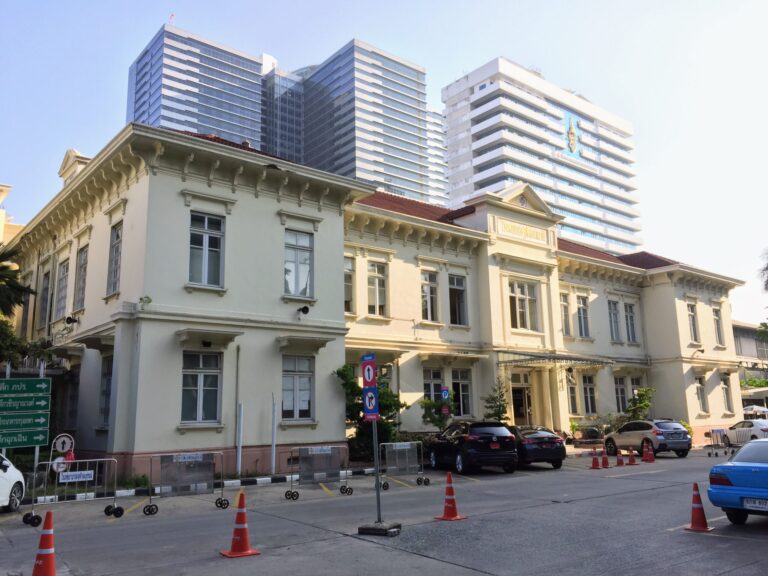
    BANGKOK, Thailand — The medical team treating Her Royal Highness Princess Bajrakitiyabha Narendira Debyavati has announced that the Princess’s condition has become unstable due to a severe abdominal infection, despite ongoing intensive care and specialized treatment at King Chulalongkorn Memorial Hospital. Princess Bajrakitiyabha remains unconscious, bacteria blamed for illness In an official statement released by […]

  • | |

    Pakistan seeks $10b in US backstop facility

    Pakistan has formally requested a 10 billion dollar exchange stabilisation facility from the United States to boost its foreign exchange reserves and stabilise its economy, according to a source familiar with the development. The request, addressed to US Treasury Secretary Scott Bessent, seeks a Bilateral Exchange Stabilisation Support Facility with a maturity period of up to five years. This move follows Pakistan’s involvement in facilitating negotiations regarding the Iran war, an effort that elevated the country’s diplomatic standing and fueled expectations of economic support from Washington and international partners. If approved, the 10 billion dollar facility would help replenish Pakistan’s central bank reserves, reduce downward pressure on the rupee, and decrease dependency on multilateral lenders. It would also provide financial flexibility as Islamabad continues implementing strict fiscal and monetary measures mandated under its 7 billion dollar International Monetary Fund programme. These IMF-guided measures have required politically challenging tax hikes, spending cuts, and structural reforms to ensure fiscal discipline. Neither the Pakistani Ministry of Finance nor the US Treasury immediately responded to requests for comment regarding the proposal. US Exchange Stabilisation Facilities, typically administered through the Exchange Stabilisation Fund, are rare financial mechanisms that provide foreign governments with dollars, currency swaps, or guarantees. These backstops differ from the Federal Reserve’s permanent standing swap lines with major foreign central banks. A 2025 financial package provided to Argentina represented the first new exchange stabilisation facility granted to a foreign government since Uruguay in 2002, alongside Mexico’s long-standing swap agreement dating back to the 1940s. Pakistan narrowly avoided a debt default in 2023 by securing a 3 billion dollar IMF standby arrangement, which was later succeeded by the current 7 billion dollar Extended Fund Facility. However, its foreign reserves remain heavily dependent on official loans, debt rollovers, and financial deposits from bilateral partners like Saudi Arabia and China. This reliance leaves the country vulnerable to delays in IMF disbursements and shifts in bilateral support, as demonstrated in April when Pakistan repaid approximately 3.5 billion dollars to the United Arab Emirates, representing a fifth of its reserves, while receiving 3 billion dollars in fresh backing from Saudi Arabia. Despite these vulnerabilities, Pakistan’s central bank projected in January that its foreign exchange reserves could approach their 2021 historical high, reaching 20 billion dollars by the close of 2026. In April, rating agency Fitch noted that compliance with the IMF programme has enhanced Pakistan’s funding capacity, while rebuilt foreign exchange buffers offer a cushion against economic shocks stemming from Middle East instability. However, Fitch cautioned that escalating global energy costs and potential supply disruptions could rapidly erode these reserve buffers. Furthermore, foreign direct investment in Pakistan remains constrained due to recurring external account crises, policy shifts, security concerns, historical restrictions on profit repatriation, and a narrow export base. The nation’s credit rating remains firmly in speculative-grade territory, limiting access to international capital markets and keeping borrowing costs high. To navigate these economic pressures, Islamabad has sought deeper engagement with the Trump administration through various commercial and investment initiatives. These efforts include signing a stablecoin agreement for cross-border transactions with an affiliate of World Liberty Financial, advancing a memorandum of understanding to redevelop the Pakistan International Airlines-owned Roosevelt Hotel in New York with the US government, and encouraging US investment in the domestic mining sector, where the US Export-Import Bank announced 1.2 billion dollars in financing for the Reko Diq project.

  • |

    China launches Arctic route to bypass global shipping chokepoints

    China is preparing to open a regular container shipping route through the Arctic as disruptions at major maritime chokepoints continue to affect global trade. The new service will operate through Russia’s Northern Sea Route along the Arctic coast. It is being presented as an alternative route between Asia and Europe. Chinese shipping company Sea Legend is expected to launch its first regular service on the route. The service will connect Ningbo in China with Felixstowe in the United Kingdom. The route has been described as the “Ice Silk Road”. It is designed to provide faster access to European markets. It could also improve trade links with Turkey and North Africa. The Arctic route could significantly reduce sailing times between China and Europe. The journey between Ningbo and Felixstowe normally takes around 40 days by traditional routes. The Northern Sea Route could cut the travel time by roughly half under suitable conditions. The route has gained attention as shipping companies look for alternatives to heavily congested and politically sensitive waterways. The Strait of Hormuz and the Bab al-Mandab have become major areas of concern for international shipping. Rising tensions in these regions have increased risks for vessels and raised costs for shipping companies. Marine risk experts say the Arctic is attracting greater interest from shipowners because it can offer shorter journeys and reduce exposure to geopolitical conflict zones. The Northern Sea Route is divided into 28 sections. Different rules and operating requirements apply along the route. Ships generally need permission from the Northern Sea Route administration, which is controlled by Russia’s state nuclear energy company Rosatom. Interest in the Arctic route is not new. Several international shipping companies have previously tested the Northern Sea Route. However, many European operators later avoided regular use of the route because of worsening relations with Russia. Concerns over the potential environmental impact of increased shipping in the fragile Arctic ecosystem have also remained a major issue. The changing climate has added another dimension to the debate. Shrinking sea ice has made some Arctic routes more accessible during parts of the year. The Arctic is now becoming an increasingly important area of competition among major powers. Russia considers the region strategically important for its economy and national security. It also views the Northern Sea Route as a major trade corridor. China has described itself as a “near-Arctic state” and has promoted the concept of a “Polar Silk Road”. Beijing sees greater Arctic access as an opportunity to expand trade and strengthen its global supply chains. The United States, meanwhile, has opposed efforts that could give Russia and China excessive control over Arctic routes. Washington has repeatedly supported freedom of navigation and greater international access to the region. The growing use of the Arctic shipping corridor could therefore have implications beyond commercial trade. For China, the route offers a potential way to reduce dependence on traditional maritime passages. For Russia, it could strengthen the economic importance of its Arctic coastline.

Leave a Reply

Your email address will not be published. Required fields are marked *