pakistan spain discuss
| |

Pakistan, Spain discuss expanding trade, investmen…

RAWALPINDI: Ambassador of Spain to Pakistan, H.E. Carlos Aragón Gil de la Serna, visited the Rawalpindi Chamber of Commerce & Industry (RCCI) and held a meeting with RCCI President Usman Shaukat to discuss ways to further strengthen bilateral economic, trade and cultural relations between Pakistan and Spain.

Rana Mashhood Ahmad Khan, Coordinator to the Prime Minister’s Youth Programme, was also present as the chief guest on the occasion. Senior Vice President Khalid Farooq Qazi, Vice President Fahad Barlas, former presidents of RCCI, Executive Committee members and a large number of Chamber members also attended the meeting.

Upon their arrival, the Spanish Ambassador and Rana Mashhood Ahmad Khan were warmly welcomed by RCCI President Usman Shaukat and members of the Chamber.

RCCI President Usman Shaukat highlighted the significant potential for expanding Pakistan–Spain trade and called for stronger business-to-business linkages, improved market access, and enhanced cooperation in investment and technology.

He said Spain offers important opportunities for Pakistani exporters, particularly in textiles and agro-based products, while Pakistan can benefit from Spanish expertise in modern agriculture, precision farming, irrigation, mechanization, greenhouse technology and water management.

The discussion assumes added significance in light of recent Pakistan–Spain consultations regarding the establishment of a Joint Working Group on Agriculture. Pakistan has identified rice, ethanol, potatoes and maize as products with potential for increased exports to the Spanish market. Spain has also acknowledged Pakistan’s favourable trade balance, with textiles being among Pakistan’s major exports to Spain.

On this occasion, Rana Mashhood Ahmad Khan highlighted RCCI’s important role in supporting the government on economic and budget-related matters and appreciated the Chamber’s contribution towards strengthening Pakistan’s economic foundations. He said Pakistan is moving forward across various sectors, particularly information technology, and stressed the need to further promote investment, innovation and entrepreneurship.

Rana Mashhood said the Prime Minister’s Vision 2047 provides a roadmap for building a prosperous, self-reliant and globally competitive Pakistan. He emphasized that youth empowerment, employment generation, peace and economic stability are essential priorities for the country’s sustainable development. He added that Pakistan’s young population represents a major national asset and that greater opportunities for skills development, entrepreneurship and employment are needed to fully harness its potential.

He also appreciated the growing economic and diplomatic engagement between Pakistan and Spain, saying stronger cooperation with European countries can create new opportunities for Pakistani businesses, exporters and young entrepreneurs.

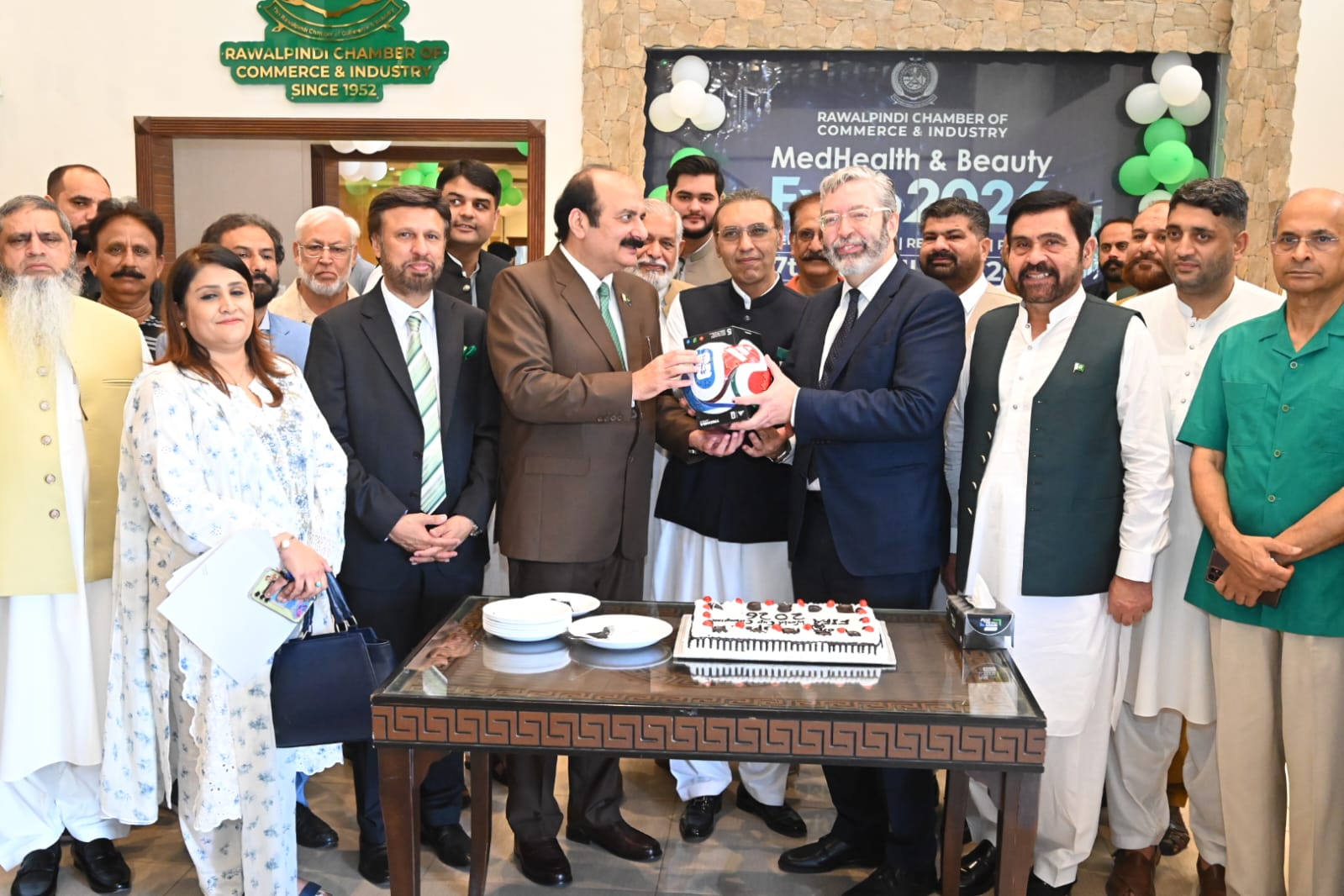
In a special gesture of friendship and goodwill, RCCI President Usman Shaukat and Rana Mashhood Ahmad Khan jointly presented H.E. Carlos Aragón Gil de la Serna with a football manufactured in Pakistan for the FIFA World Cup. The presentation showcased Pakistan’s strong sports manufacturing capabilities and symbolized the growing friendship, cooperation and people-to-people ties between Pakistan and Spain.

The Spanish Ambassador also participated in RCCI’s Independence Day celebrations and cake-cutting ceremony, further reflecting the warm cultural and people-to-people relations between the two countries.

The meeting concluded with a shared commitment to promoting bilateral trade and investment, technology cooperation, agricultural collaboration and stronger institutional linkages for the mutual economic benefit of Pakistan and Spain.

Similar Posts

  • | |

    Fire put out at Aramco’s Jazan Refinery, Saudi A…

    JAZAN: Firefighters have extinguished a blaze that erupted early Sunday at a facility within Saudi Aramco’s Jazan refinery in southwestern Saudi Arabia, with authorities confirming that no injuries were reported. The Saudi Energy Ministry said Aramco’s industrial security teams quickly brought the fire under control. Relevant authorities were subsequently working to complete procedures related to the incident. The ministry did not disclose what caused the fire or provide details about the extent of any damage. Located on the Red Sea near Saudi Arabia’s border with Yemen, the Jazan refinery has a processing capacity of around 400,000 barrels of crude oil per day. The facility produces several refined petroleum products, including gasoline and ultra-low-sulfur diesel. The latest incident comes shortly after the refinery was shut down following an attack in late July that Saudi authorities attributed to Yemen’s Houthi movement. The attack reportedly damaged parts of the refinery’s integrated gasification complex and tank storage facilities. The Houthis had previously claimed responsibility for strikes targeting Aramco facilities in Jazan and Yanbu, raising concerns over the security of Saudi energy infrastructure and shipping routes in the Red Sea. Aramco Chief Executive Amin Nasser said last week that recent attacks had caused some temporary production disruptions but expressed confidence that operations could be restored quickly. He said the incidents had not caused a significant operational or financial impact on the company. The latest fire comes amid heightened regional tensions involving Saudi Arabia, Yemen and wider disruptions affecting energy and maritime security across the Middle East.

  • |

    US investigates possible Russian role in Iranian strikes on CIA facilities

    US intelligence agencies are examining whether Russia helped Iran carry out drone attacks on CIA facilities in the Gulf, raising fresh concerns about growing military cooperation between Moscow and Tehran. Officials are reviewing intelligence to determine whether Russia provided targeting information, advanced drone technology, or other forms of support that may have increased the accuracy of the attacks. According to sources familiar with the investigation, analysts have not reached any final conclusions about Russia’s involvement. However, the precision of the strikes and Russia’s long history of military and technical cooperation with Iran have led intelligence officials to explore whether Moscow played a direct role in planning or supporting the operations. The investigation follows a series of Iranian drone attacks that targeted sensitive US intelligence locations in the region. At least two CIA facilities were reportedly hit in March. One of the sites was located inside the US Embassy in Riyadh, Saudi Arabia, while another was in eastern Iraq. Officials familiar with the matter said additional CIA locations may also have been attacked, although they declined to reveal further details because of security concerns. Western intelligence officials have also reviewed reports suggesting that Russia may have assisted Iran in selecting the targets. One intelligence assessment reportedly concluded that Russia likely contributed to identifying regional CIA facilities, although officials stressed that the findings remain under review and have not been publicly confirmed. According to officials briefed on intelligence reports, the attack on the US Embassy compound in Riyadh involved two upgraded versions of Iran’s Shahed drones. They said one drone created an opening in the embassy’s outer structure while the second entered through the damaged area before exploding inside. No casualties were reported, but the operation demonstrated a level of accuracy that surprised intelligence analysts. The investigation comes as tensions between the United States and Iran remain high following months of military exchanges across the Middle East. American officials are also examining recent Iranian strikes on a US military base in Jordan where ballistic missiles killed two American soldiers. Those attacks have intensified concerns that Iran may be receiving more advanced military support from Russia. Analysts believe Russia has spent years helping Iran improve its drone capabilities. Intelligence sources say Moscow has assisted Tehran in increasing the range and precision of its Shahed drones through technical upgrades. Reports also suggest Russia supplied Iran with the Kometa M satellite navigation system, which is believed to provide greater accuracy and stronger resistance to electronic interference than Iran’s previous guidance systems. Russia has denied supplying the technology and dismissed earlier reports on the matter. The White House referred questions about the investigation to the CIA, which declined to comment. Iran’s mission to the United Nations, the Russian Defense Ministry, and Saudi authorities also did not respond to requests for statements. The exact number and locations of the targeted CIA facilities remain classified. Intelligence sources said more than one site but fewer than a dozen were struck during the attacks. Overseas CIA operations often include embassy based stations as well as secure facilities used for surveillance, logistics, intelligence gathering, and other sensitive missions. US analysts are also investigating whether Russia supplied the intelligence used to identify the Riyadh facility. Some officials remain cautious, noting that Iran may have intended to strike the US Embassy as a whole rather than specifically targeting the CIA station located within the compound. Others believe very few countries possess both the intelligence capabilities and the strategic motivation to identify and support attacks against such highly sensitive US facilities. Former CIA station chief Daniel Hoffman said closer military cooperation between Russia and Iran makes such assistance plausible. He argued that both countries share a common interest in reducing American influence across the Middle East and other regions where they seek greater strategic control. The investigation remains ongoing as US intelligence agencies continue to assess the available evidence.

  • | | |

    Kuwait’s foreign minister arrives in Pakistan on…

    Kuwait’s Foreign Minister, Sheikh Jarrah Jaber Al-Ahmad Al-Sabah, arrived in Islamabad on Tuesday for an official visit to Pakistan at the invitation of Deputy Prime Minister and Foreign Minister Ishaq Dar. The visit highlights the longstanding friendship and growing diplomatic cooperation between the two countries. According to Pakistan’s Ministry of Foreign Affairs, the Kuwaiti foreign minister received a warm welcome upon his arrival at Islamabad International Airport. Additional Secretary for the Middle East, Zahid Hussain, welcomed the distinguished guest on behalf of the Pakistani government. During the visit, senior officials from both countries are expected to hold high-level discussions on a wide range of bilateral, regional, and international issues of mutual interest. The talks will focus on strengthening political cooperation, expanding economic partnerships, enhancing trade and investment opportunities, and promoting collaboration in various sectors. The Foreign Office stated that the visit reflects the deep-rooted brotherly relations between Pakistan and Kuwait, built on a shared history, mutual trust, and close cooperation over the years. Both nations have maintained friendly diplomatic ties and regularly work together on regional and international platforms. Pakistan and Kuwait enjoy strong cooperation in labor, energy, investment, and defense, while a large Pakistani expatriate community continues to contribute significantly to Kuwait’s economy. The leadership of both countries has repeatedly expressed a commitment to further strengthening these ties through increased engagement and high-level exchanges. Officials believe the visit will provide an opportunity to review the progress made in bilateral relations and identify new areas for collaboration. Discussions are also expected to cover regional developments in the Middle East and South Asia, as well as other international issues of common concern. The official visit underscores the shared commitment of Pakistan and Kuwait to enhancing diplomatic relations, promoting economic cooperation, and expanding strategic partnerships. It also reaffirms both countries’ desire to deepen engagement through regular dialogue and continued collaboration for mutual benefit. The outcomes of the meetings are expected to contribute to stronger Pakistan-Kuwait relations and pave the way for future initiatives aimed at boosting trade, investment, and regional cooperation.

  • | |

    Air ambulance vs bicycle ambulance: Bukhari’s di…

    Punjab Information Minister Azma Bukhari has rejected allegations of electoral rigging raised by the Pakistan Peoples Party (PPP) following the first phase of the Azad Jammu and Kashmir elections. Speaking at a press conference in Lahore, Bukhari said the people of Kashmir had made their decision through their votes. She claimed that voters had preferred the performance of Punjab Chief Minister Maryam Nawaz. Bukhari said the election results reflected the choice of the people. She dismissed the PPP’s allegations and defended the performance of the Pakistan Muslim League-Nawaz (PML-N). The provincial minister also criticised PPP Chairman Bilawal Bhutto Zardari. She said political pressure appeared to be increasing within a particular party. She further claimed that Bilawal had attempted to imitate another political leader during his election speech. Bukhari also criticised the PPP’s performance in Sindh. She said the party often used the name of Raiwind to target the PML-N and its leadership. She challenged the PPP to present its performance record from the past 18 years. She also questioned the condition of Karachi, Sindh’s largest city. Bukhari said voters should compare the performance of Punjab under Maryam Nawaz with the situation in Sindh under the PPP. “Look at Maryam’s Punjab and Bilawal’s Sindh,” she said while comparing the two provinces. The minister argued that a government unable to improve roads in its own areas could not claim that it would transform roads in Kashmir. She also highlighted differences in public services between Punjab and Sindh. Bukhari said Punjab had introduced air ambulance services to provide emergency medical assistance. She claimed that Sindh, by comparison, had introduced a bicycle ambulance service. She used the comparison to criticise the PPP’s governance record and defend the PML-N’s performance in Punjab. Bukhari also discussed the education initiatives introduced by the Punjab government. She said Maryam Nawaz believed that every child should have access to educational opportunities. According to Bukhari, students should be able to receive laptops and scholarships regardless of their background. She said such programmes were aimed at supporting young people and helping them continue their education. The minister contrasted these initiatives with the situation in Sindh. She claimed that students in the province were protesting to demand better educational facilities and opportunities. Bukhari’s remarks came after the PPP questioned the credibility of the first phase of the AJK elections and alleged irregularities. The first phase covered 13 constituencies in the Mirpur division. The PML-N emerged as the leading party, winning nine seats. The PPP secured four seats. The election results have triggered a political dispute between the two parties. The PML-N has defended its victory and rejected claims that the results were manipulated. Bukhari’s latest comments further intensified the political exchange. She presented the results as an endorsement of the PML-N’s performance and Maryam Nawaz’s governance model. The remaining phases of the AJK elections are expected to keep the political competition intense. Both parties are likely to continue highlighting their respective performance records as campaigning moves forward.

  • | |

    FIFA pushes ahead with controversial commercial investment plan despite opposition from UEFA and Concacaf

    FIFA has insisted that “nobody is selling football” whilst reaffirming its intention to proceed with a plan to sell minority stakes in its commercial operations to private investors, despite a fierce backlash from major regional governing bodies. UEFA voted to boycott future World Cups if the initiative moves forward, whilst Concacaf confirmed its 41 member associations also rejected the proposal put forward by FIFA president Gianni Infantino. Under the proposal, FIFA intends to establish a new commercial subsidiary, FIFA Forward Enterprise (FFE), to manage the commercial rights of major tournaments including the men’s World Cup. Private equity firm Thrive Eternal, founded by venture capitalist Joshua Kushner, is expected to lead the investor group purchasing a minority stake in the new entity, which carries an initial valuation of $20 billion. To secure the necessary 106 votes from FIFA’s 211 member associations, Infantino has offered an immediate $20 million payout to federations that back the proposal before a 19 September deadline. FIFA maintains the initiative will significantly increase development funding for smaller footballing nations without compromising the sport’s governance.

  • |

    Flash floods cut off lower Chitral

    Heavy rains have once again triggered flash floods in the Broz and Gumbas Gol streams of Lower Chitral, causing widespread damage and disrupting road connectivity. The powerful floodwaters swept away the remaining section of Gumbas Bridge, further worsening transportation problems in the area. Flood debris covered the Chitral-Peshawar Road, forcing authorities to suspend traffic. A petrol station also suffered damage as floodwaters rushed through the area. The National Highway Authority (NHA) has deployed heavy machinery to clear debris and restore the road for traffic. Meanwhile, flash floods blocked routes in Baroz Gol and Sheedi village, leaving several communities cut off from the main road network. The flooding has also disrupted communications after the main fibre-optic link was damaged, cutting internet services across affected areas. Thousands of residents remain stranded amid difficult conditions, with limited access to food, shelter and communication. The destruction has spread across a large part of Chitral. Several areas, from Sheshi Koh Valley and Drosh town in Lower Chitral to Mastuj in Upper Chitral, have suffered from damaged roads and disrupted connectivity. Authorities are continuing relief and clearance operations as heavy machinery works to reopen key routes and restore access to affected communities.

Leave a Reply

Your email address will not be published. Required fields are marked *