ispr8217s press conference

DG ISPR’s Press Conference: Strategic Signal…

The recent press conference by ISPR Director General Lieutenant General Ahmed Sharif Chaudhry was presented as a significant and comprehensive briefing outlining Pakistan’s strategic direction, national priorities, and approach to security, governance, economic stability, terrorism, and external interference. Lasting more than two hours in Rawalpindi, the briefing went beyond a routine security update by addressing sensitive national issues in detail and providing operational information supported by data, charts, and presentations. It emphasized transparency, offered the military’s perspective on the country’s security environment, and sought to provide clarity on the state’s actions and long-term plans. The conference highlighted the breadth of the challenges facing Pakistan and outlined what was described as a unified path forward, while emphasizing the armed forces’ commitment to national security and sovereignty.

A central theme of the address was that good governance is essential for Pakistan’s long-term security and stability, with the argument that military operations alone cannot eliminate terrorism and extremism without stronger administrative and institutional capacity. The DG ISPR described security and governance as closely interconnected and cited the National Action Plan (NAP) as a consensus framework requiring effective implementation through measures such as countering extremist narratives, disrupting terror financing, and strengthening institutions. Referring to Pakistan’s population of around 240 to 250 million, he suggested reviewing whether the existing four-province administrative structure adequately serves the goal of good governance and said that, if an administrative reset is considered necessary, it should be decided by the country’s political leadership through constitutional and legal processes reflecting the will of the people. He also underscored the distinction between the military’s responsibility for security and the authority of civilian institutions over political and administrative reforms, reaffirming that such decisions should remain within the constitutional framework.

A significant portion of the press conference was dedicated to providing a stark and detailed update on the country’s counterterrorism efforts, presenting an overwhelming amount of operational data. The DG ISPR revealed that security forces have conducted a staggering 40,348 intelligence-based operations (IBOs) across Pakistan so far in 2026, which averages to nearly 200 operations every single day. This relentless operational tempo is a testament to the proactive and aggressive posture adopted by the security forces to root out militancy from every corner of the country, leaving no safe haven for terrorists to operate. Of these, the majority—over 31,000—were carried out in Balochistan, underscoring the province’s central role in the national security strategy and the immense efforts being invested to bring stability to that region. He reported that a total of 3,145 terrorism incidents had taken place in the country in 2026, with 1,971 reported from Khyber Pakhtunkhwa, 1,148 from Balochistan, and 26 from other parts of the country. The results of these operations, he stated, have been significant, with 2,084 confirmed terrorists eliminated. This, he emphasized, translates to an average of 10 terrorists being killed every day, which he described as the highest operational ratio ever achieved in the country’s history. This high kill ratio is indicative of the intelligence-led nature of the operations, where precise targeting minimizes collateral damage and maximizes the impact on terrorist networks. However, he also acknowledged the heavy price paid for this peace, revealing that 819 Pakistanis have embraced martyrdom this year in the fight against terrorism. This somber figure includes 303 Pakistan Army personnel, 194 police and other law enforcement officials, and 322 innocent civilians. The sacrifice of these brave individuals, he noted, is a debt that can never be fully repaid, but it underscores the determination of the nation to prevail against the scourge of terrorism. He also disclosed that 28 suicide bombings have occurred nationwide, the majority of which, he alleged, were carried out by Afghan nationals. This disclosure highlighted the nexus between cross-border terrorism and the instability in Afghanistan, a point he elaborated on to stress the need for effective border management and regional cooperation.

In a crucial clarification that resonated deeply with the public, the DG ISPR addressed the concept of a “hard state,” dispelling any misconceptions about its meaning. He explained that a “hard state” does not refer to military rule, nor does it imply a repressive or authoritarian regime. Instead, he defined it as a country where the Constitution and the rule of law are enforced equally for every individual without any discrimination or elitism. It is a system where all matters are resolved through constitutional and legal mechanisms, and where every citizen is equal before the law, regardless of their social or political standing. This vision of a “hard state” is fundamentally about strengthening the state’s institutions and legal frameworks to ensure justice and accountability for all, thereby creating a more stable and prosperous society where the rights of every citizen are protected. He used this definition to counter the narratives of those who fear a strong state, arguing that a “hard state” is the ultimate guarantor of democracy and individual freedoms, as it prevents the strong from exploiting the weak and ensures that the law is the supreme authority.

Turning his focus to the complex security situation in Balochistan, the DG ISPR adopted a nuanced approach that combined a firm security stance with a clear commitment to development and public engagement. He firmly rejected the narrative that the security situation in the province is deteriorating, calling it a deliberate and coordinated campaign to create a false perception. He alleged that certain elite groups and tribal leaders (sardars) have historically opposed social progress to preserve their own power structures, and he stressed the need to empower the people of Balochistan instead of these traditional power brokers. The state’s priority, he declared, is to resolve the genuine grievances of the province’s residents while continuing decisive operations against militant groups who seek to disrupt the peace. He outlined a comprehensive development agenda for the province, detailing that the state would engage directly with the people of Balochistan rather than with disruptive elements. To this end, he highlighted that billions of rupees are being invested in socio-economic development projects across the province. Key infrastructure projects like the Mangi Dam, Kachhi Canal, and the Pakistan Expressway are underway, which will not only provide water and energy but will also create thousands of jobs and stimulate economic activity. He also noted that 52 dams have been completed under the 100 Dams Project, which are crucial for water storage and agricultural development in the arid province. He proudly stated that sixteen new educational institutions and two healthcare facilities are being established every month, alongside substantial investment in promoting shrimp farming and providing loans to farmers under the Balochistan Green Initiative. These initiatives, he explained, are designed to address the root causes of insurgency by providing economic opportunities and improving the quality of life for the common citizen, thereby drying up the recruitment pool for militant organizations.

The DG ISPR also addressed the situation in Azad Jammu and Kashmir (AJK), making it clear that the state would not allow any unrest to derail the democratic and constitutional process. He stressed that political issues should be resolved through democratic and constitutional means, and that the state’s role is to ensure a peaceful environment where democratic institutions can function effectively. He stated that the state has acted with restraint in dealing with recent unrest and that the electoral process would continue without disruption, ensuring that the will of the people is expressed through the ballot box. He reiterated Pakistan’s long-standing and unwavering position on Kashmir, describing it as the unfinished agenda of the Partition of the Subcontinent and central to the country’s national policy. He firmly rejected any claims that the Pakistan Army is an occupying force in AJK, clarifying that security matters in the region are handled by the AJK government, its police, and civilian law enforcement agencies. This clarification was important to counter the false narratives that seek to undermine Pakistan’s moral and legal position on the Kashmir dispute.

A recurring and powerful theme throughout the press conference was the issue of external interference, with the DG ISPR pointing a clear finger at India. He alleged that after failing to achieve its objectives through direct confrontation, India has increasingly turned to proxy warfare. He claimed that over three hundred Indian websites are actively working to foment terrorism in Balochistan and that a staggering fifty-four percent of the propaganda against Pakistan originates from India. He described a sophisticated mechanism where terrorist incidents are rapidly followed by coordinated online campaigns involving militant organisations and Indian media platforms, designed to magnify fear and project an exaggerated image of instability. He accused India of funding and supporting terror proxies and using psychological warfare and digital propaganda in a desperate attempt to destabilize Pakistan from within. This external dimension, he argued, adds a layer of complexity to the internal security challenges, requiring a comprehensive national response that combines military vigilance with diplomatic and informational countermeasures.

Beyond the immediate security and political issues, the DG ISPR also discussed the critical link between terrorism and the country’s economy. He revealed that security forces have conducted operations against illegal economic activities that are harming Pakistan’s economy. He stated that smuggled goods worth billions of rupees and narcotics worth eighteen billion rupees have been seized during these operations. He emphasized that certain elements are frustrated by these actions because terrorist groups have strong links with smuggling networks, and a strong state cannot allow such illegal activities to continue. By targeting these economic crimes, the security forces are not only disrupting terrorist financing but are also protecting the legitimate economic interests of the country, contributing to overall economic stability and growth.

The DG ISPR’s press conference has been welcomed by the people of Pakistan who love the Pak Army, as it provided them with a comprehensive and transparent account of the challenges facing the nation and the sacrifices being made to overcome them. The people of Pakistan feel immense pride in the Pak Army, which is doing its absolute best to bring lasting peace and stability to the country. They see the DG ISPR’s briefing as a testament to the professionalism, dedication, and patriotic spirit of the armed forces, who are not only defending the borders but are also actively working to secure a prosperous future for the coming generations. The overwhelming positive response from the public reflects a deep-seated trust in the military’s ability to safeguard the national interest and a recognition of the heavy burden carried by the soldiers and officers who lay down their lives for the nation. The press conference has served as a unifying force, bringing the nation together around a shared understanding of the threats and a collective resolve to face them with courage and determination. It has reinforced the bond between the people and the military, reminding everyone that the fight for Pakistan’s future is a shared responsibility that requires unwavering support for the men and women in uniform who stand as the ultimate guarantors of the country’s sovereignty and integrity

Similar Posts

  • Muslim Nationalism: From Economic Exclusion to Sov…

    ​As Pakistan celebrates its Independence Day on August 14, the twentieth-century history of the South Asian subcontinent demands a reflective analysis that goes far beyond a mere anti-colonial struggle or a simplistic narrative of imperial power transition. The creation of Pakistan represents a profound, philosophical, and structural saga centered on collective economic survival, uneven development, and the discovery of a modern political identity. Western Orientalists and traditional nationalist historians of India have often tended to reduce the genesis of Pakistan to emotional religious fervor or the peripheral consequence of a British “divide and rule” strategy. However, when analyzed through the prisms of political economy and structural analysis, a distinct reality emerges: the Muslim demand for a separate homeland was fundamentally a rational, material response to systemic economic marginalization, structural imbalances, and the acute objective fear of becoming a permanent minority under Westminster-style majoritarian democracy. This trajectory unfolded with unbroken intellectual, economic, and constitutional continuity from the post-eighteenth-century decline down to the geopolitical remapping of 14th August 1947. ​To comprehend the evolution of Muslim nationalism in South Asia, a rigorous analysis of the post-1857 economic and structural disruption is indispensable. The collapse of the Mughal state and the consolidation of East India Company rule subjected Muslim society to a catastrophic economic crisis rooted in colonial land and fiscal policies. Through the Permanent Settlement of 1793 in the Muslim-majority region of Bengal, traditional landholding rights were systematically stripped from Muslims and transferred to a newly created non-Muslim landed class. As the historian W. W. Hunter observed in his seminal work, The Indian Musalmans, British administrative interventions pushed the Muslims of Bengal—who had previously constituted the ruling elite and agrarian proprietors—into a condition of severe peasant impoverishment and structural decay. This agricultural dislocation was paralleled by institutional disenfranchisement. The replacement of Persian with English as the official language in 1835 instantly alienated the Muslim intelligentsia and professional classes from the bureaucracy, judiciary, and civil service. In his analysis of the post-colonial state, the political economist Hamza Alavi conceptualized this segment as the “salariat”—a bureaucratic-bourgeois element whose economic dislocation and exclusion from state patronage generated deep structural grievances that ultimately fueled the demand for a distinct national identity. ​As industrial and commercial capitalism took root in the late nineteenth and early twentieth centuries, its structure was inherently skewed. India’s emerging indigenous bourgeoisie—comprising Marwari, Gujarati, and Parsi capitalist networks—monopolized banking, insurance, and primary manufacturing. In burgeoning industrial nodes such as Bombay, Calcutta, and Madras, Muslims were largely relegated to the ranks of agrarian labor, petty artisans, or urban proletariats. As economic historian Benjamin Zachariah notes, the nature of Indian industrialization created a stark spatial and structural imbalance: Muslim-majority provinces like Bengal, Punjab, Sindh, and the North-West Frontier became agrarian hinterlands relegated to supplying raw materials—such as jute, cotton, and wheat—for external processing. While Bengal produced the vast majority of the world’s raw jute, the processing mills, financial capital, and commercial profits were strictly concentrated in Calcutta under non-Muslim mercantile ownership. This economic asymmetry solidified a growing realization among Muslims that an integrated, highly centralized economy in a united India would permanently trap them in an exploited periphery. ​Against this backdrop of economic and institutional decline, the intellectual trajectory of Muslim nationalism evolved in a deliberate, phased manner. Sir Syed Ahmad Khan’s Aligarh Movement sought the scientific renaissance and modernizing realignment of Muslim society. As early as the 1880s, Sir Syed critically dissected the mechanics of British parliamentary democracy, arguing that numerical majoritarianism in a multinational, heterogeneous subcontinent would inevitably result in the permanent hegemony of an ethnically and economically dominant majority. By the 1930s, Allama Muhammad Iqbal elevated this political economy argument into a robust philosophical and territorial framework. In his historic 1930 Allahabad Address, Iqbal rejected Western territorial nationalism, asserting that South Asian Muslims constituted a distinct nation in their own right, given their unique socio-legal and cultural matrix. Crucially, Iqbal linked the preservation of Muslim spiritual and cultural identity directly to territorial and economic self-determination in Muslim-majority regions. As political scientist Paul Brass observed through his theoretical lens of instrumentalism, Muslim nationalism in South Asia was not merely an abstract identity movement, but a structured mobilization by an educated, politically conscious elite seeking an equitable distribution of state power and economic resources. ​Translating this intellectual framework into a tangible, international constitutional reality became the historic mission of Quaid-e-Azam Muhammad Ali Jinnah. Rather than relying on hagiographic narratives, Jinnah’s political evolution must be evaluated through his rigorous legal and constitutional record. As historian Ayesha Jalal demonstrates, Jinnah’s primary objective remained the ironclad safeguarding of the economic, political, and administrative rights of Muslim-majority regions within the subcontinental architecture. For three decades, Jinnah operated as the foremost champion of constitutional guarantees within a united, federal India—evidenced by the Lucknow Pact of 1916 and his Fourteen Points of 1929. However, the centralized ethos of the 1928 Nehru Report, followed by the authoritarian conduct of Congress provincial ministries between 1937 and 1939, forced a decisive paradigm shift in Jinnah’s strategy. The twenty-eight months of Congress rule—marked by educational engineering, discriminatory economic measures, and the marginalization of Muslims in local administrations—proved that paper constitutional guarantees were fragile against an unchecked numerical majority. ​It was from the crucible of this constitutional failure that the Lahore Resolution of 1940 emerged, serving as the definitive blueprint for the creation of Pakistan. Jinnah articulated to the international community that the subcontinental impasse was not a minor minority-majority dispute or a sectarian problem, but an irreconcilable structural conflict between two distinct nations, two differing political economies, and two separate civilizational matrixes. The elections of 1945–46 delivered an overwhelming democratic mandate, confirming that Muslim agrarian masses, merchants, urban laborers, and young professionals unanimously viewed Pakistan as the sole guarantee of their economic emancipation and political sovereignty. Consequently, the Pakistan movement transformed from an elite constitutional debate into a broad-based socio-economic revolution. ​The emergence of Pakistan on August 14, 1947, remains a landmark event in global history, challenging classical theories of post-colonial state formation. It

  • The Makkah Defence Pact and the Making of a New Re…

    Saudi Arabia, Pakistan and Türkiye have signed the Makkah Joint Defence Agreement on 7 August in 2026 and this signing is far more significant than what ceremony and symbolism it carries. Signed in Makkah by Saudi Crown Prince Mohammed bin Salman, Turkey’s President Recep Tayyip Erdoğan and Pakistani Prime Minister Shehbaz Sharif, the deal provides that an armed attack against any one of the three countries will be considered as an attack against all the three countries.  But its sincerity was greatest not in the denouncing of a specific enemy but in an understanding of the strategic environment which has produced an enemy. It is not a moment for defining the agreement as an “anti-Iran, anti-Israel, anti-American pact. There’s no mentioning of any of these states being specifically called out as the target state. Instead, the agreement seems to be part of a larger strategic pivot amid a more complicated security landscape in the Middle East. Saudi Arabia, Türkiye and Pakistan have divergent agenda in foreign-policy, but all three countries have an interest in lessening strategic vulnerability while gaining more ‘room for manoeuvre’. For the capital of the Hejaz, the key strategic priority is defending its territory, which contains important military bases, energy resources and trading lines, set in a much-changing environment. Saudi Arabia has close relations with Washington, but its foreign policy in recent years has been firmly founded on a strong sense of need for building more than one strategic partnership with the outside world. As such, the Makkah deal is more a tool for “strategic hedging” and less a statement of opposition to a specific regime. The participation of Türkiye is especially significant. While Ankara is a NATO country, it is also developing an autonomous regional foreign policy. In particular the dealings of its government with Iran, Russia, the Gulf monarchies, Europe, and the United States make it difficult to pigeonhole current Turkish strategy into a neat geopolitical box. The importance of this in the context of Türkiye’s presence in the country is such that shooting multi-alignment rather than sectarian or bloc confrontation. On the other hand, Pakistan has years of defence cooperation with Saudi Arabia and a growing institutionalized strategic ties with Türkiye. The deal provides Islamabad a chance to take the existing military cooperation into a larger strategic partnership. However, Pakistan needs to prudently guard its ties with the neighbouring country Iran as well as its ancestral ties with Saudi Arabia and also protect and carry forward its strategic partnership with China. The most sensible thing for Pakistan to do, then, is not bloc politics but calibrated multi-alignment. Particularly noted is Egypt’s non-participation in the defence pact, but it is too early to draw a clear conclusion that the country had been denied its membership due to the influence of any other country, including the United States and Israel. Indeed, Egypt has been continuing its strong partnerships with Saudi Arabia, Türkiye and Pakistan within the framework of R4. In June 2026, all four countries’ foreign ministers met in Cairo and reiterated their efforts in the realm of consultation and regional stability and coordinated diplomacy.  This isn’t necessarily a foreign veto in action, then, that Egypt is not a party to a certain military arrangement, but could be partly because of its own strategic decisions. The same level of skepticism should be applied towards the general pronouncements about Israel. As Türkiye’s rival relationship with Tel Aviv and the Saudi Arabia’s major role in the Arab-Israeli conflict weighs in, Israel will increasingly be considered a part of the “strategic equation” of the region. However, to date there is no visible evidence that the Makkah agreement was essentially a plan against Israel. Likewise, any potential Pakistani naval base at Pasni or the potential major shift of Pakistan’s maritime strategy should be viewed currently not as policy, but as potential options. The rising significance of geography at sea is much more evident. National security is entangling in increasing ways with the Arabian Sea, the Gulf of Oman, the Red Sea and network of commercial and energy corridors. Nowadays, ports and shipping routes are not just economic infrastructure, but strategic assets, in a world of geopolitical dynamics and fragile supply networks. This geographical locational aspect highlights the significance attributed to Pakistan as going beyond its geographical limelight in geography. Chances are on the rise that China will play a key role in this new order. Beijing has already got noticeable economic presence in Pakistan and the Gulf countries, and importantly, it has built a long-term strategic presence in the Indian Ocean via the Belt and Road Initiative and CPEC. However, China has tended towards more flexible economic and diplomatic ties rather than military alliances. Saudi-Türkiye-Pakistan cooperation thus puts Beijing in a stronger position to maintain room for manoeuvre within the new framework without having to join it formally. The emerging picture is rather not that of a straightforward American power-substitution than one of an American power-displacement. Instead, the Middle East seems to be shifting towards a more pluralist and networked security configuration, in which governments have multiple relations with rival entities at the same time. Saudi Arabia can cooperate with the US and work towards closer ties with Pakistan and Türkiye; Türkiye can be in NATO and yet have a policy of its own in the region; Pakistan can have closer relationship with China, and Saudi Arabia and Türkiye; and at the same time take part in the dialogue between Pakistan and Iran and the West. After signing the Makkah agreement, its ultimate effect will be determined. Though it might turn into a regular framework of intelligence sharing, joint exercises, defence production and operational co-ordination it could serve as a lasting centrepiece of regional security. Its impact will be more limited, if it is kept largely declaratory. But at this time the most credible inference is that the Makkah pact is far from being an alliance against a common enemy but rather a strategy for the breakdown of one

  • Trump talks, Iran denies, Pakistan mediates

    I have lost count of how many times I have written this sentence. Trump announces a possible dialogue with Iran. Iran denies it within hours. Then Pakistan quietly steps in to keep the peace alive. I sit down to write about it again, and I feel a strange mixture of hope and exhaustion. This cycle has repeated itself so many times since this war began that I could write it in my sleep. Let me walk you through what happened this time, because I think you deserve to understand the pattern as clearly as I do. President Donald Trump took to his social media platform Truth Social and declared that Washington and Tehran are talking. He said Iran may not admit it, but both nations are working through a problem that has lingered for decades. He accused Iranian leaders of playing a double game. He said the outcome will be one of two things. Either a deal gets made, or Iran faces what he called complete surrender. He also insisted that America will never let Iran get its hands on a nuclear weapon. Then, right on cue, Iran said no. Foreign ministry spokesman Esmaeil Baghaei stood before reporters and rejected every word of it. He said there are no negotiations happening with the United States. He said the only contact right now involves Oman, and it concerns nothing more than keeping ships moving safely through the Strait of Hormuz. I want you to notice something here. This is not a new argument. I have watched this exact exchange play out again and again. One side claims talks are happening. The other side flatly denies it. And somewhere in the middle, the truth probably sits quietly, waiting for someone honest enough to admit it. This is where Pakistan enters the picture, as it so often does. Turkish news agency Anadolu reported that Pakistan and Qatar are working to arrange a new round of direct talks. Islamabad and Doha are both being considered as possible venues where America and Iran might eventually sit across from each other again. I find this part of the story important, and I do not think it gets enough credit. Pakistan helped broker something called the Islamabad Memorandum of Understanding, which brought about a ceasefire back in June. That agreement asked both sides to stop military action, keep the Strait of Hormuz open for trade, and begin serious talks on Iran’s nuclear program and American sanctions. Iranian parliamentary spokesman Hassan Gashghavi confirmed that mediating countries are now trying to breathe new life into that same agreement. Deputy Prime Minister and foreign minister Ishaq Dar spoke by phone with his Iranian counterpart, Abbas Araghchi, on Monday. They discussed the broader situation in the region and the ongoing diplomatic efforts across the Middle East. Dar also invited Araghchi to visit Pakistan soon. I keep coming back to one question as I write this. How many more times will I have to write this same story? How many more announcements, denials, and quiet rescues will it take before something actually holds? I will be honest with you. I am tired of writing about tension. I am tired of watching one side hint at peace while the other side pulls back. I am tired of hearing familiar names promise a resolution that never quite arrives. But I still hold onto something, and I think you should too. I hope this is the last time I have to write this cycle. I hope the next headline is not about another denial or another delayed meeting. I hope it is about a real, lasting peace, the kind that does not need Pakistan or Qatar or anyone else to keep rescuing it.

  • Beyond Public Finance: Towards Constitutional Poli…

    The fifth part of this series examined how Pakistan’s strategic location, domestic privileges and recurring external assistance have produced a rent-based political economy. The state has repeatedly obtained temporary relief without undertaking the constitutional and productive transformation required for genuine economic independence. Professor Ehtisham Ahmad’s proposed monograph, Can Pakistan evolve from a dependent “buffer state”? (shared with many including me), raises the right question at the right time. Unlike conventional reports that treat Pakistan merely as an under-taxed developing economy, he recognises the historical relationship between strategic rents, external dependency, fiscal weakness and recurring recourse to the International Monetary Fund (IMF) and other lenders. His central concern deserves serious engagement rather than routine approval or dismissal. This part is humble attempt to analyse his proposed monograph. Ehtisham Ahmad argues that Pakistan’s geographic position has periodically enabled it to obtain external assistance as a frontline or buffer state. During the Cold War, the Afghan conflict and the post-9/11 period, strategic usefulness generated substantial inflows. When geopolitical support receded, the IMF and multilateral institutions frequently stepped in to fill the breach. His published study, ‘Political Economy of Tax and Digital Transformations in Pakistan’, similarly connects Pakistan’s stop-go aid experience with its failure to undertake sustainable domestic resource mobilisation.  This is an important advance over revenue-only analysis. Pakistan’s persistent dependence cannot be explained simply by weak tax administration, low compliance or insufficient technical capacity. External rents have reduced the immediate pressure to negotiate a durable fiscal settlement with citizens. They have also strengthened institutions positioned to manage Pakistan’s strategic relationship with external powers. Ehtisham Ahmad is equally persuasive in identifying serious defects in Pakistan’s tax structure. He correctly criticises the conversion of value added tax (VAT) into a production excise, the proliferation of exemptions, the destruction of the invoice chain, cascading, excessive withholding taxation, nuisance levies and the absence of an arms-length administration. His insistence that taxation must be linked with growth, investment, distribution and political economy is entirely justified. His criticism of digitalisation without comprehensive change management is also timely. Computerising defective procedures cannot cure the institutional incentives that produced them. Linking identity numbers, tax registrations, invoices and financial information may improve enforcement, but technology cannot decide whether the law will be applied equally. These insights substantially overlap with the argument developed in this series. The difficulty arises at the next stage. Ehtisham begins with a powerful political-economy diagnosis but gradually returns to a largely public-finance remedy. Pakistan is first presented as a security-dependent buffer state; its continuing weakness is then explained mainly through the Government of India Act 1935, fragmented tax assignments, a split VAT, inadequate provincial own-source revenue and incomplete digital transformation. The analytical journey moves from geopolitics to tax architecture too quickly. Pakistan is not dependent merely because it has a badly designed VAT or an inefficient division of taxing powers. Its tax system has itself been shaped by the distribution of political, institutional and strategic power. Exemptions, withholding taxes, petroleum levies, blocked refunds and arbitrary concessions are not accidental departures from an otherwise neutral system. They reflect bargains through which burdens and benefits are distributed. Fiscal design matters greatly. It cannot by itself explain why successive governments have preserved arrangements that are demonstrably damaging to growth, documentation and equity. Ehtisham assigns considerable importance to the Government of India Act 1935. The Act undoubtedly institutionalised a colonial distribution of legislative and fiscal authority. It divided functions between the centre and provinces while reserving decisive powers for the Governor-General and provincial governors. Its legislative lists influenced the constitutional development of both India and Pakistan.  Colonial inheritance, however, cannot become a substitute for analysing postcolonial responsibility. Pakistan adopted constitutions in 1956, 1962 and 1973. It experienced repeated military interventions, the dismemberment of the country in 1971, presidential centralisation, uneven National Finance Commission Awards, extensive constitutional amendments and decades of external security alliances. Each period involved decisions made by domestic actors possessing agency, interests and power. The present Constitution of 1973 is not pari materia to “1972 Constitution”. The Interim Constitution operated in 1972, whereas the permanent constitutional settlement reached on April 10, 1973. The 1973 became operative from August 14, 1973. This is more than a matter of nomenclature. Pakistan’s fiscal federalism must be examined through the constitutional bargain consciously adopted after the catastrophe of 1971. The Constitution (Eighteenth Amendment) Act, 2010 also cannot be treated simply as Pakistan “doubling down” on the colonial arrangements of 1935. It was a democratic response to prolonged centralisation and an attempt to restore parliamentary federalism, provincial autonomy and the original character of the 1973 Constitution. Problems created by the division of sales tax on goods and services are real. Businesses should not be subjected to multiple registrations, conflicting interpretations, fragmented audits and unnecessary compliance costs.  A common base, harmonised definitions, integrated information, a clearing mechanism and coordinated administration are all necessary. Coordination need not mean re-centralisation. Pakistan’s federation cannot be redesigned solely for the convenience of tax administrators. Fiscal arrangements must also preserve provincial autonomy, democratic accountability and the lessons of constitutional history. A technically elegant centralised system may produce serious political and constitutional costs if imposed without consent. Ehtisham’s historical thesis requires similar caution. He suggests that the British deliberately sought to create a weak and dependent buffer state along the Indus to preserve strategic influence in the continuing “Great Game”. This is a significant hypothesis, deserving investigation through archival evidence. It should not be presented as settled history without fuller documentation. The official Cabinet Mission statement of May 16, 1946 expressly declined to recommend the transfer of power to two completely separate sovereign states. It proposed a Union dealing with foreign affairs, defence and communications, while residuary powers would remain with the provinces and provinces could form groups.  The document may be interpreted in different ways, but its stated scheme was for a united, highly decentralised India rather than the immediate creation of a separate buffer state.  Claims that the NWFP (now Khyber Pakhtunkhwa) referendum was secured through ballot stuffing, that

  • Fundamental Right No. 10A: Right to Fair Trial in …

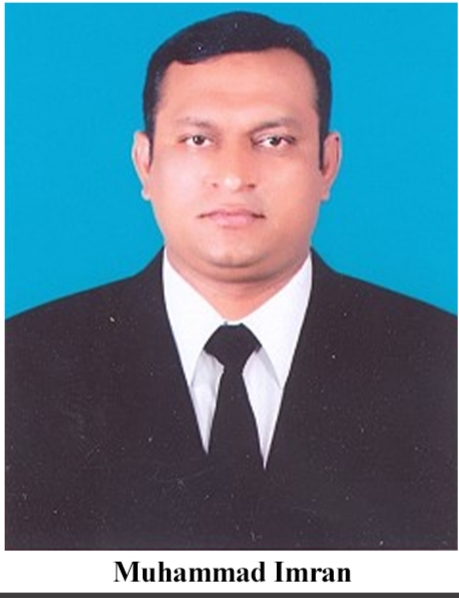
    By Muhammad Imran, Staff Member, SAHSOL-LUMS and Asma Rahmat, Final Year Law Student, SLC, Superior University and Muhammad Ameer Hamza, Final Year Law Student, SLC, Superior University    Historical Evolution and Constitutional Recognition: The right to a fair trial and due process is expressly guaranteed under Article 10A of the Constitution of the Islamic Republic of Pakistan, 1973, which was inserted through the Constitution (Eighteenth Amendment) Act, 2010. The Eighteenth Amendment was passed by the National Assembly on 8 April 2010, approved by the Senate on 15 April 2010, and received the assent of the President on 19 April 2010, whereupon it came into force. The insertion of Article 10A marked one of the most significant constitutional reforms introduced by the Eighteenth Amendment by expressly recognizing the right to a fair trial and due process as enforceable fundamental rights. Before the insertion of Article 10A, the Constitution did not contain an explicit guarantee of the right to a fair trial. Nevertheless, the superior judiciary consistently interpreted Articles 4, 9, and 25 of the Constitution as implicitly incorporating the principles of natural justice, procedural fairness, and due process. Article 4 guarantees the right of every individual to be dealt with in accordance with law, Article 9 protects the security of person, and Article 25 guarantees equality before the law and equal protection of the law. Through an evolving body of constitutional jurisprudence, the Supreme Court of Pakistan acknowledged that fairness in legal proceedings constituted an indispensable component of the rule of law and the protection of fundamental rights. However, the absence of an express constitutional guarantee often created uncertainty regarding the precise scope and enforceability of these procedural protections. The insertion of Article 10A fundamentally transformed Pakistan’s constitutional framework by elevating the right to a fair trial and due process into an independent and directly enforceable fundamental right. It converted principles previously implied through judicial interpretation into an explicit constitutional mandate, thereby strengthening the protection of individual liberties, reinforcing constitutional supremacy, and enhancing judicial oversight. Moreover, the amendment reflects Pakistan’s commitment to internationally recognized human rights standards, particularly Article 14 of the International Covenant on Civil and Political Rights (ICCPR), which guarantees the right to a fair and public hearing by an independent and impartial tribunal. Scope and Nature of Article 10A: Article 10A provides that: “For the determination of his civil rights and obligations or in any criminal charge against him, a person shall be entitled to a fair trial and due process.” The language of Article 10A demonstrates that its protection is not confined to criminal prosecutions. Rather, it extends equally to civil proceedings and all judicial, quasi-judicial, and administrative proceedings in which legal rights and obligations are determined. Consequently, the constitutional guarantee encompasses the entire continuum of justice, including investigation, arrest, detention, prosecution, adjudication, sentencing, appeal, and review. The constitutional requirement of “due process” ensures that every stage of legal proceedings must be conducted in accordance with established legal procedures, free from arbitrariness, discrimination, mala fide exercise of power, or abuse of authority. Essential Components of the Right to Fair Trial: The right to a fair trial under Article 10A embodies a comprehensive set of procedural safeguards that are indispensable for the administration of justice. These include the presumption of innocence until guilt is proved beyond reasonable doubt, the right to be informed promptly and clearly of the accusations, the right to adequate time and facilities to prepare a defence, the right to legal representation by counsel of one’s own choosing, the opportunity to examine and cross-examine witnesses, the right to produce evidence in defence, and the entitlement to a public hearing before an independent, impartial, and competent tribunal established by law. Equally important is the obligation that judicial decisions be reasoned, evidence-based, and transparent. The requirement to provide reasoned judgments promotes accountability, facilitates appellate review, enhances public confidence in the administration of justice, and ensures that justice is not only done but is also manifestly seen to be done. Relationship with Other Constitutional Guarantees: Article 10A does not operate in isolation but forms part of a broader constitutional framework safeguarding individual liberty and procedural justice. Article 4 guarantees that every individual shall be treated strictly in accordance with law, while Article 9 protects the fundamental rights to life and liberty. Article 10 provides specific procedural safeguards relating to arrest and detention, including the right to be informed of the grounds of arrest, the right to consult legal counsel, and the right to be produced before a magistrate within twenty-four hours. Article 25 further guarantees equality before the law and equal protection of the law. Read harmoniously, these constitutional provisions establish an integrated framework designed to prevent arbitrary state action, ensure accountability of public authorities, and uphold fairness throughout the legal process. Judicial Interpretation of Article 10A: The superior judiciary has consistently interpreted Article 10A as embodying both procedural and substantive dimensions of justice. The Supreme Court of Pakistan has repeatedly emphasized that compliance with Article 10A requires more than mere adherence to technical procedural formalities; rather, fairness must permeate every stage of legal proceedings. Investigations, collection of evidence, prosecution, trial, sentencing, and appellate review must all satisfy constitutional standards of due process. The courts have further held that statutory provisions or executive actions inconsistent with Article 10A are subject to constitutional scrutiny and may be declared unconstitutional where they undermine the fundamental right to a fair trial. Consequently, Article 10A has become a cornerstone of Pakistan’s constitutional jurisprudence, guiding judicial review in criminal justice, administrative law, disciplinary proceedings, and civil litigation. Constitutional Significance: The constitutional recognition of the right to a fair trial has significantly strengthened Pakistan’s legal system by providing an effective safeguard against arbitrary exercise of state power. It protects individuals against unlawful convictions, promotes judicial accountability, enhances public confidence in legal institutions, and reinforces the supremacy of the rule of law. Simultaneously, it serves as an important constitutional mechanism for balancing society’s interest in the effective prosecution of crime with the fundamental rights

  • Happy birthday Asian Nelson Mandela

    July 26th marks the birthday of an political prisoner who spend 1.5 decade in prison without conviction meaning he was innocent but was kept in prison unlawfully. But from prison torture cell he stood by the state. He is son of soil. His non-violent legacy is worth following by all political prisoners of world. This is the beauty of the modern world era that you can not hide anything from anyone. Welcome to present world best known as modern world era. This s all about technology and methods of gathering information compiling it and ultimately relaying it in more authenticated way. It took decades to evolve technology from computing, internet, gadgets and mobile revolution to the present world modern world era of artificial intelligence. Gen Z and Gen Alpha highly rely on AI tools. If you go through Google and AI tools and start searching term ‘political prisoners’ then you will find incumbent President of Pakistan Asif Ali Zardari as the one and only political prisoner in the history of world, who spent fourteen years and eight months in prison without any conviction. His tongue was cut and botched attempt was made to cut his neck and throat to kill him. He faced worst third degree torture in prison. He never gave a single call to his party workers to protest or attack the institutes. In 1990s and onwards United Nations Convention against Torture and Other Cruel, Inhuman or Degrading Treatment or Punishment (UNCAT) and Tokyo declaration were in place for necessary remedial but kudos to Asif Ali Zardari, he never opt for agitation. Asif Ali Zardari faced all kinds of tortures with patience and bravery and stood by the state of Pakistan under any circumstances, even when his wife two-times prime minister of Pakistan was assassinated in broad daylight in Rawalpindi on December 27, 2007, he gave he hope to nation ‘Pakistan Khappay’ Pakistan Zindabad Pakistan long live. He pledged that He with help of people of Pakistan and state institutions will make greater and stronger Pakistan. In 2008, when Asif Ali Zardari, assumed the charge of Presidency, he forgave all of his enemies and he announced general amnesty for all, in fact he also took initiatives to stop unfair and degrading treatment and third degree torture with others which he faced during his imprisonment. In year 2010, The President of Pakistan, Asif Ali Zardari, ratified the International Covenant of Civil and Political Rights (ICCPR) and the UN Convention against Torture and Other Cruel, Inhumane or Degrading Treatment or Punishment (CAT) and later it was his political party Pakistan Peoples Party which brought legislation Torture and Custodial Death (Prevention and Punishment) Act, 2022 to prohibit torture and other acts of cruel, Inhumane and degrading treatment. In year, 2023, It was also Sindh assembly/government to bring the legislation of the medico legal Act 2023. In his previous tenure of Presidency (2008-2013). He saved world from nuclear war in the wake of Mumbai attacks, strengthened ties with china and ensured revival of ties with Russia and Iran and started new era of relations with US and west on the grounds of equality as good friends. And his current tenure of Presidency is more vibrant and productive for people of Pakistan coupled with iron first lady Aseefa Bhutto Zardari’s input. Under his visionary leadership Pakistan is heading towards his dream of Greater Pakistan. May his 71st birthday bring Pakistan prosperity, peace and hub of global economy. Happy birthday Asian Nelson Mandela!

Leave a Reply

Your email address will not be published. Required fields are marked *