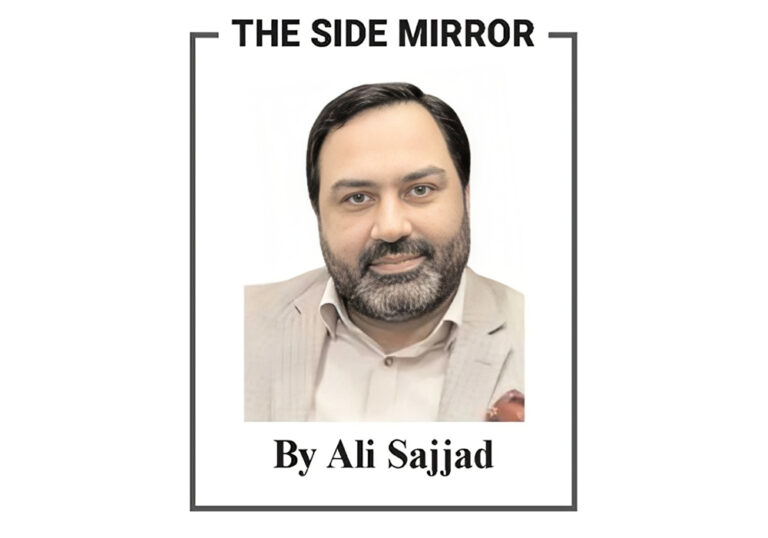
happy birthday asian

Happy birthday Asian Nelson Mandela

July 26th marks the birthday of an political prisoner who spend 1.5 decade in prison without conviction meaning he was innocent but was kept in prison unlawfully. But from prison torture cell he stood by the state. He is son of soil. His non-violent legacy is worth following by all political prisoners of world.

This is the beauty of the modern world era that you can not hide anything from anyone. Welcome to present world best known as modern world era. This s all about technology and methods of gathering information compiling it and ultimately relaying it in more authenticated way. It took decades to evolve technology from computing, internet, gadgets and mobile revolution to the present world modern world era of artificial intelligence.

Gen Z and Gen Alpha highly rely on AI tools. If you go through Google and AI tools and start searching term ‘political prisoners’ then you will find incumbent President of Pakistan Asif Ali Zardari as the one and only political prisoner in the history of world, who spent fourteen years and eight months in prison without any conviction. His tongue was cut and botched attempt was made to cut his neck and throat to kill him. He faced worst third degree torture in prison. He never gave a single call to his party workers to protest or attack the institutes. In 1990s and onwards United Nations Convention against Torture and Other Cruel, Inhuman or Degrading Treatment or Punishment (UNCAT) and Tokyo declaration were in place for necessary remedial but kudos to Asif Ali Zardari, he never opt for agitation.

Asif Ali Zardari faced all kinds of tortures with patience and bravery and stood by the state of Pakistan under any circumstances, even when his wife two-times prime minister of Pakistan was assassinated in broad daylight in Rawalpindi on December 27, 2007, he gave he hope to nation ‘Pakistan Khappay’ Pakistan Zindabad Pakistan long live. He pledged that He with help of people of Pakistan and state institutions will make greater and stronger Pakistan.

In 2008, when Asif Ali Zardari, assumed the charge of Presidency, he forgave all of his enemies and he announced general amnesty for all, in fact he also took initiatives to stop unfair and degrading treatment and third degree torture with others which he faced during his imprisonment. In year 2010, The President of Pakistan, Asif Ali Zardari, ratified the International Covenant of Civil and Political Rights (ICCPR) and the UN Convention against Torture and Other Cruel, Inhumane or Degrading Treatment or Punishment (CAT) and later it was his political party Pakistan Peoples Party which brought legislation Torture and Custodial Death (Prevention and Punishment) Act, 2022 to prohibit torture and other acts of cruel, Inhumane and degrading treatment. In year, 2023, It was also Sindh assembly/government to bring the legislation of the medico legal Act 2023.

In his previous tenure of Presidency (2008-2013). He saved world from nuclear war in the wake of Mumbai attacks, strengthened ties with china and ensured revival of ties with Russia and Iran and started new era of relations with US and west on the grounds of equality as good friends. And his current tenure of Presidency is more vibrant and productive for people of Pakistan coupled with iron first lady Aseefa Bhutto Zardari’s input.

Under his visionary leadership Pakistan is heading towards his dream of Greater Pakistan. May his 71st birthday bring Pakistan prosperity, peace and hub of global economy. Happy birthday Asian Nelson Mandela!
Similar Posts

  • Can Pakistan’s Students Compete in an AI-Dri…

    Artificial Intelligence is transforming the world at an unprecedented pace. From healthcare and agriculture to finance, education, and manufacturing, AI is changing how people work, learn, and solve problems. Countries across the globe are redesigning their education systems to prepare students for a technology-driven future. They are investing in coding, robotics, digital literacy, critical thinking, and innovation. Outdated Curriculum, Untrained Teachers, and Obsolete Classrooms Are Holding Back the Nation’s Future Pakistan, however, appears to be moving at a much slower pace. While developed nations are preparing children for careers that may not even exist today, millions of Pakistani students continue to study from outdated textbooks, rely on rote memorization, and learn in classrooms equipped with little more than blackboards and chalk. This growing disconnect raises an important question: How can Pakistan expect its youth to compete globally when they are being educated with a curriculum designed for the past? Education is the engine of economic growth and national development. Every successful nation has built its progress on a strong education system that evolves with changing times. Unfortunately, Pakistan’s school curriculum has not kept pace with technological advancement or the demands of the modern labour market. Although some reforms have been introduced over the years, many textbooks still contain outdated examples, obsolete concepts, and teaching methods that fail to develop analytical thinking and creativity. The world no longer rewards students simply for memorizing information. Search engines and AI can provide facts within seconds. What employers increasingly value are skills that machines cannot easily replace critical thinking, creativity, communication, collaboration, leadership, emotional intelligence, and the ability to solve complex problems. Yet our examination system still rewards memorization more than understanding. One of the biggest weaknesses of Pakistan’s education system is the gap between classroom learning and market needs. Universities and employers frequently complain that graduates lack practical knowledge and workplace skills. Many young people spend years earning degrees only to discover they are not prepared for modern careers. This mismatch contributes to unemployment despite rising educational qualifications. School curricula should therefore be redesigned around future skills. Coding, artificial intelligence, robotics, data literacy, entrepreneurship, financial education, climate science, environmental sustainability, cybersecurity, and digital citizenship should become part of mainstream education. These are no longer luxury subjects reserved for elite schools; they are becoming basic requirements for the global economy. Equally important is the way children are taught. Modern education encourages students to ask questions, conduct experiments, work in teams, debate ideas, and solve real-life problems. Unfortunately, many Pakistani classrooms continue to rely on one-way lectures where students quietly copy notes from the blackboard. Such methods may help children pass examinations, but they do little to prepare them for innovation or leadership. This is why teacher training deserves urgent national attention. Teachers cannot be expected to teach twenty-first-century skills using twentieth-century training. Continuous professional development should become mandatory for all teachers. They should receive regular training in digital learning, classroom technology, student-centred teaching, project-based learning, and modern assessment methods. A well-trained teacher can transform even a modest classroom, while an untrained teacher may struggle despite having excellent textbooks. Technology must also become an integral part of learning. Around the world, interactive digital boards, multimedia presentations, educational software, virtual laboratories, and online learning platforms are making classrooms more engaging and effective. In contrast, many government schools in Pakistan still depend on blackboards, chalk, and outdated teaching aids. There is nothing inherently wrong with blackboards they have educated generations of students. However, they cannot be the only teaching tool in an era when digital technology dominates every profession. Students who have never interacted with computers, digital content, or smart classrooms are already at a disadvantage before they enter higher education or the job market. Modernizing classrooms does not necessarily require replacing every blackboard overnight. Pakistan can adopt a phased approach. Schools should first be provided with reliable electricity, internet connectivity where possible, projectors, computers, and digital learning resources. Low-cost technology can significantly improve learning outcomes if combined with trained teachers and updated curricula. Education must also become more relevant to Pakistan’s own challenges. Students should learn about water scarcity, climate change, renewable energy, sustainable agriculture, disaster management, public health, financial planning, and responsible citizenship. Such knowledge not only strengthens the economy but also helps communities solve local problems. The government must increase investment in education. For many years, Pakistan has allocated a relatively small share of its national resources to education compared with what experts recommend for developing countries. Without sustained investment in schools, teacher development, educational technology, and curriculum reform, meaningful progress will remain difficult. Parents, educators, policymakers, universities, and the private sector all have a role to play. Education should not be shaped solely by examination boards. Industry leaders, technology experts, researchers, and experienced teachers should contribute to curriculum development so that what children learn reflects the realities of today’s world. Pakistan’s greatest resource is not its minerals or natural wealth, it is its young population. Millions of talented children possess the intelligence, curiosity, and determination to succeed. What they need is an education system that unlocks their potential instead of limiting it. Artificial Intelligence will reshape every sector of society during the coming decades. Countries that prepare their children today will lead tomorrow’s global economy. Those that continue teaching outdated syllabi will struggle to keep pace. The choice before Pakistan is clear. We can continue relying on obsolete textbooks, examination-driven learning, blackboards, and chalk while the rest of the world embraces AI and digital innovation. Or we can modernize our curriculum, invest in teachers, equip classrooms with appropriate technology, and prepare our children for the future. The future cannot be built with yesterday’s education. If Pakistan truly wants its youth to compete on the global stage, the time to reform our schools is not tomorrow it is today.

  • Ending the Insurgency in Months, Not Decades: What…

    I have stood in places most policymakers only read about in briefing papers. I spent time in Afghanistan during the Ashraf Ghani years, and the whole of 2010 in what was then Ex-FATA — a zone so dangerous that even seasoned aid workers called it the place where devils refuse to go. Later, I worked on rehabilitation efforts in Azad Jammu and Kashmir. None of what I am about to argue is theoretical. It is drawn from villages of EX-FATA I walked through, water I watched women carry for miles on donkeys, and children I saw crossing frozen ground without shoes while, an hour’s drive away, the Afghan elite lived behind walls that looked like fortresses. That contrast is the whole story of why the Taliban won. Over two decades, the Western-backed Afghanistan collapsed not primarily on the battlefield but in the space between Kabul’s donor-funded skyline and the rural provinces that never saw a rupee — or a dollar — of that money trickle down. Billions moved through Kabul. Almost none of it moved past it. Into that vacuum, the Taliban did not need to conquer the countryside. They simply had to show up where the state never had, and offer order where there was only neglect. In 2010, in FATA, I watched the same mechanism recruit teenage boys into suicide bombing — and the driving force was rarely ideology in its purest form. It was poverty, weaponised by men who understood exactly how to turn deprivation into obedience. I say this because Pakistan is now watching its own soldiers and citizens bleed in Balochistan, Khyber Pakhtunkhwa, and Azad Jammu and Kashmir, and we keep mistaking the symptom for the disease. In Balochistan, it is poor living conditions and the absence of work that push young men toward the BLA and other militant groups — not some inherited hatred of the state, but the calculation of someone with nothing left to lose. In KPK, mining activity that could employ tens of thousands sits frozen, and extremist preachers walk into that economic silence with a ready-made narrative of grievance, exactly as I watched happen in FATA 16 years ago. In Azad Jammu & Kashmir (AJK), where I subsequently served on the front lines of post-disaster rehabilitation, the work executed under the leadership of General Musharraf and Lieutenant General Nadeem was nothing short of extraordinary. They transformed the region—erecting world-class infrastructure that spanned rural housing, modern hospitals, and state-of-the-art universities. Having witnessed his work firsthand, I can unhesitatingly attest that Lt. Gen. Nadeem exemplified the highest standards of professional integrity and selfless duty in the field. Regrettably, subsequent regimes, particularly the current political regime, failed to capitalize on this monumental achievement. Worse still, political negotiators deliberately suppressed these successes under strict orders to deny General Musharraf the credit he rightly deserved It was neither the foreign conspiracies spun about Modi nor the shadow plays attributed to Netanyahu that brought us to our knees—it was the quiet, deliberate treason of our own. The true architects of our ruin sat comfortably in our own cabinets, presiding over the Ministry of Planning and the Ministry of Petroleum. Let the record be unsealed, and let the ledger of corruption show the reality of our sabotage. While the global solar revolution was gaining unstoppable, undeniable momentum as far back as 2012, our planners turned a blind eye to the sun. Instead, they peddled dirty imported coal and structurally flawed LNG infrastructure, deceitfully masquerading them as national “game-changers.” They were not mistakes; they were choices. They willfully shackled this nation to predatory FSRU contracts, riddled with toxic force majeure loopholes that bled our public treasury dry to enrich foreign syndicates and domestic middlemen. Their actions expose a chilling, unvarnished truth: capital was never the bottleneck. Financial constraints were a myth. The true poverty of this nation was the shameless, treasonous lack of political will to break free from the payout loop and build a sovereign future. According to Pakistan’s own energy regulator, NEPRA, consumers were burdened with roughly Rs1.81 trillion in capacity payments in fiscal year 2024–25 alone — fixed payments to power producers simply for having plants available, regardless of whether they generated a single unit of electricity. That figure made up 61 percent of the country’s entire power purchase cost. On a per-unit basis, Pakistanis paid roughly Rs14.3 for capacity alone, compared to about Rs9.0 for the energy actually consumed. Multiply that pattern across recent years and the country has handed over trillions of rupees to keep idle machinery on standby, while Pakistani manufacturers pay electricity rates nearly double what their competitors pay in India and Vietnam, hollowing out the very industries that could have employed the young men now being recruited by militants instead. Even a third of what has been paid out in capacity charges over the past five years — redirected honestly into youth employment programs in KPK, Balochistan, and AJK — would have done more to end this insurgency than any military operation conducted so far. This is not sentiment. It is arithmetic that any finance ministry could run in an afternoon. And here the accountability question becomes unavoidable. The man who, as federal minister for petroleum and natural resources from 2013 to 2018, championed the LNG import architecture that helped lock Pakistan into the very capacity-payment structure now crushing consumers, later became Prime Minister of Pakistan. He subsequently faced formal NAB proceedings, an indictment, and questions in court over unexplained deposits connected to that period — a matter of public record, still contested by his supporters as political victimization, but investigated nonetheless by the country’s own anti-graft body. I raise this not to relitigate one man’s guilt or innocence in a courtroom I am not sitting in, but to make a structural point: the same energy policy architecture that produced Pakistan’s capacity-payment crisis was built, negotiated, and defended by people who moved seamlessly from ministry to premiership to private life, largely untouched by the consequences their decisions imposed on

  • Why Trump welcomed Makkah pact?

    The signing of the Mecca Joint Defence Agreement by Pakistan, Saudi Arabia and Türkiye on August 7 has opened a new and potentially consequential chapter in the security architecture of Asia and the Gulf. The agreement states that an armed attack against any one of the three countries will be regarded as an attack against all three, while envisaging deeper military coordination, joint exercises, intelligence cooperation and collaboration in areas including drones, electronic warfare, artificial intelligence and defence production. Türkiye has also indicated that the framework could eventually be expanded to other countries. What makes the development particularly significant is not simply the agreement itself, but the reaction from Washington. President Donald Trump has welcomed the pact as a “big, bold, important first step” towards regional countries being able to defend themselves more meaningfully. His words raise a larger strategic question, is the United States beginning to transfer a greater share of the burden of confronting Iran to regional powers, particularly the Gulf and Asian countries? Or making this region as its main combatant force against Iran? And what are the possible next steps? The answer is more complicated than a simple American withdrawal. Washington is unlikely to abandon the Middle East, its military assets, intelligence networks, diplomatic influence or relationships with Gulf states. What appears to be changing is the distribution of responsibility. The Trump administration’s broader philosophy of burden-sharing suggests that countries possessing substantial financial, military and strategic resources should assume greater responsibility for their own security rather than expecting Washington to carry the entire cost. In that sense, America may not be handing over the war against Iran, but it may be regionalising the consequences of that war. The distinction is crucial. A regionalised conflict can become much more dangerous because the number of actors involved increases. At the same time, regional ownership of security could eventually create a framework in which regional states themselves negotiate a new balance rather than remaining permanently dependent on an external power. The Pakistan-Saudi relationship provides the foundation for this transformation. The two countries signed their Strategic Mutual Defence Agreement in September 2025, committing themselves to collective security. The new Mecca agreement effectively brings Türkiye into a much broader strategic framework. Each country brings a different strategic asset. Saudi Arabia possesses enormous financial resources, energy influence and geographical importance. Türkiye brings one of the region’s most capable conventional militaries, a rapidly developing indigenous defence industry, drone technology and NATO experience. Pakistan brings a large and experienced military establishment and, uniquely among Muslim-majority states, a nuclear deterrent. The combination therefore has significance beyond its three signatories. It links the Gulf, South Asia and the eastern Mediterranean in a single security conversation. For Saudi Arabia, the agreement represents strategic insurance. Riyadh has increasingly understood that sophisticated American weapons alone cannot eliminate vulnerabilities created by missiles, drones, cyberwarfare and attacks on energy infrastructure. Diversifying its security relationships allows Saudi Arabia to maintain its partnership with Washington while simultaneously developing alternative sources of military capability. For Türkiye, the pact fits into Ankara’s long-standing ambition to exercise greater strategic autonomy. Türkiye remains a NATO member, but it has increasingly demonstrated that it does not want its foreign policy to be dictated by any single great power. A defence relationship stretching from Türkiye through Saudi Arabia to Pakistan expands Ankara’s influence across two strategically vital regions. For Pakistan, however, the equation is much more delicate. Pakistan has the opportunity to emerge as an important security bridge between South Asia and the Gulf, but it also has a geographical reality that cannot be ignored, it shares a border with Iran. Islamabad cannot afford to treat Tehran simply as an enemy without exposing itself to enormous security, economic and diplomatic risks. Pakistan therefore faces the most difficult balancing act of the three. Its relationship with Saudi Arabia is strategically important. Its relationship with Türkiye is deepening. Its partnership with China remains fundamental. Its relationship with the United States is economically and strategically significant. Yet Iran is its immediate western neighbour, with which it shares a long border and important diplomatic and economic interests. This makes Pakistan potentially more valuable as a mediator than as a frontline combatant. If Islamabad can defend Saudi Arabia while simultaneously maintaining communication with Tehran, it could acquire an extraordinary diplomatic role. Pakistan could become one of the few countries capable of speaking to the Gulf, Iran, Türkiye, China and Washington at the same time. That possibility is already visible in Pakistan’s efforts to maintain diplomatic engagement with Iran while navigating its defence commitments to Saudi Arabia. The Iranian response will be critical. Although the three countries have described the agreement as defensive rather than an alliance directed against a particular state, Tehran will inevitably examine its military implications. A coordinated Saudi-Turkish-Pakistani security structure potentially means improved intelligence, air defence, military exercises, drone capabilities and defence-industrial cooperation around Iran’s strategic neighbourhood. But this could produce two very different outcomes. The first is escalation. Iran could interpret the emerging architecture as an attempt to encircle it and respond by strengthening its missile forces, regional partnerships and asymmetric capabilities. The Gulf could then become increasingly militarised, with every defensive measure interpreted by the other side as preparation for aggression. The second possibility is deterrence leading eventually to diplomacy. If Iran concludes that it cannot achieve regional dominance through military pressure, while Saudi Arabia and other Gulf states conclude that permanent dependence on American protection is neither sufficient nor sustainable, both sides may eventually have an incentive to negotiate a regional security arrangement. That would be the more constructive outcome. The danger, however, is that the emerging alliance could be interpreted through a sectarian lens. Saudi Arabia, Türkiye and Pakistan are all Sunni-majority states, while Iran is the region’s principal Shia power. If the new security architecture becomes identified as a Sunni military bloc confronting Shia Iran, it could revive precisely the sectarian competition that has destabilised the Middle East for decades. Pakistan should be particularly careful

  • |

    Does your native language control how you think?

    With over 7,000 distinct human languages spoken across the globe today, humanity communicates through fascinating sentence structures. A compelling debate has captivated thinkers for decades. Does the language you grow up speaking dictate the limits of what your mind can comprehend? This captivating idea lies at the heart of the Sapir-Whorf hypothesis. A theory that continues to provoke vibrant discussions across linguistics, philosophy, and cognitive science. The Power of Vocabulary and Perception The hypothesis was formulated in the early 20th century by linguists Edward Sapir and Benjamin Lee Whorf. It’s often referred to as linguistic relativity or linguistic determinism. They propose that the structure of a native language fundamentally shapes its speakers’ worldview and cognitive capacity. If a concept or object lacks a dedicated word in a person’s language, that person cannot truly perceive, categorize or conceptualize it. Consider how different cultures classify colors. Some languages possess dozens of specific terms for distinct shades. Whereas,  others operate with only a couple of basic terms distinguishing between light and dark tones. According to strong linguistic determinism, a speaker whose native tongue lacks a dedicated word for green would struggle to perceive a green leaf as distinct from yellow. Similarly, emotional vocabularies vary widely across cultures. German famously uses the word Schadenfreude to describe taking pleasure in someone else’s misfortune. According to Sapir-Whorf theory, an English speaker whose language lacks an exact single-word equivalent would supposedly find it difficult to recognize or isolate that specific emotional state within themselves. Why the Concept Fascinates Us? It is easy to see why the Sapir-Whorf hypothesis captured public imagination. The notion that our mother tongue acts as a unique way through which we view reality is deeply romantic. Philosophically, the theory suggests that the world contains thousands of distinct cognitive universes. If language entirely dictated thought, cross-cultural understanding would face profound barriers. It is so as the speakers of different languages would operate inside fundamentally incompatible mental frameworks. In semantic studies, labeling objects and experiences allows humans to organize chaotic sensory input efficiently. Giving a name to a precise group such as distinguishing toddlers, teenagers and senior citizens helps us categorize society into recognizable stages. The hypothesis demonstrated that naming things provides cognitive shortcuts. Such a naming method makes specific distinctions far easier to reference and discuss in daily life. Why Modern Science Rejects Strong Determinism Despite its initial popularity, modern linguistics and cognitive scientists reject strong linguistic determinism. The fundamental flaw in the hypothesis rests on a misunderstanding of the relationship between mind and speech. Language does not produce thought. Rather, human thought drives the creation and evolution of language. When people encounter new experiences, foods or technologies, they do not remain silent simply because they lack pre-existing terminology. Instead, humans spontaneously create new phrases. They adapt existing terms or borrow words from other cultures to describe what they have experienced. An English speaker can easily understand and feel pleasure at a rival’s failure without ever having heard the German word Schadenfreude. While English uses blue for both dark and light shades. Whereas Italian maintains separate primary words (blu and azzurro). English speakers are fully capable of seeing the difference between a midday sky and the deep ocean. Human cognition precedes language. Speech serves as a flexible tool designed to communicate human experiences, not a rigid cage that imprisons cognitive ability. The Lasting Value of Sapir-Whorf   The Sapir-Whorf hypothesis retains great value even if its most radical claim has been disproven. It paved the way for weak linguistic relativity. The claim further explores how language subtly influences cognition, memory and visual attention without imposing hard limits on intellect. Ultimately, Sapir and Whorf inspired generations of researchers to explore the mysterious connection between human culture, language and the mind.

  • The Loaded Sponge

    We Were Forewarned, Then Why Are We Drowning, and What Lies Ahead In March, when the glaciers were shedding their winter whites too early and the northern valleys stood bare against a sky that should have held snow, I wrote that the coming monsoon would test us. The National Disaster Management Authority had foreseen rains twenty-two to twenty-six percent heavier than the floods that killed more than a thousand souls the year before. Our embankments were still broken. Our protocols were still asleep. It is late July now. The test has begun. Riverine area dwellers stand at the edge of swollen rivers, watching the water turn from brown to something near black, carrying the upstream soil. There is that familiar murmur of disbelief from government corridors—the same soft gasp that follows every flood, as if the water had not been whispering its arrival for months. But the water does not whisper to those who will not bend their ear. It speaks in the language of saturated earth, and we have heard it before. We have simply chosen, again and again, not to listen. We were forewarned by the agencies. We were forewarned by the science. And we were forewarned by the very land beneath our feet—the old, patient land that absorbed until it could absorb no more, and is now quietly drowning. Yet when the skies opened, we were caught unprepared. And the heavy heart of Bhadoon is still to come. What the Old Farmers Knew For generations, the farmers of the Indus Basin have spoken of Sawan and Bhadoon not as months, but as temperaments. Sawan, the early monsoon of July and mid-August, is the gentle guest who fills the earthen pot. Bhadoon, the late monsoon of August and September, is the guest who arrives heavy with sorrow, and finds the door already swollen shut. There is an old understanding in the villages of Punjab and Sindh: if Sawan has been generous—if the rains have fallen day after day without rest—then Bhadoon must be received with care. Not because Bhadoon brings more rain, but because the earth, by the time Bhadoon arrives, has already absorbed all it can hold. The soil is no longer soil. It is a clay pot filled to the lip, trembling at the brim. The next drop does not nourish. It overflows. Modern science calls this Antecedent Moisture Condition. During a gentle Sawan, the land breathes; the rivers rise slowly, politely. But when the early rains come without pause, the land stops breathing. Its lungs fill with water. What was once a sponge becomes something heavy, something waiting. In dry years, only a fraction of rainfall becomes dangerous runoff. But once the soil is saturated, eighty to ninety-five percent of every new drop becomes immediate floodwater. The sponge has no choice. It must release what it cannot hold. It weeps. Nature does not betray us. It simply does what it has always done. It is we who forget the earth, who build our homes upon its floodplains and then feign surprise when the water remembers its ancient path home. The Water Remembers This is not a new story. The water has told it before, and it has told it gently, and we have not listened. In 1955, the Ravi rose with a roar that split the embankments of Lahore’s periphery. The river had been primed for weeks—day after day of July and August rain had filled the soil until the ground could no longer hold the September deluge. The peak at Madhopur was the highest ever recorded. The city woke to find its edges softened, dissolved, gone. In 1992, the same priming filled Mangla and Tarbela to their brims by mid-August. When the early September rains came, Tarbela’s flood-peak reduction capacity collapsed from thirty percent to two percent. The rest surged into the lower plains, uninvited and sorrowful. The engineers knew what was coming. The farmers had only the sound of the river changing pitch—a sound every old farmer knows, a sound that means it is time to gather the children and climb. In 2022, Sindh became an inland sea. Nearly a meter of rain fell on ground that was already thirty percent wetter than it should have been. The water had nowhere to go but into homes, into fields, into the places where people had built their lives on the quiet assumption that the land would always absorb their troubles. The years that followed did not forgive us. In 2023, the Chenab and Jhelum catchments drank until they were full, and when Bhadoon came heavy in September, communities that had barely recovered from 2022 found themselves underwater again. In 2024, the same quiet sorrow played across Sindh and Balochistan—early rains primed the soil, late rains broke the banks, and the katcha communities woke to find their world softened and dissolved. These were not catastrophes on the scale of 2022, but gentle, persistent reminders that the mechanism does not rest, and that a loaded sponge does not care whether the year is famous or forgotten. Then came 2025. The NDMA’s own reports confirmed what the old farmers could have recited without a single instrument: the rain fell on ground that was already wet. The system had no buffer, no forgiveness, no room for error. One thousand and thirty-seven people died. More than two hundred and seventy-five of them were children. Nearly seven million were affected. Three million displaced. Two hundred and twenty-nine thousand, seven hundred and sixty-three homes damaged or destroyed. These are not estimates. These are the quiet names and numbers of a nation that has grown accustomed to forgetting. Now, in 2026, the NDMA warns of an even more intense monsoon. The early snowmelt has already fed the rivers before the clouds even gathered. The reservoirs are high. The soil is full. The sponge is loaded. And Bhadoon has not yet arrived. The Quiet After the Warning The tragedy of this year is not that we did not know. It is that

  • How long can a human really live?

    I have always been curious about one big question. How long can a person actually live? I am not talking about wishful thinking. I mean real science. What does nature actually allow? Well, I finally found some answers, and they surprised me. In a blog post, published in Minute Mirror, it is said that scientists say there is a natural limit to how long a human body can survive. No one knows the exact number, but a new study gives us a rough idea. According to this research, a person could possibly live as long as 194 years. Yes, you read that right. Nearly two centuries. But before you get too excited, let me tell you, reaching that age would be extremely rare. Almost impossible in real life. I will be honest with you. I love the idea of living a long life. Who does not? I want to see my grandchildren grow up. I want to watch how the world changes over the years. I want more time with the people I love. But when I read that a person could live up to 194 years, I could not help but smile and shake my head at the same time. That is too long for me. I do not think I want to walk this earth for two hundred years. Imagine outliving everyone you know, again and again. That sounds tiring, not exciting. Now let me explain what the scientists actually found. The study was published in a well-known science journal called Nature. Researchers looked closely at our DNA and genes. They wanted to understand how these tiny building blocks change as we grow older. They found something interesting. Many of these genetic changes are harmless. Our bodies handle them just fine. But some changes are not so friendly. They damage our cells. Over time, this damage builds up. And this is what leads to age related diseases, the kind that becomes more common as we grow old. Here is the tricky part. Scientists say these genetic changes cannot be completely stopped. They happen naturally when our cells divide, which is a normal part of life. But they can also be caused by outside things, like viruses, certain chemicals, and even the sun. Yes, the same sunlight that gives us a good tan can also quietly damage our cells over the years. To figure out the maximum human lifespan, the researchers built a scientific model. They included the signs of aging that can be reversed, but they kept the permanent genetic damage in place, since that part cannot be undone. The result of their model suggested that even with future advances in slowing down aging, the longest a human could likely live would be somewhere between 146 and 194 years. I found one detail especially interesting. Some organs, like our skin and liver, are good at replacing old and damaged cells. They repair themselves regularly. But our heart and brain are different. They do not replace most of their cells. This makes any genetic damage in these two organs much harder to fix. In a way, our heart and brain carry the heaviest burden of aging. So where does that leave us today? Right now, the longest confirmed human lifespan belongs to a woman named Jeanne Calment from France. She lived to be 122 years old and passed away in 1997. She remains the oldest verified person in recorded history, and no one has matched her record since. As I think about all of this, I remain hopeful. Science has surprised us before, and I believe it will surprise us again. Maybe one day, researchers will find new ways to slow down aging even further, or to help our hearts and brains repair themselves the way our skin does. Who knows, the age limit we know today may not be the final word. But for now, I will settle for a good, healthy, and meaningful life. Not necessarily the longest one.

Leave a Reply

Your email address will not be published. Required fields are marked *