mirwaiz slams demand
| |

Mirwaiz slams demand to end refugee seats in AJK

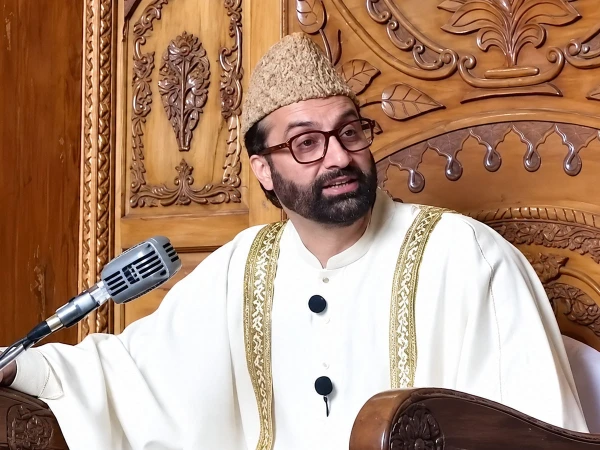
Hurriyat leader Mirwaiz Umar Farooq has strongly opposed calls to abolish the reserved legislative seats for Kashmiri refugees living in Pakistan, saying the voting rights of displaced Kashmiris are protected by constitutional and democratic principles and must not be undermined.

His remarks came after reports that a banned Action Committee had demanded the abolition of seats reserved for refugees from Indian-administered Kashmir in the Azad Jammu and Kashmir (AJK) legislative framework. The proposal has sparked debate and criticism from political and social circles on both sides of the Line of Control.

In a statement, Mirwaiz said millions of Kashmiri refugees residing in Pakistan have a legitimate constitutional and democratic right to participate in the electoral process, adding that these rights cannot be ignored or sacrificed.

“The voting rights of Kashmiri refugees are an integral part of their constitutional and democratic rights,” he said, stressing that displaced Kashmiris deserve equal respect, representation and protection.

Mirwaiz argued that the rights of refugees are inseparable from the collective rights of the people of Jammu and Kashmir. He maintained that any political movement claiming to represent Kashmiris must ensure equal representation for residents of every region and community without discrimination.

He warned that protecting the interests of one group should never come at the cost of another group’s constitutional rights. According to the Hurriyat leader, justice, equality and mutual respect must remain the guiding principles in resolving issues affecting the people of Jammu and Kashmir.

Calling for dialogue, Mirwaiz urged all stakeholders to engage in consultations and meaningful discussions to find a balanced and widely acceptable solution. He said consensus-based decision-making was essential to preserving unity and protecting the democratic rights of all Kashmiris.

The statement also criticized attempts to alter the existing representation of Kashmiri refugees, arguing that such moves risk deepening divisions rather than strengthening democratic participation.

The controversy over refugee seats has emerged during a politically sensitive period in Azad Jammu and Kashmir, with electoral issues drawing increased public attention. While supporters of the proposal argue that reforms are needed, opponents insist that any changes affecting refugee representation must respect constitutional guarantees and the political rights of displaced Kashmiris.

Mirwaiz’s intervention adds a prominent voice to the debate, highlighting the need for dialogue and consensus rather than unilateral decisions on issues involving the constitutional and democratic rights of Kashmiri refugees.


Similar Posts

  • | |

    Ex-army chief Qamar Bajwa undergoes Dubai check-up

    Former Chief of Army Staff General (retd) Qamar Javed Bajwa has been shifted to the United Arab Emirates for further medical examination and treatment. Family sources said Bajwa is currently in the UAE. He travelled abroad after completing his initial treatment in Pakistan. The former army chief was examined by a team of specialist doctors in Dubai. The doctors carried out a detailed medical check-up. According to family sources, Bajwa’s condition has improved considerably after the medical examination. However, the results of some important medical tests are still awaited. Doctors will review the remaining reports before giving their final recommendations. His further treatment and return to Pakistan will depend on the doctors’ advice. Family sources said Bajwa will stay in the UAE for a few days. He will remain with his son during his stay in the country. A final decision about his return to Pakistan will be taken after the doctors review all his medical reports. His family is also awaiting the doctors’ further instructions. Bajwa had suffered serious injuries around four and a half months ago. He reportedly slipped and fell at his residence. The accident caused injuries to his head and back. He was immediately shifted to Combined Military Hospital (CMH) Rawalpindi for treatment. The former army chief remained admitted to the hospital for around three weeks. He received treatment under the supervision of military doctors. At the time, the Inter-Services Public Relations (ISPR) officially confirmed that Bajwa had been injured after falling at his residence. The military’s media wing said he was receiving treatment at CMH Rawalpindi. His condition was monitored by doctors during his stay at the hospital. After completing his initial treatment in Pakistan, Bajwa later travelled to the UAE for further medical assessment. His current stay in the UAE is expected to continue until doctors complete their assessment. The results of the pending tests will help determine the next course of treatment. Family sources have not provided a specific date for his return to Pakistan. They said the decision will be made after consultation with doctors. General (retd) Qamar Javed Bajwa served as Pakistan’s Chief of Army Staff from November 2016 to November 2022. He retired from the position after completing his tenure in November 2022.

  • |

    Tom Holland breaks down his mindset during 2019 Spider-Man crisis

    Spider-Man: Brand New Day finally arrived in theatres on July 31. With the film now out, Tom Holland has opened up about what really went on behind the scenes to get it there. Back in 2019, Sony and Disney hit a major roadblock. Their co-financing deal for the Spider-Man franchise fell apart. For a while, it looked like the character’s future on screen was genuinely uncertain. Holland is said to have stepped in personally during this period. He reportedly reached out to both studios in hopes of smoothing things over. As part of this effort, he asked for Disney CEO Bob Iger’s email address. That contact reportedly made a direct conversation between them possible. Fan outrage played a role too. Combined with Holland’s own efforts, the backlash is believed to have pushed both companies back to the table. Eventually, they worked out a new arrangement. Years later, Holland revisited that chapter during a conversation with Josh Horowitz on the Happy Sad Confused podcast. Horowitz asked him to describe what was going through his mind during that uncertain window in 2019. He noted it came right in the middle of an otherwise strong run for the franchise. Holland responded honestly. He said he felt confused more than anything else. According to him, everything between the two studios had seemed fine up until that point. He pointed to the strong response to the first solo film. He also mentioned the character’s appearance in Civil War, which he felt had gone down well with audiences. He added that he never lost confidence during that time. Holland said he always believed the next film would turn out great, regardless of the studio drama happening behind the scenes. He also clarified that he never felt personally pushed aside by either studio. Instead, Holland compared the situation to a disagreement between parents. He said both studios eventually spoke things through and recognised how well the character could work for each of them. He admitted he still isn’t entirely sure of every detail from that period. Still, he said his confidence in the character never wavered. He also credited collaborators Amy Pascal, Tom Rothman, and Rachel O’Connor for keeping things steady throughout. With the film now finally playing in cinemas, Holland’s comments give fans a candid look back. They show just how close Spider-Man’s future once came to falling apart, and how it eventually came together after all.

  • NA Committee calls for better support for children with Dyslexia

    Islamabad: More than two years after the approval of the Dyslexia Special Measures Law, the National Assembly Standing Committee on Federal Education and Professional Training has raised serious concerns over the slow progress in implementing measures designed to support children facing learning difficulties. During the 25th meeting of the National Assembly Standing Committee on Federal Education and Professional Training, chaired by Ms. Mahtab Akbar Rashdi, MNA, the committee reviewed the progress of recommendations made for children with dyslexia and questioned whether the required rules, support systems and professional facilities had been fully developed. The issue was brought before the committee after Dr. Shazia Sobia Aslam Soomro, MNA, presented the report of the sub committee on dyslexia. She informed the committee that a meeting on the subject was held on 19 February 2024 at the National Assembly regarding the Dyslexia Bill passed in 2022. She stated that officials had earlier informed the committee that work on implementation was still in progress. Dr. Shazia highlighted that dyslexia is often misunderstood as a disease, while it is actually a learning condition that requires proper identification and specialised support. She stressed the need for trained experts who can identify children with dyslexia and help them continue their education effectively. The committee had earlier recommended that the Ministry of Federal Education and Professional Training provide details about the implementation status of the Dyslexia Special Measures Law, including rules, regulations, screening reports and future plans. It also called for the creation of a national database and the availability of trained remedial therapists and educational psychologists to support affected children. The committee also recommended that examination boards develop special arrangements for students with certified dyslexia and related learning difficulties so they can receive appropriate support during examinations. Dr. Shazia further recommended bringing all major education stakeholders together, including the Higher Education Commission, National Vocational and Technical Training Commission, Allama Iqbal Open University, Federal Board of Intermediate and Secondary Education, Inter Boards Coordination Committee, National Institute of Psychology, National Book Foundation and National Curriculum Council. She said that joint efforts were necessary to prepare proper rules and regulations and start practical work under the law. Chairperson Ms. Mahtab Akbar Rashdi directed that the recommendations should officially be sent to the Ministry of Federal Education and Professional Training. She said the Ministry should review the recommendations and provide information about implementation progress or any concerns. A ministry representative informed the committee that some steps had already been taken and a report on completed and ongoing actions would be submitted. The official also stated that remedial therapy services had already been started in government schools. Committee members also suggested involving organisations already working voluntarily for children with learning difficulties so their experience and feedback could help improve the system. The committee’s discussion highlighted concerns over the lack of a complete national system for identifying children with dyslexia, shortage of trained specialists and the need for stronger coordination between education institutions and government departments. The committee stressed that children with learning difficulties should not be ignored and must receive proper educational support, trained professionals and suitable examination facilities so they can achieve their full potential.

  • |

    NCCIA under fire over social media figures, PECA cases and newspaper column complaint

    Islamabad: A controversy has erupted over the National Cyber Crime Investigation Agency (NCCIA) after a Senate committee questioned differences in social media statistics, delays in transferring PECA cases and the registration of complaints linked to a newspaper column. The Senate Standing Committee on Information and Broadcasting has sought answers from NCCIA over claims that figures shared earlier with lawmakers were later described as incorrect by its own officials. The committee questioned how NCCIA could provide one set of figures before the Senate and later have its officials reportedly distance themselves from those numbers. The dispute mainly focused on claims about fake social media accounts and content removal requests. Earlier figures suggested that around 20 percent of social media accounts were fake, but questions were raised after officials allegedly suggested that the number was much lower. The committee also questioned claims that 83 percent of content removal requests received responses from social media companies. Officials explained that a response from platforms does not always mean the request was accepted or action was taken. They said some requests were accepted while others were rejected, but companies provided replies. During the meeting, NCCIA officials defended the figures and said the data was publicly available online. They said the 83.64 percent response figure related to Meta was available through official reports and could be verified by anyone through the internet. Officials said if journalists had checked the available reports before publishing news, the confusion could have been avoided. They also explained that Pakistan’s response rate was compared with India’s figures, noting that both countries’ data was available online. Another major issue discussed was the transfer of cases under the Prevention of Electronic Crimes Act (PECA). The committee questioned why provinces had not transferred all relevant cases to NCCIA after PECA powers were shifted. NCCIA officials informed the committee that hundreds of cases existed across Pakistan. According to the briefing, Islamabad had 19 cases, Punjab had 268, Khyber Pakhtunkhwa had 47, Balochistan had 7, Sindh had 21, Azad Jammu and Kashmir had 10, while Gilgit Baltistan had none. The total number mentioned was 372 cases across Pakistan. Officials said only nine cases from Sindh Police had so far been transferred to NCCIA, while many others were still pending. Committee members questioned why cases already before courts or under trial were not being transferred. They said earlier instructions had been issued to provincial authorities to move investigation stage cases to NCCIA, but the orders had not been fully followed. The committee decided to again contact provincial police chiefs and legal authorities to ask why transfers were delayed. The most sensitive discussion came a complaint related to journalist Toufeeq Butt’s column published in Daily Nai Baat. The column titled “Bero Corrupts” became controversial after the Pakistan Administrative Services Association filed a complaint. The complainant argued that the term used in the article was insulting and damaging to the reputation of civil servants. NCCIA officials clarified that no case had been registered against the writer. They said only a complaint was received and an inquiry process started to hear both sides. Toufeeq Butt was issued notices to provide his explanation, but officials said he did not appear after receiving two notices. The committee debated whether NCCIA should handle newspaper content or if such matters should go to press related institutions. Members warned that allowing every complaint against newspapers and journalists to reach the NCCIA could create a flood of cases. They pointed out that newspapers are regulated by the Press Council while television is handled by PEMRA. Some members argued that asking for an explanation differed from taking legal action. They said every person has the right to present their side before any decision is made. Others warned that using cybercrime laws for newspaper related matters could open a new door for pressure against journalists. Chairman directed NCCIA to refer both the complaint and the complainant to the Press Council of Pakistan, being the appropriate forum to examine the published column and decide the matter.

  • UK Prime Minister Keir Starmer Resigns Amid Pressure from Labour Party

    Keir Starmer announced his resignation as Leader of the Labour Party and Prime Minister of the United Kingdom on Monday, visibly emotional as he acknowledged that he had lost the confidence of his parliamentary group to continue governing. His appearance came after a weekend of reflection on his political future, besieged by pressure following a […]

  • Royally Donated Targeted Cancer Drug Delivered For Universal Healthcare Patients In Thailand

    BANGKOK, Thailand — The Chulabhorn Royal Academy (CRA) has completed the inaugural delivery of a royally bestowed targeted cancer medication to the National Health Security Office (NHSO), marking a historic milestone in Thailand’s public healthcare system. The delivery of Imcranib 100 paves the way for nationwide, equitable access to the life-saving treatment for patients enrolled […]

Leave a Reply

Your email address will not be published. Required fields are marked *