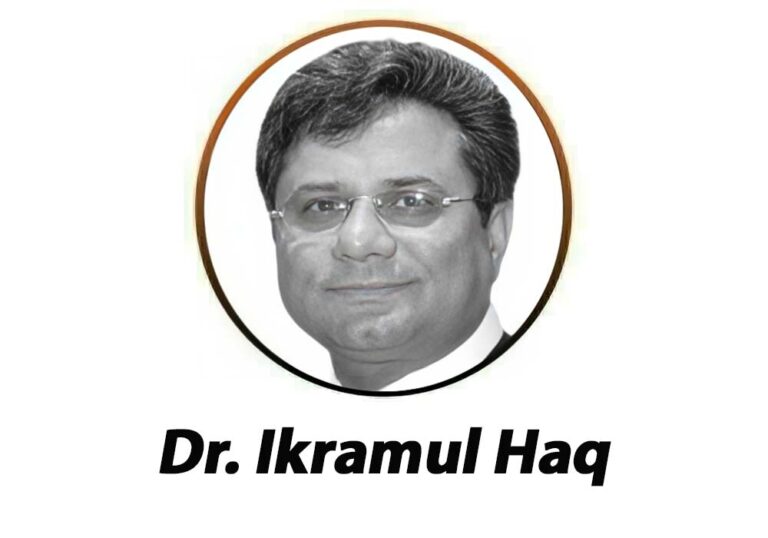
second darkest day

Second Darkest Day For Kashmiris

Kashmiris including men, women, youth and children who underwent the second longest lockdown, complete curfew, for a pretty long time, are observing it as the second darkest day in their history on August 05, 2026.

On August 05, 2019, the Indian Government of Prime Minister Narendra Modi had quite unexpectedly, illegally and unilaterally scrapped the special status of Jammu and Kashmir under Article 370 of the Indian Constitution making it an integral part of the country. These measures had ended the occupied territory’s limited autonomy and sought to alter the internationally recognized disputed status of Jammu and Kashmir in blatant violation of the United Nations Security Council resolutions and international law. The second darkest day in Kashmiris’ history is now better known and is observed every year on August 05 as Youm-e-Istehsal (Day of Exploitation). The observance of Youm-e-Istehsal not only serves as a reminder of the continued sufferings of the Kashmiri people but also reaffirms Pakistan’s unflinching solidarity with their just struggle for the realization of their right of self-determination. Pakistan’s civil and military leadership has all along been extending moral, diplomatic and political support to the Kashmiris in their just and indigenous freedom struggle.

Kashmiris on both sides of the Line of Control (LoC), around the world as well as the Pakistan government and the people are observing yet another Youm-e-Istehsal on August 05, 2026 to mark the 7 years of quite regretful, deplorable Indian siege of its illegally occupied Jammu and Kashmir valley and denying the Kashmiris their birth right of self-determination in accordance with the UN Security Council resolutions.

Needless to mention here that Kashmir conflict continues to remain as perhaps the oldest lingering and unresolved international dispute dating back to 1947. It also continues to be recognized by the world body, the United Nations, as an issue requiring peaceful settlement in accordance with its Security Council resolutions and the wishes of the Kashmiri people who were engaged in one of the longest unarmed struggles for freedom from the Indian shackles.

Kashmiris in the occupied valley, on both sides of the Line of Control, in the world over are observing August 5, 2026 as the second darkest day of their history. The first one being observed every year on October 27 is to continue marking their protest and agitation against illegal and forcible occupation of their territory by India on this day in 1947 after its last Dogra ruler Maharaja Hari Singh, one of as many as 565 princely states, had an Instrument of Accession signed in Delhi, had opted to join India in accordance with the provisions of the Sub-Continent Partition Plan against the wishes and aspirations of the valley residents. Following this ugliest development, India had airlifted its security forces into the occupied territory.

Since August 05, 2019, India has accelerated its efforts for consolidating its control over its Illegally Occupied Jammu and Kashmir (IIOJK) through a series of political, legal, and administrative measures. The Indian Government was also making attempts, which are a great source of concern for everybody, to engineer demographic changes in its occupied territory through the issuance of forged domicile certificates to non-Kashmiris, mainly Hindus, changing the land ownership laws, and electoral delimitation measures which were designed to arbitrarily alter the region’s demographic and political landscape. There were reports that in pursuance of Indian PM Narendra Modi’s devilish intentions of promoting Hindutva more than 350,000 fake and forged domicile certificates have been issued to non-Kashmiris (Hindus) enabling them to settle in the occupying territory since August 05, 2029. These measures, quite obviously, were a crude attempt to dilute the identity of the indigenous Kashmiri population, undermining their political representation, and creating irreversible changes to the disputed territory in flagrant violation of all international laws and the Fourth Geneva Convention.

The years following August 5, 2019, have also witnessed a worsening and quite alarming human rights situation in IIOJK. Reports of arbitrary detentions, extrajudicial killings, enforced disappearances, custodial torture, women’s rapes, restrictions on freedom of expression and peaceful assembly, and systematic curbs on media freedom continue to surface and emerge frequently.

Observance of another Youm-e-Istehsal on August 05, 2026 as such is not only a painful and tragic commemoration of August 05, 2019 events but also a reminder of the ongoing challenges being faced by the Kashmiris but will also highlight the urgent and dire need for the international community to take cognizance of the situation in IIOJK and exert pressure on India to respect international law and human rights and firmly support the efforts aiming at achieving a just and peaceful resolution of the Jammu and Kashmir dispute.

Observance of the Youm-e-Istehsal by the government and the people of Pakistan is also a renewed commitment of Pakistan to continue extending political, diplomatic and moral support to the Kashmiris until they are enabled to exercise their inalienable right of self-determination in accordance with the UN Security Council resolutions.

Kashmiris all over the world earnestly believe that their observance of the darkest days on August 5 and October 27 besides other protests and rallies in occupied territory and elsewhere will sooner or later awake the sleeping conscience of the international community and they will be getting their birth right of self-determination in accordance with UN Security Council resolutions and they will be free to either stay with India or join Pakistan. They are hopeful that this will happen but are unable to say surely as to when this is going to happen.
Similar Posts

  • The AJK Crisis 

    Azad Jammu and Kashmir has recorded at least 40 deaths since early June in clashes tied to the Joint Awami Action Committee’s campaign against the region’s twelve refugee assembly seats, a toll that predates the events of July 27-28, when JAAC and AJK police gave conflicting counts of 14 to 21 more killed in Rawalakot. The combined total since June likely sits in the high 40s to high 50s, though no independent body has confirmed a single figure; every clash in this sequence has produced a JAAC count and a police count that don’t match, and neither has been verified from outside. The July violence fell during the first phase of a legislative election that AJK’s election commission split into three stages because of the unrest, a break from the territory’s usual practice of voting in a single day. Mirpur division cast ballots on July 27. Rawalakot, in Poonch division, was deliberately held back for the third phase because it has been the epicenter of the agitation. The clashes there on July 27-28 came as JAAC’s long march tried to push through the city toward Muzaffarabad, not on a day its own constituents were voting. That the state felt it necessary to stagger an election by geography to manage a protest movement is itself a measure of how far the crisis had already gone. Law enforcement personnel have been repeatedly targeted through the unrest. Police say an armed JAAC contingent opened fire on officers near Combined Military Hospital Rawalakot in a planned attack, which the region’s police chief called outright terrorism. JAAC disputes this, as it has disputed nearly every account of nearly every clash, saying its own people came under fire after power was cut to the area. Neither version has been independently verified, and the Human Rights Commission of Pakistan has called for an impartial probe into the Rawalakot deaths for that reason. What is not contested is that a movement now banned under anti-terrorism law has been in near-continuous confrontation with police for eight weeks, and that officers have died in it. The dispute traces back to a structural question the state has already answered through the proper channel. Six of the twelve seats go to refugees from the Jammu division, numbering around 434,000; six more go to refugees from the Kashmir Valley, numbering around 30,000. JAAC calls this disproportionate and argues the seats let people who do not live in AJK shape its politics from outside. The AJK Supreme Court ruled on June 7 that the seats are constitutionally protected and can only be altered through a formal amendment, not by administrative order or by protest. The government’s proscription of JAAC under anti-terrorism law came two days earlier, on June 5, ahead of a planned June 9 protest; the worst of the killing followed the ban rather than preceding it. Both sides of that sequence can be argued. What can’t be argued is that the state waited for a body count before invoking the law , it acted first, and the deaths followed. On the demands themselves, the government reports 24 of JAAC’s 44 total demands fully implemented and 16 more partially complete or in process, with 4 at an impasse. That record is substantial, larger than most governments manage against a protest charter. But it does not settle the argument on its own, because none of the 24 completed demands is the refugee-seat question. That one sits among the 16 still unresolved, and it is the demand driving the current violence. A compliance rate built mostly from other line items ; subsidies, cabinet size, judicial commissions, demonstrates the state’s good faith in general. It does not demonstrate its handling of the one issue JAAC is dying and killing over, and that distinction should not be blurred. Even so, the seat question has been settled by the only body with authority to settle it. Abolishing the seats to appease pressure tactics would be unconstitutional on its face, and it would tell any future movement in Pakistan that enough disruption can override a court and a negotiated settlement alike. A state that has followed its own constitutional process, implemented most of an agreed reform charter, and still faces an intensifying campaign of blockades and attacks on security personnel has grounds to hold its position; grounds that rest on the process it followed, not on an implementation statistic that doesn’t reach the actual grievance. The state’s strongest move now is to negotiate from the position it has already earned, not concede from a position of weakness. Reweighting the seats toward Jammu’s larger population, pursued through the amendment process the Supreme Court has itself outlined, would resolve the proportionality complaint on the state’s own terms and timeline, not JAAC’s. Offered now, immediately after a disputed mass-casualty event, it would read as capitulation. Offered once the group’s remaining leadership either accepts the court’s authority or is dealt with through the law, it becomes a demonstration of a functioning constitutional order rather than a retreat from one. The state does not owe JAAC a seat at the table it has spent eight weeks helping to blow up. It owes AJK’s residents a government that can enforce the law, account honestly for its own role in how this got this bloody, and eventually fix what is fair within the constitution , in that order.

  • Pakistan deserves better, Call for responsible gov…

    By Mehak Ali Pakistan is a country united by diverse cultures, languages, and provinces. Sindh, Punjab, Balochistan, Khyber Pakhtunkhwa, Gilgit-Baltistan, and Azad Jammu and Kashmir together form a nation blessed with breathtaking mountains, mighty rivers, vast deserts, fertile plains, and a strategically significant location. These natural blessings make Pakistan one of the most important countries in South Asia. ‎Yet, despite these advantages, millions of citizens continue to struggle with basic issues. Every day, news headlines report murders, sexual violence, malnutrition, unemployment, floods, illiteracy, inflation, gas shortages, electricity outages, and rising fuel prices. These are not isolated incidents; they are challenges that affect the daily lives of ordinary Pakistanis. ‎Citizens pay taxes with the expectation that the government will provide quality education, healthcare, infrastructure, security, and economic opportunities. When these expectations remain unfulfilled, frustration naturally grows. Good governance is not measured by speeches or publicity but by improvements in the lives of the people. ‎The condition of Sindh, particularly in many rural areas, reflects these concerns. Damaged roads, overflowing garbage, poor sanitation, and inadequate public services make everyday life difficult. Similar concerns are voiced by people in Balochistan, Khyber Pakhtunkhwa, and other regions, where many continue to demand better facilities, development, and equal opportunities. ‎Farmers work tirelessly under the scorching sun to feed the nation. Employees spend long hours in offices to support their families. Students invest years in education, yet many remain unemployed even highly qualified graduates and researchers struggle to find suitable jobs. Meanwhile, poverty, heat-related illnesses, and malnutrition continue to claim innocent lives. ‎In a democratic society, peaceful protest is a constitutional right. When citizens raise their voices for justice, development, or equal treatment, they deserve to be heard with dialogue rather than confrontation. The unrest in Azad Jammu and Kashmir reminds us that citizens’ grievances whether related to economic hardships, political representation, or governance must be addressed through dialogue, accountability, and peaceful solutions rather than allowing frustration to turn into violence. Listening to the concerns of the people strengthens democracy and builds trust between the government and its citizens. ‎Despite these challenges, Pakistan remains our home, and we are proud to be Pakistanis. Criticizing shortcomings does not mean we love our country any less. On the contrary, it reflects our hope for a better future. We dream of a Pakistan where every citizen enjoys equal rights, where public resources are used responsibly, where justice prevails, and where no one is left behind because of their province, ethnicity, or economic status. ‎Pakistan has immense potential. What it needs is sincere leadership, transparent governance, and policies that place the welfare of the people above all else. Only then will every citizen be able to say with confidence and pride: Yes, we are Pakistanis, and we are truly united.

  • Beyond Public Finance: Towards Constitutional Poli…

    The fifth part of this series examined how Pakistan’s strategic location, domestic privileges and recurring external assistance have produced a rent-based political economy. The state has repeatedly obtained temporary relief without undertaking the constitutional and productive transformation required for genuine economic independence. Professor Ehtisham Ahmad’s proposed monograph, Can Pakistan evolve from a dependent “buffer state”? (shared with many including me), raises the right question at the right time. Unlike conventional reports that treat Pakistan merely as an under-taxed developing economy, he recognises the historical relationship between strategic rents, external dependency, fiscal weakness and recurring recourse to the International Monetary Fund (IMF) and other lenders. His central concern deserves serious engagement rather than routine approval or dismissal. This part is humble attempt to analyse his proposed monograph. Ehtisham Ahmad argues that Pakistan’s geographic position has periodically enabled it to obtain external assistance as a frontline or buffer state. During the Cold War, the Afghan conflict and the post-9/11 period, strategic usefulness generated substantial inflows. When geopolitical support receded, the IMF and multilateral institutions frequently stepped in to fill the breach. His published study, ‘Political Economy of Tax and Digital Transformations in Pakistan’, similarly connects Pakistan’s stop-go aid experience with its failure to undertake sustainable domestic resource mobilisation.  This is an important advance over revenue-only analysis. Pakistan’s persistent dependence cannot be explained simply by weak tax administration, low compliance or insufficient technical capacity. External rents have reduced the immediate pressure to negotiate a durable fiscal settlement with citizens. They have also strengthened institutions positioned to manage Pakistan’s strategic relationship with external powers. Ehtisham Ahmad is equally persuasive in identifying serious defects in Pakistan’s tax structure. He correctly criticises the conversion of value added tax (VAT) into a production excise, the proliferation of exemptions, the destruction of the invoice chain, cascading, excessive withholding taxation, nuisance levies and the absence of an arms-length administration. His insistence that taxation must be linked with growth, investment, distribution and political economy is entirely justified. His criticism of digitalisation without comprehensive change management is also timely. Computerising defective procedures cannot cure the institutional incentives that produced them. Linking identity numbers, tax registrations, invoices and financial information may improve enforcement, but technology cannot decide whether the law will be applied equally. These insights substantially overlap with the argument developed in this series. The difficulty arises at the next stage. Ehtisham begins with a powerful political-economy diagnosis but gradually returns to a largely public-finance remedy. Pakistan is first presented as a security-dependent buffer state; its continuing weakness is then explained mainly through the Government of India Act 1935, fragmented tax assignments, a split VAT, inadequate provincial own-source revenue and incomplete digital transformation. The analytical journey moves from geopolitics to tax architecture too quickly. Pakistan is not dependent merely because it has a badly designed VAT or an inefficient division of taxing powers. Its tax system has itself been shaped by the distribution of political, institutional and strategic power. Exemptions, withholding taxes, petroleum levies, blocked refunds and arbitrary concessions are not accidental departures from an otherwise neutral system. They reflect bargains through which burdens and benefits are distributed. Fiscal design matters greatly. It cannot by itself explain why successive governments have preserved arrangements that are demonstrably damaging to growth, documentation and equity. Ehtisham assigns considerable importance to the Government of India Act 1935. The Act undoubtedly institutionalised a colonial distribution of legislative and fiscal authority. It divided functions between the centre and provinces while reserving decisive powers for the Governor-General and provincial governors. Its legislative lists influenced the constitutional development of both India and Pakistan.  Colonial inheritance, however, cannot become a substitute for analysing postcolonial responsibility. Pakistan adopted constitutions in 1956, 1962 and 1973. It experienced repeated military interventions, the dismemberment of the country in 1971, presidential centralisation, uneven National Finance Commission Awards, extensive constitutional amendments and decades of external security alliances. Each period involved decisions made by domestic actors possessing agency, interests and power. The present Constitution of 1973 is not pari materia to “1972 Constitution”. The Interim Constitution operated in 1972, whereas the permanent constitutional settlement reached on April 10, 1973. The 1973 became operative from August 14, 1973. This is more than a matter of nomenclature. Pakistan’s fiscal federalism must be examined through the constitutional bargain consciously adopted after the catastrophe of 1971. The Constitution (Eighteenth Amendment) Act, 2010 also cannot be treated simply as Pakistan “doubling down” on the colonial arrangements of 1935. It was a democratic response to prolonged centralisation and an attempt to restore parliamentary federalism, provincial autonomy and the original character of the 1973 Constitution. Problems created by the division of sales tax on goods and services are real. Businesses should not be subjected to multiple registrations, conflicting interpretations, fragmented audits and unnecessary compliance costs.  A common base, harmonised definitions, integrated information, a clearing mechanism and coordinated administration are all necessary. Coordination need not mean re-centralisation. Pakistan’s federation cannot be redesigned solely for the convenience of tax administrators. Fiscal arrangements must also preserve provincial autonomy, democratic accountability and the lessons of constitutional history. A technically elegant centralised system may produce serious political and constitutional costs if imposed without consent. Ehtisham’s historical thesis requires similar caution. He suggests that the British deliberately sought to create a weak and dependent buffer state along the Indus to preserve strategic influence in the continuing “Great Game”. This is a significant hypothesis, deserving investigation through archival evidence. It should not be presented as settled history without fuller documentation. The official Cabinet Mission statement of May 16, 1946 expressly declined to recommend the transfer of power to two completely separate sovereign states. It proposed a Union dealing with foreign affairs, defence and communications, while residuary powers would remain with the provinces and provinces could form groups.  The document may be interpreted in different ways, but its stated scheme was for a united, highly decentralised India rather than the immediate creation of a separate buffer state.  Claims that the NWFP (now Khyber Pakhtunkhwa) referendum was secured through ballot stuffing, that

  • |

    Does your native language control how you think?

    With over 7,000 distinct human languages spoken across the globe today, humanity communicates through fascinating sentence structures. A compelling debate has captivated thinkers for decades. Does the language you grow up speaking dictate the limits of what your mind can comprehend? This captivating idea lies at the heart of the Sapir-Whorf hypothesis. A theory that continues to provoke vibrant discussions across linguistics, philosophy, and cognitive science. The Power of Vocabulary and Perception The hypothesis was formulated in the early 20th century by linguists Edward Sapir and Benjamin Lee Whorf. It’s often referred to as linguistic relativity or linguistic determinism. They propose that the structure of a native language fundamentally shapes its speakers’ worldview and cognitive capacity. If a concept or object lacks a dedicated word in a person’s language, that person cannot truly perceive, categorize or conceptualize it. Consider how different cultures classify colors. Some languages possess dozens of specific terms for distinct shades. Whereas,  others operate with only a couple of basic terms distinguishing between light and dark tones. According to strong linguistic determinism, a speaker whose native tongue lacks a dedicated word for green would struggle to perceive a green leaf as distinct from yellow. Similarly, emotional vocabularies vary widely across cultures. German famously uses the word Schadenfreude to describe taking pleasure in someone else’s misfortune. According to Sapir-Whorf theory, an English speaker whose language lacks an exact single-word equivalent would supposedly find it difficult to recognize or isolate that specific emotional state within themselves. Why the Concept Fascinates Us? It is easy to see why the Sapir-Whorf hypothesis captured public imagination. The notion that our mother tongue acts as a unique way through which we view reality is deeply romantic. Philosophically, the theory suggests that the world contains thousands of distinct cognitive universes. If language entirely dictated thought, cross-cultural understanding would face profound barriers. It is so as the speakers of different languages would operate inside fundamentally incompatible mental frameworks. In semantic studies, labeling objects and experiences allows humans to organize chaotic sensory input efficiently. Giving a name to a precise group such as distinguishing toddlers, teenagers and senior citizens helps us categorize society into recognizable stages. The hypothesis demonstrated that naming things provides cognitive shortcuts. Such a naming method makes specific distinctions far easier to reference and discuss in daily life. Why Modern Science Rejects Strong Determinism Despite its initial popularity, modern linguistics and cognitive scientists reject strong linguistic determinism. The fundamental flaw in the hypothesis rests on a misunderstanding of the relationship between mind and speech. Language does not produce thought. Rather, human thought drives the creation and evolution of language. When people encounter new experiences, foods or technologies, they do not remain silent simply because they lack pre-existing terminology. Instead, humans spontaneously create new phrases. They adapt existing terms or borrow words from other cultures to describe what they have experienced. An English speaker can easily understand and feel pleasure at a rival’s failure without ever having heard the German word Schadenfreude. While English uses blue for both dark and light shades. Whereas Italian maintains separate primary words (blu and azzurro). English speakers are fully capable of seeing the difference between a midday sky and the deep ocean. Human cognition precedes language. Speech serves as a flexible tool designed to communicate human experiences, not a rigid cage that imprisons cognitive ability. The Lasting Value of Sapir-Whorf   The Sapir-Whorf hypothesis retains great value even if its most radical claim has been disproven. It paved the way for weak linguistic relativity. The claim further explores how language subtly influences cognition, memory and visual attention without imposing hard limits on intellect. Ultimately, Sapir and Whorf inspired generations of researchers to explore the mysterious connection between human culture, language and the mind.

  • Beyond Public Finance: Towards  Constitutional Po…

    The second part of this series explained why public finance and Constitutional Political Economy (CPE) ask different questions. Public finance ordinarily examines what taxes governments should impose and how revenue should be spent. CPE asks who makes those choices, under what rules, for whose benefit and subject to what restraints. That distinction leads to an important conclusion: there is no politically neutral tax system. Tax policy is often presented as a technical exercise. Economists compare direct and indirect taxes, estimate elasticity, calculate effective rates and recommend reforms intended to improve efficiency. Governments describe exemptions as incentives, withholding provisions as enforcement mechanisms and consumption taxes as instruments of broad-based revenue mobilisation. Such terminology creates the impression that taxation operates independently of political power. It does not. Every tax decision identifies those who will pay, those who will collect, those who will receive concessions and those whose activities will remain beyond effective enforcement. A tax may be neutral between two products in an economic model, but the process through which it is enacted and administered can rarely be neutral between organised interests, social classes or political constituencies. The Organisation of Economic Cooperation and Development (OECD) itself recognises that taxes affect taxpayers differently according to their income and other socio-economic characteristics. They alter behaviour and influence the distribution of income both directly and through the public expenditure they finance. Taxation is, thus, not merely a device for transferring money to the treasury. It changes economic opportunities and affects the relationship between citizen and state. The celebrated Mirrlees Review sought to design a coherent tax system in which similar activities were treated consistently, and economic choices were not distorted without good reason. This is a valuable objective. Neutrality can reduce arbitrary discrimination and prevent tax considerations from dominating productive decisions. Nevertheless, even the most carefully designed system must decide which activities are alike, which differences justify special treatment and how equity should be balanced against efficiency. Those choices necessarily embody judgments about society. The idea of neutrality becomes more problematic when it is transferred from theory to a state characterised by unequal political influence. Consider a general sales tax (GST). In theory, a broad-based value added tax (VAT) imposed at a uniform rate minimises distortions and preserves the chain of documentation. In practice, exemptions, reduced rates, special schedules, fixed taxes, withholding taxes (unique in Pakistan even for VAT/GST!) and sector-specific arrangements are introduced during the political process. The final statute may bear little resemblance to the neutral instrument initially proposed. The same is true of income tax. Horizontal equity requires persons with similar ability to pay to bear comparable burdens. Vertical equity requires those possessing greater capacity to contribute more. In Pakistan, however, the legal character assigned to income often determines the burden more decisively than the taxpayer’s actual economic capacity. Salary, business income, capital gains, dividends, property income and agricultural income may all be subjected to different regimes, rates or jurisdictions. These distinctions are not always indefensible. Different types of income may require different collection methods. The constitutional distribution of taxing powers must also be respected. However, a CPE analysis asks why particular differences survive, who benefits from them and whether their stated rationale corresponds to their actual effect. Tax exemptions provide the clearest illustration. Governments describe them as instruments for attracting investment, supporting industries, protecting vulnerable groups or promoting exports. Some concessions may serve legitimate public purposes. Others constitute expenditure conducted through the tax system without the scrutiny ordinarily applied to direct spending. Pakistan’s official Tax Expenditure Report 2026 estimated revenue forgone during fiscal year 2024–25 through income tax, sales tax and customs concessions at approximately Rs. 2.353 trillion (excluding sales tax on POL products to deprive provinces of their constitutional right, replacing it with petroleum levy). Of this amount, sales tax concessions accounted for about Rs. 1.274 trillion, income tax concessions for Rs. 579.70 billion and customs concessions for Rs. 499.14 billion. These are not accounting curiosities. They represent choices about which persons, sectors and transactions receive preferential treatment, and which taxpayers must bear the resulting revenue burden. A concession granted through the tax law is economically similar to public expenditure. If the state collects Rs. 100 from a citizen and transfers it to an industry, the transaction appears in the budget. If the state allows that industry to retain Rs. 100 that would otherwise have been payable, the distributive effect may be comparable, but the benefit is less visible. This opacity is politically useful. Direct subsidies attract public attention and legislative scrutiny. Tax concessions are buried in schedules, exemptions and statutory notifications. Their beneficiaries are often concentrated and organised, while the cost is dispersed across millions of taxpayers and consumers. Constitutional Political Economy explains why such arrangements persist. A concentrated group has a strong incentive to lobby for a benefit worth billions of rupees. Each member of the general public, bearing only a fraction of the cost, has little incentive or capacity to oppose it. What appears to be an anomaly in tax design may be the predictable result of unequal political organisation. Withholding taxation presents another example. It is defended as an efficient method of collecting revenue from an economy with weak compliance. In limited circumstances, deduction/collection at source is entirely justified. Salary taxation (pay roll taxes) and payments to non-residents commonly require withholding systems in many jurisdictions. Pakistan, however, has transformed withholding from a collection technique into a parallel tax regime. According to the Revenue Division Year Book 2024–25, withholding taxes contributed 60 percent of total income tax collection in that year. Collection through withholding reached approximately Rs. 3.382 trillion. This reliance changes the institutional character of income taxation. The tax administration increasingly obtains revenue from transactions rather than determining taxpayers’ actual net income and ability to pay. Banks, employers, utilities, property registrars, businesses and other intermediaries become unpaid tax collectors. Persons already operating within the documented economy bear recurring deductions/collections in advance, compliance costs and the burden of seeking adjustments or refunds (hardly allowed automatically in

  • Devolution Without Governance Reform

    The original 1973 Constitution, Charter of Democracy (COD), and the landmark 18th Amendment all call for a strong local government system. Till today, it remains the unfinished agenda of good governance. It is key to the modernization of the state, society, and politics. The consensual Constitution was a miracle and a masterstroke of the elected government of Zulfikar Ali Bhutto (ZAB). Devolution was a cornerstone of this document, so painfully drafted by elected representatives of the people. As the newly created provinces after the break-up of the infamous One Unit lacked the capacity to handle vital areas like education, health, and agriculture, a concurrent list was prepared to devolve these departments systematically to the provincial governments. A Department of Provincial Coordination was created to oversee this transfer from Islamabad to Lahore, Karachi, Peshawar, and Quetta. Unfortunately, after the fall of the government in July 1977, the entire process was stalled. Governments that followed did not take this transfer seriously, resulting in serious governance issues. The two mainstream political parties of the time, PPP and PML-N, followed with the COD in May 2006, in which it was agreed to build an effective local government system. Unfortunately, after the assassination of Benazir Bhutto, the driving force behind the Charter, it was not fully adhered to. Instead, the 18th Amendment was passed by the legislature in April 2010 to restore the original document. Through this constitutional clean-up, Islamabad was cut to size while power and resources were handed over to the provincial governments, with the hope that they would be devolved all the way down to the tehsil and union council levels. But that did not take place. While the federal government was depleted, the provinces grew fat and started indulging in frivolous projects. In Punjab, Lahore was developed as a flagship showcase project for publicity while the rest of the province was left to languish. Karachi was ignored; resources were moved inland by the provincial government. The menace of incompetence, corruption, and abuse of authority has to be addressed at the national level before it is devolved; otherwise, it will be more of the same. The Civil Secretariat in Lahore, also called Lat Sahib Ka Daftar, which runs the largest province of the federation, reveals it all. Office hours are not observed; files do not move without wheels; records are poorly managed. There was a time when the Chief Minister resided only in GOR-I on Club Road, while official work was carried out at the Secretariat, but not anymore. Most senior officers (Chief Secretary, Commissioner, Deputy Commissioner, etc.) have established home offices, resulting in duplication and waste. Till the decade of the 1970s, only the telephone operator and one coordinator manned most official residences, but not anymore. Great Britain ruled the world with its Commissioners System. The only difference was that there was civilian oversight and accountability by the British Parliament, which has faded over time in the Islamic Republic of Pakistan (IRP). Till today, the flag is unfurled at the office and residence of the Deputy Commissioner (DC), as representative of the Crown with sovereign powers (administrative, judicial, and revenue). Over the years, some judicial powers have been taken away; otherwise, the DC runs the district while the Commissioner controls the division. Recently, in Lahore, the Commissioner’s office was moved from the Sanda area to the Mall, across from Aitchison College. It is a fancy structure right on the main artery of the city, where millions have been spent on refurbishing the building vacated by the Naval Staff College, which was established close to the waters of the Lahore Canal. Perhaps it has been moved to the BRB waters now. One office move has strained the budget of the province. What will happen if scores of such infrastructures are built for new provincial governments? Growing up on the Mall, close to the Town Hall (Lahore Municipal Corporation, now Metropolitan Corporation of Lahore), my memory is of a functional city run by an elected mayor. Today, the metropolis is non-functional as it is under the control of the bureaucracy instead of an accountable elected representative of the people. In the USA, the President runs the federation, the fifty states are under the Governors, while the Mayor controls the city, all directly elected by the people. Except for the President, there is an Electoral College as well. The state of Texas is larger in area than Pakistan, yet it is fully functional. The cities are run by elected city governments. Town hall meetings are regularly held where public input is solicited to improve services; service to the people is the common agenda. Once the system is made functional by getting rid of the evils, devolution can be effective. The federal government has offices in major cities of America, but most day-to-day work is carried out by state and city governments. The Americans believe that no government is the best government; as such, employment is limited to minimal functional staff. Procedures are updated and simplified for the smooth flow of work. Obstacles are removed for functionality. More of the same has never worked in the past, nor will it work in the future. Dysfunctional bureaucracy has to be made functional to kick-start the stalled system for real devolution to take place.

Leave a Reply

Your email address will not be published. Required fields are marked *