south korea investigates
|

South Korea investigates military response after US drone mistaken for threat

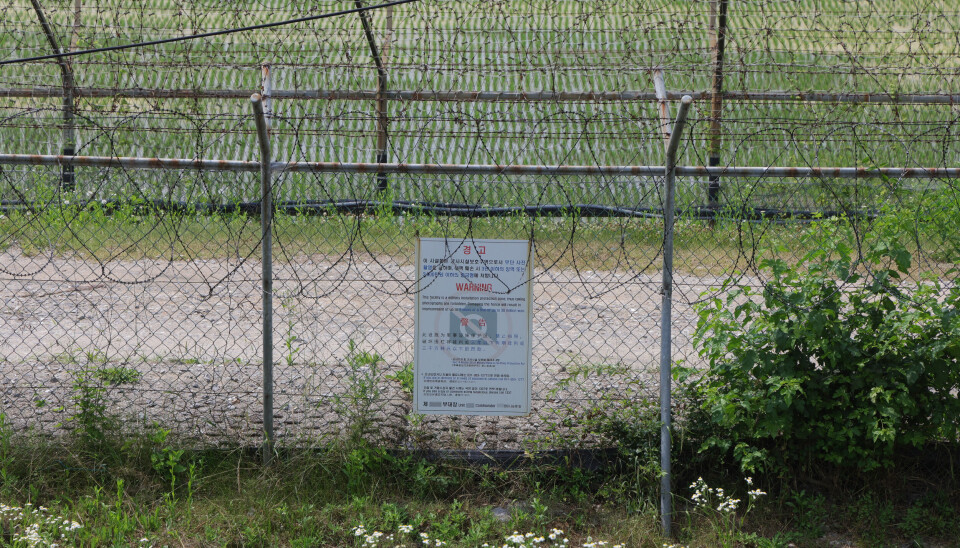
South Korea has launched a review after its military nearly opened fire on a United States military drone that was initially identified as an unknown aircraft near the border with North Korea. The incident briefly raised security concerns in one of the most heavily guarded areas of the Korean Peninsula before officials confirmed the aircraft was taking part in a joint military exercise.

According to South Korea’s Joint Chiefs of Staff, the drone was detected on Thursday in northern Gyeonggi Province close to the border. Military personnel followed standard operational procedures after they were unable to immediately identify the aircraft. As a precaution, troops prepared to respond while continuing to track its movements. The aircraft was later confirmed to be a United States Marine Corps drone participating in combined training with South Korean forces.

The incident prompted a temporary security alert in the border region. Local authorities issued evacuation warnings to residents and farmers living inside the Civilian Control Zone around Cheorwon and nearby communities. Emergency text messages sent shortly after 2 pm advised people in frontline areas to move to shelters or other safe locations until the situation became clear.

After military officials confirmed the aircraft’s identity, a second message informed residents that the alert had been lifted and there was no longer any immediate danger. No shots were fired and no injuries or damage were reported.

United States Forces Korea confirmed that the aircraft belonged to the US Marine Corps and was involved in a scheduled joint exercise with South Korean troops. The command said it is reviewing the circumstances that led to the misunderstanding and is working with South Korean authorities to examine the incident.

South Korea’s Joint Chiefs of Staff announced that military inspectors from its readiness office would visit the Army’s 1st Corps on Friday to review how the situation was handled. The inspection will assess whether existing identification and communication procedures were properly followed and whether improvements are needed to prevent similar incidents in the future.

The episode highlights the high level of military alert maintained along the border with North Korea, where tensions remain elevated. South Korean forces routinely monitor unidentified aircraft because of the possibility of North Korean military activity. Officials said troops acted according to established procedures because they could not immediately determine whether the aircraft posed a potential threat.

The incident also comes shortly after another security concern involving the United States military. Earlier this week, residents living near a US military base in Pyeongtaek were briefly advised to evacuate following an incident involving white phosphorus. That event prompted some civic groups to call for an investigation and for the US military to provide a public explanation.

Although the drone incident ended without violence, it has renewed attention on the challenges of coordinating military operations in a region where misunderstandings can quickly escalate. South Korean authorities are expected to use the findings of their review to strengthen communication and operational procedures during future joint exercises with United States forces.

Similar Posts

  • | |

    Kangana Ranaut attacks Gen Z protesters, targets young women

    Actress and BJP Member of Parliament Kangana Ranaut has sparked widespread outrage after sharing a series of inflammatory Instagram Stories targeting the Gen Z-led Cockroach Janta Party movement, which has been demanding accountability over exam paper leaks that rocked India’s education system. Her remarks, which took direct aim at young women protesters and described them in deeply offensive terms, have drawn sharp condemnation from across the country. The political context for her comments is significant. The CJP protests, which began in New Delhi and spread to other cities, were triggered by widespread allegations of paper leaks in competitive examinations. The movement gained considerable momentum after Education Minister Dharmendra Pradhan resigned, intensifying public debate around the protesters’ demands for systemic reform and accountability. Ranaut chose not to address those demands. Instead, she used her platform to launch a sweeping attack on the character of the people participating in the protests. “They don’t do this at the cost of their parents or families,” she wrote. “Here is a new generation of so-called westernised Indian women. I call them generational gutter. Some of them have nothing to offer to the system. They are not good at studies but they are so ugly and corrupt that they can’t be home makers either. But they probably flaunt their freedom to have drugs, drinks or endless body counts.” She went on to specifically criticise young Hindu women whom she accused of aspiring to a form of independence they had not earned. “Most appalled is the behaviour of young Hindu women who want to imitate the lives of independent career women, without earning that freedom,” she said. “Women who are truly independent, they make rebellious choices, bold opinions, unconventional career moves and they take accountability for their actions.” She also addressed those who had faced physical confrontations during the protests, framing the violence as a natural consequence of their own behaviour. “Protesters who are getting beaten and abused on the roads by the common people because of their filthy and abusive roles, must understand that once you post, you will be criticised and once you damage public property, the public will damage you.” She concluded with a statement she presented as philosophical but which read to many as dismissive. “Now is not a time to cry. If you receive the opposite reaction, it is due to cause and effect. You will understand soon if you have not already.” The remarks have landed with considerable force at a moment when Indian celebrities are already divided over whether and how to support the CJP movement. While figures including Diljit Dosanjh, Arijit Singh and actor Imran Khan have expressed solidarity with the protesters, Ranaut has positioned herself firmly on the opposite side, in a manner that has gone well beyond political disagreement into personal attack. The language she used about young women in particular has drawn the most intense criticism, with many pointing out the specific ugliness of describing protesting citizens in the terms she chose.

  • |

    Bangladesh President Shahabuddin resigns, cites serious health issues

    Bangladesh President Mohammed Shahabuddin has resigned from office after citing serious health concerns that he said were preventing him from fulfilling his constitutional responsibilities. The 76-year-old announced that he had recently been diagnosed with autonomic neuropathy, a medical condition that occasionally causes sudden loss of consciousness. He said continuing in office had become increasingly difficult because of his health and that stepping down was in the country’s best interest. Shahabuddin had been serving as Bangladesh’s president since April 2023. While the presidency is largely a ceremonial position, the office plays an important constitutional role as the country’s head of state and commander-in-chief of the armed forces. Following his resignation, the Speaker of the Jatiya Sangsad (Parliament) will assume the responsibilities of acting president until parliament elects a new head of state under constitutional procedures. His resignation comes at a crucial time for Bangladesh, which has undergone major political changes since the 2024 student-led uprising that led to the removal of former Prime Minister Sheikh Hasina from power. The country’s political landscape has since shifted significantly, with the Awami League facing legal restrictions and many of its leaders confronting legal challenges or remaining out of public view. Shahabuddin had been elected president in 2023 with the backing of the Awami League. His departure means another major political figure associated with the former ruling party has left public office during Bangladesh’s ongoing political transition. The government is now expected to begin the constitutional process of electing a new president. Until then, the acting president will perform all official duties to ensure the continuity of state affairs. Political observers say the selection of Bangladesh’s next president will be closely watched, as it comes during a period of political uncertainty and institutional reforms. The new appointment is expected to play an important symbolic role as the country prepares for future political and constitutional developments. In his resignation statement, Shahabuddin thanked the people of Bangladesh for their trust and support during his tenure. He expressed hope that the country would continue on a path of peace, democratic stability and economic progress despite the current political challenges.

  • | | | |

    Roman-Era masterpiece found hidden beneath fields …

    Archaeologists have uncovered a stunning 4th-century Roman mosaic beneath farmland in England, offering new insight into life during the period when Britain was part of the Roman Empire. The remarkable mosaic was discovered at the remains of an ancient Roman villa in Devon. Made from thousands of colorful stones arranged into intricate floral patterns, the artwork is believed to date back to the fourth century AD. The discovery provides fresh evidence of the wealth, architecture and cultural influence that existed in Roman Britain. The Roman Empire controlled much of Britain from around AD 43 until around AD 410, leaving behind numerous settlements, villas, roads and other archaeological remains. Alongside the mosaic, archaeologists discovered a large and sophisticated Roman bathhouse near the site. The complex reportedly contained several small pools, walls decorated with colorful plaster and a range of other ancient artifacts. The excavation was carried out over a two-month period by archaeologists from the University of Exeter and Cotswold Archaeology. Volunteers also participated in the work, helping researchers investigate the agricultural land located between the Devon villages of Hill Barton and Sampford Peverell. The archaeological team already knew that the Roman villa and surrounding working areas were potentially important for understanding the spread of Roman culture across Devon. However, the latest findings have revealed that the site was considerably larger and more significant than previously understood. Project leader Dr Susan Greaney said the discoveries could help researchers better understand Roman cultural influence and its interaction with local communities in the region. The detailed mosaic is particularly significant because such decorative artwork can provide clues about the status and lifestyle of people who lived at Roman villas. Its elaborate design and the presence of a substantial bathhouse suggest that the site was an important settlement rather than a simple rural dwelling. Archaeologists will now continue studying the discoveries and artifacts recovered from the site. Researchers hope the evidence will shed more light on how people lived, worked and adopted Roman customs in southwest England nearly 2,000 years ago. The Roman mosaic discovered in Devon is another reminder of how much of Britain’s ancient history remains hidden beneath modern farmland. Further archaeological investigation could reveal even more about the communities that lived in the region during the final centuries of Roman rule.

  • | |

    Pakistani documentary selected for Locarno Film Festival

    Pakistan’s presence on the international film festival circuit has grown significantly in recent years, and the latest milestone arrives in the form of a debut documentary that will carry the spirit of Sehwan to one of Europe’s most prestigious stages. Filmmaker Umair Bilal’s debut feature documentary As Light as Air has been selected for the 79th Locarno Film Festival in Switzerland, where it will have its world premiere in August. The selection places Pakistani independent cinema on a platform that celebrates outstanding documentary filmmaking from around the world, and represents another meaningful step in the growing global recognition of Pakistan’s independent film movement. The film is set in Sehwan, the historic Sufi town in Sindh that is home to the shrine of Lal Shahbaz Qalandar, one of Pakistan’s most revered spiritual sites. The documentary explores the lives of the pilgrims, wanderers and spiritual seekers who travel to Sehwan carrying grief, longing and hope, drawn by the promise of solace that the shrine and its rituals have offered for centuries. At the centre of the film is the practice of dhamaal, the devotional dance performed at the shrine, which Bilal has described as the heartbeat of Sehwan. Through the rhythm of the music, the movement of the devotees and the atmosphere of collective faith, the documentary offers an intimate and immersive portrait of a spiritual world that few outside Pakistan have encountered directly. As Light as Air has been selected for the Semaine de la Critique section of the Locarno festival, a dedicated showcase for outstanding documentary filmmaking that consistently attracts significant attention from international distributors and critics. The 79th Locarno Film Festival runs from August 5 to 15 and will present 103 world premieres this year across its various sections, including international competition, the Piazza Grande outdoor screenings and documentary showcases. The programme features new work by internationally acclaimed filmmakers including Hong Sangsoo, Denis Cote and Maria Back. The festival will also honour celebrated American director James Gray with its Career Leopard award, one of the most prestigious recognitions the festival offers to filmmakers who have made an enduring contribution to cinema. Festival organisers have described this year’s edition as reflecting a world shaped by conflict while celebrating the enduring power of cinema to connect audiences across cultures and borders. Against that backdrop, a documentary rooted in Pakistan’s Sufi traditions and set in one of the country’s most spiritually significant towns offers something genuinely distinctive, a window into a world of devotion, music and collective belonging that carries a universality capable of reaching audiences with no prior connection to its cultural context. For Umair Bilal, the Locarno selection is a remarkable achievement for a debut feature, and for Pakistani cinema more broadly it signals that stories told with authenticity and artistic conviction about the country’s own cultural heritage can find a home on the world stage.

  • | |

    Information Ministry accuses Al Jazeera of biased …

    The Ministry of Information and Broadcasting has accused international broadcaster Al Jazeera of presenting a misleading picture of the recently held Azad Jammu and Kashmir (AJK) Legislative Assembly elections, alleging that its coverage selectively portrayed the electoral process. In an official statement, the ministry said the broadcaster reported from selected polling stations in Muzaffarabad and relied on carefully chosen interviews and timings that did not accurately reflect the overall conduct of the elections. It claimed the reporting created a distorted impression of the voting process and failed to represent the broader electoral environment. The ministry further alleged that such coverage appeared aimed at undermining the credibility of the elections and ignoring what it described as the democratic will expressed by voters across the region. It maintained that the people of AJK had exercised their right to vote despite political tensions. Alongside its criticism of the coverage, the ministry reminded foreign media organisations operating in Pakistan that reporting assignments outside Islamabad, Lahore and Karachi require prior approval under the country’s External Publicity Guidelines. It urged all foreign correspondents to comply with the regulations governing reporting in other parts of the country. The AJK elections, however, remained under intense scrutiny after allegations of irregularities and isolated incidents of violence emerged during polling. Opposition parties accused authorities of interfering in the electoral process, while the ruling coalition exchanged allegations of rigging and misuse of state resources. Human rights organisations also expressed concern over reports of deaths and injuries linked to election-related unrest. They called for transparent and independent investigations into the incidents and stressed that maintaining public order should not come at the expense of fundamental rights, including peaceful assembly and freedom of expression. The elections were held against the backdrop of political unrest that has continued in AJK since last year’s protests over governance reforms and constitutional issues. The controversy surrounding reserved refugee seats in the AJK Legislative Assembly also remained a major political issue during the campaign.

  • | |

    Security measures strengthened ahead of second pha…

    Chief Election Commissioner of Azad Jammu and Kashmir, retired Justice Ghulam Mustafa Mughal, has said that the law and order situation in Muzaffarabad has improved, following concerns over uncertainty and security challenges in the city. Justice (retd) Ghulam Mustafa Mughal said that while there had been an atmosphere of uncertainty in Muzaffarabad the previous day, the situation had now become more stable and peaceful. He added that additional security personnel had been deployed at the two most sensitive constituencies in the region to ensure peaceful polling. The chief election commissioner said that security arrangements for elections on migrant seats in Pakistan were the responsibility of the relevant provincial governments. He explained that election materials had been dispatched to polling stations and that presiding officers had also left for their assigned areas. “Election equipment has been sent to the polling stations, and presiding officers have moved toward their respective locations,” he said, adding that in some remote areas, the transportation of election materials was continuing gradually due to logistical challenges. Justice Mughal confirmed that polling in Muzaffarabad would take place the following day and identified two constituencies—LA-5 Khawora and LA-3 Lajrat—as highly sensitive areas requiring additional security arrangements. He said extra security forces had been deployed at sensitive polling stations, while Quick Response Force units would also remain available throughout the polling process. In the event of any emergency or disturbance, the quick response teams would immediately intervene to control the situation and maintain peace. The chief election commissioner expressed confidence that the security arrangements would help ensure a smooth and transparent election process. He emphasized that all necessary measures were being taken to protect voters, polling staff, and election officials. Meanwhile, preparations for the second phase of the Azad Jammu and Kashmir elections have been completed. Polling will be held in three districts of the Muzaffarabad division as well as on 12 seats reserved for Kashmiri refugees living in Pakistan. According to the Azad Jammu and Kashmir Election Commission, the Muzaffarabad division consists of three districts: Muzaffarabad, Neelum, and Jhelum Valley. More than 890,000 registered voters are eligible to cast their ballots across these areas. A total of 208 candidates are contesting elections in nine constituencies across the three districts. The voting process will also include refugee seats representing Jammu and Kashmir Valley migrants who are currently residing in Pakistan. The Election Commission stated that six seats representing Jammu and six seats representing the Valley will be contested by Kashmiri refugees living in Pakistan. These seats are part of the legislative structure of Azad Jammu and Kashmir and allow displaced communities to participate in the political process. Authorities have increased security arrangements across polling areas to prevent any disruption and ensure that voters can exercise their right peacefully. Election officials have also directed security agencies and administrative departments to remain alert throughout polling day. The second phase of voting is being closely monitored due to the importance of the constituencies involved and previous concerns regarding security. Officials have assured that all necessary steps have been taken to conduct free, fair, and peaceful elections in the region.

Leave a Reply

Your email address will not be published. Required fields are marked *