human civilisation has

Human civilisation has always been scared of forgetting

By Syed Tahir Rashdi

A long time ago, before the first computer, the first library or even the first book, people thought memory was the most important thing for knowledge. Whole societies relied on it. People remembered laws and stories by heart. Passed them down to their children. To remember something was not just to recall facts it was to keep your identity, culture and history alive.

A long time ago in ancient Greece, people started to worry about memory.

In a book called *Phaedrus* a man named Socrates tells a story about a god named Theuth. Theuth invented writing. Thought it would make people wiser and help them remember more.. The king of Egypt, Thamus did not agree. He said that writing would actually make peoples memories weaker. People would start to rely on written words of trying to remember things themselves. They would think they know something just because they can read it. They would not really understand it.

Course that is not what happened. Writing did not hurt society it changed it. Books became a way to store knowledge and share ideas with people all over the world.

Socrates was worried about something that is still important today.

The question now is not whether we remember things because of books.

It is whether we remember anything all.

Today we have information stored somewhere than ever before. Our phones remember our conversations. Computers store our photos forever. We can find answers to questions in seconds. Machines can summarise books. Help us find information fast.

Never before has much information existed outside of our own minds.

This is a change in how people relate to knowledge.

A man named Marshall McLuhan said that every new technology is like an extension of our abilities. The wheel is like an extension of our feet. The telescope is like an extension of our eyes. By that logic our phones are like an extension of our memories.

They help us remember things.

The problem is obvious.

As we get better at storing information outside of our minds we get worse at remembering things ourselves. We do not remember phone numbers because our phones do. We do not remember birthdays because our computers do. We do not remember how to get places because our phones tell us. We are not trying to remember things much as we used to.

We are just looking them up.

That small change might be one of the most important things that has happened to our minds in the past century.

It is easy to see why we like to store information outside of our minds. Who would want to go to using paper maps or big books to find answers? Digital technology has made it easy for everyone to get information. We can find things out in seconds that used to take days.

The question is not whether this is useful.

It is whether it is changing our minds in some way.

Some psychologists did a study in 2011. Found out something interesting. They found out that when people know they can find information easily they do not try to remember it much. They just remember where to find it.

This is a deal.

Our minds are changing from storing information to finding it.

We are getting better at finding the path. Not the destination.

This is not a habit it is how we think. Remembering things is not about storing facts it is about using them to make decisions to imagine things and to be creative. When we remember things we can connect them in ways and have new ideas.

When we store information outside of our minds that changes.

A man named Nicholas Carr said that digital technology is not just changing how we get information it is changing how we think. The internet is great at giving us answers. It is not so good at helping us really understand things. If we get used to getting answers we might not be as good at thinking deeply about things.

This does not mean that technology is making us less smart.

It means that our intelligence is changing.

The problem is not that we do not know things.

It is that we are too dependent on technology to remember them for us.

A student might think that they can just look up answers and not really learn anything. A professional might rely much on reminders that they do not even try to remember things. Machines are getting better at remembering things for us. That might mean we do not have to try as hard.

Slowly remembering things is becoming more like looking them up.

Knowledge is becoming about getting access to information.

Thinking is becoming more about getting things done.

Technology has definitely helped us store information than ever before.

The question is whether it is also making us less likely to try to remember things ourselves.

Memory is not just about storing information.

It is about how we experience life.

A computer can store every document ever written. A machine can look up every photo ever taken.. They cannot turn experience into wisdom. Our memories are not just storage they are how we interpret things. We forget some things we remember others. We use them to understand ourselves.

A writer named Jorge Luis Borges wrote a story about a man who could remember everything.. This gift was actually a curse. The man could not forget anything so he could not think about things in a way. He was trapped by his memory. Borges was saying that forgetting is not a thing it is actually necessary for thought.

This is not about how we think as individuals.

It is about how we learn and how we understand ourselves as a society.

Education used to be about more than learning facts. It was about learning how to think. If we just store information outside of our minds education might just become about looking things up.

The same thing applies to our society.

Every society relies on shared memories. We keep records, histories and monuments because they help us remember who we are. If we forget our past we do not just lose information we lose perspective.

The digital age has stored information than any other time in history.

It has also made it easy to forget things. Yesterdays news is replaced by todays notifications. History is not just competing with people who want to deny it.

It is competing with distractions.

This is the problem with technology and memory.

We have made machines that can remember perfectly. We might be creating a culture that remembers less deeply.

This is not an argument against technology. Every new technology has changed how we remember things. Digital memory has made it easier for us to learn and access information.

The problem is not with the technology.

It is with how we think about it.

We need to decide whether we will use technology to help our minds or replace them.

Because the biggest danger of technology is not that machines will remember everything.

It is that we will forget that memory is not about storing the past.

It is, about helping us imagine the future.

(The writer is a Shahdadpur-based contributing columnist, book reviewer, and climate change activist. He holds a BS degree in Pakistan Studies from University of Sindh and can be reached at syedtahir926@gmail.com.)

Similar Posts

  • Hala fruit explained

    Have you ever seen a fruit that looks like a brain when it’s whole and a bursting planet when it’s opened? That’s the Hala fruit one of the world’s most unusual fruits. The Hala fruit grows in Southeast Asia eastern Australia the Pacific Islands and Hawaii. It is made up of many separate sections called keys or cones giving it a very unique appearance. The fruit comes from the Pandanus tree which includes more than 750 species. A Hala tree can grow up to 14 meters (46 feet) tall. Hala fruit has a sweet and pleasant taste. It can be eaten fresh added to different dishes for extra flavor and is also used in traditional medicine. People have traditionally used the fruit to help relieve headaches and constipation and it is believed to support a healthy immune system. It is also rich in vitamin C making it a nutritious tropical fruit. Growing Hala fruit is not easy. The tree is very sensitive to cold weather and thrives only in warm humid climates where temperatures stay above 18°C (64°F) throughout the year.

  • Marriage can change couples personalities, study reveals

    Marriage is often described as a situation where “those who marry regret it and those who do not marry regret that too.” Now, scientists have revealed a surprising effect that marriage can have on couples. According to researchers, the first two years of marriage can bring significant changes to the personalities of newly married couples. A joint study by the University of Georgia and the University of California found that personality changes during the first two years of marriage can have important long-term effects on marital relationships. According to the study, newlyweds experience noticeable changes in their personalities and these changes can influence their satisfaction with their relationship with their spouse. The research found that during the first 18 months of marriage, husbands tend to become more dependent on their wives and increasingly focus their attention on their wives rather than the outside world. The study also found that wives experienced reductions in anxiety, depression, feelings of inferiority, restlessness and stress. These positive personality changes were observed among couples of different age groups. However, researchers also noted one negative development: compatibility between husbands and wives tended to decrease. The researchers said that, overall, the findings show that men and women undergo significant personality changes soon after marriage and these changes can be important for developing a healthy long-term relationship. The findings of the study were published in the journal Developmental Psychology. Spousal support and stress Earlier, a study conducted by Binghamton University in the United States in April 2024 found that feeling a lack of support from a spouse can increase physical stress. This feeling can raise levels of cortisol, a hormone associated with stress. Cortisol works with parts of the brain involved in regulating mood, motivation and behaviour. Researchers said that people’s perceptions of their spouse’s support become stronger over time allowing them to predict how their partner is likely to behave in different situations. They further noted that support from a spouse is more important than people may expect.

  • Vaping shift may lower future cancer rates

    In the United States, the growing shift from traditional cigarettes to e-cigarettes and other nicotine products could potentially lead to a decline in cancer rates in the future. A new study published in JNCI Cancer Spectrum analyzed data from US federal health surveys collected between 2015 and 2023. According to the study, traditional cigarette smoking declined significantly across almost all age groups during this period with the decline being particularly noticeable among people aged 18 to 34. In contrast, the number of people using only alternative nicotine products particularly e-cigarettes, increased. The study’s lead researcher, Professor Kenneth Michael Cummings of the Medical University of South Carolina said the trend suggests that many smokers are completely switching to vaping rather than using both products simultaneously. The study found that the proportion of people who used both cigarettes and e-cigarettes remained around 2% to 3% throughout the study period. Scientists also developed a Population Harm Reduction Index to compare traditional cigarette smoking with the use of non-combustible nicotine products. According to the researchers, an increase in the index indicates that more people are using alternatives to traditional cigarettes that may expose them to lower levels of potentially cancer-causing chemicals. The study found that people aged 55 and above were much less likely than younger people to quit smoking and switch to alternative products even though older adults could gain significant immediate health benefits from quitting smoking. According to the study, vaping has now become more common than cigarette smoking among young people aged 18 to 24. Professor Cummings said the greatest concern is that older people who have smoked for many years are not switching to lower-risk, non-combustible nicotine products as quickly. This is the group that could potentially gain the greatest immediate health benefits from quitting smoking. According to the report, the study was funded by the US National Cancer Institute and the Food and Drug Administration (FDA) while the vaping industry provided no financial support.

  • Too much gaming may harm children

    Online and video games are a popular source of entertainment for children.  However experts warn that spending too much time playing games can affect a child’s mental physical and social development. Playing games in moderation can be enjoyable but excessive gaming may lead to several problems. Experts say the growing popularity of video games among children is becoming a concern around the world. Spending long hours in front of a screen can reduce time for schoolwork exercise and other healthy activities. Research also suggests that too much gaming may make some children more irritable angry or aggressive. According to experts excessive gaming may also affect brain function and the nervous system. Children who spend too much time playing games may lose interest in their studies perform poorly at school and become more likely to develop an unhealthy dependence on video games. Too much screen time can also reduce social interaction. Instead of spending time with family and friends children may prefer staying alone with their games which can affect their communication and relationship skills. Pediatric experts advise parents to set clear limits on screen time and encourage children to take part in other activities. Outdoor games painting arts and crafts reading and other creative hobbies can support healthy physical and mental development. These activities are even more beneficial when parents are involved. Experts also say that spending time with siblings and family members helps children build stronger relationships confidence, and social skills.  If video games become a child’s main focus family life and personal development may suffer. Experts do not recommend banning video games completely as learning to use technology is important today. Instead parents should set reasonable gaming limits monitor what their children play and encourage a balanced lifestyle that includes learning physical activity and family time.

  • Smart uses for leftover cooking oil

    After frying puris pakoras, or other foods leftover oil is often thrown away. If the oil has been heated many times it may no longer be safe for cooking, especially if its color smell or taste has changed. Instead of wasting it you can use old cooking oil for some simple household tasks. Remove sticky stickers A few drops of oil can help loosen stubborn stickers and labels from plastic glass or steel items. Apply a little oil to the sticker leave it for a few minutes and then gently peel it off. Loosen rusty nuts and bolts If a rusty nut or bolt is stuck put a few drops of leftover oil around the joint. Wait for a while and then try to loosen it.  The oil can reduce friction and make the job easier. Add shine to wooden furniture You can use a small amount of oil to give old wooden furniture a fresh look. Put a little oil on a soft cloth gently rub the wood and then wipe it with a clean dry cloth. Always test the oil on a small hidden area first to make sure it does not damage the wood. Polish leather items Leftover oil can sometimes be used to add shine to leather shoes bags or decorative items.  Apply only a very small amount and wipe it gently. However, not all types of leather react well to oil, so test it on a hidden spot first. Stop squeaky doors and windows If a door or window makes a squeaky sound put a few drops of oil on its hinges.  This can reduce friction and help make the noise quieter. Store leftover oil safely Before using leftover oil for household tasks strain it to remove food particles. Store it in a clean dry airtight jar. Do not use the oil if it smells bad becomes very dark or shows any unusual changes. It is also better to avoid repeatedly using the same oil for cooking or frying.

  • | |

    Echoes from the Interstellar Dark

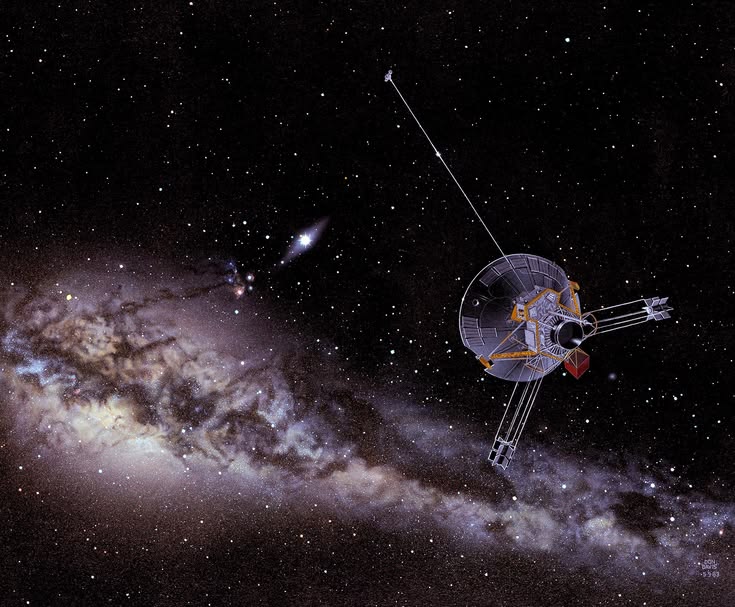
    NASA’s Voyager 1 probe was designed to explore the outer giant planets and send back photographs of Jupiter and Saturn. It was launched in 1977. More than eleven billion miles from Earth, floating through the icy void beyond our solar system, a tiny scrap of 1970s human ingenuity continues its lonely journey. Decades after its primary mission ended, the craft crossed the heliopause. The boundary where the sun’s protective magnetic bubble ends and true interstellar space begins. ​In recent months, engineers faced a daunting crisis. Voyager 1 began transmitting a repeating, meaningless gibberish loop of ones and zeros back to Mission Control. For a moment, scientists feared that after nearly half a century of unbroken operation, the farthest human artifact had finally succumbed to cosmic radiation and cold degradation. Yet through meticulous diagnostic work, engineers isolated a corrupt microchip. They rerouted its memory code across ancient hardware.  Hence, they successfully restored intelligible science data across the vast distance. ​Voyager 1’s survival is not just an engineering miracle; it is a profound testament to humanity’s desire to touch the unknown. ​A spindle of wire, a heart made of bronze, It drifts through the night where the quiet responds. Beyond the sun’s breath and the cradle of red, It whispers the secrets of worlds overhead. ​A Message in a Bottle Across Cosmic Waves ​Carried on the hull of Voyager 1 is the Golden Record, a gold-plated copper phonograph disc containing sounds of Earth, greetings in fifty-five languages, musical compositions from Bach to Chuck Berry, and encoded images of terrestrial life. It serves as an interstellar time capsule, intended to outlast our civilization and tell any distant intelligence who we were. ​We carved our desire on golden veneer, To prove in the darkness that someone was here. A chorus of ocean, a child’s brief greeting, Sent out to outlive every mortal heart’s beating. ​As the probe glides through the cosmic dust, its radio signal traveling at the speed of light takes over twenty-two hours to reach dish antennas on Earth. Every line of telemetry received is a faint echo from an environment no human eye will ever witness firsthand. The spacecraft operates on a diminishing power supply provided by its decaying plutonium generators. Year by year, NASA engineers shut down non-essential instruments to conserve every milliwatt of power, prioritizing the magnetometers and cosmic ray sensors that measure the interstellar medium. ​The Final Quiet Crossing ​The remaining active instruments will inevitably power down as the thermal generators fade entirely by the end of this decade. Voyager 1 will then become a silent voyager, drifting along its galactic orbit around the center of the Milky Way, unbothered by atmospheric drag or gravitational interference, lasting for millions of years. ​When the last power flickers and warmth slips away, It will glide through the night till the dawn of no day. No longer a transmitter, no longer a thread, Just a monument floating where gods used to tread. ​The triumph of retrieving clear data from Voyager 1 reminds us why we look up. Science and art stem from the same original impulse: the refusal to remain quiet in the vastness of the dark, and the drive to leave something meaningful behind before the power fades.

Leave a Reply

Your email address will not be published. Required fields are marked *