|

Japan unveils first spy agency since WWII

Japan has launched its first centralized intelligence agency since the end of World War II. The move marks one of the country’s biggest security reforms in decades. It comes as Japan faces rising regional tensions and growing concerns over espionage, cyber threats, and global instability.

The new body is called the National Intelligence Bureau (NIB). It officially began operations on Friday. It replaces the Cabinet Intelligence and Research Office (CIRO), which had served as Japan’s main intelligence office for years. However, experts often criticized the old system for lacking authority and coordination.

Prime Minister Sanae Takaichi described the new agency as the first step in a broader intelligence reform plan. She said today’s security environment is changing rapidly. According to her, modern conflicts now involve cyberattacks, intelligence operations, and other non-traditional forms of warfare. She stressed that Japan must strengthen its intelligence capabilities to protect national security.

The National Intelligence Bureau will collect, analyze, and coordinate intelligence gathered by various government departments. These include the ministries of defense, foreign affairs, justice, and the National Police Agency. Under the new system, government agencies will be required to share information with the bureau. Officials believe this will improve cooperation and eliminate delays caused by fragmented intelligence networks.

The bureau will work under the newly created National Intelligence Council. The council will be chaired by the prime minister and include senior cabinet ministers. It will oversee national intelligence policy and coordinate responses to major security threats.

The agency’s responsibilities will cover a wide range of issues. These include counterterrorism, emergency response, cybersecurity, foreign espionage, and efforts to detect covert influence operations carried out by hostile states.

Security analysts have long argued that Japan’s intelligence system has been weaker than those of many other developed countries. Unlike several of its close allies, Japan does not have a dedicated foreign intelligence agency that operates overseas. The country also lacks a comprehensive anti-espionage law, making it more difficult to investigate and prosecute espionage activities.

Experts say these weaknesses have raised concerns among Japan’s international partners. Countries sharing sensitive intelligence expect strong security measures to prevent leaks. A weak intelligence system can reduce confidence and limit intelligence cooperation.

Calls for reform are not new. In the 1980s, former Prime Minister Yasuhiro Nakasone warned that Japan had become a “paradise for spies.” He proposed stronger anti-espionage laws, but the plan faced strong public opposition and was never approved. At the time, many Japanese feared that expanding intelligence powers could revive the surveillance and repression experienced before and during World War II.

Today, the security situation is very different. Japan faces increasing military and strategic challenges from China, North Korea, and Russia. The country also hosts thousands of US military personnel, making it an important strategic partner in the Indo-Pacific region. Officials believe foreign intelligence services are actively seeking information about Japan’s defense systems, advanced technology, and military cooperation with its allies.

Growing military cooperation among China, Russia, and North Korea has also increased concerns in Tokyo. Their joint military activities and closer political ties have reinforced the belief that Japan must strengthen its national security institutions.

Prime Minister Takaichi has made defense and intelligence reform a key priority since taking office. With strong support in parliament, her government is expected to push for further changes. These may include introducing an anti-espionage law and creating a dedicated foreign intelligence service similar to those operated by other major democratic nations.

Despite the government’s arguments, the reforms remain controversial. Opposition lawmakers and civil rights groups warn that expanding intelligence powers could threaten privacy and individual freedoms if proper safeguards are not introduced. They argue that stronger oversight, parliamentary scrutiny, and independent monitoring will be essential to prevent misuse of power.

Similar Posts

  • |

    Kubra Khan breaks silence on Dr Bahu criticism

    Pakistani actress Kubra Khan has addressed the criticism she faced for her role in the hit drama Dr Bahu, revealing that the negative comments surrounding her appearance and on-screen pairing with co-star Shuja Asad deeply affected her. Dr Bahu, which is approaching its finale on ARY Digital, has remained one of the most talked-about dramas of the season. Written by Sanam Mehdi Zaryab and directed by renowned filmmaker Mehreen Jabbar, the serial is produced by Humayun Saeed and Shahzad Nasib. Kubra Khan plays the lead role, while Shuja Asad stars opposite her. Although the drama has received praise for its storytelling and performances, it also sparked widespread debate online. Many social media users criticized the casting of Kubra Khan and Shuja Asad, with some claiming that the actress appeared older than her co-star. The criticism soon expanded beyond the pairing, with users also commenting on Kubra’s hairstyle, clothing, and weight. Speaking during a recent appearance on journalist Maliha Rehman’s YouTube show, Kubra Khan shared how the online backlash impacted her emotionally despite her decision to remain silent. She admitted that the criticism did hurt her, explaining that choosing not to respond publicly did not mean she was unaffected by the comments. According to the actress, people often assume silence means indifference, but that was never the case for her. Kubra also spoke about the unrealistic beauty standards that women in the entertainment industry are expected to meet. She said there is a narrow definition of beauty that expects women to be extremely slim, tall, and fair-skinned, making it difficult for many actresses to fit into those expectations. The actress pointed out that she does not consider herself to fit those conventional standards and has dealt with such judgments for years. She added that seeing people criticize her weight simply because it became a trending topic was upsetting. Rather than engaging with online trolls, Kubra chose to stay quiet because she believed responding would not change anyone’s mindset. She said it felt like “talking to a wall,” making it pointless to defend herself against endless criticism. Kubra further revealed that social media users also targeted her hairstyle and wardrobe during the drama’s initial episodes. She said such things could easily be changed, but she questioned why people were so focused on minor details while far more important issues were taking place in the world. The actress also clarified the story behind her much-discussed hairstyle. She explained that the haircut was inspired by the voluminous hairstyles that were popular during the 1990s. According to Kubra, she had already been sporting bangs before they became a viral topic online, but the look unexpectedly drew widespread attention after the drama premiered. Despite the criticism, Kubra Khan has continued to focus on her work, with many viewers praising her performance in Dr Bahu as the serial heads toward its final episodes. Her comments have also reignited conversations about body shaming, unrealistic beauty standards, and the pressure female actors face in the entertainment industry.

  • | |

    Azma Bukhari mocks PPP over Lahore rally

    Punjab Information Minister Azma Bukhari has criticised the Pakistan Peoples Party (PPP) over its recent political gathering in Lahore. She also extended birthday wishes to former president and PPP leader Asif Ali Zardari. In a statement, Bukhari said Zardari should be thankful that he had been spared the embarrassment of another poorly attended gathering at Minar-e-Pakistan. Her remarks came after the PPP announced a Lahore gathering to mark Zardari’s birthday. Bukhari questioned the decision to organise the event in Lahore. She said holding a gathering with a large number of empty chairs would be disrespectful to Zardari. She also criticised those who advised the PPP leadership to hold the event in Lahore. She said the party should review the advice it receives from its provincial leadership. Bukhari claimed that the Governor House Punjab had a large number of empty chairs during the gathering held the previous night. She claimed around 2,000 chairs had been arranged for the event. However, she alleged that only around 150 people were present. The minister used the reported attendance to question the PPP’s political standing in Punjab. She said the party’s poor position in the province was partly linked to the information being provided to its leadership. According to Bukhari, some party leaders are giving senior leadership inaccurate reports about the party’s popularity and political strength. She said such reporting could prevent the PPP leadership from understanding the actual situation on the ground. Bukhari also criticised the PPP’s Punjab leadership for what she described as misplaced priorities. She alleged that the provincial leadership was more focused on the Punjab government than on strengthening the PPP itself. The minister said the party should focus on expanding its political presence and improving its organisational structure in Punjab. She argued that greater attention to party affairs could have prevented the PPP from reaching its current political position in the province. Bukhari’s comments reflect the continuing political rivalry between the ruling Punjab setup and opposition parties in the province. The PPP has traditionally maintained a political presence in Punjab. However, its influence in the province has faced challenges from major political parties. The latest exchange also highlights the importance of public gatherings for political parties. Large rallies are often used to demonstrate public support and organisational strength. Bukhari’s criticism focused heavily on the reported attendance at the Lahore event. She suggested that the number of participants did not match the scale of the arrangements. The PPP has yet to publicly respond to all of Bukhari’s allegations.

  • |

    Xi backs Brazil against foreign interference in call with Lula

    Chinese President Xi Jinping expressed support for Brazil’s efforts to protect its sovereignty and resist foreign interference during a phone conversation with Brazilian President Luiz Inacio Lula da Silva, according to Chinese state media. The discussion took place just months before Brazil’s closely watched presidential election and against the backdrop of growing trade and diplomatic tensions with the United States. According to China’s Xinhua news agency, Xi praised Brazil’s role on the international stage and said Beijing values the country’s influence in global affairs. He stated that China supports Brazil in defending its independence, rejecting outside interference, and contributing to regional and international peace and stability. The phone call comes less than three months before Brazilians head to the polls in an election expected to be highly competitive. President Lula is seeking another term and faces a challenge from right wing candidate Flavio Bolsonaro, the son of former president Jair Bolsonaro. The Brazilian presidency said the two leaders also discussed strengthening economic cooperation. Both sides agreed on the importance of accelerating negotiations for a trade agreement between China and Mercosur, the South American trade bloc that includes Brazil, Argentina, Paraguay, and Uruguay. Such an agreement could expand trade opportunities between the region and the world’s second largest economy. During the conversation, which lasted more than an hour, Lula reaffirmed his commitment to expanding Brazil’s international trade network. He said his government is working to diversify export markets and reduce dependence on a limited number of trading partners, particularly as Brazil faces increased tariff pressure from the United States. Relations between Brasilia and Washington have become more strained in recent months. The United States introduced two additional rounds of tariffs on a range of Brazilian products this month, following a significant tariff increase imposed last year. The measures were linked to political tensions surrounding the legal case that resulted in former president Jair Bolsonaro being sentenced to prison over an alleged coup plot. Lula has strongly criticized the tariffs, arguing that they amount to political pressure during an election year. He has accused Washington of attempting to influence Brazil’s domestic affairs through economic measures, an allegation the United States has rejected. Diplomatic tensions have also surfaced over election related issues. According to diplomatic sources, Brazil recently refused entry visas for two American officials who planned to visit the country’s election authorities ahead of the October vote. The move reflected growing sensitivity within the Brazilian government over foreign involvement in electoral matters. Meanwhile, Flavio Bolsonaro has continued to question the reliability of Brazil’s electronic voting system despite repeated assurances from election officials that it is secure. His claims have echoed similar allegations made by US President Donald Trump regarding American elections, although no credible evidence has supported those accusations. While the Chinese government highlighted Xi’s support for Brazil in resisting external interference, the official statement released by the Brazilian presidency did not specifically mention that part of the discussion. Instead, it focused on economic cooperation and the importance of strengthening trade ties between Brazil, China, and the Mercosur bloc. The conversation underscores the increasingly close relationship between Beijing and Brasilia at a time when Brazil is balancing political challenges at home with shifting economic and diplomatic dynamics on the global stage.

  • | |

    Wildfires keep Spain and France on alert amid extr…

    Firefighters battling wildfires across Spain and France warned Wednesday that the risk of additional blazes remains very high in the coming days, even as a major fire in Spain’s central Guadalajara province eased enough to allow some residents to return home. Wildfires have already scorched more land across Europe this year than the continent’s average over the past two decades, according to available data, as the world’s fastest warming continent endures its third stifling heatwave in close succession this year. In France, where two firefighters died Tuesday after their truck became engulfed in flames in the southwestern Gironde region, authorities urged residents in areas affected by the heat to avoid using barbecues, stressing that nine out of ten wildfires start as a result of human activity, whether accidental or not. Meanwhile, in the Western Balkans, the nature of the threat has shifted from heat to hailstorms, with several people injured in North Macedonia and eastern Kosovo. Scientists say human driven climate change continues to intensify heatwaves, droughts and wildfires, while also creating conditions that can trigger sudden and destructive storms. Real time data from a climate monitoring tool showed the average high temperature across Western Europe is forecast to reach 26.6 degrees Celsius, about 3 degrees above the historical norm for July 22 based on the 1961 to 1990 reference period. Spain’s most severe wildfire so far this year has burned an estimated 32,000 hectares in the Guadalajara region. The fire began to stabilize Tuesday after forcing evacuations across 34 municipalities and confinement orders in 14 others. Castilla La Mancha’s regional fire service, INFOCAM, said residents of five villages have been allowed to return home, though other restrictions remain in place. Visiting the affected region Wednesday, Prime Minister Pedro Sanchez said Spain has already experienced 22 major wildfires this year. He said the country has already surpassed 100,000 hectares burned before even reaching the most critical period of the wildfire season, noting that figure matches Spain’s annual average over the past decade. He added that more action is needed to prevent future fires. Spain’s national weather agency, AEMET, said wildfire danger remains very high or extreme across most of mainland Spain and the Balearic Islands and is expected to climb further in the coming days. The agency urged extreme caution as the ongoing heatwave combines with dry thunderstorms and Saharan dust blowing into the region. While temperatures are expected to ease slightly in some areas Thursday, forecasters expect a dry westerly wind to drive a fresh surge of heat into Mediterranean regions, where highs of 42 to 44 degrees Celsius could be recorded in some locations. The back to back heatwaves and wildfires this summer add to a growing pattern of extreme weather events across southern Europe, with officials in both Spain and France continuing to stress prevention measures as the region moves deeper into what is traditionally its most dangerous period for wildfire activity.

  • | |

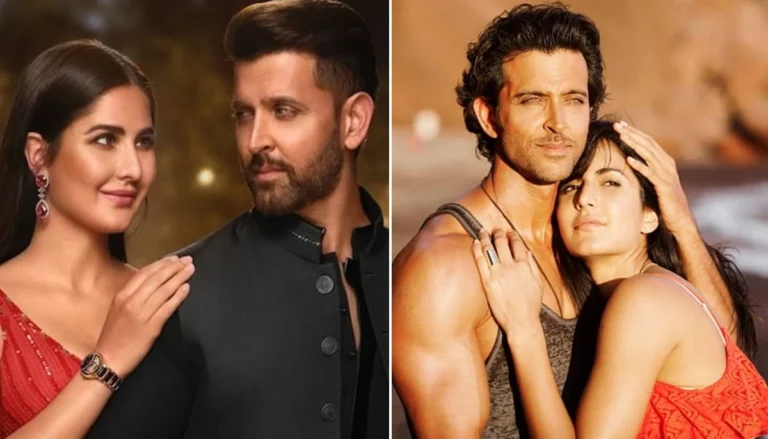
    Zoya Akhtar explains Katrina’s ZNMD kiss with Hrithik

    Filmmaker Zoya Akhtar has revealed why Katrina Kaif agreed to an unexpected kissing scene with Hrithik Roshan in Zindagi Na Milegi Dobara. Speaking at the Monsoon Film Festival on Monday, Akhtar recalled her experience of working with Katrina on the 2011 film. She said Katrina had never performed a kissing scene before. According to Akhtar, Katrina understood that the scene was important to the story. After reading the script, she agreed to film the moment because she recognised its importance to her character. The director explained that Katrina’s character, Laila, was portrayed as someone who lived in the moment and acted on her instincts. Akhtar said the kiss was important because audiences needed to see Laila make a completely spontaneous decision. The moment was designed to reveal another side of her personality. She compared the scene to a fairy-tale moment. In her interpretation, Hrithik Roshan’s character Arjun was like Sleeping Beauty, while Laila played the role of the prince who wakes him up. Akhtar said the scene was not included simply as a romantic moment. It was intended to strengthen Laila’s character and underline the emotional transformation taking place between the characters. The scene later became one of the most discussed moments from the popular film. During the conversation, Akhtar also addressed reports about a possible sequel to Zindagi Na Milegi Dobara. She confirmed that work on a follow-up is underway but said several details are still uncertain. The filmmaker indicated that the team is considering whether the story can successfully revisit the characters at their current stage of life. Released in 2011, Zindagi Na Milegi Dobara starred Katrina Kaif, Hrithik Roshan, Farhan Akhtar, Abhay Deol and Kalki Koechlin. The film followed three friends who reunited for a road trip in Spain. It became widely popular for its themes of friendship, adventure, relationships and living life to the fullest. The movie was also a commercial success. It reportedly earned around ₹153 crore worldwide against a production budget estimated at between ₹45 crore and ₹55 crore.

  • |

    Romania shuts final nuclear reactor as severe Danube drought forces emergency energy measures

    Romania has completed a full shutdown of its Cernavoda nuclear power plant after severe drought dropped water levels in the Danube River to historic lows. The plant, which relies on the Danube for cooling and typically provides 20% of the country’s electricity generation, took its second reactor offline following the prior closure of its first reactor in late July. State operator Nuclearelectrica stated that the second reactor was shut down due to the ongoing drop in water levels, with no restart anticipated for at least ten days. To mitigate the energy shortfall, Romania declared a state of emergency for August, activated a 330-megawatt lignite-fired power plant, and requested that major industrial consumers and households curb power use during peak hours. Major automakers including Dacia and Ford have paused domestic production to help conserve power. The total shutdown immediately threatens energy security in neighbouring Moldova, which relies on Romanian imports to cover up to 60% of its electricity deficits. Moldovan authorities warned of potential rolling power cuts if alternative supplies cannot be secured from Ukraine or Western Europe. Across Europe, low river levels have similarly forced nuclear output reductions in France and triggered emergency engineering interventions in Hungary.

Leave a Reply

Your email address will not be published. Required fields are marked *