jaffna kings outclass
|

Jaffna Kings outclass Kandy Royals by 21 runs in LPL 2026

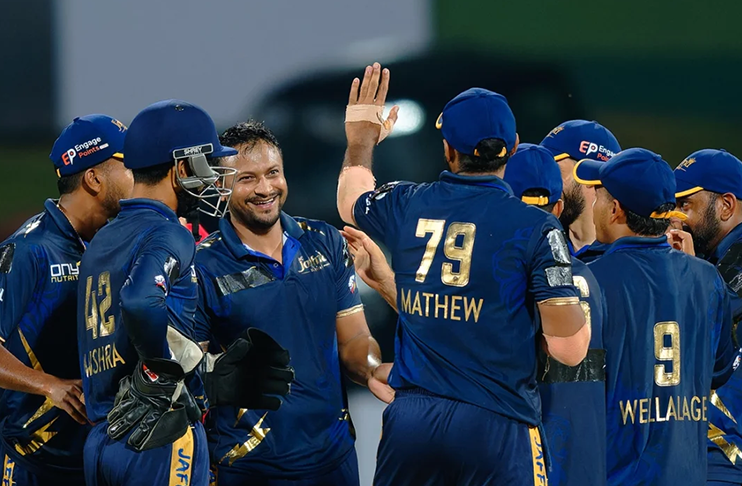
Shakib Al Hasan delivered an outstanding all-round performance to guide Jaffna Kings to a 21-run victory over Kandy Royals in the 18th match of the Lanka Premier League (LPL) 2026 at the Pallekele International Cricket Stadium on Thursday.

Defending a formidable target of 222, Jaffna Kings dismissed Kandy Royals for 200 on the final delivery of the innings to secure an important win.

The Royals made a flying start to their chase, with openers Pawan Sandesh and Lahiru Igalagamage putting immediate pressure on the bowling attack. The pair raced to a 40-run partnership within the first three overs, setting the tone for an aggressive pursuit of the target.

Sandesh played an entertaining knock of 48, while Igalagamage contributed 15 before the opening stand was broken. Kandy Royals maintained a healthy scoring rate during the first half of the innings, keeping themselves in contention.

However, the momentum shifted dramatically once the spin duo of Shakib Al Hasan and Dunith Wellalage came into the attack. The experienced bowlers tightened the scoring and struck at crucial intervals, reducing the Royals to 112-4 and putting Jaffna firmly back in control.

Captain Wanindu Hasaranga attempted to revive the chase with a quickfire 24 off just 12 deliveries, smashing three sixes in an attacking cameo. His aggressive innings briefly raised hopes of a late comeback, but Shakib dismissed the Royals skipper in the 18th over, effectively ending the contest.

Shakib and Wellalage claimed three wickets each to lead the bowling effort, while Dilshan Madushanka and Zahoor Khan chipped in with two wickets apiece to complete the victory.

Earlier, Jaffna Kings produced an explosive batting display after being asked to bat first, finishing with an imposing total of 221-6 in their allotted 20 overs.

Openers Kamil Mishara and Avishka Fernando laid the perfect platform with a blistering 95-run partnership inside the opening seven overs. Mishara narrowly missed out on a half-century, scoring 49 with the help of five sixes and two boundaries. Fernando added 36 from 22 balls, striking three fours and a six before leaving the field as a substitute.

Although the Royals managed to regain some control through a series of quick wickets, reducing Jaffna to 139-5 in the 15th over, the innings received a powerful finish from Shakib Al Hasan and Chamindu Wickramasinghe.

The pair added 59 runs in just 23 deliveries, lifting the Kings beyond the 220-run mark. Wickramasinghe played a breathtaking innings of 43 from only 15 balls, hammering four sixes and three boundaries. Shakib remained composed at the other end, contributing 22 runs from 16 deliveries, including one six and one four.

For Kandy Royals, Moeen Ali and Wanindu Hasaranga were the standout bowlers, taking two wickets each. Pakistan left-arm pacer Shaheen Shah Afridi, however, endured a difficult outing, finishing wicketless after conceding 43 runs in his three overs.

The comprehensive victory strengthened Jaffna Kings’ campaign, with Shakib Al Hasan making a decisive impact with both bat and ball in a memorable all-round performance.

Similar Posts

  • |

    Sanya Malhotra says desi ‘acts of service’ hurt women

    Sanya Malhotra has spoken about breaking old patterns in her own family. She admitted she “forced” her mother to step back from the kitchen and focus on herself instead. According to her, the habit of women expressing love through nonstop service is not healthy. In many South Asian homes, she said, women spend their days caring for others while their own goals get set aside. She brought this up in a recent interview. Her own house followed the same pattern growing up. Women stayed in the kitchen. Men waited around for things to be handed to them. She said she didn’t fully see how much pressure her mother was under until she moved away to Mumbai. One memory stood out for her. Her mother once cried simply because she felt too sick to cook. Sanya told her that food had nothing to do with love. She explained that cooking is just one way people show care, not the only way it can be shown. That moment shifted things at home. Sanya started nudging her parents away from old habits. Her mother now listens when Sanya tells her to skip the kitchen for a day. She said it makes her proud watching her mother take time for herself in the mornings instead of rushing straight to chores. Her father was not left out either. Sanya said she often pushed him to do small things, like getting his own glass of water or making a simple meal. She admitted the change has not fully stuck yet, but she keeps reminding him. She connected all of this to her character in Mrs. In the film, she plays a newlywed whose entire identity gets swallowed by household duties. Sanya said many women tell her the story feels personal to them. That response, she said, leaves her both upset and hopeful, since even a small shift in mindset feels worth it to her. She also called out how sacrifice tends to get romanticised, especially when it comes to mothers. Women, she said, are often expected to give up their own dreams the moment they become parents. Talking about her mother’s past, Sanya revealed she once wanted to become a fashion designer. It took her years to understand her mother had dreams of her own beyond raising a family. As for the criticism Mrs received, Sanya said none of it bothered her. She said she has no interest in defending her views to people who never even watched the film. She last appeared in Netflix’s Toaster and is currently working on Bandar and Sundar Poonam.

  • | |

    Brad Pitt sees AI as a tool, not a threat to Hollywood

    Brad Pitt has offered a measured view on the growing use of artificial intelligence in Hollywood, saying the technology could help filmmakers produce mid-budget movies more efficiently if it is used responsibly. The Oscar-winning actor acknowledged that AI has become a controversial subject across the entertainment industry. While many filmmakers, actors and other industry professionals remain concerned about its impact, Pitt believes the technology could have practical benefits when treated as a creative tool rather than a replacement for human talent. Speaking about the potential financial impact of AI, Pitt said the technology could make it easier to produce films with budgets ranging from around $40 million to $90 million. According to Pitt, the main value of AI could be in helping filmmakers reduce production costs and bring projects to the screen that might otherwise struggle to secure financing. However, the actor does not appear convinced that AI can simply reproduce an actor’s performance in a way that replaces the individual behind it. Discussing the possibility of artificial intelligence recreating his performances, Pitt pointed to the importance of human decisions in filmmaking. He suggested that even if technology can reproduce aspects of an actor’s appearance or performance, the final result would depend heavily on the person directing and shaping the material. For Pitt, acting is not simply about physical appearance or delivering lines. It also involves personal choices, emotions and discoveries made during the creative process. He questioned whether an AI-generated performance would necessarily reflect the decisions an actor originally made while developing a character. His comments come as Hollywood continues to debate how artificial intelligence should be used in film and television. The technology has raised concerns about the future of acting, writing, visual effects and other creative professions. Industry representatives have been pushing for safeguards to protect performers and creators from having their likenesses, voices or work reproduced without appropriate consent and compensation. Pitt acknowledged that opposition to AI remains widespread within Hollywood. At the same time, his comments suggest that he sees a distinction between using AI to assist filmmakers and allowing it to replace human creativity.

  • |

    Afghan fathers struggle as girls remain barred from secondary schools

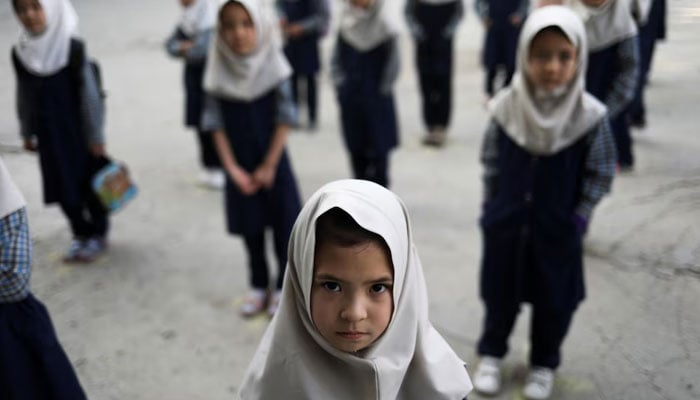
    KABUL: Afghan fathers are facing growing distress as their daughters remain unable to continue their education beyond primary school under restrictions imposed by the Taliban authorities. Families across Afghanistan say the education ban is creating deep emotional and financial pressure. Some fathers are openly questioning the policy, despite their religious beliefs and support for other government measures. The Taliban administration has defended the restrictions as temporary and based on its interpretation of religious principles. However, many Afghan men say they cannot understand why girls should be prevented from receiving secondary education. A United Nations survey conducted last year found that about nine out of 10 Afghan men considered it important for girls to attend secondary school. Nearly two-thirds also viewed supporting a daughter’s education as a religiously commendable act. Girls were barred from secondary schools after the Taliban returned to power in 2021. Women were later also prohibited from attending universities. The restrictions have affected a large number of young Afghan women and girls. For many families, the approaching end of primary education has become a source of fear. Fathers worry that their daughters will lose their chance to pursue higher education and build professional careers. One father, identified as Ahmad, said he had never imagined that his daughters could be forced to stop studying. His wife is a mathematics teacher who is also unable to continue teaching secondary-level students. Ahmad said his eldest daughter is approaching the end of primary school. The family has considered private and underground educational options, but the cost is difficult to manage. Another father, a doctor identified as Mohammad, said he had always wanted his daughters to attend leading universities. He believes women are essential to Afghanistan’s development and should have opportunities beyond household responsibilities. His daughters are approaching the age when they will be forced to leave formal schooling. The family has considered sending them abroad, including to Pakistan, but changing regional circumstances have made that option difficult. Some families have turned to private schools that secretly provide general education alongside religious studies. These institutions often charge high fees and may not provide recognised graduation certificates. Parents also fear that authorities could take action against schools operating outside official restrictions. This leaves families caught between protecting their children and trying to continue their education. Another father from Kandahar said his young daughter has a strong interest in astronomy. She asks questions about the solar system, gravity and science. The girl reportedly asked her father how she could continue learning if she could not study beyond the sixth grade. Her question has become a painful reminder of the limited opportunities available to girls. Some families have moved to Kabul in search of better educational opportunities. Others are relying on online courses, home schooling and secret classes. The restrictions are also affecting children emotionally. Parents say many girls feel frustrated, isolated and uncertain about their future. One father said his teenage daughter often stays at home and becomes deeply upset when she thinks about her education. He said he sometimes leaves the room because he cannot control his emotions and ends up crying privately. Another family has created a home-schooling routine using old secondary-school textbooks. The parents try to maintain a school-like schedule so their daughters can continue learning. However, the parents say home education cannot fully replace a formal school environment. They worry about the lack of recognised qualifications, social interaction and access to trained teachers. Some girls have also begun attending secret classes. Their families remain concerned about possible consequences if the authorities discover them. The prolonged restrictions have created uncertainty for an entire generation of Afghan girls. Parents fear that years without formal education will limit their daughters’ future opportunities

  • |

    Karachi petroleum dealers consider options as dispute over strike call looms

    Plans for a nationwide closure of petrol pumps entered a new phase after dealers in Karachi refrained from immediately supporting a shutdown call issued by petrol pump owners. The Petrol Pump Owners Association had instructed fuel outlets to close across the country from midnight following inconclusive negotiations with Petroleum Minister Ali Pervez Malik. However, the Karachi Petroleum Dealers Association did not move to align with the closure order due to disagreements between the two bodies. To address the situation, the Petroleum Dealers Association scheduled an executive committee meeting to consult with counterparts across Pakistan and evaluate the seven-day deadline set by the Oil and Gas Regulatory Authority (OGRA). The meeting’s outcome will decide whether the association proceeds with a nationwide strike or pursues alternative methods of protest. The Petroleum Dealers Association stated that the government has requested an additional week to resolve outstanding demands and assured dealers that its concerns will be addressed. The association noted that it will consider the government’s request during its internal consultations and formally communicate its final strategy to OGRA and relevant state authorities.

  • | |

    Iran rejects Hormuz plan as US intercepts missiles

    WASHINGTON: Regional tensions intensified on Wednesday after Iran rejected Oman’s proposal for jointly managed shipping routes in the Strait of Hormuz, while the United States said it intercepted multiple Iranian ballistic missiles allegedly launched towards American forces in the Middle East. Iranian Deputy Foreign Minister Kazem Gharibabadi said Muscat had proposed dividing the Strait of Hormuz transit route equally between Iranian and Omani territorial waters. However, Tehran instead suggested that shipping passing through Iranian waters should remain under its control, while Oman would oversee only part of the route on its side. He warned that if Oman declined the proposal, the strategic waterway would remain closed. The Strait of Hormuz is one of the world’s busiest maritime corridors and a vital route for global energy exports, making any disruption a significant concern for international trade and regional security. Meanwhile, the US Central Command announced that its forces had intercepted several ballistic missiles launched by Iran in what Washington described as an attempted surprise attack on US military personnel stationed in the Middle East. Although the exact target was not disclosed, Iranian state media reported that the Islamic Revolutionary Guard Corps (IRGC) had fired missiles at a US military base and a Central Command facility in Jordan, claiming the strikes were retaliation for recent American actions against Iranian interests. US President Donald Trump said diplomatic contacts with Tehran had shown positive signs but warned that military action could resume if negotiations failed to produce results. Iran, however, denied reports suggesting it was preparing to restart direct talks with Washington. The conflict has also spilled into neighbouring countries. Jordan confirmed that its air defence systems intercepted five missiles entering its airspace early Wednesday, marking the third consecutive day of aerial threats against the kingdom. No casualties or property damage were reported. In response to the escalating crisis, Gulf nations intensified diplomatic coordination. Saudi Foreign Minister Prince Faisal bin Farhan held separate discussions with his counterparts from Qatar, Kuwait and Bahrain, with all sides stressing the importance of reducing regional tensions and ensuring freedom of navigation through the Strait of Hormuz and the Bab al-Mandeb Strait. The ministers also condemned attacks attributed to Iran and its allied armed groups. The Gulf Cooperation Council (GCC) strongly criticised repeated attacks on Saudi Arabia, describing them as a serious violation of the kingdom’s sovereignty and a threat to regional stability. GCC Secretary-General Jasem Mohamed AlBudaiwi reaffirmed the bloc’s full support for Saudi Arabia and urged stronger regional cooperation to prevent further escalation. The European Union also expressed concern over the deteriorating security situation. EU foreign policy chief Kaja Kallas discussed Gulf tensions with Iranian Foreign Minister Abbas Araghchi, calling for renewed diplomacy while also raising concerns over Iran’s military support for Russia and the temporary detention of two French diplomats in Tehran. China appealed for restraint, urging all parties to resolve disputes through dialogue while safeguarding freedom of navigation in international waterways. Beijing reiterated its support for peaceful solutions and respect for the sovereignty of regional states. Separately, Iran’s IRGC Navy announced that it had intercepted and halted three oil tankers in the Strait of Hormuz after the vessels allegedly ignored official warnings. Iranian authorities did not disclose the ships’ identities or provide further details regarding the alleged violations. Iran also rejected accusations linking it to projectiles fired at targets inside Saudi Arabia from other countries, insisting that attributing every attack on US interests in the region to Tehran was a serious miscalculation. The latest developments highlight growing instability across the Gulf, with military confrontations, diplomatic efforts and concerns over maritime security continuing to shape one of the world’s most sensitive geopolitical flashpoints.

  • | |

    Rs. 38 trillion in Bank deposits raise alarm as Go…

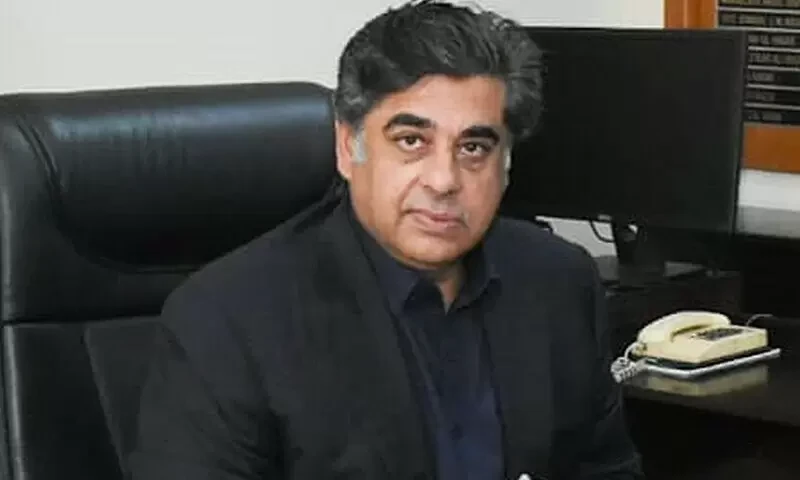
      LAHORE: Former caretaker federal minister and prominent industrialist Dr. Gohar Ijaz has raised serious concerns over Pakistan’s economic direction, warning that growing bank deposits alongside declining industrial activity indicate that capital is moving away from productive sectors.   Speaking to *Minute Mirror*, Ijaz said bank deposits had increased from around Rs. 21 trillion three years ago to Rs. 38 trillion, describing the trend as evidence that people were increasingly choosing to keep their money in banks rather than invest in businesses. He argued that excessive taxation was making industrial activity increasingly difficult. According to Ijaz, an effective tax burden of around 45 percent has discouraged investors and forced several businesses to reduce operations or shut down. “Three years ago, Rs. 21 trillion was lying in banks. Today, it has increased to Rs. 38 trillion,” Ijaz said, arguing that the country needed to encourage investment in manufacturing, exports and employment instead of allowing capital to remain parked in financial institutions. He also claimed that Pakistan could address a significant portion of its external debt if the textile industry received appropriate policy support. Ijaz said the All Pakistan Textile Mills Association (APTMA) had been offering for years to help generate enough foreign exchange for Pakistan to repay $10 billion in debt within one year. According to him, the proposal would require measures such as competitive energy prices, rational taxation, export incentives and a stable policy environment. He maintained that Pakistan’s industrial sector had the capacity to significantly strengthen the country’s foreign exchange position if its competitiveness was restored. Ijaz also criticised what he described as policy distortions in the sugar sector. He alleged that sugar mill-owning families had benefited from additional profits of approximately Rs. 30 billion per month due to pricing mechanisms, subsidies and regulatory decisions. He did not present documentary evidence for the figure during the interview but argued that government policies should prioritize consumers, industrial growth and the national economy rather than benefiting a limited number of influential groups. The former minister further commented on the current political and civil-military leadership, saying the Army and Prime Minister were receiving unprecedented recognition. He expressed optimism that stronger economic policies could enable Pakistan to overcome its financial challenges. Economists and business leaders have similarly pointed to high interest rates, expensive energy, inflation, taxation and policy uncertainty as major factors behind weak private investment. When bank returns appear more attractive and less risky than establishing or expanding businesses, capital can increasingly shift toward financial assets. Industry leaders have therefore called for lower and more predictable taxes, competitive electricity and gas tariffs, faster refunds, fewer ad-hoc duties and incentives for export-oriented manufacturing. Ijaz’s remarks highlight a broader challenge facing Pakistan: having substantial liquidity does not necessarily translate into economic productivity. For the country to generate employment, increase exports and strengthen its ability to repay external debt, more capital needs to flow into productive businesses. The central question, therefore, is whether future economic policies will encourage investment, manufacturing and exports or continue to make bank deposits more attractive than business expansion.

Leave a Reply

Your email address will not be published. Required fields are marked *