| |

Nirmal Purja feared missing in Pakistan avalanche

World-renowned mountaineer Nirmal Purja is among 10 climbers feared missing after a powerful avalanche struck an expedition on Broad Peak in Pakistan’s Karakoram mountain range.

According to the Alpine Club of Pakistan, the avalanche hit the team around midday on Thursday while they were attempting to climb the 8,047-metre peak. Since the incident, all members of the expedition have reportedly lost communication, raising serious concerns about their safety.

The missing group is said to include climbers from Pakistan, Oman, China and the United States. Rescue officials are working to gather more information as efforts continue to establish contact with the team.

The Alpine Club stated that it is coordinating closely with government authorities and relevant agencies to launch an urgent search and rescue operation. Helicopter support and other emergency resources are being arranged, although rescue efforts may depend on weather conditions and access to the remote mountain.

Nirmal Purja, a Nepal-born climber, is widely regarded as one of the world’s greatest high-altitude mountaineers. He gained global recognition in 2019 after becoming the first person to climb all 14 of the world’s mountains above 8,000 metres in just over six months, a record-breaking achievement that earned international acclaim.

Broad Peak, located near K2 in northern Pakistan, is one of the world’s 14 highest mountains and is known for its challenging terrain and unpredictable weather. Avalanches and harsh conditions have made it one of the most dangerous climbing destinations in the region.

Authorities have not yet confirmed the fate of the climbers. Search teams remain on standby, hoping for improved weather conditions to begin a full-scale rescue mission. The mountaineering community is closely monitoring developments as hopes remain that the missing climbers will be found safely.
Similar Posts

  • | |

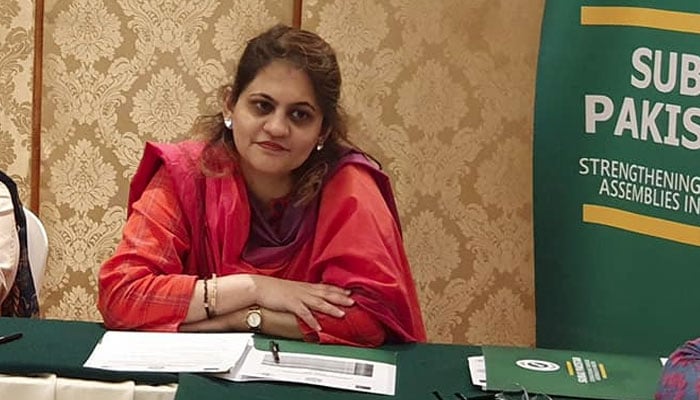
    Sindh government spokesperson accuses Hafiz Naeem …

      Sindh government spokesperson Sadia Javed has accused Jamaat-e-Islami Pakistan Emir Hafiz Naeem ur Rehman of distorting the context of what she described as sincere national agreements reached in the past. In a statement issued from Karachi, Sadia Javed said that Hafiz Naeem was presenting previous national agreements in a misleading manner. She criticised the Jamaat-e-Islami leader for allegedly attempting to portray past understandings between political stakeholders in a way that did not reflect their original spirit or context. She questioned Hafiz Naeem’s position on electricity generated from Thar coal, asking why he remained silent about what she described as some of the cheapest electricity being produced through the country’s indigenous coal resources. “Why is Hafiz Naeem silent on the inexpensive electricity generated from Thar coal?” she questioned, while responding to his criticism of the Sindh government and the Pakistan Peoples Party (PPP). Sadia Javed also strongly rejected what she described as allegations against the Sindh government, saying that Hafiz Naeem had no justification for issuing what she termed “mafia certificates” to others. She challenged the Jamaat-e-Islami leader to examine his own political record before making accusations against others. According to her, political leaders should first reflect on their own actions and positions before questioning the credibility or performance of others. The Sindh government spokesperson further defended the provincial government’s policies and highlighted the importance of Thar coal in meeting Pakistan’s energy requirements. She suggested that criticism of the provincial government should be based on facts and a complete understanding of the agreements and projects under discussion. Another Sindh government spokesperson, Ghanhor Khan, also criticised Jamaat-e-Islami and Hafiz Naeem, accusing them of making allegations based on what he described as political hypocrisy. Ghanhor Khan said that making accusations against the PPP over the issue of Independent Power Producers (IPPs) was part of what he called Jamaat-e-Islami’s unsuccessful political strategy. He argued that the party was attempting to use the controversial issue of IPPs to create political pressure against the PPP and the Sindh government. The dispute comes amid renewed political debate over Pakistan’s electricity sector, particularly the cost of power generation, agreements with IPPs and the role of domestic energy resources. Political parties have frequently criticised successive governments over electricity prices, power-sector contracts and energy policies. The Sindh government has continued to highlight Thar coal as an important component of its energy strategy, while its political opponents have raised questions about governance, transparency and the broader impact of energy-sector agreements. The exchange between the Sindh government and Jamaat-e-Islami reflects growing political tensions over energy policy and the interpretation of past agreements. While Hafiz Naeem has criticised the government’s handling of the power sector, Sindh government representatives have rejected his allegations and questioned the consistency of his political position. Both sides have continued to defend their respective positions, with the Sindh government emphasising its energy initiatives and Jamaat-e-Islami maintaining its criticism of the power-sector policies.

  • | |

    PM Shehbaz orders probe into PIMS CTA failure

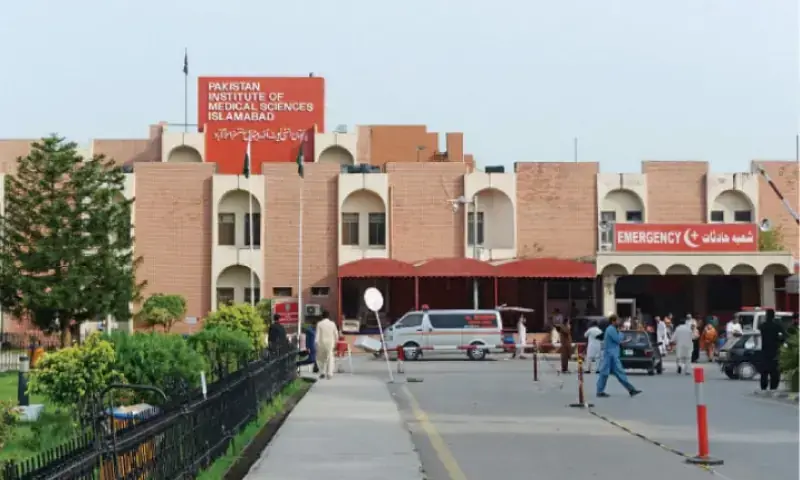
    Prime Minister Shehbaz Sharif has taken notice of the failure to conduct a CT angiography (CTA) test at the Pakistan Institute of Medical Sciences (PIMS) after PTI founder Imran Khan was taken to the hospital for a medical examination. The prime minister has formed an inquiry committee to investigate why the recommended cardiac test could not be performed and determine whether the required facilities were available at the hospital. The committee will be headed by the secretary of the Establishment Division and will include senior officials and medical experts from the National Health Services ministry, Armed Forces Institute of Cardiology (AFIC) and PIMS. The inquiry will examine whether PIMS had the technical capacity to conduct CTA scans since 2022. It will also determine whether the necessary equipment, software and trained staff were available when the test was recommended. The committee will review hospital records to establish how many CTA procedures have been conducted at PIMS since 2022 and whether patients requiring the test were routinely referred to private medical facilities. The investigation will also examine coordination between the cardiology and radiology departments and determine whether administrative shortcomings contributed to the failure to conduct the test. According to hospital officials, Imran Khan was brought to PIMS in the early hours of Friday for a medical check-up. His CTA was recommended, but the test was not carried out and he was subsequently taken back to Adiala Jail. The issue has raised questions about the availability and use of diagnostic facilities at the public-sector hospital. Officials said a CTA machine in the cardiac centre had remained out of service for years, while another machine in the radiology department was reportedly operational. The inquiry will specifically determine whether hospital staff were aware of the functioning radiology facility and why the patient was not referred there for the required examination. The committee will also investigate whether poor coordination, mismanagement or a misunderstanding between departments caused the failure and whether any officials should be held responsible. It has further been tasked with examining referrals to private hospitals, including whether any particular private facility was repeatedly preferred and whether such referrals resulted in the diversion of patients and revenue from the public hospital. Prime Minister Shehbaz has directed the committee to conduct a comprehensive review of all relevant records and facts and submit its findings. Further action will be taken on the basis of the inquiry report and in accordance with the law.

  • | |

    New provinces debate gains momentum as coalition p…

    A renewed debate over the creation of new provinces in Pakistan has gathered political momentum after two major coalition partners publicly endorsed Interior Minister Mohsin Naqvi’s proposal to restructure the country’s administrative system. However, the ruling Pakistan Muslim League-Nawaz (PML-N) has yet to officially comment, fueling speculation over its stance on the sensitive issue. The discussion began after Naqvi argued that Pakistan’s existing administrative framework had become ineffective and called for a national consensus on establishing smaller provinces to improve governance and public service delivery. His remarks quickly drew support from coalition allies, including the Muttahida Qaumi Movement-Pakistan (MQM-P) and the Istehkam-e-Pakistan Party (IPP). Federal Health Minister Mustafa Kamal described the proposal as an urgent national necessity rather than a political choice, stressing that decentralizing administrative powers was essential for effective governance. The MQM-P has long advocated the creation of an additional province in Sindh, making the party one of the strongest supporters of the initiative. Privatization Minister Abdul Aleem Khan of the IPP also endorsed the proposal, suggesting that each of Pakistan’s four existing provinces could eventually be divided into three administrative regions. He argued that smaller provinces would bring government closer to the people and reduce the hardships faced by citizens traveling long distances to provincial capitals. Despite growing support from coalition partners, the proposal faces significant constitutional and political challenges. Any change to provincial boundaries requires a two-thirds majority in the affected provincial assembly, making consensus difficult to achieve. The Pakistan Peoples Party (PPP), which governs Sindh and is also part of the federal coalition, has expressed strong reservations, warning that such a move could create more problems than solutions. Opposition leaders have also criticized the proposal, arguing that the government lacks the political mandate for such a major constitutional change. They insist that strengthening democratic institutions and improving governance should take priority over redrawing provincial boundaries. Political analysts have offered differing views on the initiative. Some believe creating new provinces could deepen ethnic and regional divisions, while others see the debate as an attempt to shift public attention away from pressing national issues, including recent unrest in Azad Jammu and Kashmir and ongoing security challenges in Balochistan. Many experts argue that empowering local governments under the 18th Constitutional Amendment would be a more practical and effective way to improve governance without altering provincial boundaries. Mustafa Kamal also acknowledged that stronger local governments are essential regardless of whether new provinces are eventually created. With the PML-N maintaining silence and key coalition partners taking opposing positions, the proposal has opened a fresh political debate that is likely to remain at the center of Pakistan’s national discourse in the coming months.

  • | |

    Five young lives lost as speeding car crashes into…

    LAHORE: Five young people were killed after a speeding car crashed into a tree along Canal Road in the Harbanspura area of Lahore on Friday night. According to Rescue 1122 officials, the vehicle was travelling at high speed when it went out of control and struck a roadside tree. The impact proved fatal for all five occupants. Rescue teams reached the scene and recovered the bodies, which were later shifted to a nearby hospital for necessary procedures. Officials said all those killed were young. The cause of the crash is being investigated, while authorities are also examining whether excessive speed or other factors contributed to the fatal accident.

  • |

    Sultana Siddiqui reveals women empowerment approach

    Sultana Siddiqui, the founder of HUM Network and one of Pakistan’s most influential television producers, has spoken about her long-held belief in empowering women by giving them meaningful leadership roles. During a recent podcast appearance, she reflected on how she entrusted her daughters-in-law with running production houses, saying she has always believed women should be encouraged to take responsibility and shape the future of the entertainment industry. Sharing her journey, Siddiqui explained that she never considered it wrong to empower women, especially within her own family. She revealed that when her elder daughter-in-law, Moomal, got married, she established Moomal Entertainment and handed over its management to her. Later, after Momina joined the family, Siddiqui launched MD Productions and entrusted the company to her as well. According to Siddiqui, Momina had completed a degree in business and initially had no plans to work in television. However, after observing the creative atmosphere around her, she gradually became interested in the industry and accepted the challenge of contributing to meaningful storytelling. Recalling their conversations, Siddiqui said Momina told her that she wanted to educate audiences through television content rather than simply produce entertainment. That vision, she said, inspired the production of several memorable dramas that combined strong storytelling with social messages. The veteran producer highlighted that Pakistani television was going through a difficult period at the time. She remembered that audiences were increasingly drawn to Indian television serials, making it challenging for local productions to compete. Even attracting sponsors for new dramas was a major hurdle, as confidence in the local industry had declined. Despite these obstacles, Siddiqui said her team remained determined to revive Pakistani dramas by focusing on quality scripts and emotionally engaging stories. She credited the dedication of her production houses and creative teams for helping restore viewers’ interest in local television. Reflecting on that era, she pointed to critically acclaimed projects such as Dastaan as examples of the kind of meaningful content that helped bring audiences back to Pakistani dramas. She said productions like these played an important role in rebuilding the industry’s reputation and proving that locally produced stories could resonate with viewers. Siddiqui also recalled how the revival of Pakistani dramas required patience and persistence. She noted that the industry had to overcome financial challenges, limited sponsorship opportunities, and tough competition before eventually regaining its strong position in the entertainment landscape. Throughout the discussion, Siddiqui emphasized that empowering women has always been one of her core values. Rather than limiting opportunities, she believes women should be trusted with leadership positions and given the freedom to make important decisions. Her remarks offered a glimpse into the philosophy that has shaped both her family and professional life. By placing confidence in the abilities of her daughters-in-law and encouraging them to lead successful production houses, Siddiqui said she hoped to create an environment where women could thrive, innovate, and make a lasting impact on Pakistan’s television industry.

  • | |

    Supreme Court orders early hearing of Imran’s me…

    ISLAMABAD: The Supreme Court on Friday accepted a chamber appeal filed by former prime minister and Pakistan Tehreek-e-Insaf (PTI) founder Imran Khan. The court directed that his petition be fixed for hearing before a Supreme Court bench at the earliest. Imran Khan has requested the court to order his transfer from Adiala Jail to Islamabad’s Shifa International Hospital for medical treatment. He has also sought permission for regular meetings with his family members, personal physicians and legal counsel. In addition, he wants his medical reports to be shared with his family. The appeal challenged an earlier decision by the Supreme Court Registrar, who had returned the petitions after raising objections. The Registrar’s Office said the petitions were incomplete because they did not include a signed power of attorney. During Friday’s proceedings, Advocate Uzair Karamat Bhandari appeared before Chief Justice Yahya Afridi in chambers on behalf of Imran Khan. After hearing the arguments, the chief justice declared the Registrar’s objections ineffective and directed the legal team to submit a signed power of attorney. The Registrar’s Office was also instructed to assign a regular case number to the petition so it could be listed for hearing without unnecessary delay. The Supreme Court further ordered that a separate petition filed by Imran Khan’s sister, Dr Uzma Khan, should be heard together with his own case. In the appeal, Imran Khan argued that the Registrar had exceeded his administrative powers by deciding the maintainability of the petition. His legal team maintained that such questions should be decided by judges because they involve constitutional and legal interpretation rather than administrative scrutiny. The petition also requested that Imran Khan be examined by doctors of his own choice. The names included Dr Khurram Mirza, Dr Asim Yusuf, Dr Faisal Sultan and Dr Samina Niazi. It further asked the court to order his immediate transfer to Shifa International Hospital for a detailed medical examination and treatment. The petition also sought uninterrupted access to his personal doctors, family members and lawyers during his imprisonment and treatment. Dr Uzma Khan has also challenged an Islamabad High Court ruling that refused to order Imran Khan’s transfer to Shifa International Hospital. She also questioned the decision denying his family access to his medical information and visits by his personal physicians. In her petition, Dr Uzma said Imran Khan and his wife are currently imprisoned in Adiala Jail, while his two sons live abroad. She said she is his closest immediate family member in Pakistan and, as a medical doctor, is deeply concerned about his health. She argued that she has the legal standing to pursue the case on his behalf. Imran Khan has remained in custody since August 2023. He is serving a 14-year prison sentence in the £190 million Al-Qadir Trust corruption case. He is also receiving treatment for right central retinal vein occlusion (CRVO), an eye condition that was diagnosed earlier this year. His medical treatment has become a major political issue in recent months. Opposition leaders have repeatedly accused the government of failing to ensure proper medical care and denying him access to his personal doctors. They have also demanded his transfer to Shifa International Hospital

Leave a Reply

Your email address will not be published. Required fields are marked *