US launches heavy strikes on Iran after missile at…
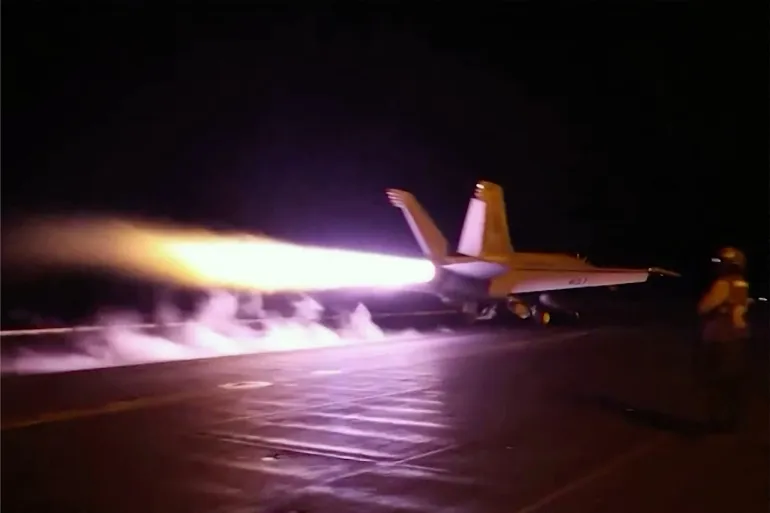
The United States has resumed large-scale military operations against Iran, launching what officials described as a “heavy wave” of precision strikes after a five-night pause, dramatically escalating tensions across the Middle East and raising fresh concerns over the security of the Strait of Hormuz.
According to the US Central Command (CENTCOM), the overnight operation targeted dozens of sites linked to Iran’s Islamic Revolutionary Guard Corps (IRGC), including military command centres, missile and drone facilities, coastal defence systems and maritime infrastructure. The strikes came in response to Iranian missile attacks a day earlier on American forces stationed at a US military base in Jordan.

US President Donald Trump had warned that Washington would respond “very hard” to any attack on American troops, and the latest operation marked one of the most extensive US offensives since the conflict intensified earlier this year.
Iranian state media reported that at least three civilians were killed in the strikes, including a couple and their two-year-old child after a residential building on Qeshm Island was hit. The IRGC also confirmed that three of its personnel were killed during the attacks.
Explosions were reported across several southern Iranian cities, including Ahvaz, Abadan, Bushehr, Kazerun and Farashband. Iranian media said power outages affected parts of Ahvaz following strikes in the oil-rich Khuzestan province, while local officials confirmed that multiple locations in Abadan had also been targeted.
The confrontation quickly spread beyond Iran. Jordan said its air defence systems intercepted five Iranian missiles launched toward its territory after Tehran targeted a US airbase and command headquarters inside the kingdom. No casualties were reported.
Meanwhile, Kuwait confirmed that an Iranian strike hit a building belonging to a Chinese company in the country’s north, killing one worker and causing significant damage. Saudi Arabia condemned Iran’s attacks on Jordan, describing them as a violation of international law and regional stability.
Despite the renewed fighting, diplomatic contacts continue behind the scenes. Pakistan’s Foreign Ministry said negotiations between Tehran and Washington remain active, particularly over the Strait of Hormuz and efforts to reduce tensions. Iranian officials also confirmed that discussions with Omani mediators regarding the future of the strategic waterway are continuing.
The Strait of Hormuz remains at the heart of the crisis. Iran insists the waterway remains closed because of US military actions, while Washington accuses Tehran of threatening global shipping and using maritime pressure to strengthen the IRGC’s influence.
Adding economic pressure, the US Treasury imposed fresh sanctions on two Iranian companies accused of supporting an IRGC-backed maritime insurance network.
Security analysts say Washington now faces a critical decision: continue targeting Iran’s military infrastructure around Hormuz or expand attacks on key national infrastructure. While the latest strikes signal a tougher military posture, experts believe both sides still have incentives to leave the door open for diplomacy, even as the risk of a wider regional war continues to grow.