saudi arabia names
| |

Saudi Arabia names new envoy to Pakistan

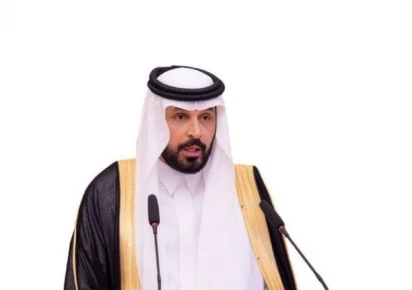
Saudi Arabia has appointed Dr Rajeh bin Tami Al-Baqami as its new ambassador to Pakistan, replacing Nawaf bin Said Al-Malki.

The appointment comes as Pakistan and Saudi Arabia continue to strengthen their longstanding partnership in defence, investment, trade and regional security.

The Saudi Ministry of Foreign Affairs said Al-Baqami was among eight newly appointed ambassadors who recently took the oath of office.

The ministry shared photographs of the newly appointed envoys and said they had been sworn in on behalf of the Saudi leadership.

Al-Baqami brings both military and diplomatic experience to his new position. He previously served as a major general in the Saudi armed forces before joining the Foreign Ministry at ambassadorial rank.

He holds a doctorate in Human Resource Management from Brunel University London.

His appointment comes at a time when Islamabad and Riyadh are expanding their strategic cooperation.

The two countries recently formalised their defence partnership through a Strategic Mutual Defence Agreement. Under the agreement, aggression against either country is considered an attack on both, further strengthening their long-standing military relationship.

Economic cooperation has also become an important part of bilateral ties.

Saudi Arabia has pledged major investments in Pakistan under Crown Prince Mohammed bin Salman’s Vision 2030 programme. Riyadh has also provided financial assistance to Pakistan during periods of economic and balance-of-payments pressure.

Saudi Arabia remains an important source of oil supplies for Pakistan, including arrangements involving deferred payments.

The kingdom has also supported Pakistan’s foreign exchange position through deposits with the State Bank of Pakistan.

Relations between the two countries have gained further momentum amid changing regional security dynamics.

Islamabad and Riyadh have maintained close consultations on regional developments, including tensions involving Iran.

Pakistan has also provided military support to Saudi Arabia during periods of heightened security concerns in the region.

Al-Baqami succeeds Al-Malki, who served as Saudi ambassador during a period of expanding political, defence and economic cooperation between the two countries.

His arrival is expected to provide further momentum to bilateral engagement and strengthen coordination between Islamabad and Riyadh.

Similar Posts

  • |

    Acting US Attorney General rescinds $1.8 billion initiative to clear path for Senate confirmation

    Acting US Attorney General Todd Blanche has issued an official order rescinding the controversial $1.8 billion “Anti-Weaponisation Fund”, resolving a key point of friction ahead of his confirmation vote before the Senate Judiciary Committee. The action follows extended negotiations with Republican Senators John Cornyn and Thom Tillis, who had withheld support for the nomination pending written assurances that the initiative would be permanently discarded. Although Blanche previously indicated in Congressional testimony that the department would not move forward with the program, lawmakers sought a formal rescission to prevent its potential revival. The directive also clarifies terms surrounding a related legal settlement, stipulating that provisions concerning tax audit protections apply exclusively on a retroactive basis to open claims active at the time of the agreement and do not extend to future tax filings.

  • |

    Modi forms task force to reform exam system

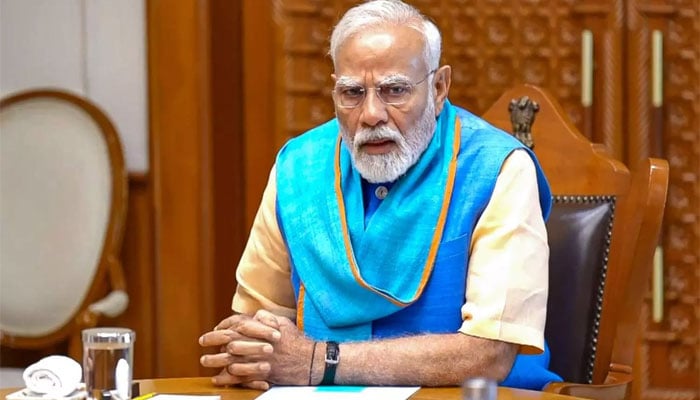
    Indian Prime Minister Narendra Modi has announced a high-powered task force to reform the country’s examination system following weeks of student-led protests over alleged irregularities in major entrance exams. The announcement came a day after Education Minister Dharmendra Pradhan resigned, as the government faced growing pressure from students and opposition groups demanding changes to the examination process. Modi said the new task force would be headed by Nandan Nilekani, co-founder of technology company Infosys. The panel will focus on improving the examination system and making it more transparent, reliable and technology-driven. In a video message posted on social media, Modi said the government wanted to restore confidence in upcoming examinations as quickly as possible. He stressed that the system must ensure greater transparency and make effective use of technology. The protests had been led in large part by supporters of the social media-driven Cockroach Janta Party (CJP). Thousands of students and young people gathered at New Delhi’s Jantar Mantar over several weeks, making the demonstrations among the most significant anti-government protests in India in recent years. The movement initially focused on alleged problems and irregularities in examinations, but its demands later expanded. Protesters also raised concerns about unemployment, limited opportunities for young people and what critics described as the government’s increasingly authoritarian approach. The protest site was largely cleared on Sunday. Municipal workers washed the surrounding roads and began repainting walls covered with slogans, posters and graffiti. Some protesters criticised the decision to remove the writings, saying the messages represented an important record of the movement. Rahul, a protester who had visited the site, said demonstrators had photographed and recorded the posters and slogans before they were removed. He said they wanted the material to remain documented and remembered. Some young people who travelled long distances to participate in the demonstrations arrived after the protest had already ended. One 19-year-old participant said he had travelled for around 20 hours after seeing videos of the demonstrations on Instagram. He said he wanted to witness the atmosphere and join other young protesters. Another visitor accused the government of worsening the situation by attempting to suppress the demonstrations. He argued that the crackdown had contributed to the protests becoming larger.

  • | |

    Pakistan Post issues high alert for mail bound for…

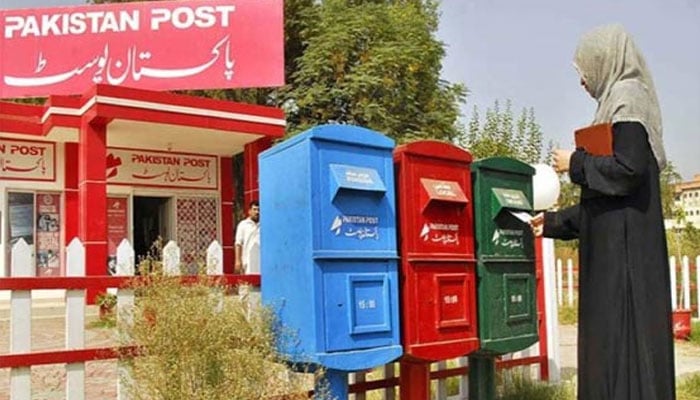
    Pakistan Post has issued a high alert for international mail destined for the United States and ordered tighter security measures for all such consignments. The postal service has directed officials and staff to strictly comply with the security and electronic information requirements set by the United States Postal Service. According to a circular issued by Pakistan Post headquarters, all relevant officers and employees have been instructed to exercise extra caution while handling mail destined for the US. The instructions cover all stages of the process, including the acceptance, preparation, processing and dispatch of international mail. Officials have been directed to ensure that the required security procedures and electronic information are completed accurately before consignments are dispatched. Pakistan Post has also stressed the need for vigilance during the handling of US-bound mail to prevent any security or compliance-related issues. The latest instructions are aimed at strengthening the screening and handling process for international postal items and ensuring that mail sent to the United States meets the required security standards.

  • |

    PhD exams face explosive questions over quality

    A renewed debate over the reliability of PhD examinations has emerged following questions surrounding the doctoral thesis of Professor Jason Arday. Arday submitted his PhD thesis at Liverpool John Moores University in July 2015. The controversy resurfaced after Professor Richard Dawkins publicly questioned whether the thesis had been thoroughly examined. Other commentators have also raised concerns about its academic quality and allegations of plagiarism. The debate has now expanded beyond the individual case. It has prompted questions about how universities assess doctoral research and whether the existing system consistently maintains the required academic standards. A PhD normally represents several years of specialised research. A doctoral thesis can contain tens of thousands of words and often requires extensive academic reading and analysis. The assessment is generally carried out by two examiners. One is usually from the candidate’s university, while the other comes from an external institution. Critics argue that the workload involved in examining a thesis is not always matched by the financial compensation provided to examiners. Examiners are commonly paid a relatively modest fee for reviewing lengthy and complex research. This has raised concerns that some may not devote sufficient time to the process. There are also concerns about inconsistencies in examination decisions. Some candidates have reportedly failed their PhDs despite believing that their research met the required standard. Others have received a pass even when questions remained about the quality of their work. The appeal process can be particularly difficult for unsuccessful candidates. A failed PhD can mean years of research being lost. Students who finance their own studies can also face substantial financial losses. For those hoping to build academic careers, the consequences can be even more serious. Another issue is the selection of examiners. Supervisors often play a role in recommending academics to assess their students’ work. Critics say professional relationships within academia could potentially influence the choice of examiners or the assessment itself. Academic misconduct presents another challenge. Universities can spend considerable time investigating allegations of plagiarism and other forms of cheating. Lengthy investigations can involve hearings, appeals and administrative procedures. The discussion has also highlighted the subjective nature of academic assessment. Different examiners can sometimes reach different conclusions about the same research. In some cases, candidates who fail with one set of examiners may later receive a pass from another panel after an appeal. There is no suggestion that these concerns necessarily apply to Arday’s examination. The available debate does not establish whether his thesis met or failed to meet the required standard. However, the controversy has renewed calls for universities to examine their doctoral assessment systems. Questions include how examiners are selected, whether they receive adequate compensation, how thoroughly theses are reviewed and how allegations of academic misconduct are handled. The wider debate is therefore about more than one doctoral thesis. It raises fundamental questions about the credibility, consistency and accountability of the PhD examination process.

  • | |

    Rana Sanaullah says sit-in protesters failed to st…

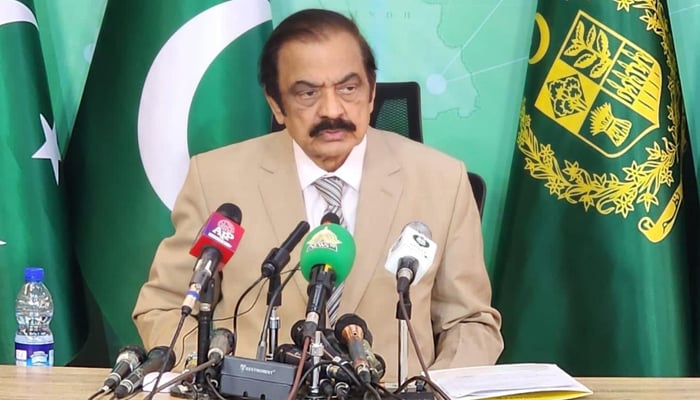
    Prime Minister’s Adviser on Political Affairs Rana Sanaullah has said that the groups holding sit-ins had attempted to disrupt the Azad Jammu and Kashmir elections but failed to achieve their objective. Speaking to the media in Islamabad, Rana Sanaullah said the people of Azad Kashmir had exercised their right to vote and given a mandate to their chosen representatives. He said the process of government formation in Azad Kashmir would begin after the completion of the third phase of the elections. Rana Sanaullah expressed hope that the groups staging protests would now recognise the situation and end their sit-ins. He said the government was willing to review the legitimate demands of the protesters. However, he warned that individuals who take up arms or act against the state would have to face legal action. The adviser also rejected allegations of widespread election rigging. He said those making such claims had so far failed to present evidence to support their allegations. Rana Sanaullah accused the Pakistan Peoples Party of using allegations of rigging to cover up what he described as its electoral defeat. He said the PPP was still raising concerns about alleged rigging, but the intensity of its claims had decreased compared with earlier stages of the election. He expressed hope that PPP leaders would eventually accept the results and congratulate the Pakistan Muslim League-Nawaz on its performance. Polling in the third phase of the Azad Kashmir elections was continuing, while authorities reported that the overall voting process remained peaceful. Rana Sanaullah said elements that had attempted to prevent people from casting their votes had failed in their efforts. He maintained that voters were freely exercising their democratic right and choosing their representatives through the ballot. The prime minister’s adviser also expressed confidence about the formation of the next government in Azad Kashmir. He claimed that the results available so far indicated that the PML-N was on course to form the government with a two-thirds majority. Rana Sanaullah described the elections as free, fair and transparent. He said the democratic process had allowed the people of Azad Kashmir to give a clear mandate to their representatives. He added that the government would focus on addressing public issues after the elections. According to Rana Sanaullah, the completion of the third phase will pave the way for the formal process of government formation in Azad Kashmir. The remarks came amid political tensions surrounding the elections and protests. The government has repeatedly called for the continuation of the democratic process, while opposition groups have raised concerns over the conduct of the polls.

  • |

    Google DeepMind exec admits AI extinction risk is “not zero

    Lila Ibrahim, Google DeepMind’s Chief AI Readiness Officer, will not put a number on the odds of AI wiping out humanity. She is not dismissing the possibility either. Speaking to Fortune, she said the risk is “not zero,” admitting that anything more specific would just be guesswork on her part. Ibrahim was among those who signed the Center for AI Safety’s 2023 statement, alongside co-founders of Anthropic and OpenAI. That statement argued AI extinction risk deserves the same global priority as nuclear war and pandemics. Three years on, she still believes staying silent on existential risk would be irresponsible. She feels this way especially now, given how far the technology has advanced since then. Some of her peers sound even more alarmed. Geoffrey Hinton, often called the “godfather of AI,” estimates a 10% to 20% chance of extinction within the next three decades. Anthropic’s Dario Amodei has gone further, putting the odds of things going “really, really badly” at around 25%. These warnings are not new either. Physicist Stephen Hawking, who used AI tools himself, raised similar concerns long before ChatGPT even existed. Ibrahim compares the situation to the pandemic, pointing out that the worst risks rarely arrive the way people expect. She noted that entire industries failed to properly weigh risk during earlier tech shifts, including the rise of the internet and social media. She is just as sceptical of the optimistic predictions floating around. Elon Musk recently told The Economist that money will stop mattering by 2036, imagining a future of cheap abundance and universal high income once robots take over most jobs. Jeff Bezos has predicted millions of people living in space by 2045. Sam Altman, meanwhile, envisions new job opportunities specifically for graduates working in space. Ibrahim isn’t convinced by either scenario, arguing that AI simply is not developing fast enough to make these predictions realistic anytime soon. Rather than debating far-off futures, Ibrahim says she is more focused on using AI to tackle problems happening right now. She pointed to climate change and industrial pollution as areas where the technology could make a real difference. She was also clear that AI’s benefits should not be limited to a handful of powerful companies. For her, that is just as important as managing the risks.

Leave a Reply

Your email address will not be published. Required fields are marked *