acting attorney general
|

Acting US Attorney General rescinds $1.8 billion initiative to clear path for Senate confirmation

Acting US Attorney General Todd Blanche has issued an official order rescinding the controversial $1.8 billion “Anti-Weaponisation Fund”, resolving a key point of friction ahead of his confirmation vote before the Senate Judiciary Committee.

The action follows extended negotiations with Republican Senators John Cornyn and Thom Tillis, who had withheld support for the nomination pending written assurances that the initiative would be permanently discarded.

Although Blanche previously indicated in Congressional testimony that the department would not move forward with the program, lawmakers sought a formal rescission to prevent its potential revival.

The directive also clarifies terms surrounding a related legal settlement, stipulating that provisions concerning tax audit protections apply exclusively on a retroactive basis to open claims active at the time of the agreement and do not extend to future tax filings.

Similar Posts

  • | | |

    Karachi water crisis: Munem Zafar Khan says citize…

    Jamaat-e-Islami Karachi chief Munem Zafar Khan has expressed concern over the worsening civic problems in Karachi, saying that residents of the city are struggling even for basic necessities such as clean water. Addressing a press conference in Karachi, Munem Zafar Khan criticized the provincial government over issues related to water supply, electricity, infrastructure, and public services. He said that the city continues to face serious challenges despite repeated promises of improvement. The Jamaat-e-Islami leader claimed that shortly after the first drops of rain fell in Karachi, around 200 power feeders were affected, causing electricity disruptions in several areas. He questioned the performance of K-Electric, stating that despite receiving significant government support, improvements in power generation and transmission systems had not met public expectations. Munem Zafar Khan also criticized the Sindh government over urban infrastructure issues, claiming that Karachi lacks adequate facilities and that residents are facing difficulties due to shortages of essential services. He raised concerns about drainage problems and safety issues, stating that several people had lost their lives after falling into open gutters. He questioned why proper maintenance and safety measures had not been implemented despite repeated incidents. The JI Karachi chief also criticized the pace of development projects, claiming that funds allocated for drainage cleaning and infrastructure improvements were often utilized shortly before the monsoon season instead of through year-round planning. Discussing the city’s water shortage, he said that a significant portion of Karachi’s coastal population continues to face difficulties accessing water. He also raised concerns about delays in the K-IV water project, saying that the project remains crucial for meeting the city’s growing water needs. Munem Zafar Khan further criticized delays in road and transport projects, including water pipeline work and other development schemes, alleging that political interests and poor management have affected progress. He also mentioned health-related concerns, referring to reports of HIV cases among children and calling for accountability and improvements in healthcare systems. The Sindh government and other relevant authorities have faced repeated criticism from opposition parties over Karachi’s civic challenges, including water shortages, electricity problems, waste management, and infrastructure development. Karachi, Pakistan’s largest city and economic hub, continues to face pressure from rapid population growth and increasing demand for public services. Experts have emphasized the need for long-term planning, better governance, and effective implementation of development projects to address the city’s growing challenges.

  • | |

    Mir Raza murder case raises questions over investi…

    The father of young Karachi businessman Mir Raza has raised serious questions over the investigation into his son’s murder. He alleged that the case was being influenced. He claimed that signs of interference by the Sindh government were visible in the investigation. Lawyers protested at the City Court on Tuesday over the failure to arrest the suspects in the case. Mir Raza’s father, Mir Hussain, also spoke during the protest. He questioned the removal of Dr Usama from the case. According to Mir Hussain, Dr Usama was removed so that he would not be able to answer questions about the matter. He also questioned the preparation of the post-mortem report. He asked why the report was allegedly prepared on the basis of photographs. Mir Hussain questioned whether any pressure was involved in the preparation of the report. He demanded that the circumstances surrounding the post-mortem be properly examined. The victim’s father further criticised the police investigation. He said the police’s alleged incompetence in his son’s case was now evident. The protest was held as the suspects in the murder case remained at large. The lawyers demanded progress in the investigation and the arrest of those responsible. Mir Hussain called for transparency in the investigation. He said the family wanted answers regarding every aspect of the case.

  • |

    Oil prices rise as US-Iran uncertainty and shipping attacks raise supply concerns

    BEIJING: Global oil prices advanced on Wednesday as uncertainty surrounding a potential peace agreement between the United States and Iran, coupled with attacks on commercial shipping in key Middle Eastern waterways, heightened concerns about disruptions to crude supplies. At 0553 GMT, Brent crude futures had gained 75 cents, or 0.84%, to reach $89.66 per barrel. US West Texas Intermediate (WTI) crude rose 72 cents, or 0.87%, to $83.92 a barrel. Both benchmarks had climbed by more than $1 earlier in the session. The latest gains followed a strong rally on Tuesday, when both Brent and WTI settled more than $1 higher, reaching their highest closing levels since July 31. Oil prices had already surged around 5% on Monday as market participants became increasingly sceptical about the prospects of a US-Iran agreement to end the conflict. Concerns intensified after US President Donald Trump issued a fresh demand that Iran compensate people killed in wars, attacks and protests. Market analysts said the latest developments have left energy markets highly sensitive to changes in the US-Iran narrative. “The Middle East is increasingly becoming a seesaw between ‘deal’ and ‘war’,” said Priyanka Sachdeva, head of market insights at Phillip Nova in Singapore, describing the resulting price swings as a pendulum moving between roughly $70 and $90 a barrel. Shipping Disruptions Add to Market Pressure Concerns over the safety of crude shipments were also reinforced after the United States and Yemen’s Iran-aligned Houthis reported separate attacks involving shipping in the Strait of Hormuz and the Bab el-Mandeb Strait. The Strait of Hormuz is one of the world’s most important energy transit routes, making any prolonged disruption there a major concern for global oil markets. Iranian security official Mohsen Rezaei said the strategic waterway would remain closed unless Washington accepted Tehran’s conditions for ending the conflict. Those demands reportedly include the release of frozen Iranian assets and an end to other regional conflicts. Trump, meanwhile, has continued to send mixed signals about the US response, alternating between warnings of a tougher military approach and suggestions that an agreement could still be reached. The uncertainty has contributed to sharp swings in crude prices as traders attempt to assess whether the conflict will escalate or move towards negotiations. Sachdeva said markets could increasingly become accustomed to the frequent changes in the geopolitical narrative, creating a highly volatile environment for short-term traders and speculators. Hormuz Traffic Falls Sharply Shipping data highlighted the scale of the disruption. The number of vessels passing through the Strait of Hormuz fell to only eight on Tuesday, according to shipping data cited in market reports. That compares with an estimated 125 to 140 vessels a day before the conflict, underscoring the extent to which security concerns have affected maritime traffic through the strategic waterway. A sustained reduction in shipping through Hormuz could have significant implications for global energy markets because the route handles a substantial share of international oil shipments. US Crude Inventories in Focus Despite geopolitical concerns, developments in the United States provided a counterweight to the bullish sentiment. A Reuters poll released on Tuesday had indicated that US crude and fuel inventories were expected to decline during the week ended August 7. However, market sources citing data from the American Petroleum Institute (API) reported a substantial increase in US crude stocks. According to the sources, US crude inventories increased by approximately 9.1 million barrels last week. Gasoline stocks declined by around 1.5 million barrels, while distillate inventories fell by approximately 596,000 barrels. The reported crude build was considerably larger than market expectations. If confirmed by official figures, the increase could ease concerns over tightness in the US oil market and potentially limit further price gains. Haitong Futures said in a market note that the unexpectedly large increase in crude inventories could reduce some of the supply-related pressure currently supporting oil prices. EIA Data Awaited Investors are now awaiting official inventory figures from the US Energy Information Administration (EIA), the statistical arm of the US Department of Energy. The EIA’s weekly petroleum report is scheduled for release at 10:30 a.m. Eastern Time (1430 GMT) on Wednesday. Market participants will closely examine the data for signs of changes in crude production, refinery activity, gasoline demand and commercial inventories. Any significant deviation from the API figures could trigger additional volatility in oil prices. Longer-Term Supply Risks Remain Beyond the immediate market reaction, longer-term concerns over Middle Eastern supply disruptions continue to provide support to crude prices. The EIA has estimated that disruptions to Middle Eastern crude supplies could amount to approximately 600,000 barrels per day and persist through the end of 2027. With geopolitical tensions still unresolved and shipping activity through major regional waterways significantly reduced, traders are expected to remain highly sensitive to developments involving the United States, Iran and regional armed groups.

  • |

    Lionel Messi returns to Inter Miami training after World Cup

    MIAMI: Football icon Lionel Messi has returned to training with Inter Miami CF after taking a short break following Argentina’s heartbreaking defeat in the FIFA World Cup 2026 final. The Argentine captain was back on the training pitch on Wednesday, just 10 days after Spain edged Argentina 1-0 in the World Cup final in New Jersey, ending the South American nation’s hopes of defending the title they won in Qatar four years earlier. Inter Miami shared a video on its official social media platforms showing Messi arriving for training alongside longtime teammate and close friend Luis Suárez. The footage quickly attracted millions of views as fans celebrated the return of one of football’s greatest-ever players. Following the World Cup final, Messi returned to his hometown of Rosario in Argentina, where he spent time with his family while recovering physically and emotionally from the tournament. A day after the final, the 39-year-old expressed his disappointment in an emotional social media message, admitting that the defeat had left a deep emotional scar. “The pain is immense, and it’s going to take a long time for this wound to heal,” Messi wrote after Argentina narrowly missed out on consecutive World Cup titles. The football legend has not yet confirmed whether he will continue representing Argentina at international level, leaving supporters eagerly waiting for a decision about his future with the national team. During Messi’s absence, Inter Miami head coach Guillermo Hoyos explained that neither Messi nor Argentine midfielder Rodrigo De Paul had a fixed return date, stressing the physical and mental demands of a World Cup campaign. “They need the time,” Hoyos had said, adding that players deserved adequate rest after competing on football’s biggest stage. Major League Soccer also granted Messi and De Paul permission to miss this year’s MLS All-Star Game in Charlotte due to their recent World Cup commitments. The decision marked a departure from last season, when Messi received a one-match suspension after missing the showcase event without an approved exemption. Although Messi has resumed full training, Inter Miami has not officially confirmed when he will return to competitive action. The club is scheduled to host the Columbus Crew on Saturday before beginning its Leagues Cup campaign next week against Mexico’s Atlético de San Luis. With Messi back on the training ground, excitement has surged among Inter Miami supporters, who hope the Argentine superstar will quickly return to action and lead the club’s push for silverware during the remainder of the 2026 season.

  • |

    North Korean missile unit reportedly deploys to Russia for Ukraine war

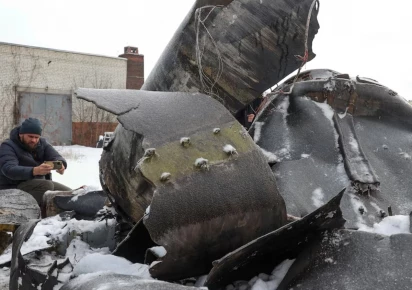
    Ukraine’s military intelligence claims that a North Korean missile unit has started deploying to western Russia, marking what could become a major expansion of military cooperation between Moscow and Pyongyang. According to Ukrainian officials, the unit may eventually be equipped with up to 120 ballistic missiles and six launchers for use in attacks against Ukraine. Andrii Cherniak, an official with Ukraine’s Main Directorate of Intelligence, said around 90 North Korean personnel are expected to be stationed in Russia’s Voronezh region as part of the Russian military’s 112th Missile Brigade. He added that discussions between senior Russian and North Korean officials next month are expected to determine the final deployment plan and missile numbers. Ukraine says North Korea has already delivered another batch of 40 KN-23 and KN-24 ballistic missiles along with military personnel. These missiles reportedly have a longer range and larger payload than Russia’s Iskander missiles, although Ukrainian military sources believe they are less accurate and have caused significant civilian casualties during previous strikes. The reported deployment comes as Russia has resumed using North Korean-made ballistic missiles after nearly a year. Ukrainian authorities say two such missiles were launched last week, including one that struck the village of Radushne in central Ukraine, reportedly killing at least five members of the same family. Ukraine remains heavily dependent on advanced air defence systems, particularly US-made Patriot batteries, to intercept ballistic missiles. Military analysts warn that an increase in North Korean missile supplies would place additional pressure on Ukraine’s already stretched air defence network, especially ahead of the winter months when Russia has previously targeted the country’s energy infrastructure. Cherniak said intelligence suggests Russia intends to integrate North Korean missile forces into its operations, although the exact role of North Korean personnel has not yet been confirmed. He also stated that about 9,500 North Korean troops remain in Russia’s Kursk region, though they are not currently taking part in direct combat operations against Ukraine. Russia and North Korea have strengthened military ties since Moscow launched its full-scale invasion of Ukraine in 2022. The two countries signed a mutual defence agreement in 2024, while Kyiv accuses Pyongyang of supplying millions of artillery shells, ballistic missiles and thousands of troops to support Russia’s war effort.

  • |

    Julie Andrews confirms she will not return for ‘Princess Diaries 3’

    “The Princess Diaries” remains one of the most beloved coming-of-age films of the century, but its long-awaited third instalment just lost one of its biggest stars. Dame Julie Andrews has confirmed she won’t be part of it. The 90-year-old actress played Queen Clarisse Renaldi opposite Anne Hathaway in the original films. She has now revealed she’ll be sitting out the upcoming sequel entirely. Speaking to Today, Andrews confirmed directly that she will not appear in the new instalment. She explained that the story appears to be taking a somewhat different direction this time around. She admitted she isn’t entirely sure how the filmmakers plan to handle that shift. According to her, the timing simply doesn’t work for her to be part of it anymore. Andrews said she believes the story now belongs to Princess Mia, Hathaway’s character, rather than her own. She framed the decision as a natural handoff, letting the franchise continue through its central character instead. Her comments have already sparked disappointment among longtime fans of the franchise. One user online said the script would need to be exceptional now, arguing the film has lost one of its strongest draws. For many, Andrews’ presence was a defining part of what made the earlier films so beloved. Fans had been hoping to see her return to the big screen after years away from major on-screen roles. Since stepping back from acting, Andrews has largely shifted toward voiceover work instead. Her absence from “The Princess Diaries 3” marks another sign of that ongoing transition away from live-action performances. While the news has left fans emotional, it also puts more attention on how the new film will carry the story forward. With Andrews stepping aside, all eyes are now on how the franchise reintroduces its world without one of its most iconic characters.

Leave a Reply

Your email address will not be published. Required fields are marked *