stop culture begging

Stop the culture of begging

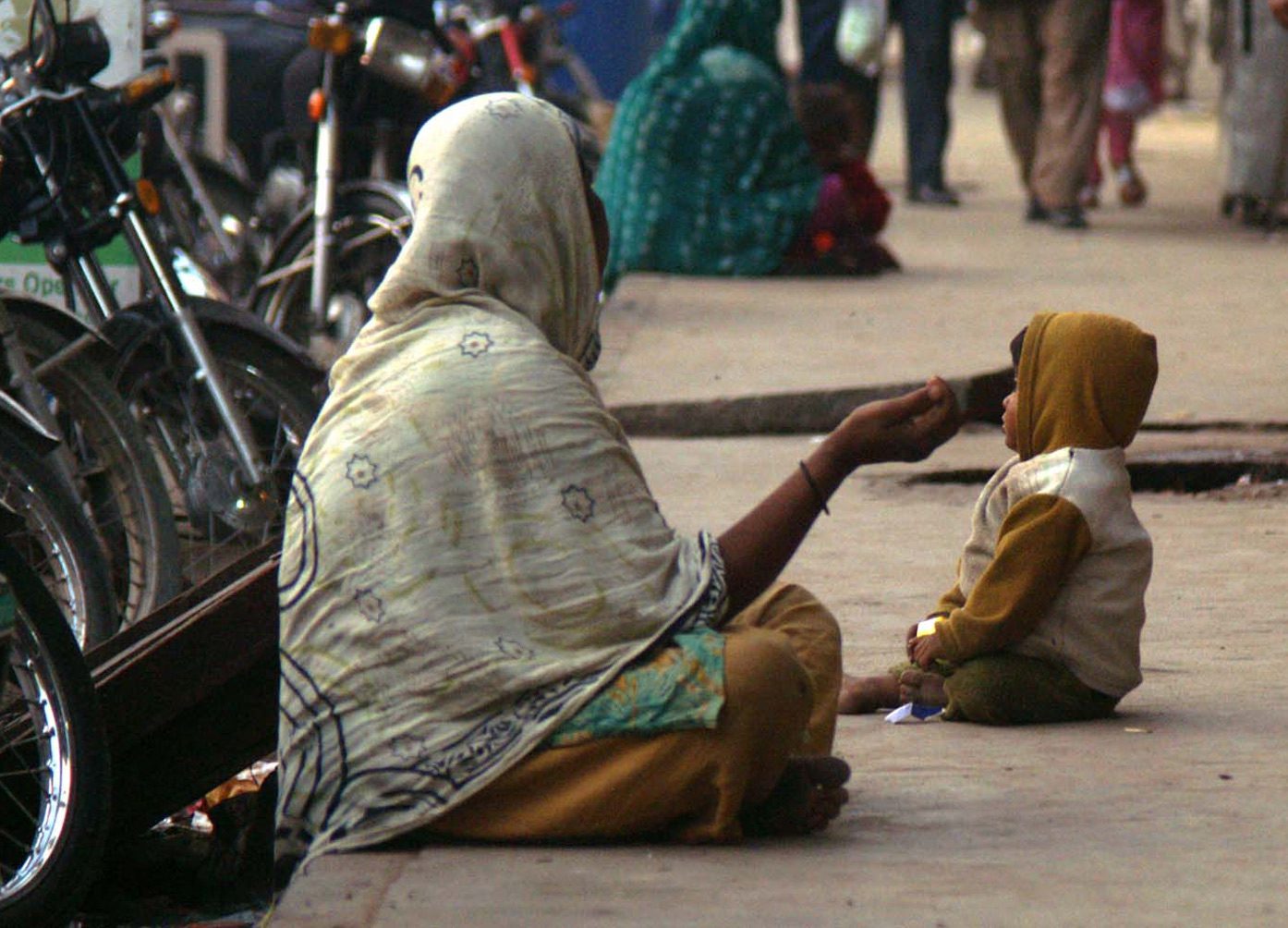
Begging has become a growing problem in many cities of Pakistan. It is common to see children women and elderly people begging at traffic signals markets and public places.


While some are genuinely poor many are forced into organized begging networks that exploit them for money.

Instead of encouraging begging by giving cash, society should support charities, shelters and welfare programs that help people become self reliant.


The government must also take strict action against begging mafias provide vocational training and create employment opportunities for those in need.

By addressing the root causes of poverty and exploitation we can help people live with dignity rather than depend on begging

Similar Posts

  • Tracing the spiritual legacy of “Nanak Se Nankana”

    In the fertile plains of Punjab lies a landscape quietly layered with centuries of devotion, miracle tales, and interfaith kinship. This sanctuary of green fields was known as Rai-Bhoi-Di-Talwandi. The time long before the bustling town of Nankana Sahib bore its current name. It was overseen by Rai Bhoi Bhatti, a local Muslim landlord whose family had influence over the region. Yet, history transitioned irreversibly in 1469. It was in this soil that Guru Nanak Dev Ji, the founder of Sikhism, was born to Mehta Kalu and Mata Tripta. Rai Bular Bhatti (Rai Bhoi’s descendant) renamed the settlement Nankana Sahib in his honor. He was basically moved by the extraordinary spiritual wisdom radiating from the young child. Thus began a historical and spiritual trajectory known throughout the subcontinent as Nanak Se Nankana. The sacred evolution of a man into a timeless sanctuary. What makes Nankana Sahib uniquely enchanting is that the entire geography operates as a living storyboard. The city’s trees, fields, and lanes are strongly knitted  into local folklore. And each folklore is  marked by a Gurdwara commemorating young Nanak’s childhood and early enlightenment. Gurdwara Janam Asthan is the crown of the holy city. This magnificent marble compound stands at the site of Guru Nanak’s ancestral home. It was originally built as a small sanctum by his descendants. Later transformed into a grand complex surrounded by reflective Sarovars (holy pools) during the reign of Maharaja Ranjit Singh. According to popular regional legend, a young Nanak was sleeping out in the open pastures while tending to his father’s cattle. As the afternoon sun shifted, a large cobra slithered out and expanded its hood above his face to shade him from the blistering heat. Rai Bular Bhatti witnessed this miracle from his horse and then showed his devotion for Nanak. The ancient Jal (Mal) tree under which the event occurred still casts its shade today at Gurdwara Malji Sahib. Local folklore recalls a peasant complaining that Nanak’s roaming cattle had ruined his crops. Yet, when officials inspected the field, the damaged green stalks had miraculously grew back whole and undamaged. Gurdwara Kiara Sahib stands today atop that very field. When young Nanak returned from a nearby market town having spent his father’s money entirely on feeding hungry sadhus (Sacha Sauda or the True Bargain), he feared his father’s anger. He hid beneath a large, canopy-like tree whose drooping branches resembled a tent (tambu). Nearby stands Patti Sahib, where a seven-year-old Nanak astounded his teacher by writing an acrostic poem on the alphabet explaining divine truths instead of mere grammar. Beyond the miraculous legends of childhood, Nankana Sahib carries profound historical lore. It weathered the turbulent Sikh Empire era. The city witnessed the heroic sacrifices of the 1921 Akali Movement reform at Janam Asthan. It also survived the painful demographics shifts of the 1947 Partition. Today, the journey of Nanak Se Nankana remains an emotional pilgrimage. Every year during Gurpurab (Guru Nanak’s birth anniversary), thousands of pilgrims from across the globe cross borders to converge on these quiet lanes. The devotees step through the grand archways of Gurdwara Janam Asthan and touch the dust of Nankana to their foreheads. They aren’t just visiting a building. They are retracing a historical path that transformed a quiet Punjab meadow into a sanctuary of universal love, humility, and timeless unity.  

  • New image reveal Sun’s surface in amazing detail

    Looking directly at the Sun is impossible and capturing a clear image of it is even more difficult. However, new images of the star at the center of our solar system have been released showing its surface in extraordinary detail. The images were captured by the Inouye Solar Telescope located in the US state of Hawaii. It is considered the world’s most powerful solar telescope and is capable of observing the Sun in unprecedented detail. The telescope has captured images of the Sun before but these new photographs provide the most detailed views yet of the surface of our solar system’s star. A unique wing-like pattern can be seen across the Sun’s surface in the images. According to scientists, this pattern is associated with the Sun’s magnetic field which is moving in a wave-like manner due to hot gases. Closer look at Sun’s surface The images reveal processes occurring on the Sun’s surface that may help explain a decades-old mystery: why the Sun’s outer atmosphere known as the corona is millions of times hotter than its visible surface. Experts say these are the highest-resolution images of the Sun’s surface ever captured. In earlier observations, the telescope detected sand-like structures on the Sun’s surface making it appear as though grains of sand were being viewed under a microscope. Each of these structures was roughly the size of France in terms of area but the new images reveal much greater detail. The new photographs show a distinctive pattern on the Sun’s surface associated with rapidly moving plasma. Scientists have identified this pattern as Kelvin-Helmholtz instabilities (KHIs). Kelvin-Helmholtz instabilities have been observed on Earth during the formation of patterns in lakes, oceans and clouds. They have also been detected on Jupiter and Saturn but their presence on the Sun had not previously been confirmed. Why Sun’s magnetic activity matters? Solar activity particularly changes in the Sun’s magnetic fields can affect power grids, satellites, GPS positioning and global communications on Earth. These magnetic fields are generated by the Sun’s extremely hot plasma but scientists have not yet fully understood how they work. Experts know that these magnetic fields can trigger sudden releases of enormous amounts of heat but exactly why this happens remains unclear. The new images, however, provide clues that could help explain why the Sun’s visible surface has a temperature of around 6,000°C while its outer atmosphere can reach temperatures of millions of degrees Celsius.

  • Gas cooking may worsen asthma

    A new US study suggests that using gas stoves at home may worsen asthma symptoms by reducing indoor air quality. Researchers at Case Western Reserve University studied 85 children and adults with moderate to severe asthma. Participants used gas stoves for four weeks before researchers replaced them with electric stoves at no cost. Their health was then monitored for another two to three months.  The team also measured indoor air pollution before and after the switch. The study found that burning natural gas releases harmful gases including nitrogen dioxide and carbon monoxide which can affect lung health over time. After switching to electric stoves nitrogen dioxide levels inside homes dropped by up to 70% while asthma symptoms became less severe. Researchers said the health improvements were similar to or even better than those usually seen with asthma medication. The study also found an 80% drop in asthma related absences from work or school and a 70% reduction in doctor visits. However the researchers said the study was small and lasted only a few months so larger and longer studies are needed to confirm the findings.

  • The Euphemism of Integration: Kashmir Seven Years Later

    By Ahmad Hassan “The convoluted wording of legalisms grew up around the necessity to hide from ourselves the violence we intend toward each other… Elaborate euphemisms may conceal your intent to kill, but behind any use of power over another the ultimate assumption remains: ‘I feed on your energy.’” When Frank Herbert wrote those words in his novel Dune Messiah, he observed that elaborate euphemisms are often used by the state to conceal the raw mechanics of power. In Pakistan, August 5 is observed as Youm-e-Istehsal to condemn the 2019 revocation of Article 370 and its supplementary provision, Article 35A. This act of the Indian government removed Kashmir’s separate constitution, its flag and its control over its own affairs. Last week marked seven years since that day. What began as a dramatic constitutional rupture has now, by design, become quietly normalized. Jammu and Kashmir joined India in 1947 on defined terms. The Maharaja handed over defence, foreign affairs and communications. Everything else stayed with the state. The United Nations later called for a plebiscite. It never happened. Instead, over decades, the protections that were supposed to stand in its place were worn down piece by piece, until August 5, 2019, when the government removed what remained in a single stroke. The method deserves more attention than it usually gets. Article 370 was not directly changed. First, the government reached for Article 367, which was intended to aid in the interpretation of the Constitution, and used it to redefine one phrase: “Constituent Assembly” became “Legislative Assembly.” Kashmir had no sitting assembly at the time, and the state was under President’s Rule. So, the government’s own appointee, the Governor, signed off on the change. India’s Supreme Court had already ruled, in 1959 and again in 1969, that Kashmir’s constitutional status could only be changed after the approval of the Constituent Assembly of Kashmir. When that body no longer existed, no institution had the standing to give that consent on Kashmir’s behalf. New Delhi decided that its own Governor could stand in for the people he had not been elected by. That is not consent. It is a government consenting to itself. The Indian government argued that Kashmiris had lived for decades under an insurgency that killed tens of thousands and emptied the Valley of its Pandit community in 1990. It left the region isolated from the investment and policing coordination. That argument would carry more weight if the method had matched it. What followed the revocation was not the language of integration. It was a total communications blackout, landlines and mobile networks and the internet all cut at once. Independent estimates put the troop presence at 600,000 to 800,000, roughly one soldier for every ten Kashmiris. Even pro-India politicians, former chief ministers among them, were placed under detention. Perhaps a security argument can justify counter-insurgency operations. It cannot by itself justify dissolving a state’s constitutional status, its legislature and its statehood in one move. That too with no elected Kashmiri voice given the chance to object. Jawaharlal Nehru warned Parliament about exactly this shortcut in 1952, while Article 370 was still being drafted. No clause in a constitution, he said, could substitute for the will of the Kashmiri people. Real integration, in his words, comes from the mind and the heart, not from a clause imposed from outside. Actually, there is a longer, quieter project behind the legal manoeuvre. Article 35A once barred outsiders from buying land or settling permanently in Kashmir. Since its removal, more than 3.2 million domicile certificates have gone to outsiders, most of them non-Kashmiri Hindus. This alarming thing is that wherever a disputed territory’s demographics are reshaped before its people are asked what they want, the eventual vote, if one ever comes, no longer reflects the population whose future was originally in question. None of this required an invading army, or an open declaration of intent. It required a redefined word, a signature from an appointee, and a great deal of time. The convoluted legalisms that Herbert warned about have become policy in Kashmir: development, integration, correction. Each euphemism has quietly done the work that an honest admission of purpose could never have achieved. Seven years on, Kashmir’s assembly has voted decisively against the BJP that carried out the revocation, and passed its own resolution demanding the restoration of its special status. New Delhi can easily ignore them. Yet, that very power to ignore an elected legislature proves, beyond any doubt, that the “consent” obtained seven years ago was always a legal fiction.

  • How to keep your inverter battery healthy

    Inverter batteries have become common in many homes especially in areas where power cuts are frequent.  However many people forget to maintain the battery properly.  Knowing when to check the water level and how much water to add can help keep a battery working well. Check the water level regularly In traditional lead acid batteries the water level slowly decreases with use.  That is why it is important to check it from time to time. If the inverter is used less often checking the battery every two to three months may be enough. With heavier use it may need to be checked more often. A very low water level can affect the battery’s internal parts and may reduce its lifespan. Watch for signs of low water If your inverter is giving less backup than before the battery feels unusually hot, or its performance keeps getting worse check its condition and water level.  However low water is not always the only reason for battery problems. If the issue continues have the battery checked by a professional. Add the right amount of water When adding water, check the level marked on the battery. The water should stay between the minimum and maximum lines. If the level is below the minimum mark add the required amount carefully.  Never fill the battery above the maximum level. Do not overfill the battery Adding extra water does not make a battery last longer.  Overfilling can cause the electrolyte to spill out and may damage nearby parts.  Always keep the water within the recommended level. Use distilled water Avoid using ordinary tap water in batteries that require topping up. Minerals and other substances in tap water can damage the battery over time. Distilled water is generally recommended but always follow the instructions provided by the battery manufacturer. Not every battery needs water Not all inverter batteries are the same.  Some are maintenance free and do not need to be opened or filled with water. Before opening a battery or adding anything to it check its type and read the manufacturer’s instructions. Be careful while Checking the battery Lead acid batteries can contain corrosive liquid so wear protective gloves and protect your eyes when handling them.  Keep cigarettes flames, and sparks away from the battery. If the battery is swollen, leaking or becoming extremely hot, do not try to open or repair it yourself. Contact a qualified technician. •Regular Maintenance •Can extend battery life •Taking simple care of your inverter battery can help maintain its performance. Check the water level when needed use the correct type of water keep the battery clean and follow the manufacturer’s instructions to help keep it in good condition.

  • Dark spots? Expert tips for clear skin

    Clear healthy skin is something many women want but sun exposure acne marks hormonal changes skin irritation and poor skincare can all lead to dark spots on the face. Many people try quick home remedies or low quality creams to remove these marks but these products can sometimes make the skin more sensitive instead of improving it. Experts say it is important to understand the cause of dark spots rather than just trying to hide them. •What causes dark spots? Dark spots can appear after acne heals from skin injuries or irritation hormonal changes or too much sun exposure.  In some cases using skincare products that irritate the skin can also lead to discoloration. •Simple habits for healthier skin A daily skincare routine can help keep your skin clear.  Wash your face every day to remove dirt sweat and makeup especially before going to bed. Using sunscreen every day is also important. Dermatologists say sunlight can make existing dark spots darker and increase the risk of new ones forming. •Be careful with home remedies Natural ingredients such as rose water honey and yogurt are commonly used in home beauty treatments but they may not suit every skin type. Avoid applying lemon juice or other acidic ingredients directly to your face as they can cause irritation redness and make dark spots worse. •When to see a dermatologist If your dark spots keep getting worse return frequently or do not improve despite proper skincare it is best to consult a dermatologist.  Finding the real cause of the problem is the first step toward choosing the right treatment.

Leave a Reply

Your email address will not be published. Required fields are marked *