democratic support israel
|

Democratic support for Israel weakens as Gaza war deepens political divide in US

For decades, support for Israel was one of the few foreign policy issues that united both major political parties in the United States. That long standing consensus is now showing signs of breaking down as growing criticism of Israel’s military actions in Gaza, the conflict with Iran and Prime Minister Benjamin Netanyahu’s close relationship with Republican leaders reshape opinion within the Democratic Party.

Public support for Israel among Democratic voters has fallen sharply in recent years. More Democratic candidates are openly criticizing Israeli government policies and several have built successful election campaigns around calls to reassess Washington’s military and diplomatic support for its longtime ally. The shift has become increasingly visible in Congress, where many lawmakers who once backed military assistance without question are now calling for restrictions or major changes.

The change was highlighted this month when nearly half of House Democrats voted in favor of an amendment that sought to block military aid to Israel. Although the proposal ultimately failed, the level of support marked a significant departure from previous years when similar measures would have attracted little backing. Israel receives $3.8 billion in annual US military assistance and has also secured billions of dollars in additional emergency funding over the past several years.

Democratic leaders remain divided over the issue. House Democratic Leader Hakeem Jeffries opposed the amendment, arguing that it was too broad. However, senior party figures including former House Speaker Nancy Pelosi and House Democratic Whip Katherine Clark voted in support of it. The differing positions reflect an increasingly difficult debate within the party over whether military assistance should continue without conditions, be limited to defensive equipment or be suspended altogether.

Senator Chris Coons, the top Democrat on the Senate Foreign Relations Committee, expressed hope that Israel’s upcoming elections could improve relations between the two allies. He suggested that new political leadership in Israel might help restore bipartisan support in Washington and move beyond the current period of tension. Coons also argued that Netanyahu has prolonged conflicts for political reasons, a claim that adds to the growing criticism from within the Democratic Party.

Recent polling shows how public opinion has shifted. A Quinnipiac University survey conducted in June found that nearly half of all American voters believe the United States is too supportive of Israel. Among Democrats, that figure rose to 66 percent, a dramatic increase compared with the results recorded when the question was first asked in 2017.

Israel’s ambassador to the United Nations, Danny Danon, dismissed concerns that bipartisan backing is disappearing. He said that despite intense political debate, support for Israel continues to remain strong across large sections of both major parties.

The issue has become especially important in Michigan’s Democratic Senate primary, where voters are choosing between candidates with sharply different positions on Israel. Representative Haley Stevens has defended close ties with Israel and argues that the relationship strengthens economic growth and national security. Her opponent, Abdul El-Sayed, has strongly criticized continued military support and says American resources should be invested at home rather than funding Israel’s military campaign.

The debate follows nearly three years of conflict that began after Hamas launched its October 2023 attack on Israel, killing around 1,200 people and taking hundreds hostage. Since then, Gaza health authorities say more than 73,000 Palestinians have been killed during Israel’s military operations. Israel rejects accusations of genocide and maintains that it is fighting Hamas while taking measures to reduce civilian casualties.

Political analysts say the war has significantly influenced younger Democratic voters, many of whom have become more critical of Israeli government policies. Campus protests and growing public demonstrations have increased pressure on Democratic leaders to reconsider traditional positions on military aid. Some observers also believe the issue contributed to divisions within the party during the 2024 presidential election campaign.

The debate is spreading beyond Michigan into congressional races across states including New York, Florida and Colorado, where candidates are increasingly making Israel a central campaign issue. Progressive organizations argue that opposition is directed mainly at Netanyahu’s government rather than Israel itself, while more traditional pro-Israel groups continue to defend the alliance.

Despite the growing disagreement, many Democratic lawmakers continue to support Israel’s right to exist and defend itself. However, an increasing number are questioning the policies of the current Israeli leadership and calling for greater humanitarian assistance to Palestinians, signaling that the party’s approach to one of America’s closest allies is undergoing a significant transformation.


Similar Posts

  • | |

    Daanish schools enrol only 40,000 in 15 years: Edu…

    Punjab Education Minister Rana Sikandar Hayat has raised questions about the performance and accessibility of the Daanish School System. He said education at Daanish schools was expensive. As a result, the system had enrolled only around 40,000 students in 15 years. The minister questioned the effectiveness of earlier education initiatives in the province. He specifically referred to comprehensive and pilot schools established in Punjab. He asked where those schools had gone and why they had failed to deliver the expected results. Rana Sikandar Hayat said the Punjab government was working to reduce the gap between public and private education. For this purpose, the government had moved towards a public-private partnership model. He said the approach could help improve the quality of education and increase access for children. The provincial minister also highlighted the enrolment performance of the Nawaz Sharif School of Eminence programme. He said these schools had recorded an average enrolment of around 112 per cent so far. Rana Sikandar Hayat also spoke about the issue of inaccurate student records in government schools. He claimed that authorities had removed around 1.5 million ghost students from government school records across Punjab. The minister said the province still faced a major education challenge. Around 25 per cent of children in Punjab remain out of school, according to him. He said the dropout problem becomes particularly serious when students reach the high-school level. A significant number of children leave education after reaching secondary-level schools, he said. This affects the overall literacy and education indicators of the province. The minister said the government was now focusing on bringing children who are outside the education system back into schools. He said schools operating under outsourcing arrangements had been given a specific target. They would be required to enrol 5 per cent of children currently deprived of education. The initiative is aimed at increasing school enrolment and reducing the number of children who remain outside the formal education system. Rana Sikandar Hayat said improving access to education required both enrolment and retention. Bringing children into schools would not be enough if they later dropped out. He stressed the need to strengthen the education system and ensure that children continue their studies through higher grades. The minister’s remarks highlight the challenges facing Punjab’s education sector. Despite having a large network of schools, the province continues to deal with out-of-school children, inaccurate enrolment records and high dropout rates. The government is now looking towards partnerships with the private sector and reforms in public schools to address these problems. The minister said the ultimate objective was to provide more children with access to quality education and reduce the divide between public and private schooling.

  • | |

    Essential commodity prices surge sharply over one …

    Prices of several essential commodities have increased significantly across Pakistan over the past year, putting additional pressure on household budgets. According to the latest data released by the Pakistan Bureau of Statistics (PBS), major increases were recorded in the prices of several food items and fuel products. Onion prices recorded the highest increase among the commodities listed by the statistics agency. The price of onions rose by 132.52% in one year. Tomato prices also increased sharply by 93.21%, while flour became 62.25% more expensive during the same period. Fuel prices also witnessed substantial increases. According to the PBS, LPG became 51.69% more expensive over the year. Diesel prices increased by 33.08%, while petrol became 27.65% more expensive. The rise in fuel prices can also affect transportation and the cost of goods and services. Several meat and fruit prices also increased during the year. The price of bananas rose by 17.66%, while mutton became 15.98% more expensive. Beef prices increased by 13.54%, adding to the cost of commonly consumed food items. However, some essential commodities became cheaper during the same period. Potato prices declined by 30%, while sugar became 19.10% cheaper. Chicken prices also decreased by 17.68%, providing some relief to consumers. The statistics also showed a decline in the prices of eggs and pulses. Egg prices fell by 17.41% over the year, while chana dal became more than 13% cheaper. Masoor dal prices declined by 12.29%, while jaggery became 6% cheaper. The latest figures show mixed price trends in the country. While consumers received some relief from lower prices of potatoes, sugar, chicken, eggs and pulses, sharp increases in onions, tomatoes, flour and fuel continued to add pressure to household expenses. The data highlights the significant changes in the prices of everyday necessities over the past year.

  • | |

    AJK polls disrupted as clash erupts at Bhimber pol…

    Voting was suspended at a polling station in Azad Jammu and Kashmir’s Bhimber district after a clash broke out between workers of two political parties during the first phase of the AJK elections. The incident took place at the Darbar Baba Shadi Shaheed polling station in constituency LA-6 Bhimber. Following the confrontation, polling was halted temporarily. Pakistan Muslim League-Nawaz (PML-N) candidate Abdul Razzaq Chaudhry alleged that workers of an opposing political party started the fight at the polling station. District Returning Officer (DRO) confirmed that a clash had taken place at one of the polling stations at Darbar Baba Shadi Shaheed. According to the official, miscreants snatched a ballot box and set it on fire. The DRO said the ballot box contained 232 votes when it was set ablaze. Returning officials and security personnel are currently present at the polling station. The DRO said legal action would be taken against those involved in disrupting the polling process. Officials have yet to decide whether polling will be held again at the affected polling station. The DRO said a decision on re-polling would be taken later in accordance with the relevant election rules. Apart from the affected polling station, polling is continuing normally at all other polling stations across the constituency. Meanwhile, the DRO also said that former AJK prime minister Anwar-ul-Haq had raised a complaint regarding polling arrangements in constituency LA-7. Officials visited the polling stations where complaints had been received and found that the relevant polling agents were present there.

  • | |

    Russia blasts Japan over Putin’s Kuril visit

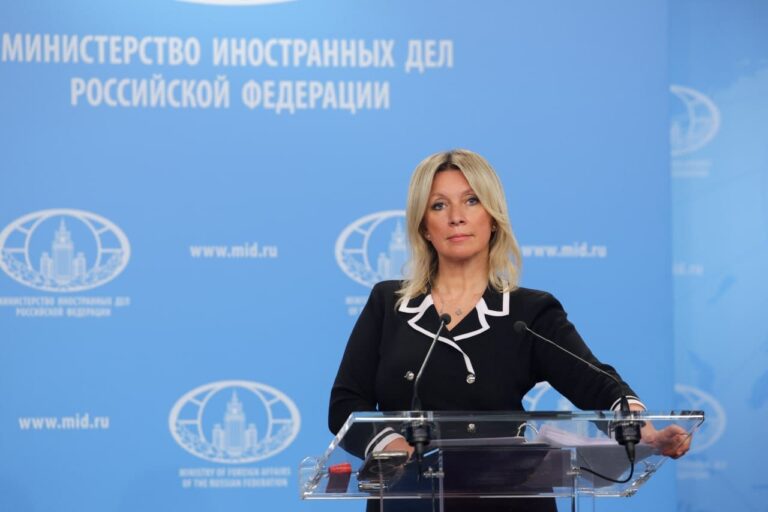
    MOSCOW: Russia has strongly condemned recent remarks by Japanese Prime Minister Sanae Takaichi and Foreign Minister Toshimitsu Motegi concerning President Vladimir Putin’s visit to Iturup Island. Russian Foreign Ministry spokeswoman Maria Zakharova described Tokyo’s criticism as unacceptable and rejected Japan’s objections to Putin visiting the island, which Moscow considers part of Russian territory. Zakharova accused senior Japanese officials of attempting to dictate where the Russian president could travel within his own country. She said Moscow regarded the Japanese statements as politically motivated and legally invalid, arguing that Russia’s sovereignty over the southern Kuril Islands was not open to question. The dispute over the islands remains one of the most sensitive issues in Russia-Japan relations. Japan refers to the southern islands as the Northern Territories and maintains its own claim over them. Zakharova said Tokyo’s current approach reflected what she called an increasingly hostile policy towards Russia. She criticised Japan for joining Western sanctions against Moscow and for providing political, military and technical support to Ukraine. According to the Russian spokeswoman, these policies have seriously damaged bilateral relations that had been developed over decades. She also accused Japan of undermining international legal principles while attempting to lecture Moscow on international law and the future of bilateral relations. Zakharova further argued that Japan’s policies did not serve the interests of its own population or contribute to regional stability. Moscow maintains that the southern Kuril Islands became part of the Soviet Union following the Second World War and argues that their status was established through post-war agreements. The Russian official also accused Tokyo of reviving what she described as revisionist and revanchist narratives. She warned that such rhetoric could have wider consequences for peace and security across the Asia-Pacific region. Russia said the latest Japanese statements risked further damaging already strained relations between the two countries and ran counter to broader regional efforts to promote stability, cooperation and peace.

  • |

    Telecom operators invest $178.57 million in Pakistan’s 5G rollout

    Pakistan’s major telecom operators have invested an estimated $178.57 million in the deployment of 5G networks across the country up to June 2026, the Senate has been informed. The investment details were presented in a written reply submitted by the Ministry of Information Technology and Telecommunications in response to a question raised by Senator Samina Mumtaz Zehri. According to the government’s data, Zong emerged as the largest investor in the country’s 5G rollout, committing around $98.9 million by June 2026. Jazz followed with an investment of approximately $59.67 million, while Ufone invested an estimated $20 million during the same period. The figures were based on information provided directly by the respective mobile network operators. No Foreign Investment Target Set for 5G Minister for Information Technology and Telecommunications Shaza Fatima Khawaja told the Senate that the government had not imposed any specific foreign direct investment (FDI) target on telecom companies as part of the country’s 5G rollout policy. She said the Policy Directive for the Spectrum Auction, issued on January 6, 2026, did not include a requirement for operators to attract a particular amount of foreign investment for the deployment of 5G services. The minister clarified that the investment figures presented before the Senate represented data supplied by the operators themselves. Operators Plan Additional 5G Investment Telecom companies are also preparing to increase their investment in 5G infrastructure during fiscal year 2026-27. Jazz has projected an additional investment of approximately $30.33 million, while Zong expects to spend around $39.9 million on further 5G deployment during the year. A specific investment projection for Ufone was not available at this stage. According to the written response, the company’s future investment figures will be shared once its ongoing merger-related activities are completed. The government also noted that Ufone’s previously reported $20 million investment in the 5G rollout was an estimated figure. More Than 1,100 Sites Upgraded to 5G The Senate was also informed that mobile operators had upgraded 1,136 sites to support 5G services across Pakistan by June 2026. Punjab recorded the highest number of upgraded sites, with 587 locations, reflecting the province’s large subscriber base and extensive telecom infrastructure. The regional breakdown showed:  Punjab: 587 5G-upgraded sites  Sindh: 262 sites  Islamabad Capital Territory: 192 sites Khyber Pakhtunkhwa: 64 sites Balochistan: 31 sites No 5G-upgraded sites were reported in Gilgit-Baltistan or Azad Jammu and Kashmir in the province-wise figures submitted to the Senate. Pakistan Has 10,499 Fiberized Sites The government’s response also provided an update on the country’s broader telecom infrastructure, particularly the expansion of fiber-optic connectivity. Pakistan had a total of 10,499 fiberized telecom sites, with the overall fiberization rate standing at approximately 17.2 percent. Punjab had the largest number of fiberized sites at 6,153, followed by Sindh with 2,121 and Khyber Pakhtunkhwa with 953. The figures for other regions were: Islamabad: 521 fiberized sites Balochistan: 417 sites Gilgit-Baltistan: 196 sites Azad Jammu and Kashmir: 138 sites Despite having fewer fiberized locations in absolute numbers, Gilgit-Baltistan recorded the highest fiberization rate at 36.3 percent. Islamabad ranked second with a rate of 30.4 percent. Meanwhile, Azad Jammu and Kashmir recorded the lowest fiberization rate at 9.5 percent. 5G Expansion Linked to Digital Connectivity The continued investment by telecom operators is expected to support the expansion of high-speed mobile connectivity and strengthen Pakistan’s digital infrastructure. The deployment of 5G technology is also being viewed as an important step toward improving mobile broadband capacity, supporting digital businesses and enabling emerging technologies that require faster and more reliable networks. With operators planning further investment during FY2026-27, the scale of Pakistan’s 5G network is expected to expand further. However, the pace of deployment will also depend on infrastructure development, fiberization, spectrum utilization and the completion of ongoing corporate and regulatory processes.

  • | |

    Meghan Markle has an offer: The truth behind her d…

    Meghan Markle and Prince Harry’s decision to return to the UK has raised plenty of questions. After leaving Britain in 2020 and building a new life in California, the couple are now preparing to move back with their children, Prince Archie and Princess Lilibet. But according to fresh reports, Meghan may have another reason to welcome the move: a new career opportunity. The Duchess of Sussex has reportedly been offered a British television role, with the potential project being described as a major acting opportunity. Reports suggest the offer could mark Meghan’s first significant acting role in around eight years. However, details about the production and whether she has formally accepted the role have not been confirmed. (Nine⁠) The timing has naturally fueled speculation. Meghan was an actress before joining the Royal Family. She became widely known for playing Rachel Zane on Suits, but stepped away from acting after marrying Harry in 2018. Since leaving royal life, she has focused on producing, philanthropy and her lifestyle business, As Ever. Her reported acting offer could therefore represent a surprising return to the career she left behind. Still, the acting opportunity is only one part of the story. Harry and Meghan are preparing to establish themselves in Britain again, with their children expected to begin school there in September. The family will reportedly live in a private, non-royal residence outside London rather than returning to a royal property. (The Guardian⁠) Their decision also appears connected to family. Harry recently reunited with his father, King Charles, during a private visit. The meeting was significant because Charles had not seen Archie and Lilibet since 2022. Reports suggest Harry wants his children to have a stronger relationship with their British relatives and for the family to spend more time together. (Page Six⁠) Meghan’s reported acting offer may make the UK more attractive professionally, but it does not mean the couple are returning as working royals. They will remain private citizens and will not resume official royal duties. (The Guardian⁠) The Sussexes are also expected to keep their Montecito home, meaning the move does not necessarily signal a permanent goodbye to America. Instead, it appears to be an attempt to build a life that connects both sides of the Atlantic. (People.com⁠) For Meghan, a return to British television could bring her career back to where her public story changed forever. Whether the reported role becomes reality remains to be seen, but the possibility adds another intriguing layer to the Sussexes’ unexpected return.

Leave a Reply

Your email address will not be published. Required fields are marked *