ajk polls disrupted
| |

AJK polls disrupted as clash erupts at Bhimber pol…

Voting was suspended at a polling station in Azad Jammu and Kashmir’s Bhimber district after a clash broke out between workers of two political parties during the first phase of the AJK elections.

The incident took place at the Darbar Baba Shadi Shaheed polling station in constituency LA-6 Bhimber. Following the confrontation, polling was halted temporarily.

Pakistan Muslim League-Nawaz (PML-N) candidate Abdul Razzaq Chaudhry alleged that workers of an opposing political party started the fight at the polling station.

District Returning Officer (DRO) confirmed that a clash had taken place at one of the polling stations at Darbar Baba Shadi Shaheed. According to the official, miscreants snatched a ballot box and set it on fire.

The DRO said the ballot box contained 232 votes when it was set ablaze.

Returning officials and security personnel are currently present at the polling station. The DRO said legal action would be taken against those involved in disrupting the polling process.

Officials have yet to decide whether polling will be held again at the affected polling station. The DRO said a decision on re-polling would be taken later in accordance with the relevant election rules.

Apart from the affected polling station, polling is continuing normally at all other polling stations across the constituency.

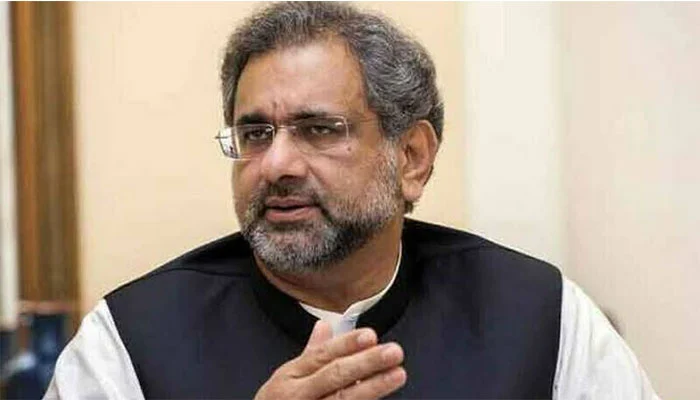
Meanwhile, the DRO also said that former AJK prime minister Anwar-ul-Haq had raised a complaint regarding polling arrangements in constituency LA-7.

Officials visited the polling stations where complaints had been received and found that the relevant polling agents were present there.

Similar Posts

  • | |

    Japan PM’s market woes deepen as support slides

    Japanese Prime Minister Sanae Takaichi is facing mounting political and economic pressure as falling public support makes it harder for her government to balance tax cuts, economic stimulus and financial stability. Takaichi’s approval rating fell sharply in July, reaching its lowest level since she became prime minister last year. Rising inflation has increased pressure on households and weakened public confidence in the government. Higher import costs linked to a weaker yen have contributed to price increases. The impact of inflation is now becoming a major political challenge for Takaichi. The prime minister has continued to support higher government spending and large-scale investment. She has also criticised excessive monetary and fiscal tightening. However, investors are increasingly worried that the government’s expansionary policies could worsen Japan’s already difficult fiscal position. Those concerns have pushed Japanese government bond yields higher. Rising yields indicate that investors are demanding greater returns to hold Japanese debt. The market pressure has also complicated government efforts to support the yen. Officials have repeatedly warned currency traders against excessive speculation, but their comments have had limited impact. Government sources said the effectiveness of such verbal intervention was weakening as investors became more concerned about Japan’s fiscal outlook. One source warned that financial markets were gaining greater influence over fiscal management, creating a situation Japan had not experienced on this scale for decades. Takaichi is caught between two competing objectives. She wants to stimulate economic growth and reduce the burden of rising living costs. At the same time, she needs to convince investors that Japan remains committed to fiscal discipline. Her government’s spending plans have already contributed to market concerns. Japanese government bond yields climbed to their highest level in about three decades in July as investors assessed the potential impact of increased spending and borrowing. Takaichi has acknowledged the importance of rebuilding confidence among investors. She recently said that communication with financial markets would become increasingly important. However, she has shown little intention of abandoning her expansionary economic strategy. The prime minister has reiterated her goal of ending what she calls excessive fiscal tightening. She wants to promote growth through increased investment and tax reductions. That position has created a political dilemma. Reducing or delaying her planned measures could weaken her popularity. But continuing with them could further unsettle financial markets. The pressure could intensify in the coming months. Takaichi is expected to proceed with a proposal to reduce an 8% consumption tax on food for two years. Japanese media have reported that the government intends to move ahead despite reservations within the ruling party. The plan could provide relief to households struggling with higher prices. However, analysts say uncertainty over how the tax reduction would be financed could create additional pressure in the bond market. The government is also considering changes to its budget-making process. Under the proposed system, spending requests for key growth sectors would not be subject to strict ceilings. That could lead to higher government expenditure and increased debt issuance in the next fiscal year. Economists have warned that such measures may make it more difficult for the government to reassure investors about its commitment to fiscal responsibility. Japan’s currency is also facing significant pressure.

  • | |

    Atiqa Odho, Marina Khan oppose Sania Saeed’s grandmother role

    Aap Ki Izzat has only been on air for three episodes and has already become one of the most discussed dramas of the year. Written by Umera Ahmed, produced by Nina Kashif and Momina Duraid, and directed by Saifee Hassan, the Hum TV drama has amassed around 10 million views and earned remarkable TRP ratings in a very short time. Its cast, featuring Ahsan Khan, Saif Ali Khan, Urwa Hocane, Sania Saeed and Nauman Masood, has been widely praised. But not everyone is entirely comfortable with every casting choice, and two of Pakistan’s most respected actresses have said so plainly. Atiqa Odho and Marina Khan, appearing as judges on Kya Drama Hai alongside Nadia Khan, praised the drama warmly before raising a specific concern about Sania Saeed being cast as a grandmother. Their objection was not about the quality of the performance, which both acknowledged as excellent, but about the casting itself, specifically the age dynamic it creates on screen. Atiqa Odho was candid about why the role unsettled her. “I am a bit sceptical about Sania playing a grandmother because I find it difficult to accept if it’s given to me,” she said. “Sania and I started our careers together in Sitara Aur Mehrunnisa, so when I see her playing such an elderly character, I think, ‘Oh my God, why is she playing this old role? She has become a grandmother at such a young age.’” She was quick to separate her personal reaction from her professional assessment, adding: “Sania has played the role beautifully, though. But I feel like we girls are becoming old now.” The remark was as much about time and self-reflection as it was about casting. Watching a contemporary from the earliest days of her career play a grandmother is not simply a professional observation. It is a mirror held up to one’s own passage through time, and Odho’s reaction captured that complicated feeling with characteristic honesty. Marina Khan echoed the concern but framed it through the specific dynamic within the drama itself. “Nauman Masood and Sania are of the same age,” she said. “I couldn’t digest Sania in such an old-age character, especially when actors of her own age are playing younger roles. Nauman Masood, in particular, was shown as younger than her.” She too made sure to credit the performance even while questioning the decision. “There is no doubt that she is a tremendous actor and is playing the role perfectly, but they should have cast much younger actors opposite her.” Aap Ki Izzat continues to air on Hum TV and remains among the most watched and most discussed dramas currently on Pakistani television.

  • | |

    Sania Mirza backs NEET student protesters

    Former Indian tennis star Sania Mirza has expressed support for students protesting over the alleged NEET examination scandal. She urged the Indian government to introduce meaningful reforms to restore confidence in the country’s education system and ensure fairness for students. In a message shared on social media, Mirza said students are the future of the nation and should not have to face uncertainty after spending years preparing for one of India’s most competitive entrance examinations. She said many young people had devoted significant time and effort to achieving their academic goals and deserved a transparent and credible examination process. Mirza called on the government to listen carefully to students’ concerns. She said their complaints should be addressed without delay and that practical reforms should be introduced to strengthen the integrity of the education system. According to her, restoring public trust in national examinations is essential for protecting the future of millions of students. She also appealed for calm and stressed that violence should have no place in resolving public issues. She encouraged all stakeholders to work together peacefully to find a solution that safeguards students’ interests and ensures equal opportunities for every candidate. The protests began after allegations emerged that the NEET medical entrance examination paper had been leaked. The controversy triggered demonstrations in several parts of India, with students demanding greater transparency, stricter accountability and sweeping reforms in the examination system. Many protesters are also calling for the resignation of India’s Education Minister, Dharmendra Pradhan. They argue that the examination controversy has caused serious emotional and psychological stress for thousands of candidates who spent years preparing for the test.

  • | |

    Renowned mountaineer Nirmal Purja among 10 killed …

    British Nepali mountaineer Nirmal Purja has died along with nine other climbers in an avalanche on Broad Peak in Pakistan, according to his expedition company. Elite Expeditions confirmed the death of the 43 year old climber on social media, saying the news came with profound sadness and heartbreak following Thursday’s avalanche. Purja, who was born in Nepal and later served in the British army, had earned global recognition for climbing the world’s 14 highest peaks in just over six months in 2019. Pakistani officials had earlier reported the recovery of the bodies of three other climbers from the same expedition, identified as American Mallory Geis, Nadhira Ahmed Abdullah Al Harthy from Oman and Pur Bahadur Gurung from Nepal. Nepal’s Prime Minister Balendra Shah also confirmed Purja’s death, saying the loss of six Nepali climbers and four foreign climbers, including world record holder Purja, in Pakistan’s Karakoram range had shocked the nation. Shah said the climbers’ courage and contributions would continue to inspire others. Naila Kiani, a spokesperson for the Alpine Club of Pakistan, which is coordinating rescue operations, told a British broadcaster that Purja had led numerous expeditions she had personally taken part in and described him as an extremely experienced and fearless climber with strong leadership skills. Kiani said the Alpine Club would only formally confirm his death once his body has been recovered, though she acknowledged rescuers fear all members of the group have died. She said search teams have spotted some bodies but have not yet been able to reach them. Rescue teams in Pakistan have been searching for the missing climbers on the world’s 12th highest peak following the avalanche, which struck the 8,047 meter summit in the Karakoram mountain range. Purja was leading the multinational climbing group at the time. Also known as Nims, Purja rose to international fame in 2019 after climbing all 14 of the world’s peaks above 8,000 meters in 189 days, breaking the previous record by more than seven years. His achievement later became the subject of a Netflix documentary titled 14 Peaks: Nothing Is Impossible. At the time of his historic climb, he described the effort as grueling but humbling, and said he hoped to show that determination, self belief and positivity could make anything possible. Purja served in the British military for 16 years, including a decade in the special forces, and received an MBE from the late Queen in 2018 in recognition of his extreme high altitude mountaineering achievements. He lived in Hampshire in southern England with his wife and three year old daughter, and was also known as the first Gurkha soldier to climb Everest while still serving in the British military. In his final social media post, shared on Monday, Purja wrote that he had not originally planned to climb Broad Peak. He said his trip had initially been focused solely on Gasherbrum II, another peak in the Karakoram range, but that he realized shortly before departing for Pakistan that summiting Broad Peak as well would leave him needing just one more mountain to become the first person in history to climb all 14 peaks above 8,000 meters twice without supplemental oxygen. He described the added goal as something that emerged unexpectedly rather than as part of a plan, writing that opportunities tend to present themselves quietly to those already putting in the work. He added that he was asking Broad Peak for nothing more than safe passage up and back down, saying he never took any mountain for granted. Broad Peak is widely regarded as one of the more difficult peaks for climbers to summit. The mountain was first successfully climbed in 1957 by an Austrian expedition, and while many climbers have reached its summit since then, dozens have died attempting the ascent. One of its deadliest recorded years was 2013, when at least six climbers lost their lives on the mountain.

  • Thailand Ends 60-day Visa-free Scheme For 93 Countries

    BANGKOK, Thailand — Thailand’s Cabinet has approved the cancellation of the pre-travel 60-day visa exemption scheme for citizens of 93 countries, a policy introduced two years ago to stimulate tourism and economic recovery, according to Tourism and Sports Minister Surasak Phancharoenworakul following the Cabinet meeting. Thailand Prepares To Halve Visa-free Stay For Tourists From 60 […]

  • |

    Pakistan’s Abdullah Iqbal makes history in UEFA Champions League

    STOCKHOLM: Pakistani international Abdullah Iqbal has achieved a major milestone in the country’s football history by becoming the first Pakistan national team player to feature in a UEFA Champions League qualifying match. The historic moment came when the defender made his debut for Swedish club Mjällby AIF during their UEFA Champions League qualifying fixture against Gibraltar’s Lincoln Red Imps on Tuesday. Iqbal entered the match in the 62nd minute, marking a landmark achievement for both his career and Pakistani football. His appearance places him among a select group of Pakistani footballers to compete on one of Europe’s biggest club football stages. The 26-year-old has become an important figure for Pakistan’s national team in recent years and is widely regarded as one of the country’s most accomplished overseas-based footballers. His Champions League qualifying debut is expected to inspire young footballers in Pakistan, where the sport has been striving for greater international recognition. Although Pakistani-origin footballer Atta Hussain previously played in UEFA Champions League qualifiers, he had not yet represented Pakistan at the international level at the time. Abdullah Iqbal is therefore the first player to achieve the milestone after officially representing the Pakistan national team. Football fans across Pakistan celebrated the achievement on social media, describing it as another proud moment for the country’s growing presence in international football. Many supporters praised Iqbal’s dedication and expressed hope that his success would encourage more Pakistani players to pursue professional careers in Europe. The achievement also highlights the increasing impact of overseas-based Pakistani footballers, who continue to strengthen the national team with experience gained in competitive European leagues. While Abdullah Iqbal’s appearance came in the qualifying rounds rather than the Champions League group stage, it remains a historic first for Pakistan and another sign of the country’s gradual progress on the international football scene. His landmark debut is expected to inspire the next generation of Pakistani footballers dreaming of competing at the highest level of European club football.

Leave a Reply

Your email address will not be published. Required fields are marked *