sindh announces 3day

Sindh announces 3-day holiday for Independence Day

Karachi – The Sindh government has announced a public holiday on the occasion of Independence Day allowing citizens to enjoy three consecutive days off.

According to details, the Government of Sindh has officially announced Friday, August 14, 2026 as a public holiday across the province on the occasion of Pakistan’s 79th Independence Day.

A notification issued by the Services, General Administration and Coordination Department stated that the holiday will apply to all government offices, autonomous and semi-autonomous institutions, corporations and local councils under the administrative control of the Sindh government.

However, institutions providing emergency and essential services will be exempt from the holiday and will continue their services as usual. As August 14 falls on a Friday followed by the regular Saturday and Sunday holidays, citizens will be able to enjoy three consecutive days off.

Similar Posts

  • | |

    Man climbs electricity pole in Peshawar to steal P…

      A man climbed an electricity pole in Peshawar in an alleged attempt to steal power cables, according to the Peshawar Electric Supply Company (PESCO). The unusual incident took place in the Shahibagh Sub-Division area, where electricity supply had already been suspended because maintenance work was underway. According to PESCO officials, the man climbed onto the pole while power was switched off in the area. The incident reportedly occurred during a period when electricity lines were not operational due to repair and maintenance work being carried out by the power distribution company. PESCO said that the man appeared to have taken advantage of the temporary suspension of electricity supply. He reportedly climbed the pole with the intention of removing electrical wires. The incident was noticed by people in the area, who alerted the relevant authorities. Officials reached the location and took action to prevent the situation from becoming more serious. The man was eventually brought down safely from the electricity pole. The incident occurred in the Shahibagh Sub-Division, an area served by PESCO as part of its electricity distribution network in Peshawar. Authorities said that the power supply had been deliberately shut down because repair work was being conducted on the network. The temporary power outage may have created an opportunity for the suspect to attempt the alleged theft. Electricity cables and other equipment belonging to power distribution companies are frequently targeted by thieves because the materials can be sold as scrap or for their metal value. However, climbing an electricity pole can be extremely dangerous even when the power supply has been switched off. Electrical systems can contain residual risks, and unexpected restoration of electricity can also create a serious threat to anyone working on or near power lines. PESCO officials did not immediately provide further details about whether the man had successfully removed any cables before being stopped. It was also not immediately clear whether a formal case had been registered against him or what legal action would be taken. The incident highlights the challenges faced by electricity distribution companies in protecting their infrastructure from theft and illegal interference. Power cables, transformers and other equipment are essential for maintaining electricity supplies, and their theft can cause additional outages and financial losses. Authorities regularly warn members of the public against approaching electricity poles, wires and other electrical equipment without proper training or authorisation. Such actions can result in serious injuries or even death. Residents in the area reportedly alerted officials after noticing the man on the pole. His safe removal prevented a potentially dangerous situation from escalating. PESCO has been carrying out maintenance and repair activities in different parts of its service area to improve the reliability of electricity supplies. Planned outages are sometimes necessary to allow technical teams to safely work on power lines and related infrastructure. Officials have advised consumers to cooperate with maintenance schedules and report suspicious activity involving electricity infrastructure to the relevant authorities. The Peshawar incident serves as a reminder that electricity infrastructure remains vulnerable to theft, particularly during planned outages. It also demonstrates the dangers associated with attempting to interfere with electrical equipment. While the man was successfully brought down from the pole, authorities are expected to investigate the incident further and determine whether he intended to steal cables and whether any electricity infrastructure was damaged during the attempt.

  • | |

    Beyond faith and defense

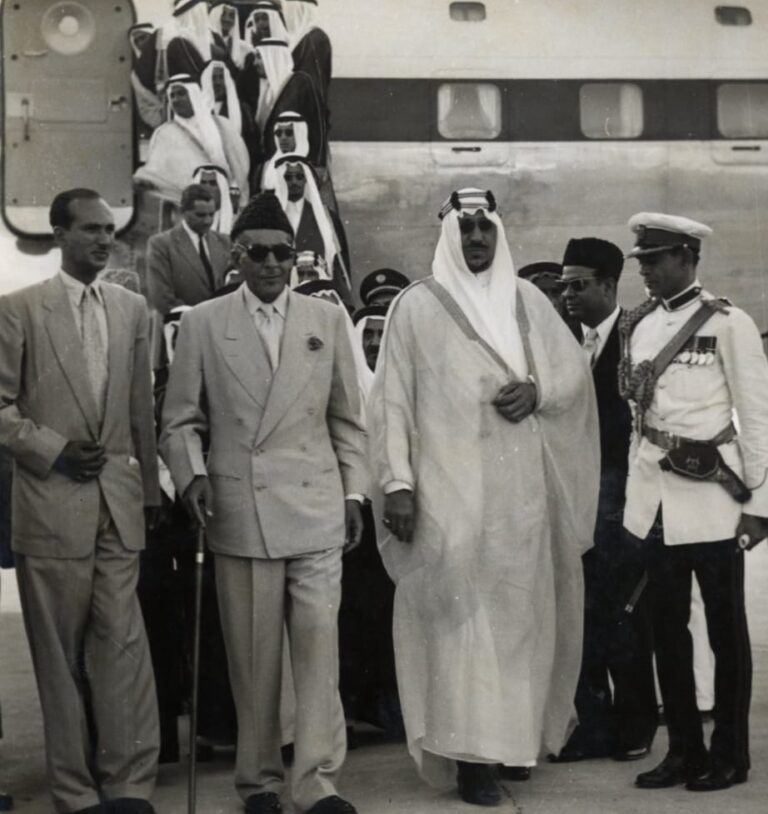
    The historical partnership between Pakistan and the Kingdom of Saudi Arabia stands as one of the most enduring bilateral relationships in the contemporary Muslim world. This history is anchored in shared Islamic values and a profound spiritual connection to the holy sanctuaries of Makkah and Medina. This alliance predates the modern era of Saudi oil wealth. The bond was formalized through the landmark Treaty of Friendship in 1951. It established an early blueprint for solidarity, ideological alignment and mutual support during crisis. Over the past seven decades, this connection has expanded from religious affinity into strategic collaboration. The Art of Strategic Neutrality Defense cooperation forms a central pivot of the bilateral relationship. Since the 1960s, the Pakistani military has played an instrumental role in advising, training, and building the infrastructure of the Saudi armed forces. Contingents of Pakistani troops have historically been deployed inside the Kingdom for defensive purposes, notably safeguarding the Holy Mosques during regional upheavals such as Operation Desert Storm. Moreover, thousands of Saudi defense personnel have undergone advanced training in Pakistani military institutions over the decades. However, the military relationship has also required careful navigation.  When conflict erupted in Yemen (2015), Pakistan’s parliament adopted a stance of strict neutrality to avoid inter-state Middle Eastern disputes, particularly while its domestic forces were actively engaged in counter-terrorism campaigns like Operation Zarb-e-Azb. Despite initial friction, Riyadh acknowledged Islamabad’s geopolitical constraints. This mature understanding was demonstrated when former Pakistani Army Chief General Raheel Sharif was appointed to lead the Islamic Military Counter Terrorism Coalition (IMCTC), focusing strictly on combating global extremism rather than taking sides in regional power struggles. Economic Interdependence and Human Capital Beyond defense, economic cooperation has provided crucial stability to Pakistan’s financial landscape. Saudi Arabia has repeatedly acted as a financial cushion. The country delivered multi-billion-dollar bailout packages, balance-of-payment assistance and deferred-payment oil supplies during economic hardship. Historically, this financial dynamic was complemented by administrative leadership. Pakistani economist Anwar Ali served as the Governor of the Saudi Arabian Monetary Agency from 1958 to 1974. He played a pivotal role in organizing the Kingdom’s modern financial infrastructure. Human capital remains another essential driver of this relationship. Over 2.7 million Pakistani expatriates reside and work within Saudi Arabia. Spanning critical sectors such as healthcare, engineering, construction, and information technology, these workers contribute directly to Saudi Arabia’s physical and economic development while generating vital remittance flows that sustain Pakistan’s domestic economy. Furthermore, administrative initiatives like the “Road to Makkah” project and reductions in visa fees have significantly streamlined pilgrimage procedures for millions of Pakistani citizens traveling for Hajj and Umrah. Geo-Economics, Vision 2030, and the Future of CPEC As both nations adjust to global realities, the bilateral partnership is changing into modern geo-economic framework. Saudi Crown Prince Mohammed bin Salman’s Vision 2030. The Kingdom aims to diversify its economy away from oil dependency by investing in global supply chains. A key element of this transformation includes multi-billion-dollar investment commitments in Pakistan. Furthermore, a proposed mega-oil refinery at the deep-sea port of Gwadar.   Ultimately, geopolitical challenges occasionally test bilateral diplomatic alignment. However, the strategic, economic and institutional ties between Islamabad and Riyadh continue to adapt. After all, it’s a dynamic future built on mutual survival and shared prosperity.


  • |

    High taxes and energy costs push businesses out of Pakistan

    Islamabad: A Senate subcommittee has raised serious concerns over Pakistan’s tax system after being told that companies are reducing operations or leaving the country because of high electricity costs, heavy taxes and difficult business rules. The committee also warned the Finance Secretary that continued absence from its meetings could lead to the matter being sent to the Senate Privileges Committee. The Sub-Committee of the Senate Standing Committee on Finance and Revenue, chaired by Senator Muhammad Talha Mahmood, reviewed Federal Board of Revenue taxation policies and their impact on businesses, investment and economic activity. Senator Talha Mahmood said the main aim was to find ways to increase economic activity and create a better environment for businesses. He said many companies were either reducing their operations or leaving Pakistan because energy costs were too high and the tax system was pressuring businesses too much. The committee also expressed serious concern over the absence of the Finance Secretary. Senator Talha Mahmood directed the Finance Secretary to attend the next meeting and warned that another absence could result in the matter being referred to the Senate Privileges Committee. Business representatives also strongly criticised the current taxation system. Mian Zahid Hussain of the Federation of Pakistan Chambers of Commerce and Industry said national policy appeared to focus more on collecting revenue than on increasing economic growth. He called for a reduction in advance taxes and withholding taxes. He also asked the government to review customs duties, simplify tax audits and reconsider factory surveillance systems. According to him, complicated tax procedures and compliance requirements were increasing the cost of doing business and discouraging industrial growth. Another business representative, Mr Jadoon, Vice President of a Chamber of Commerce, said Pakistan had competitive labour costs but businesses were still struggling because of high electricity tariffs and regulatory pressure. He said the government should bring more businesses and sectors into the tax system instead of repeatedly increasing pressure on people and companies that were already paying taxes. FBR officials defended recent government measures, telling the committee that taxation policies were influenced by Pakistan’s import requirements and financial limitations. Officials said the government had introduced tax relief for salaried people, reduced super tax and removed super tax for exporters. The committee was informed that the government accepted a revenue impact of around Rs 359 billion while trying to provide relief to businesses and increase economic activity. FBR officials also said exporters facilitation committees had been established in Karachi, Lahore, Sialkot, Faisalabad, Islamabad and Multan to deal with tax related complaints and problems. Senator Talha Mahmood questioned whether current government policies were actually successful in attracting foreign investment. He sought details about investor protection and the rules for transferring shares. The committee directed the relevant authorities to provide a complete briefing on the existing system. The committee also discussed reforms FBR is introducing to simplify tax procedures. FBR officials said work was underway on a mobile application for tax reimbursements. They also said special facilitation days were being arranged in major commercial centres to help taxpayers deal with their problems. The ongoing goods transport strike also came under serious discussion. Senator Talha Mahmood said the strike was damaging trade and business activity and criticised delays in resolving the issue. He warned that perishable goods could be destroyed while businesses were also facing heavy financial losses because containers were being held for longer periods. The committee said the government should immediately open talks with transporters and other affected groups. Members warned that continued disruption could damage Pakistan’s trade and also hurt the country’s international business reputation. The sub committee strongly recommended immediate talks with transporters to restore normal business operations. Senator Talha Mahmood also called for faster action when taxpayers make genuine mistakes in their tax returns. He recommended that if a taxpayer corrects an honest mistake, the blocked account should be restored within 24 to 48 hours. He also called for a better biometric verification system so that taxpayers could complete required procedures more easily. The committee further discussed market closure timings. Senator Talha Mahmood said closing markets early was hurting business activity and reducing traders opportunities to earn income. The convener said Pakistan could achieve sustainable economic growth only through business friendly policies and transparent governance. He stressed that competent and honest officials should be appointed to important positions so they could create policies that support investment, industry and entrepreneurship.

  • |

    Azma Bukhari slams PPP over performance

    Punjab Information Minister Azma Bukhari has criticised the Pakistan Peoples Party (PPP), accusing it of avoiding questions about its performance and shifting the blame onto the federal government through what she described as a misleading political narrative. In a statement, Bukhari said the PPP had failed to address major public issues in Sindh, particularly in Karachi, where, according to her, residents continued to struggle with water shortages and depended on the tanker mafia for access to basic necessities. She questioned the PPP’s criticism of the federal government and said the party should focus on its own performance instead of creating what she called a false narrative against the centre. Commenting on the response to previous floods, Bukhari said PPP Chairman Bilawal Bhutto Zardari had advised the government to seek donations during the crisis. She claimed that Punjab Chief Minister Maryam Nawaz took practical steps to respond to the disaster using the province’s own resources, while the federal government did not provide the support Punjab expected. The provincial information minister also criticised what she described as the PPP’s repeated complaints against its political opponents. She said the party’s tendency to “cry foul” had become a routine part of its politics. Bukhari added that political tensions could ease if the opposition reduced its rhetoric. “If the political temperature comes down from the other side, we will also respond in the same manner,” she said. Taking aim at the Sindh government’s healthcare system, Bukhari questioned why senior leaders and ministers from the province travelled abroad for medical treatment if the healthcare facilities in Sindh were as effective as the PPP claimed. She also highlighted the Punjab government’s focus on southern Punjab, saying Chief Minister Maryam Nawaz had given the region special attention and was working to improve development and public services there. Bukhari further accused the PPP of adopting different standards when discussing political and administrative issues. She said the party frequently used the southern Punjab issue as a political card while opposing similar demands for the creation of new administrative units in Sindh. The Punjab information minister argued that the PPP should maintain consistency in its political position and apply the same principles to administrative reforms across the country.

  • | |

    Peshawar High Court orders inquiry into missing ci…

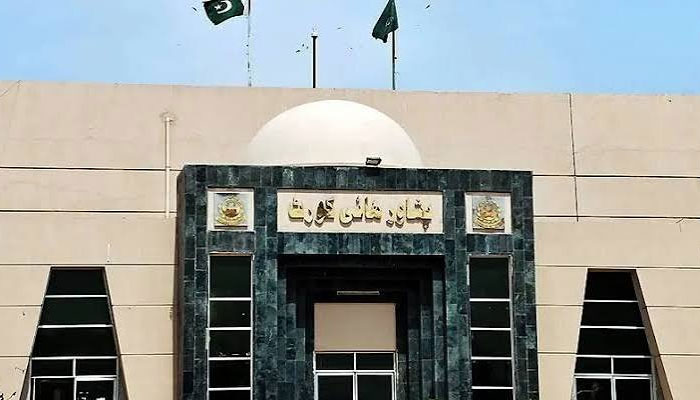
      The Peshawar High Court has issued a written order on a petition seeking the recovery of a missing citizen and directed the Capital City Police Officer (CCPO) to conduct a detailed inquiry into the matter. According to the written order, the CCPO has been instructed to appoint an inquiry officer to investigate the disappearance. The court specifically directed that the officer appointed for the inquiry must be of at least the rank of inspector, ensuring that the investigation is conducted by a senior police official. The court also issued several directions regarding the collection of evidence. It ordered the investigating officer to obtain CCTV footage from a private petrol station where the petitioner and his brother were present at the time of the incident. The footage is expected to help establish the circumstances surrounding the citizen’s disappearance and identify any individuals who may have been involved. The court further directed the authorities to record the statement of the petitioner and collect all available evidence related to the case. The inquiry officer has been instructed to examine the facts thoroughly and ensure that no relevant piece of evidence is overlooked during the investigation. The Peshawar High Court ordered that the inquiry be completed within one month and that a detailed report be submitted to the court after its conclusion. The deadline was set to ensure that the investigation proceeds without unnecessary delay and that the family receives information about the whereabouts of the missing citizen. The written order stated that the petitioner and his brother were present at a private petrol pump when the incident allegedly occurred. According to the petitioner’s account, his brother was taken to an unknown location on May 15. Since then, his whereabouts have reportedly remained unknown, prompting the petitioner to approach the high court seeking his recovery. The court also took note of the position presented by the police during the proceedings. According to the written order, the Station House Officer (SHO) of Chamkani Police Station rejected the allegations concerning the disappearance of the petitioner’s brother. Despite the SHO’s denial, the high court considered it necessary to order a formal inquiry and directed senior police authorities to investigate the matter independently. The court’s directions include examining CCTV footage, recording statements and gathering all relevant evidence to determine what happened to the missing citizen. The inquiry is expected to establish the circumstances surrounding the disappearance and determine whether further legal action is required. By directing the CCPO to appoint an officer of inspector rank or above, the court has emphasized the need for a serious and transparent investigation. The authorities have been given one month to complete the inquiry and submit their findings before the court. The case will proceed based on the report and evidence collected during the investigation.

  • | |

    Fazlur Rehman urges peace as Kashmir protests cont…

    ISLAMABAD: Jamiat Ulema-e-Islam-Fazl (JUI-F) chief Maulana Fazlur Rehman has called for restraint and dialogue amid the ongoing protest movement in Kashmir, urging state institutions to prioritize reconciliation over confrontation. In a video message released on Friday, the veteran religious and political leader said demonstrations in Kashmir have continued for nearly two months, describing the movement as a reflection of public frustration. He paid tribute to the patience and resilience of the Kashmiri people, saying they had shown remarkable endurance despite prolonged unrest. According to Fazlur Rehman, tensions escalated on June 5, prompting efforts by a mediation committee to help resolve the crisis through negotiations. He said the committee had approached him with confidence to support a peaceful settlement, but claimed its efforts did not receive the attention they deserved from the authorities. The JUI-F chief alleged that the government had remained focused on suppressing the movement through the use of force rather than engaging in meaningful dialogue. He appealed to the protest committee to allow more time for mediation and avoid taking any major step that could further escalate the situation. “I salute the patience and perseverance of the Kashmiri people,” Fazlur Rehman said, adding that the movement was spreading across Kashmir and drawing attention from audiences around the world. He also urged state institutions to adopt a path of peace instead of violence, emphasizing that reconciliation and mutual understanding were essential for resolving political disputes and restoring stability. The remarks come at a time of heightened political activity and continued demonstrations in parts of Kashmir, where various groups have been calling for action on governance and public concerns. While political leaders continue to offer differing assessments of the situation, Fazlur Rehman stressed that dialogue remains the most effective way to reduce tensions and move toward a lasting solution.

Leave a Reply

Your email address will not be published. Required fields are marked *