high taxes energy
|

High taxes and energy costs push businesses out of Pakistan

Islamabad: A Senate subcommittee has raised serious concerns over Pakistan’s tax system after being told that companies are reducing operations or leaving the country because of high electricity costs, heavy taxes and difficult business rules. The committee also warned the Finance Secretary that continued absence from its meetings could lead to the matter being sent to the Senate Privileges Committee.

The Sub-Committee of the Senate Standing Committee on Finance and Revenue, chaired by Senator Muhammad Talha Mahmood, reviewed Federal Board of Revenue taxation policies and their impact on businesses, investment and economic activity.

Senator Talha Mahmood said the main aim was to find ways to increase economic activity and create a better environment for businesses. He said many companies were either reducing their operations or leaving Pakistan because energy costs were too high and the tax system was pressuring businesses too much.

The committee also expressed serious concern over the absence of the Finance Secretary. Senator Talha Mahmood directed the Finance Secretary to attend the next meeting and warned that another absence could result in the matter being referred to the Senate Privileges Committee.

Business representatives also strongly criticised the current taxation system. Mian Zahid Hussain of the Federation of Pakistan Chambers of Commerce and Industry said national policy appeared to focus more on collecting revenue than on increasing economic growth.

He called for a reduction in advance taxes and withholding taxes. He also asked the government to review customs duties, simplify tax audits and reconsider factory surveillance systems.

According to him, complicated tax procedures and compliance requirements were increasing the cost of doing business and discouraging industrial growth. Another business representative, Mr Jadoon, Vice President of a Chamber of Commerce, said Pakistan had competitive labour costs but businesses were still struggling because of high electricity tariffs and regulatory pressure.

He said the government should bring more businesses and sectors into the tax system instead of repeatedly increasing pressure on people and companies that were already paying taxes. FBR officials defended recent government measures, telling the committee that taxation policies were influenced by Pakistan’s import requirements and financial limitations.

Officials said the government had introduced tax relief for salaried people, reduced super tax and removed super tax for exporters. The committee was informed that the government accepted a revenue impact of around Rs 359 billion while trying to provide relief to businesses and increase economic activity.

FBR officials also said exporters facilitation committees had been established in Karachi, Lahore, Sialkot, Faisalabad, Islamabad and Multan to deal with tax related complaints and problems. Senator Talha Mahmood questioned whether current government policies were actually successful in attracting foreign investment.

He sought details about investor protection and the rules for transferring shares. The committee directed the relevant authorities to provide a complete briefing on the existing system. The committee also discussed reforms FBR is introducing to simplify tax procedures.

FBR officials said work was underway on a mobile application for tax reimbursements. They also said special facilitation days were being arranged in major commercial centres to help taxpayers deal with their problems. The ongoing goods transport strike also came under serious discussion.

Senator Talha Mahmood said the strike was damaging trade and business activity and criticised delays in resolving the issue. He warned that perishable goods could be destroyed while businesses were also facing heavy financial losses because containers were being held for longer periods.

The committee said the government should immediately open talks with transporters and other affected groups. Members warned that continued disruption could damage Pakistan’s trade and also hurt the country’s international business reputation.

The sub committee strongly recommended immediate talks with transporters to restore normal business operations. Senator Talha Mahmood also called for faster action when taxpayers make genuine mistakes in their tax returns. He recommended that if a taxpayer corrects an honest mistake, the blocked account should be restored within 24 to 48 hours.

He also called for a better biometric verification system so that taxpayers could complete required procedures more easily. The committee further discussed market closure timings. Senator Talha Mahmood said closing markets early was hurting business activity and reducing traders opportunities to earn income.

The convener said Pakistan could achieve sustainable economic growth only through business friendly policies and transparent governance. He stressed that competent and honest officials should be appointed to important positions so they could create policies that support investment, industry and entrepreneurship.

Similar Posts

  • | |

    Pakistan pushes for US-Iran dialogue under Islamab…

    Pakistan is continuing diplomatic efforts to bring the United States and Iran back to the framework of the Islamabad Memorandum of Understanding (MoU) in a bid to ease regional tensions and promote dialogue, the Foreign Office (FO) said on Thursday. Speaking at the weekly media briefing, Foreign Office spokesperson Tahir Hussain Andrabi said Pakistan remains actively engaged with all relevant parties to encourage the implementation of the Islamabad MoU and the Pakistan-Qatar joint understanding aimed at reducing tensions. He said negotiations are continuing to restore stability, particularly in the Strait of Hormuz, and to support efforts for de-escalation through dialogue and diplomacy. The spokesperson noted that although the region had witnessed a brief period of relative calm, the security situation remains fragile. He said Pakistan hopes the reduction in hostilities will pave the way for a lasting ceasefire and meaningful negotiations. Reaffirming Islamabad’s position, Andrabi said dialogue and diplomacy remain the only practical solution to the ongoing crisis. He added that Pakistan welcomes every initiative aimed at resuming talks between Iran and the United States and will continue to play a constructive role in regional peace efforts. He urged all sides to exercise maximum restraint and honour their commitments to resume technical-level discussions under the Islamabad MoU. Highlighting Pakistan’s recent diplomatic engagements, Andrabi said Prime Minister Shehbaz Sharif and Saudi Crown Prince Mohammed bin Salman agreed to continue close coordination for regional peace, stability and the uninterrupted movement of lawful maritime trade through the Red Sea and the Strait of Hormuz. He said Deputy Prime Minister and Foreign Minister Ishaq Dar also held separate telephone conversations with Saudi Foreign Minister Prince Faisal bin Farhan and Jordanian Foreign Minister Ayman Safadi. The discussions focused on the evolving regional situation, diplomatic cooperation and efforts to maintain peace and stability. The spokesperson said Pakistan and Kuwait also reaffirmed their longstanding partnership and agreed to expand cooperation in trade, investment, energy, information technology, agriculture, education and healthcare. He added that Kuwait’s ratification of the Pakistan-Kuwait Defence Cooperation Agreement would further strengthen defence collaboration between the two countries. Andrabi also highlighted Pakistan’s participation in the Shanghai Cooperation Organisation (SCO) Council of Foreign Ministers meeting, where Islamabad reaffirmed its commitment to regional connectivity, the China-Pakistan Economic Corridor (CPEC) and the Belt and Road Initiative while expressing readiness to assume the SCO chairmanship for 2026-27. On Pakistan-US relations, he said Ishaq Dar recently met a visiting US congressional delegation and an American business delegation, reaffirming Pakistan’s commitment to expanding bilateral cooperation through stronger parliamentary, economic and people-to-people engagement. Addressing the situation in Palestine, Andrabi said Pakistan joined several Arab and Islamic countries in condemning Israeli actions in Jerusalem and called on the international community to uphold international law, protect Palestinian rights and preserve the historical and religious status of Al-Aqsa Mosque.

  • Kath Garh land record delay causes public hardship

    DERA ISMAIL KHAN: The continued delay in the preparation, completion and computerization of the four year land record of Kath Garh Patwari Circle has become a serious matter of public concern, causing difficulties for citizens in dealing with land-related affairs. Land records are directly linked to the fundamental rights and legal matters of the public. Their timely completion, verification and accuracy are therefore essential. According to information, the four-year record of Kath Garh Patwari Circle has still not been fully prepared and computerized, resulting in difficulties for residents in obtaining land records, processing mutations, verification and completing other property-related matters. In contrast, land records in most areas of Dera Ismail Khan district, particularly in Tehsil Paharpur, have already been prepared and computerized. This raises questions about why the process in Kath Garh has remained delayed for such a long period and requires the immediate attention of the concerned authorities. In the modern era, securing, maintaining and computerizing government records is an essential requirement for ensuring transparency and preventing disputes. Even a minor error or unnecessary delay in land records can create prolonged difficulties for citizens. The completion of the Kath Garh four-year record should therefore be treated as a matter of urgency rather than merely routine official paperwork. Complete transparency and strict compliance with laws and regulations must particularly be ensured in mutations and other land-related matters. Until the four-year record is fully completed, verified and computerized, the concerned authorities should issue clear written instructions regarding mutations so that legal or administrative complications do not arise in the future. Residents have demanded that they should not face unnecessary obstacles in obtaining records of their own land. They urged senior officials to take immediate notice of the issue, set a clear deadline for completion of the record, personally monitor the process and determine the reasons behind the delay. Those responsible for the delay should also be asked to explain their position. The people of Kath Garh deserve the same facilities that are available to residents of other areas of the district. Immediate completion and computerization of the four-year land record would not only alleviate public difficulties but also strengthen transparency, accuracy and public confidence in the land record system. The residents have urged the higher authorities to keep all mutations suspended until the four-year record is completed and to issue a formal notification in this regard.

  • | |

    ‘I never said Rawalakot people aren’t …

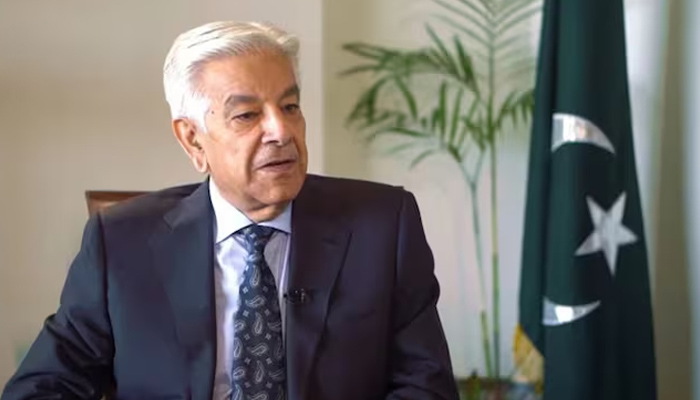
    SIALKOT: Defence Minister Khawaja Asif has rejected claims that he questioned the Kashmiri identity of the people of Rawalakot, saying his remarks had been misunderstood and reaffirming Pakistan’s support for the people of Jammu and Kashmir. Addressing a public gathering in Sialkot on Friday, the senior Pakistan Muslim League-Nawaz (PML-N) leader said he had “never said that the people of Rawalakot are not Kashmiris.” He stressed that Pakistan’s bond with Kashmir remains unwavering and added that pro-Pakistan slogans continue to be raised in Indian-administered Kashmir. Khawaja Asif also pledged that the government would not allow the abolition of refugee-reserved seats, describing Kashmiri refugees as the rightful stakeholders whose political representation must be protected. “The refugee seats will not be abolished. Kashmiri refugees are the true heirs of these constituencies,” he told supporters, adding that the government remained committed to safeguarding their constitutional and political rights. The defence minister also criticized the Action Committee operating in Azad Jammu and Kashmir, accusing it of encouraging unrest despite the government having previously accepted many of its demands. He claimed that financial assistance amounting to Rs24-25 billion had already been provided to address public concerns. Without presenting evidence, Asif further alleged that some members of the committee were “suspicious” and receiving foreign funding, asserting that their activities were creating unnecessary instability instead of contributing to constructive dialogue. Turning to politics, the PML-N leader expressed confidence that his party would form the next government in Azad Jammu and Kashmir, saying the party remained committed to development, stability and public welfare in the region. His remarks come amid heightened political debate over Kashmir-related issues and governance in Azad Jammu and Kashmir, where political parties continue to campaign on questions of representation, development and regional stability ahead of future electoral contests.

  • |

    FIA arrests 15 passport agents in crackdown outside regional passport offices

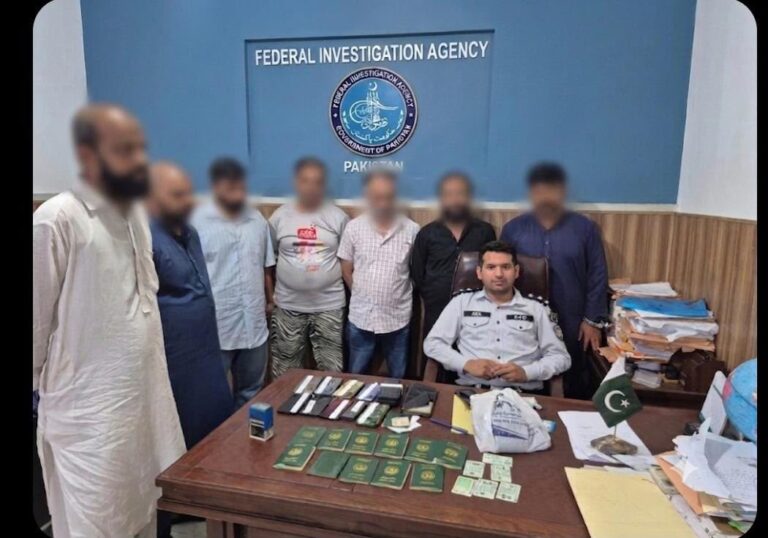
    GUJRANWALA: The Federal Investigation Agency (FIA) Gujranwala Zone has arrested 15 alleged agents during a coordinated crackdown on individuals operating outside passport offices in Gujranwala, Gujrat and Sialkot, accusing them of illegally charging citizens by promising expedited passport processing. The operation was launched on the directions of FIA Director General Dr Usman Anwar and the Director FIA Gujranwala Zone, according to an FIA spokesperson. The spokesperson said the suspects allegedly lured applicants by claiming they could secure passports quickly in exchange for money. Preliminary investigations have also indicated the alleged involvement of some passport office officials, and further inquiries are underway to determine their role. According to the FIA, seven suspects were arrested by the Gujranwala Circle, three by the Gujrat Circle and five by the Sialkot Circle. Those arrested in Gujranwala were identified as Hafiz Ayub, Muhammad Afzal, Muhammad Tariq, Ali Hassan, Muhammad Asad, Jamshed Ali and Sajjad Ali. An FIR (No. 578/2026), dated July 22, 2026, has been registered against them under Section 6 of the Passport Act, 1974, along with Sections 419, 420 and 34 of the Pakistan Penal Code. In Gujrat, FIA officials conducted a raid outside the Passport Office in Mandi Bahauddin and arrested Zahid Iqbal, Zubair Aslam and Shahroz Ali. An FIR (No. 03/2026 ACC), dated July 22, 2026, has been registered against them under Sections 419 and 420 of the Pakistan Penal Code. The FIA said five more suspects were arrested by the Sialkot Circle, where separate cases have also been registered under relevant legal provisions. Their identities were not disclosed in the press release. The agency said investigations are continuing to identify other members of the network and examine the alleged involvement of officials who may have facilitated the illegal activities. The FIA urged the public not to approach unauthorized agents for passports or other government services. Citizens have been advised to deal directly with the relevant government offices and report anyone demanding money or offering illegal facilitation so that legal action can be taken. An FIA spokesperson said the agency would continue its crackdown against agents exploiting citizens and those involved in corruption related to public services.

  • | |

    Justice delayed for 40 years is injustice, says Mu…

    Prominent religious scholar Mufti Muneeb-ur-Rehman has called for urgent reforms in Pakistan’s justice and economic systems, saying that a legal framework that fails to deliver justice for decades cannot be considered fair. Addressing a gathering in Karachi on Tuesday, Mufti Muneeb said prolonged court cases lasting 40 years amount to injustice and place an enormous burden on ordinary citizens. He stressed that timely justice is essential for social stability and public trust in institutions. The scholar also urged those in power to focus on resolving Pakistan’s domestic challenges. He said leaders often discuss global issues, but greater attention should be given to pressing national matters, particularly economic concerns affecting millions of people. Referring to the energy sector, Mufti Muneeb called for a solution to issues related to Independent Power Producers (IPPs), which have frequently been debated in Pakistan due to their impact on electricity costs and the national economy. He further highlighted the country’s financial difficulties, saying that after payments related to provincial allocations and debt obligations, limited resources remain for development and public welfare. Speaking at the same event, Maulana Bashir Farooqi expressed concern over the continuation of the interest-based banking system. He said there was a need for serious efforts to move toward alternative financial models and added that his organization was prepared to help train employees of conventional banks if reforms were introduced. The remarks come amid ongoing debates in Pakistan over judicial reforms, economic challenges and proposals for changes in the financial system.

  • | |

    Pakistan paid Rs6,405 billion to IPPs in capacity …

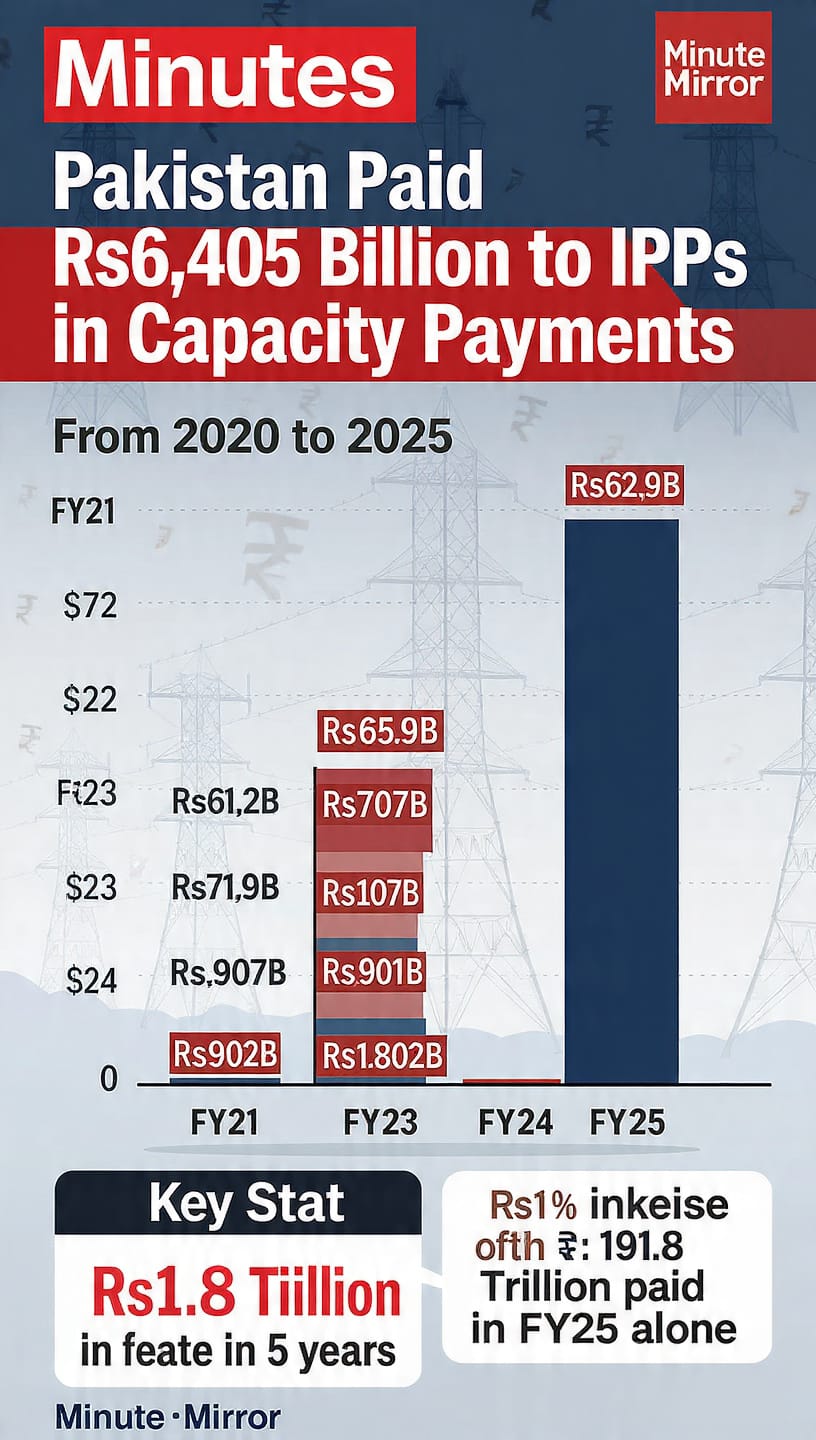
      ISLAMABAD: Pakistan’s federal government paid a total of Rs6,405 billion to Independent Power Producers (IPPs) in capacity payments between 2020 and 2025, the National Assembly has been informed, highlighting the growing financial burden associated with the country’s power sector. According to a written response submitted by Federal Minister for Energy Awais Ahmad Leghari, capacity payments increased significantly during the five-year period despite government efforts to renegotiate power purchase agreements and reduce electricity costs. The figures presented to the National Assembly show that capacity payments rose from Rs613.9 billion in FY2020-21 to Rs1,807 billion in FY2024-25. This represents an increase of approximately 194% over the period. The government paid Rs613.9 billion in capacity charges during FY2020-21. The amount increased to Rs775.9 billion in FY2021-22 before rising sharply to Rs1,307 billion in FY2022-23. Capacity payments reached their highest level during FY2023-24, when the government paid around Rs1.902 trillion to IPPs. Although the amount declined slightly in FY2024-25 to Rs1.807 trillion it remained almost three times higher than the amount paid in FY2020-21. Capacity payments are charges made to power producers for keeping their generating plants available to supply electricity, regardless of whether the full generation capacity is actually utilised. These payments are part of the contractual arrangements between the government and IPPs and have frequently been identified as one of the factors contributing to Pakistan’s expensive electricity system and growing circular debt. Responding to questions in the National Assembly, Energy Minister Awais Ahmad Leghari said the government has taken several measures to reduce the financial pressure created by existing power agreements. According to the minister, a government task force has terminated power purchase agreements with six IPPs, while agreements with several other producers have also been revised. The objective of these measures is to reduce electricity costs and limit the financial burden on the national power sector. The Ministry of Energy estimates that the changes made to the agreements could result in savings of approximately Rs4.3 trillion over the remaining life of the contracts. Leghari also clarified that payments made to power producers are based on tariffs determined by the National Electric Power Regulatory Authority (Nepra) and the terms agreed under the relevant power purchase agreements. He rejected the impression that generators were receiving payments outside the approved contractual and regulatory framework, stating that there were no additional payments beyond the applicable arrangements. Despite the government’s renegotiation efforts, the figures show that capacity payments continue to represent a major financial obligation for Pakistan. The Rs1.807 trillion paid in FY2024-25 alone demonstrates the scale of the challenge facing the country’s power sector. The government’s efforts to terminate and revise agreements are expected to provide substantial savings in the coming years. However, reducing capacity payments and addressing the broader issues of electricity pricing, power utilisation and circular debt remain critical challenges for Pakistan’s energy sector.

Leave a Reply

Your email address will not be published. Required fields are marked *