kath garh land

Kath Garh land record delay causes public hardship

DERA ISMAIL KHAN: The continued delay in the preparation, completion and computerization of the four year land record of Kath Garh Patwari Circle has become a serious matter of public concern, causing difficulties for citizens in dealing with land-related affairs.

Land records are directly linked to the fundamental rights and legal matters of the public. Their timely completion, verification and accuracy are therefore essential. According to information, the four-year record of Kath Garh Patwari Circle has still not been fully prepared and computerized, resulting in difficulties for residents in obtaining land records, processing mutations, verification and completing other property-related matters.

In contrast, land records in most areas of Dera Ismail Khan district, particularly in Tehsil Paharpur, have already been prepared and computerized. This raises questions about why the process in Kath Garh has remained delayed for such a long period and requires the immediate attention of the concerned authorities.

In the modern era, securing, maintaining and computerizing government records is an essential requirement for ensuring transparency and preventing disputes. Even a minor error or unnecessary delay in land records can create prolonged difficulties for citizens. The completion of the Kath Garh four-year record should therefore be treated as a matter of urgency rather than merely routine official paperwork.

Complete transparency and strict compliance with laws and regulations must particularly be ensured in mutations and other land-related matters. Until the four-year record is fully completed, verified and computerized, the concerned authorities should issue clear written instructions regarding mutations so that legal or administrative complications do not arise in the future.

Residents have demanded that they should not face unnecessary obstacles in obtaining records of their own land. They urged senior officials to take immediate notice of the issue, set a clear deadline for completion of the record, personally monitor the process and determine the reasons behind the delay. Those responsible for the delay should also be asked to explain their position.

The people of Kath Garh deserve the same facilities that are available to residents of other areas of the district. Immediate completion and computerization of the four-year land record would not only alleviate public difficulties but also strengthen transparency, accuracy and public confidence in the land record system.

The residents have urged the higher authorities to keep all mutations suspended until the four-year record is completed and to issue a formal notification in this regard.
Similar Posts

  • | |

    National Assembly security assistant suspended

    The National Assembly Secretariat has suspended security assistant Waqas Ahmed over alleged misuse of official powers. According to an official notification issued by the National Assembly Secretariat, the security official has been removed from his existing duties and directed to report immediately to the Human Resources Management Branch. The notification did not provide detailed information about the specific incident or circumstances that led to the disciplinary action. However, it stated that the suspension was linked to the alleged misuse of authority. The development comes as the National Assembly Secretariat continues to enforce administrative and disciplinary measures among its employees to ensure compliance with official rules and regulations. Waqas Ahmed has been instructed to follow the directions contained in the notification and report to the designated HR branch without delay. Further action in the matter is expected after the relevant authorities examine the circumstances surrounding the alleged violation.

  • Emigration policy sparks clash in National Assembly committee

    Islamabad: A fresh controversy has emerged in the National Assembly Standing Committee on Overseas Pakistanis and Human Resource Development after lawmakers raised questions over the preparation of the new emigration policy, the role of parliamentarians in policy making and mistakes in official committee records. The debate started when members questioned whether important stakeholders were consulted before the approval of the new immigration policy and why some members of the committee were not included in the policy launch event. During the meeting, Dr Mahreen Razzaq Bhutto, a member of the committee pointed out that concerns raised in an earlier meeting regarding the emigration policy were missing from the official minutes. She questioned the process through which the policy was prepared and asked whether relevant stakeholders were taken on board before the policy was approved. The lawmaker argued that public policies affect millions of people and should be prepared after consultation with all important groups, including representatives of the people. She also questioned statements regarding the policy’s approval timeline, noting confusion about when the policy was actually introduced and approved. The issue created a debate inside the committee over the difference between the government’s authority to make policies and parliament’s responsibility to monitor their implementation. Committee Chairman Syed Rafiullah stated that making government policy falls under the authority of the government and the minister concerned. He said the role of the committee is to review, monitor and examine whether the policy is being implemented properly. The chairman maintained that the government has the right to prepare policies, while parliamentary committees can examine their performance and suggest improvements. However, the member disagreed, arguing that while the government has the authority to create policies, consulting stakeholders strengthens the policy and improves public confidence. She said that parliamentarians should be involved before policies are presented for final approval because they represent public concerns. The lawmaker stressed that policies become public documents after approval, but meaningful consultation should happen before final decisions are made. The chairman responded that members would have the opportunity to discuss issues within the policy and provide suggestions after reviewing the document. The discussion also highlighted the importance of clearly defining the connection between government policy making and parliamentary oversight. Another controversy emerged when members raised objections over the wording used in committee documents regarding the Federal Secretary of the Inter Provincial Coordination Division. Dr Mahreen questioned why the word “summon” was used for a federal secretary in the committee recommendations, arguing that such language is generally associated with legal authority and court proceedings. She questioned whether a parliamentary committee should use the term for a senior government official who was being requested to attend a meeting. Officials clarified that the use of the word appeared to be a drafting mistake and that the actual intention was to invite the secretary to attend the meeting. The committee secretary explained that the official agenda mentioned the secretary was invited along with relevant officers to participate in discussions. The member insisted that official documents should use accurate wording because committee reports become public records and represent parliamentary proceedings. She said that drafting mistakes can confuse the powers and procedures of parliamentary committees. The meeting also witnessed a heated exchange between members over the issue, with the chairman asking members to follow the committee procedure and discuss matters according to their turn. The chairman advised members that disagreements should remain within the rules of parliamentary discussion and that the committee should continue its work in an organised manner. The committee later continued discussion on the relevant agenda items while maintaining that official records and policy discussions must remain clear and accurate.

  • | | |

    Death toll in Quetta coal mine blast rises to 34

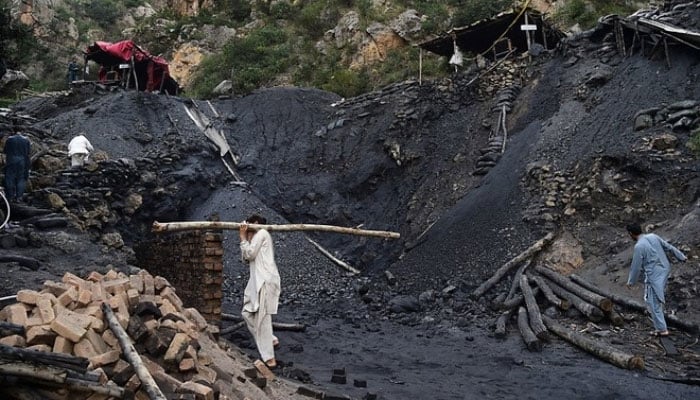
    QUETTA: The death toll from a deadly coal mine explosion near Quetta has climbed to 34 after rescue teams recovered the bodies of eight more miners from the site. The incident occurred at a coal mine in the Sorange area, where dozens of workers were underground when a powerful methane gas explosion ripped through the mine. According to the Provincial Disaster Management Authority (PDMA), a total of 42 miners were trapped following the blast. Rescue teams have managed to recover 34 bodies so far, while efforts continue to locate the remaining workers. Officials said the operation is being carried out under difficult conditions, with emergency personnel working around the clock to reach those still inside the mine. The mine owner confirmed that 42 labourers were present in the mine at the time of the explosion. Preliminary findings suggest that methane gas accumulated inside the mine, triggering the deadly blast. Balochistan Chief Minister has ordered an immediate report on the incident and directed authorities to investigate the circumstances surrounding the tragedy. He warned that strict action would be taken against anyone found responsible if negligence or safety violations are established. Coal mining accidents remain a recurring concern in Balochistan, where hazardous working conditions and poor safety standards have claimed numerous lives over the years. The latest disaster has once again raised questions about the enforcement of mine safety regulations and the protection of workers in the province’s mining sector. Rescue operations are ongoing as authorities continue their search for the miners who remain unaccounted for.

  • | | |

    Pakistan, Iran agree to strengthen border security…

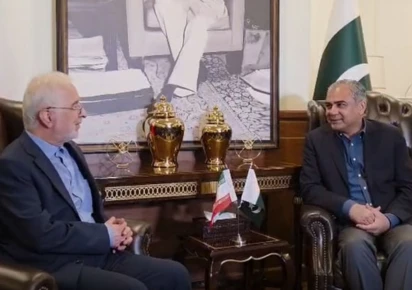
    Pakistan and Iran have agreed to deepen cooperation on border security, counterterrorism, anti-narcotics operations, and efforts to combat illegal immigration and human trafficking. The agreement was reached during a meeting between Interior Minister Mohsin Naqvi and his Iranian counterpart, Eskandar Momeni, in Islamabad. Momeni arrived in Pakistan with a high-level delegation for talks aimed at expanding bilateral cooperation and addressing shared security concerns. During the meeting, both ministers stressed the need for stronger coordination to counter terrorism and drug trafficking in the Pakistan-Iran-Afghanistan border region. They agreed that closer cooperation and intelligence sharing are essential to prevent cross-border crimes and improve regional security. The two sides also reaffirmed their commitment to strengthening bilateral relations and expanding cooperation in trade, transit, agriculture, and other sectors. They agreed to improve coordination mechanisms to promote economic ties and facilitate greater collaboration between the neighbouring countries. Mohsin Naqvi said Pakistan is ready to enhance cooperation with Iran in every field of mutual interest. He praised the efforts of Iranian officials in promoting peace and expressed hope that diplomatic initiatives would help restore stability in the region. The Iranian delegation included senior officials from the interior ministry, urban development and transport ministry, the National Iranian Oil Company, the agriculture ministry, and the governor of Sistan-Baluchestan province. Pakistan’s delegation included senior officials from the Ministry of Interior, the Federal Investigation Agency, the Anti-Narcotics Force, NADRA, the National Cyber Crime Investigation Agency, Immigration and Passports, Islamabad Police, and other relevant departments. The visit comes at a time of renewed tensions in the Middle East. Military exchanges between the United States and Iran have intensified in recent days, raising concerns over regional stability and the security of international shipping routes. The Strait of Hormuz remains a major point of concern as continued hostilities threaten global oil supplies and international trade. The escalating conflict has also increased fears of wider economic disruption.

  • |

    Two missing women, toddler found dead in Dinga pon…

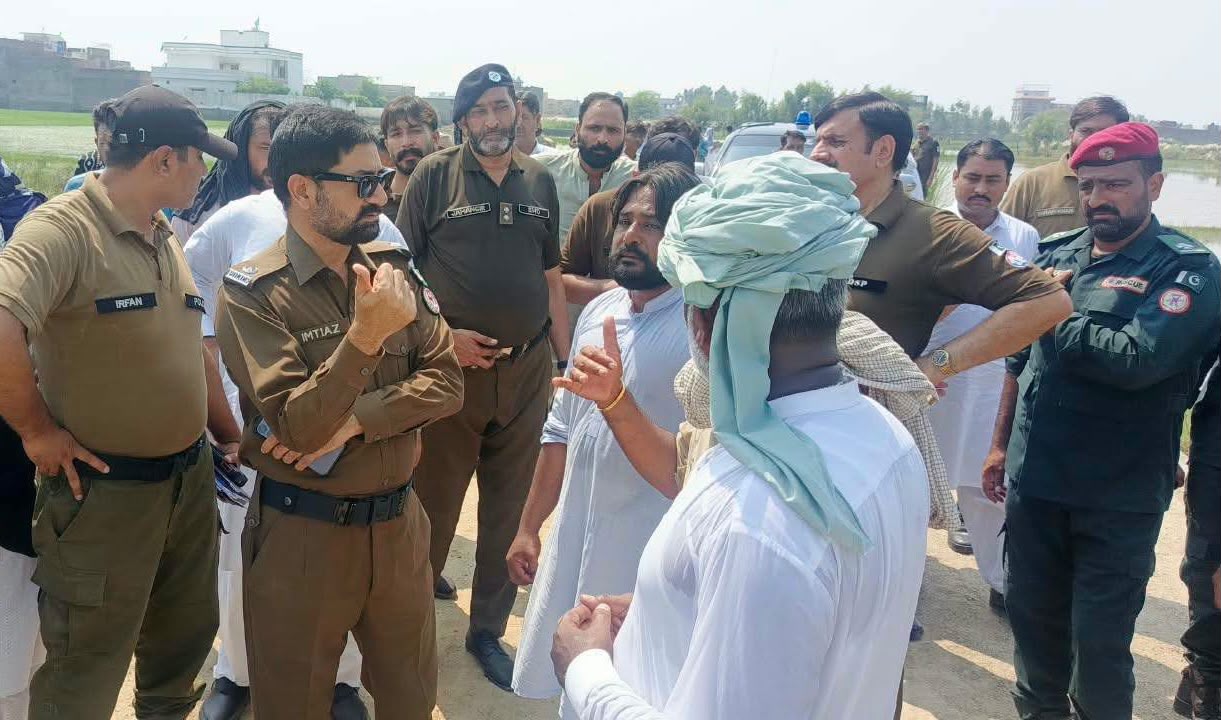
    GUJRAT: The bodies of three females, including a two-year-old girl, who had gone missing from the Dinga area a day earlier, were recovered from a pond in Mohallah Chaar Gah , police said. The deceased were identified as Arooj Fatima, Haleema Sadia and two-year-old Ruku Fatima. According to police, all three had gone missing from the jurisdiction of Dinga police station on August 25. Following their disappearance, a kidnapping case had been registered at Dinga police station on the complaint of the family. A search operation was underway when their bodies were found in a pond in Mohallah Chaar Gah. Police said a heavy contingent was deployed at the scene after the recovery of the bodies. Crime Scene Unit personnel and teams of the Punjab Forensic Science Agency (PFSA) also reached the site and collected evidence for further investigation. The bodies were later shifted to a hospital for post-mortem examinations. According to preliminary police findings, the three victims appeared to have died due to drowning. However, police said the matter was still being investigated from different angles and the final cause and circumstances of their deaths would be determined after the completion of medico-legal and forensic procedures. The recovery of the bodies sent shockwaves through the locality, particularly because a kidnapping case had been registered only a day earlier after the three females went missing. District Police Officer Gujrat Faisal Shehzad visited the scene following the recovery of the bodies. He was briefed by police officers and also gathered information from residents of the area about the circumstances surrounding the incident. The DPO directed the officers concerned to conduct a complete and transparent investigation and examine all possible aspects of the case. He said the legal and investigative process should be completed strictly on merit and no aspect of the incident should be overlooked. Faisal Shehzad also met the bereaved family members and expressed his condolences over the deaths. He assured them that police would complete all legal and investigative formalities in accordance with the law. Police officials said the post-mortem reports and forensic examination of evidence collected from the scene would play an important role in determining whether the deaths resulted solely from drowning or whether any other factor was involved. Investigators are also examining the timeline of the disappearance and other circumstances leading up to the recovery of the bodies from the pond. The Dinga police said further proceedings would be carried out in light of the post-mortem findings, forensic evidence and the results of the ongoing investigation. The bodies were handed over for further medico-legal procedures as police continued their investigation into what officials described as a tragic and sensitive case. No final conclusion regarding the circumstances of the deaths had been announced by police at the time of filing this report, while investigators continued to collect evidence and record statements from relevant persons.

  • | |

    Karachi’s cycle ambulance goes viral amid online…

    KARACHI: A cycle ambulance service in Karachi has gained widespread attention on social media after videos of the emergency response initiative went viral, sparking both criticism and appreciation online. Several users mocked the pedal-powered ambulance, comparing it with advanced emergency services used in other countries. Some social media posts also incorrectly linked the launch of the initiative to Karachi Mayor Barrister Murtaza Wahab. However, the cycle ambulance programme was introduced in May 2025 by the Sindh Integrated Emergency and Health Services (SIEHS-1122) as a pilot project. It was designed to provide faster medical assistance in densely populated areas of Karachi where narrow streets and heavy traffic can delay conventional ambulances. The specially equipped bicycles allow trained emergency responders to reach patients quickly and provide immediate medical support before a regular ambulance arrives. Each cycle ambulance carries essential medical equipment, including first-aid supplies, oxygen masks, nebulisers and blood sugar testing devices. Responders use the equipment to stabilise patients and provide initial care during emergencies. The initiative also involved trained female volunteers, aiming to improve access to emergency healthcare services and encourage women’s participation in community rescue operations. While the project became the subject of online jokes and criticism, supporters highlighted its practical value, especially in crowded neighbourhoods where traditional ambulances may face difficulties reaching patients on time. Officials and supporters of the programme said the cycle ambulance service is not intended to replace standard ambulances but to act as a rapid-response solution for immediate assistance in areas with access challenges.

Leave a Reply

Your email address will not be published. Required fields are marked *