lahore braces heavy

Lahore braces for heavy rain as WASA remains on high alert

LAHORE: Lahore is experiencing hot and humid weather, with the current temperature recorded at 31°C and the maximum expected to reach 35°C. The minimum temperature is likely to remain at 28°C, while humidity stands at 75 percent and winds are blowing at 6 kilometres per hour.

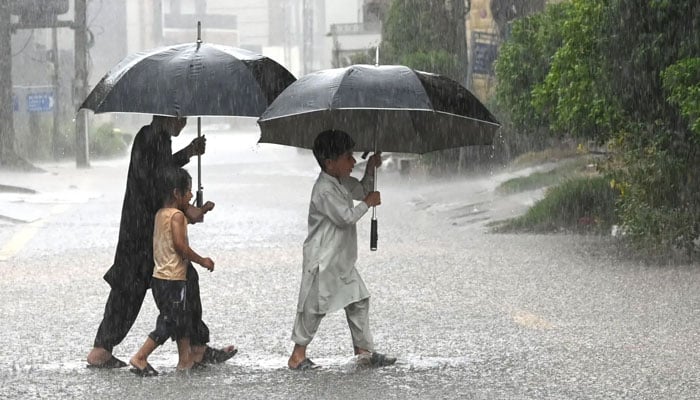
The Meteorological Department has forecast heavy rainfall in Lahore from August 17 to 20 as part of the sixth monsoon spell, with rain expected across Lahore and other districts of Punjab until August 21. Authorities have warned of possible water accumulation in low-lying areas and urban flooding.

In view of the forecast, WASA Lahore has been placed on high alert on the special directives of Punjab Chief Minister Maryam Nawaz Sharif. WASA Vice Chairman Chaudhry Shahbaz Ahmed, DG WASA Punjab Tayyab Fareed, and MD WASA Lahore Ghufran Ahmed have directed officials to ensure that all major roads and underpasses remain clear and drainage operations continue without interruption.

DG WASA Punjab directed all field teams to remain fully mobilised, while MD WASA Lahore instructed officials to operate disposal stations on generators in areas facing power outages to ensure uninterrupted drainage operations.

The WASA Vice Chairman directed officials to keep pumps at all disposal stations operational and ensure that screens are regularly cleaned to prevent blockages. MD WASA Lahore also directed all Town Directors to closely monitor their respective areas and take immediate action wherever necessary.

Meanwhile, WASA Lahore has released the latest rainfall record, with 21mm recorded at the Nishtar Town Director Office, 2.2mm in Kahna and 25.4mm at the Nishtar Town Disposal Station. The Nishtar Town Disposal Station recorded the highest rainfall among the reported locations.

Under the directives of MD WASA Lahore Ghufran Ahmed, continuous monitoring of drainage operations is underway, with field officers and staff remaining fully mobilised to ensure the timely disposal of rainwater.

The Meteorological Department has also advised citizens to take precautionary measures during rainfall and avoid unnecessary travel. Relevant authorities have been directed to remain alert and take all necessary measures to deal with any emergency situation.

Similar Posts

  • | | |

    Pakistan targets $1.5bn hybrid rice market in Chin…

    Pakistan has a major opportunity to increase its hybrid rice exports to China and could potentially secure exports worth up to $1.5 billion, according to industry experts. The opportunity has emerged as China looks for alternative sources of non-Basmati rice amid a decline in rice trade with India. Pakistani exporters believe the changing market conditions could allow the country to expand its presence in China. Shahzad Ali Malik, founding chairman of the Rice Exporters Association of Pakistan (REAP) and CEO of Guard Agricultural Research and Services, said Pakistan should move quickly to take advantage of the situation. He said Pakistan had a competitive edge because local farmers already grow Chinese hybrid rice varieties. With a coordinated strategy between the government and private sector, Pakistan could significantly increase its exports to the Chinese market. China is expected to remain one of the world’s largest rice importers. Its rice import demand for 2025-26 has been estimated at around 3.1 million tonnes. India had previously been an important supplier of non-Basmati rice to China. However, changes in Chinese import requirements and non-tariff restrictions have affected Indian rice shipments. This has created an opening for other suppliers. Pakistan is considered well placed to benefit because it already produces both Basmati and non-Basmati rice. Pakistan also has surplus stocks of several non-Basmati varieties. These include Chinese hybrid rice and IRRI varieties that are used in China for food processing and strategic food reserves. The hybrid rice segment offers particular potential. Pakistan uses hybrid seed parent lines imported from China. This could make it easier for Pakistani producers and Chinese buyers to maintain compatibility in varieties and quality standards. Pakistan also has an advantage in the non-GMO segment. Industry representatives believe this could strengthen the country’s position as Chinese buyers become more selective about imported rice. The Pakistan-China Free Trade Agreement could further support exports. Existing trade links and CPEC-related logistics may also help Pakistani exporters reduce transportation time and improve their competitiveness. The changing market could benefit both exporters and farmers. Lower competition from India may increase demand for Pakistani rice and could improve prices. Chinese buyers may also seek long-term contracts and assured supplies. Such arrangements could provide farmers with greater market certainty and encourage investment in rice production. However, industry experts say Pakistan must improve its export systems to take full advantage of the opportunity. The government and private sector will need to work together on contract farming, seed quality, certification and food safety requirements. Chinese authorities have strict standards for food safety and pesticide residues. Pakistani exporters will therefore need to ensure that rice consistently meets the required specifications. Seed companies can also play an important role. Improved hybrid seeds could increase yields per acre while helping farmers produce rice of consistent quality. Logistics will be another key factor. Industry representatives believe Pakistan’s ports and CPEC-linked infrastructure could help shorten delivery times and reduce costs. Rice is one of Pakistan’s most important export commodities and ranks second after textiles. An increase in rice exports could generate additional foreign exchange and provide greater economic opportunities for farmers, particularly in Punjab and Sindh. Malik estimated that Pakistan could increase its overall rice exports to around $5 billion within three to five years if the necessary planning, investment and policy support are provided. He also proposed establishing a Pakistan-China Rice Export Task Force. The proposed body could include rice exporters, seed companies and relevant government authorities. The task force could develop a long-term export strategy, coordinate with Chinese buyers and address regulatory and logistical challenges.

  • | |

    ECP rejects Achakzai as PkMAP chief, delists four …

    ISLAMABAD: The Election Commission of Pakistan (ECP) on Thursday declined to recognise veteran politician Mahmood Khan Achakzai as the head of the Pashtunkhwa Milli Awami Party, citing the party’s failure to conduct mandatory intra-party elections, while also delisting four political parties for violating election laws. A five-member bench, headed by the Chief Election Commissioner, heard proceedings related to PkMAP’s non-compliance with legal requirements, including the absence of intra-party elections, amendments to the party constitution, and objections concerning its financial accounts. During the hearing, the commission questioned the validity of the power of attorney submitted by the party’s legal counsel. The lawyer informed the bench that the document had been signed by the party chairman, Mahmood Khan Achakzai. However, the Chief Election Commissioner observed that the party currently had no officially recognised chairman because it had failed to hold intra-party elections as required under the law. The commission, therefore, refused to recognise Achakzai as the party’s head for the purpose of the proceedings. The ECP stated that while the power of attorney would be placed on record, a separate order would determine whether it would be formally accepted. At the request of PkMAP’s counsel, the commission granted additional time to prepare arguments and adjourned the case until August 19. In a separate development, the ECP intensified its enforcement of election regulations by removing four more political parties from its official register. The delisted parties include Technology Movement Pakistan, Awami Jamhoori Party Pakistan, Hum Awam Pakistan Party, and Pakistan Reform Party. According to official notifications, the parties were delisted for failing to conduct intra-party elections, submit annual financial statements, and comply with other mandatory legal obligations. The latest decisions underline the ECP’s continued push to ensure transparency, financial accountability, and internal democracy within Pakistan’s political parties as it strengthens enforcement of the country’s electoral laws.

  • | | |

    Fazl says Naqvi couldn’t speak without PM&#8…

    Jamiat Ulema-e-Islam (F) chief Maulana Fazlur Rehman has said Interior Minister Mohsin Naqvi could not have made recent remarks without consulting the prime minister, while calling for a national policy to address the country’s political and administrative challenges. Addressing a press conference in Quetta, Fazlur Rehman said there was no comprehensive national policy to improve the country’s current situation. He said the proposal to create new provinces should be considered carefully in light of Pakistan’s administrative structure and overall capacity. He said creating new provinces was not a bad idea in principle, but stressed that it was not a simple process and required serious consideration of the country’s political, constitutional and financial realities. The JUI-F chief alleged that new political debates were often introduced to divert public attention from pressing national issues. He urged Mahmood Khan Achakzai to convene a meeting of the joint opposition to discuss the country’s political situation. Fazlur Rehman said if such a meeting was not called, his party would organize a broader national-level conference to deliberate on the challenges facing the country. He warned that democracy could not flourish if governments continued to be formed according to individual preferences rather than the public mandate. He further said democratic institutions had weakened and Parliament was no longer functioning effectively. According to him, Pakistan must be governed strictly in accordance with the Constitution to restore public confidence. Calling for a fair and nationally inclusive policy, Fazlur Rehman said the country needed governance based on justice and equality. He also confirmed that JUI-F had decided not to join the government in Balochistan. Commenting on provincial politics, he said JUI-F remained the country’s largest public political movement and added that he had no knowledge of any proposal regarding Abdul Malik Baloch becoming the next chief minister of Balochistan.

  • | | |

    Justice for Kashmir begins with implementing UN re…

    Pakistan’s High Commissioner to the UK, Tipu Usman, has urged the international community to play a more proactive role in resolving the Kashmir dispute, declaring that “justice for Kashmir begins with implementing United Nations Security Council resolutions” and reaffirming that Pakistan’s support for the people of Jammu and Kashmir “remains unwavering and unconditional.” He was addressing a seminar organised by the Pakistan High Commission in London to observe Youm-e-Istehsal Kashmir, marking the anniversary of India’s August 5, 2019 decision to revoke the special status of Indian Illegally Occupied Jammu and Kashmir (IIOJK). The event brought together British parliamentarians, diplomats, community leaders and members of the British Pakistani and Kashmiri diaspora, who condemned India’s revocation of Article 370 and reiterated support for the Kashmiri people’s right to self-determination. In his keynote address, Tipu Usman called upon the international community, particularly the United Kingdom, to stand on the side of justice by urging India to reverse the unilateral measures introduced on August 5, 2019, restore the rights and special status of Jammu and Kashmir, and honour the relevant United Nations Security Council resolutions. “Pakistan’s support for the people of Jammu and Kashmir remains unwavering and unconditional,” he said, adding that a peaceful and lasting settlement of the dispute must be achieved in accordance with the wishes of the Kashmiri people as reflected in the UN resolutions. The seminar was attended by Lord Qurban Hussain, Baroness Nosheena Mobarik, Afzal Khan MP and Adnan Hussain MP, alongside prominent community figures including Councillor Yasmine Dar, UK-Pakistan Kashmiri Councillors Forum Chairman Liaqat Ali MBE, Jammu Kashmir Self Determination Movement International Chairman Raja Najabat Hussain and former Deputy Mayor of Peterborough Mohammad Nadeem. Speakers strongly criticised India’s constitutional changes of August 2019, describing them as illegal and unconstitutional. They expressed concern over the human rights situation in IIOJK and called for an immediate end to alleged rights violations. Participants stressed that the Kashmir dispute remains an internationally recognised issue that should be resolved through dialogue and in line with UN Security Council resolutions. The seminar also proposed a strategic roadmap to enhance engagement with policymakers, parliamentarians and international stakeholders to build support for a just and lasting resolution of the Kashmir dispute. Messages from the President of Pakistan, the Prime Minister and the Deputy Prime Minister and Foreign Minister were read out during the event, reiterating Pakistan’s continued diplomatic, political and moral support for the people of Jammu and Kashmir. The ceremony concluded with participants observing a minute’s silence in memory of those who lost their lives in the Kashmir conflict.

  • | |

    Ishaq Dar urges global support for gulf peace effo…

    Deputy Prime Minister and Foreign Minister Ishaq Dar has urged the international community to build on recent diplomatic progress in the Gulf region, emphasizing that the opportunity to achieve lasting peace should not be wasted. Speaking at the 33rd ASEAN Regional Forum (ARF) Ministerial Meeting in Manila, Dar stressed the importance of continued dialogue, diplomacy, and constructive engagement to maintain regional stability. Dar, who arrived in the Philippines with a high-level delegation, is attending the ARF Plenary Meeting and holding bilateral discussions with foreign ministers on the sidelines of the forum. During his address, he noted that recent developments in the Gulf have had far-reaching consequences for countries across the region, making it essential for all stakeholders to work together to prevent further instability. The foreign minister highlighted Pakistan’s role in promoting peace by facilitating diplomatic efforts that contributed to a ceasefire in the Gulf. He referred to the Islamabad Talks, held after a gap of 47 years, followed by the signing of the Islamabad Memorandum of Understanding in Bürgenstock. According to Dar, these initiatives reflected Pakistan’s commitment to peaceful conflict resolution and regional stability. He expressed gratitude to the United States, Iran, Gulf nations, and other international partners for placing their trust in Pakistan’s diplomatic efforts. Describing the recent progress as the result of patient negotiations and dialogue, Dar warned that these achievements must be safeguarded through continued engagement rather than allowing tensions to resurface. Dar reaffirmed Pakistan’s commitment to supporting every initiative aimed at restoring peace and security in the region. He urged all parties to exercise restraint, fulfill their commitments, and prioritize diplomatic solutions over confrontation. He also expressed hope that ongoing negotiations would help restore normal shipping operations through the Strait of Hormuz, a vital international trade route. At the beginning of his speech, Dar thanked the Philippines for hosting the ministerial meeting and reaffirmed Pakistan’s support for dialogue, mutual respect, and peaceful coexistence. He described the ASEAN Regional Forum as a key platform for regional security cooperation and welcomed the adoption of the Manila Plan of Action (2026–2036), pledging Pakistan’s support for its successful implementation. Addressing South Asian affairs, Dar reiterated Pakistan’s position that the unresolved Jammu and Kashmir dispute remains a major source of regional instability. He called for a peaceful resolution based on the United Nations Charter, relevant UN Security Council resolutions, and the wishes of the Kashmiri people. He also voiced concerns over India’s decision to suspend the Indus Waters Treaty, describing the move as a unilateral action that could threaten Pakistan’s water security and the livelihoods of millions of its citizens. Dar urged the international community to support international law and encourage peaceful solutions to regional disputes. Speaking on the humanitarian crisis in Gaza, Dar described the situation as deeply concerning and called for immediate international action to prevent further suffering. He reaffirmed Pakistan’s longstanding support for the Palestinian people’s right to self-determination and the establishment of an independent Palestinian state based on the pre-1967 borders, with Al-Quds Al-Sharif as its capital. Concluding his address, Dar highlighted Pakistan’s sacrifices in the global fight against terrorism, noting that the country has lost more than 80,000 lives and suffered significant economic losses. He reaffirmed Pakistan’s determination to continue working with the international community to promote peace, stability, and security both regionally and globally.

  • | |

    Pakistan takes charge of UN disarmament conference

    Pakistan has assumed the presidency of the United Nations Conference on Disarmament (CD), taking a leading role in international discussions on arms control and global security. Additional Secretary for Arms Control and Disarmament Tahir Hussain Andrabi is representing Pakistan and will preside over the conference’s meetings during the presidency. Pakistan holds the final presidency of the CD’s 2026 session. It will therefore oversee the conclusion of the conference’s proceedings for the year and guide work on its annual report and the related resolution for the UN General Assembly’s First Committee. As part of the opening activities, Ambassador Andrabi chaired a meeting with former presidents of the conference for the 2026 session. He also held consultations with representatives of different regional groups. The Conference on Disarmament, headquartered at the United Nations Office in Geneva, is the principal multilateral forum for negotiating international disarmament and arms-control agreements. The forum has 65 member states, including countries that possess nuclear weapons. Its discussions cover some of the most sensitive issues affecting international peace and security. Key areas on its agenda include preventing a nuclear arms race, reducing the risk of nuclear war and stopping the weaponisation of outer space. The conference and its predecessor bodies have played a significant role in developing major international security agreements. These include the Biological Weapons Convention, Chemical Weapons Convention and Comprehensive Nuclear-Test-Ban Treaty. Pakistan’s presidency comes at a time when nuclear risks, arms competition and emerging security challenges remain major concerns for the international community. The Foreign Office said Pakistan’s leadership of the conference reflects international confidence in its diplomatic role and its continued engagement in multilateral arms-control efforts.

Leave a Reply

Your email address will not be published. Required fields are marked *