search survivors intensifies
|

Search for survivors intensifies after devastating 7.1-magnitude earthquake strikes southern Japan

Emergency responders in southwestern Japan are racing against time to locate survivors trapped in rubble following a powerful 7.1-magnitude earthquake that killed at least 13 people in the Kumamoto region of Kyushu island.

The powerful tremor, which struck at a shallow depth of ten kilometres, flattened residential homes, triggered severe fires, ruptured critical bridges, and cut electricity to nearly 37,000 households.

Japanese Prime Minister Sanae Takaichi confirmed the death toll during an official address in Tokyo, while chief cabinet spokesman Minoru Kihara noted that at least seven individuals suffered severe injuries and more than 9,000 residents sought safety across hundreds of emergency evacuation shelters.

Search operations remain heavily concentrated in the town of Kashima, where part of the Aeon Mall collapsed after a gas explosion ripped through the structure shortly after the primary quake.

Rescue teams in specialised gear navigated twisted steel girders and fallen concrete inside the shopping centre, where at least two women lost their lives and eight others were pulled from the debris. Meanwhile, in Yatsushiro city, search crews continue to look for nine workers unaccounted for at a Nippon Paper Industries plant after a large smokestack collapsed onto the facility below.

The seismic shock registering at the maximum level on Japan’s intensity scale caused widespread logistical disruption across Kyushu island, derailing a cargo train, suspending high-speed bullet train lines, and causing structural collapses at the historic centuries-old Kumamoto Castle.

In response, the Japanese military has deployed 3,600 personnel alongside 20 reconnaissance aircraft to support disaster relief efforts, clear impassable roads, and assess localised damage in remote communities.


Similar Posts

  • |

    Justin Greaves’ unbeaten fifty lifts West Indies to 239-5 against Pakistan

    PORT OF SPAIN: Justin Greaves produced a composed unbeaten half-century to guide the West Indies to 239-5 at stumps on the opening day of the second Test against Pakistan, putting the hosts in a strong position after rain and fading light curtailed play. Greaves remained unbeaten on 64, while experienced all-rounder Roston Chase was solid on 36 not out, with the pair steering the Caribbean side through the closing stages after Pakistan struck at regular intervals. Earlier, Brandon King laid the foundation for the innings with an impressive 46, helping the West Indies recover from early setbacks before narrowly missing out on a well-deserved half-century. Pakistan’s bowlers worked hard on a surface that offered occasional assistance but struggled to build sustained pressure as partnerships frustrated the visitors throughout the day. Fast bowler Mohammad Ali emerged as Pakistan’s most successful bowler, claiming two wickets with disciplined line and length. Ubaid Shah, Ali Usman, and veteran spinner Sajid Khan picked up one wicket each, ensuring Pakistan stayed in the contest despite West Indies’ steady progress. The opening day’s play was interrupted by rain and poor light, limiting action to just 74 overs instead of a full day’s schedule. The frequent stoppages disrupted the rhythm of both teams and prevented Pakistan from fully capitalising whenever they gained momentum. With five wickets still in hand, the West Indies will look to extend their first-innings total beyond 350 when play resumes on Tuesday. Greaves and Chase will be aiming to convert their unbeaten partnership into a match-defining stand. Pakistan, meanwhile, will target an early breakthrough on the second morning to expose the lower order and prevent the hosts from taking complete control of the contest. The second day’s opening session is expected to play a crucial role in shaping the direction of the Test, with both teams aware that a strong first-innings performance could prove decisive in the battle for series momentum.

  • |

    OPEC+ expected to approve another oil output increase for September

    OPEC+ is widely expected to approve another increase in oil production when its members meet virtually on Sunday, as the alliance continues to adjust supply while global energy markets remain affected by ongoing geopolitical tensions. According to market analysts, Saudi Arabia, Russia and several other key members of the alliance are likely to raise their combined production target by around 188,000 barrels per day for September. If approved, the increase would continue a series of monthly production hikes introduced this year and is expected to mark the final step in the group’s current plan to gradually restore previously reduced output. OPEC+, which includes members of the Organization of the Petroleum Exporting Countries and allied producers, introduced major production cuts between late 2022 and 2023 after concerns that falling oil prices could weaken global energy markets. Those reductions removed nearly six million barrels of oil per day from the market in three separate phases. As demand gradually recovered, the group shifted its strategy by slowly increasing production, beginning in 2025, to balance supply while supporting market stability. A September increase would complete the reversal of the second package of production cuts introduced during that period. However, analysts note that higher production targets do not necessarily mean actual oil output will increase by the same amount. Several member countries are currently unable to reach their assigned quotas because of declining production capacity, ageing infrastructure or operational challenges. Energy analyst Giovanni Staunovo of UBS said many producers are already pumping below their official targets, making further quota increases less significant in practical terms. He noted that production capacity has declined in several member states, limiting their ability to take full advantage of higher output allowances. Regional tensions have also affected oil exports. Gulf producers continue to face challenges because shipping through the Strait of Hormuz has been disrupted during the conflict involving Iran. Although maritime traffic briefly improved after a memorandum of understanding between the United States and Iran was signed in June, transport through one of the world’s busiest oil routes remains uncertain. Russia is also dealing with production difficulties as repeated Ukrainian drone attacks have targeted parts of its energy infrastructure. Current Russian oil production remains close to nine million barrels per day, well below its official production target of 9.8 million barrels per day, highlighting the gap between quotas and actual output. Some OPEC+ members, including Iraq, have indicated they want to increase production significantly once conditions allow. At the same time, the alliance is reviewing the maximum sustainable production capacity of each member to help determine future output allocations. These discussions are expected to play an important role in setting production quotas for 2027 and beyond. Analysts believe negotiations over future production targets could become more challenging after the September meeting. While they say the alliance remains united for now, the departure of the United Arab Emirates from OPEC+ earlier this year has raised questions about the group’s long term cohesion. The UAE said its decision to leave was based on national interests and long term strategic goals, pointing to major investments aimed at expanding its oil production capacity beyond the limits previously set by the alliance. Despite these challenges, OPEC+ is expected to continue coordinating production policies in an effort to maintain stability in the global oil market as economic uncertainty and geopolitical tensions continue to influence energy demand and supply.

  • |

    Real Madrid hails FIFA U-turn on World Cup investor plan

    Spanish giants Real Madrid have welcomed FIFA’s decision to abandon a controversial plan that would have opened the door to private investment in the World Cup. FIFA president Gianni Infantino was forced into an embarrassing reversal on Friday. The climbdown came after strong pushback from European football’s governing body UEFA, along with several other confederations who had raised objections to the proposal. In an official statement, Real Madrid called the decision good news for football, its institutions, and the millions of fans who follow the sport worldwide. The club specifically thanked UEFA, along with various confederations and federations, for standing firm and responsibly opposing the project. According to the statement, this collective show of unity and sense of duty helped protect the game at a crucial moment. Notably, Real Madrid was once a founding member of the failed European Super League breakaway project, a venture that had strained its relationship with UEFA for years. However, the two parties reached an agreement back in February 2026, aimed at benefiting European club football and putting past tensions to rest. The controversy at the centre of this latest episode began on Tuesday. FIFA had revealed plans to set up a commercial subsidiary responsible for running its biggest events, including the World Cup and Club World Cup. This subsidiary was designed to be open to private investment, something Infantino claimed could generate as much as $4.2 billion for the organisation. UEFA led the charge against the proposal from the very beginning. The organisation made clear it would boycott all FIFA competitions if the plan went ahead. It also stated openly that it had lost confidence in Infantino’s leadership, adding to the mounting pressure the FIFA chief has faced in recent days. Given Real Madrid’s past history with breakaway football projects, their public support for UEFA in this instance carries added weight. It signals a continued effort by the club to align itself with the sport’s traditional governing structures, rather than commercial ventures that risk disrupting football’s existing institutions. For now, the scrapped plan appears to have averted a serious rift within global football’s governing bodies. Still, with UEFA having openly questioned Infantino’s leadership, uncertainty may continue to surround his position at FIFA in the coming months, even as this particular controversy comes to a close.

  • | |

    Zendaya praises Tom Holland’s ability to set healthy boundaries

    Hollywood actress Zendaya has revealed the one quality she most admires about her husband, Tom Holland, saying she wishes she could learn from his ability to stand up for himself and set clear personal boundaries. The actress made the comments during the promotional tour for Spider-Man: Brand New Day, where the couple reflected on their relationship and working together. Speaking during the interview, the Dune star explained that Holland’s greatest strength has nothing to do with his acting career or public image. Instead, she said she is impressed by the way he consistently prioritises respect and kindness while also knowing when to draw the line. Beginning her answer, Zendaya said, “Something I am always impressed with Tom about, which I feel like I want to inherit more of, but he’s very…” Before she could finish, Holland jokingly interrupted, saying, “Awesome? Legendary? Talented?” His playful response prompted laughter before Zendaya explained what she really meant. She continued, “You’re a big stickler for respect and kindness. Not to say that I’m not doing that, but you just make sure that is in the front.” Zendaya went on to explain that Holland is much better than she is at setting firm boundaries whenever someone crosses the line. “And then if that line is crossed, I think sometimes he’s better at drawing boundaries and making things clear. And I’m a little bit more like, okay, guys, it’s all right, everything’s all right.” Praising her husband further, the actress added, “You’re good at being like, no, no, this is, we’re not doing this. You’re good at setting the boundaries when they need to be set. Really clearly, really strong.” Zendaya also highlighted Holland’s protective nature, saying it is one of the qualities she values most in him. “So I like that you have, you know what you feel is right for yourself, and you do it, and for others you’re very protective in that way,” she said. Clearly touched by his wife’s heartfelt praise, Holland responded simply, “Thank you. I appreciate that.” According to the report, Zendaya believes Holland has a natural ability to remain calm while confidently standing his ground whenever necessary. She said his willingness to protect both himself and the people he cares about is something she deeply admires. One example of that protective instinct took place on 24 October 2024 in New York City, when the couple was leaving an event at the Nine Orchard Hotel. As photographers and fans crowded around Zendaya, she became separated from Holland in the middle of the large group. Witnesses recalled that Holland quickly made his way through the crowd and asked people to give his wife space. During the incident, he was heard saying, “No, no, no, give her some room,” before taking Zendaya’s hand and guiding her safely away from the crowd. The interview has been warmly received by fans, who praised the couple’s openness and mutual respect. Many also applauded Zendaya for highlighting Holland’s character rather than his fame, describing their conversation as another example of the supportive relationship the two stars have continued to display both on and off screen.

  • | |

    Hira Qaiser wins: Why is the internet divided?

    Faisalabad’s Hira Qaiser has been crowned the winner of Pakistan Idol Season 2, securing the title after a months-long singing competition that concluded with a grand finale on Sunday. Hira received a cash prize of Rs1.5 million along with the coveted trophy. Her victory came after a series of performances that earned her recognition from the judging panel and helped her reach the final stage of the competition. The emotional finale became particularly memorable when Hira walked onto the stage with her toddler. She received the trophy from host Shafaat Ali and became visibly emotional during the celebration. Hira, who comes from a middle-class family in Faisalabad, expressed her gratitude after being announced as the winner. She thanked the Pakistan Idol team, judges and viewers for supporting her throughout the competition. For her final performance, Hira performed a song by Mekaal Hasan, receiving appreciation from the judges, including singer Atif Aslam. However, her victory quickly became a subject of debate on social media. While many viewers congratulated Hira and praised her final performance, others questioned the judges’ decision and argued that another finalist was more deserving of the title. Some social media users described Hira’s singing style as distinctive but limited. They argued that she frequently performed folk and Punjabi songs and suggested that she showed less versatility when performing Urdu tracks. A section of viewers particularly backed Turab Nafees, saying the Karachi-based contestant demonstrated greater versatility and should have won the competition. Other viewers suggested that the audience should have had a greater role in selecting the winner. They argued that a public voting system could have produced a different result. Despite the criticism, Hira also received considerable support online. Many fans defended her victory and praised the quality of her performances throughout the season. Supporters said the singer had established a strong connection with audiences and demonstrated enough consistency to deserve the title. Some also highlighted the emotional significance of her journey from Faisalabad to the Pakistan Idol stage. The contrasting reactions have made Hira’s victory one of the most discussed moments of the season. While some viewers believe the judges made the right choice, others remain convinced that Turab Nafees or other finalists were stronger contenders.

  • |

    Afghan fathers struggle as girls remain barred from secondary schools

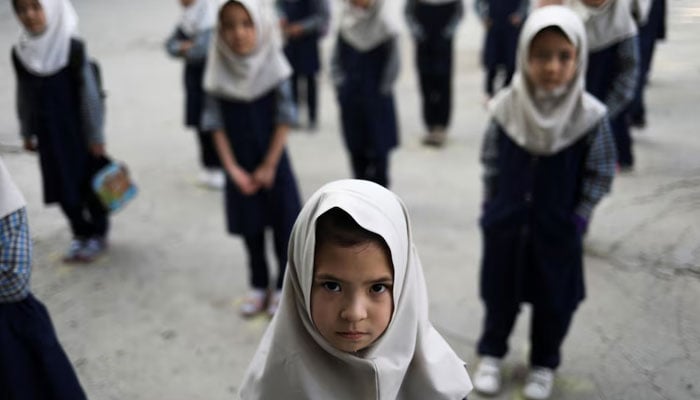
    KABUL: Afghan fathers are facing growing distress as their daughters remain unable to continue their education beyond primary school under restrictions imposed by the Taliban authorities. Families across Afghanistan say the education ban is creating deep emotional and financial pressure. Some fathers are openly questioning the policy, despite their religious beliefs and support for other government measures. The Taliban administration has defended the restrictions as temporary and based on its interpretation of religious principles. However, many Afghan men say they cannot understand why girls should be prevented from receiving secondary education. A United Nations survey conducted last year found that about nine out of 10 Afghan men considered it important for girls to attend secondary school. Nearly two-thirds also viewed supporting a daughter’s education as a religiously commendable act. Girls were barred from secondary schools after the Taliban returned to power in 2021. Women were later also prohibited from attending universities. The restrictions have affected a large number of young Afghan women and girls. For many families, the approaching end of primary education has become a source of fear. Fathers worry that their daughters will lose their chance to pursue higher education and build professional careers. One father, identified as Ahmad, said he had never imagined that his daughters could be forced to stop studying. His wife is a mathematics teacher who is also unable to continue teaching secondary-level students. Ahmad said his eldest daughter is approaching the end of primary school. The family has considered private and underground educational options, but the cost is difficult to manage. Another father, a doctor identified as Mohammad, said he had always wanted his daughters to attend leading universities. He believes women are essential to Afghanistan’s development and should have opportunities beyond household responsibilities. His daughters are approaching the age when they will be forced to leave formal schooling. The family has considered sending them abroad, including to Pakistan, but changing regional circumstances have made that option difficult. Some families have turned to private schools that secretly provide general education alongside religious studies. These institutions often charge high fees and may not provide recognised graduation certificates. Parents also fear that authorities could take action against schools operating outside official restrictions. This leaves families caught between protecting their children and trying to continue their education. Another father from Kandahar said his young daughter has a strong interest in astronomy. She asks questions about the solar system, gravity and science. The girl reportedly asked her father how she could continue learning if she could not study beyond the sixth grade. Her question has become a painful reminder of the limited opportunities available to girls. Some families have moved to Kabul in search of better educational opportunities. Others are relying on online courses, home schooling and secret classes. The restrictions are also affecting children emotionally. Parents say many girls feel frustrated, isolated and uncertain about their future. One father said his teenage daughter often stays at home and becomes deeply upset when she thinks about her education. He said he sometimes leaves the room because he cannot control his emotions and ends up crying privately. Another family has created a home-schooling routine using old secondary-school textbooks. The parents try to maintain a school-like schedule so their daughters can continue learning. However, the parents say home education cannot fully replace a formal school environment. They worry about the lack of recognised qualifications, social interaction and access to trained teachers. Some girls have also begun attending secret classes. Their families remain concerned about possible consequences if the authorities discover them. The prolonged restrictions have created uncertainty for an entire generation of Afghan girls. Parents fear that years without formal education will limit their daughters’ future opportunities

Leave a Reply

Your email address will not be published. Required fields are marked *