rome host usmediated
|

Rome to host US-mediated Israel-Lebanon negotiations on southern pilot zones

Technical delegations from Israel and Lebanon will assemble in Rome from August 4 to 6 for a fresh round of United States-brokered talks designed to advance the implementation of their bilateral framework agreement.

First disclosed by Italian Foreign Minister Antonio Tajani and subsequently confirmed by the US State Department, the upcoming dialogue will address the expansion of designated pilot zones in southern Lebanon alongside broader border resolutions and long-term peace objectives.

The core terms of the underlying framework deal, established after conflict flared between Israel and the Iran-backed militant group Hezbollah in March, require a cessation of hostilities, the disarming of Hezbollah, the national deployment of the Lebanese Armed Forces, and a structured, phased withdrawal of Israeli forces commencing from two initial pilot areas.

Negotiators aim to leverage early operational data from these initial zones to refine the broader security rollout and facilitate a progressive expansion of government control throughout the border region.

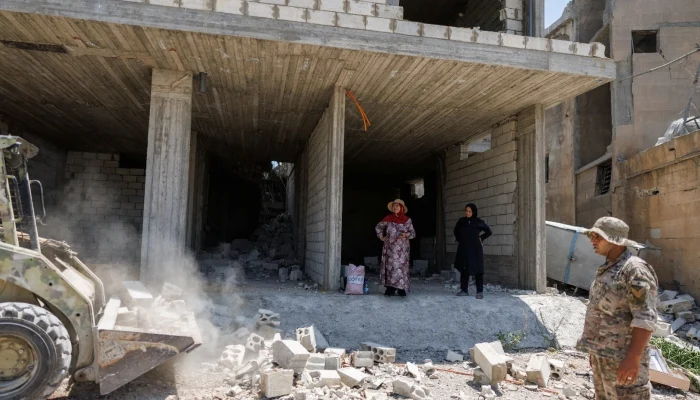
The upcoming diplomatic round occurs amidst friction on the ground, with the Lebanese military recently condemning persistent Israeli artillery shelling and strikes in southern territory, cautioning that continued operations directly impede the full deployment of state troops outlined in the agreement.

Similar Posts

  • | | | |

    Roman-Era masterpiece found hidden beneath fields …

    Archaeologists have uncovered a stunning 4th-century Roman mosaic beneath farmland in England, offering new insight into life during the period when Britain was part of the Roman Empire. The remarkable mosaic was discovered at the remains of an ancient Roman villa in Devon. Made from thousands of colorful stones arranged into intricate floral patterns, the artwork is believed to date back to the fourth century AD. The discovery provides fresh evidence of the wealth, architecture and cultural influence that existed in Roman Britain. The Roman Empire controlled much of Britain from around AD 43 until around AD 410, leaving behind numerous settlements, villas, roads and other archaeological remains. Alongside the mosaic, archaeologists discovered a large and sophisticated Roman bathhouse near the site. The complex reportedly contained several small pools, walls decorated with colorful plaster and a range of other ancient artifacts. The excavation was carried out over a two-month period by archaeologists from the University of Exeter and Cotswold Archaeology. Volunteers also participated in the work, helping researchers investigate the agricultural land located between the Devon villages of Hill Barton and Sampford Peverell. The archaeological team already knew that the Roman villa and surrounding working areas were potentially important for understanding the spread of Roman culture across Devon. However, the latest findings have revealed that the site was considerably larger and more significant than previously understood. Project leader Dr Susan Greaney said the discoveries could help researchers better understand Roman cultural influence and its interaction with local communities in the region. The detailed mosaic is particularly significant because such decorative artwork can provide clues about the status and lifestyle of people who lived at Roman villas. Its elaborate design and the presence of a substantial bathhouse suggest that the site was an important settlement rather than a simple rural dwelling. Archaeologists will now continue studying the discoveries and artifacts recovered from the site. Researchers hope the evidence will shed more light on how people lived, worked and adopted Roman customs in southwest England nearly 2,000 years ago. The Roman mosaic discovered in Devon is another reminder of how much of Britain’s ancient history remains hidden beneath modern farmland. Further archaeological investigation could reveal even more about the communities that lived in the region during the final centuries of Roman rule.

  • | |

    Lahore police intensify crackdown on usury, drugs …

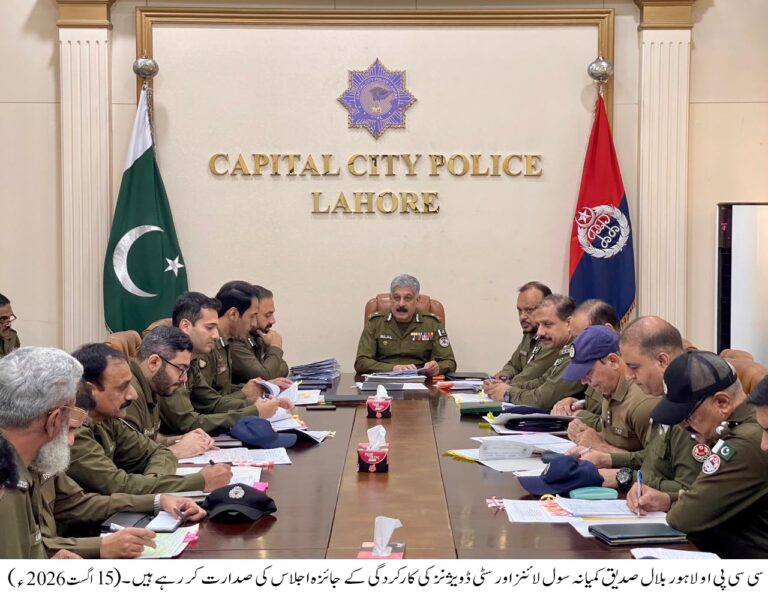
    LAHORE: Capital City Police Officer Lahore Bilal Siddique Kamyana has ordered intensified action against criminal activities while directing officers to improve law enforcement and public service delivery across the city. Chairing a meeting to review the performance of the Civil Lines and City divisions, the CCPO was briefed that 21 suspects allegedly involved in illegal moneylending had been arrested during an ongoing crackdown. He directed police to pursue legal action without leniency and ensure that victims receive protection and timely justice. Kamyana also ordered stronger operations against drug trafficking, calling for targeted action to dismantle narcotics networks and arrest those involved in the illegal trade. The CCPO directed officers to identify foreign nationals residing illegally in Lahore and proceed against them in accordance with the law. He also ordered enhanced surveillance of sensitive areas and monitoring of suspicious activities. He further called for continued combing operations and expanded intelligence-led action against elements posing threats to law and order. Stressing the importance of citizen-focused policing, Kamyana instructed officers to resolve public complaints promptly and prevent citizens from being repeatedly sent from one office to another. Senior police officials, including DIG Investigation Zeeshan Raza, DIG Operations Faisal Kamran and SSP Investigation Muhammad Naveed, attended the meeting.

  • | |

    Sardar Yousaf renews call for creation of Hazara p…

    Federal Minister for Religious Affairs Sardar Muhammad Yousaf has reiterated his demand for the creation of a separate Hazara province, saying there is broad political consensus on the issue and that administrative reforms are essential to improve governance and public service delivery. Addressing a joint press conference in Islamabad alongside Senator Talha Mahmood, the minister said the movement for Hazara province began in 2010 and has remained a longstanding demand of the region’s people. He said seven young people sacrificed their lives during the movement, adding that their contributions would always be remembered. According to the minister, people from different political parties have consistently supported the establishment of Hazara as a separate province. Sardar Yousaf noted that the Khyber Pakhtunkhwa Assembly has passed constitutional resolutions in support of Hazara province on three occasions—in 2014, 2018, and 2020. He added that bills seeking the creation of the new province have also been introduced in both the National Assembly and the Senate and have been referred to the relevant standing committees on law and justice. The minister said the creation of new administrative units has become a necessity in view of Pakistan’s growing population, which now exceeds 250 million. He argued that additional provinces would improve governance, revenue collection, and the implementation of development projects. He stressed that the demand for Hazara province is not linked to any single political party but represents a united movement supported by people from all walks of life, including political leaders, lawyers, journalists, students, traders, and religious scholars. Sardar Yousaf said several national political leaders have publicly expressed support for the Hazara province during visits to the region and public gatherings. He maintained that smaller administrative units would bring government services closer to the people, help address public issues more effectively, and strengthen the federation. He also paid tribute to those who lost their lives during the Hazara province movement, noting that Hazara Martyrs’ Day is observed every year on April 12 in their memory.

  • |

    Iran condemns Israeli minister’s remarks over Gaza killings

        Iran’s Deputy Foreign Minister Kazem Gharibabadi has strongly condemned remarks attributed to Israeli National Security Minister Itamar Ben-Gvir regarding the killing of Palestinians in Gaza, accusing him of openly advocating mass violence and the forced displacement of Palestinians. According to media reports, Gharibabadi said Ben-Gvir had set a daily target of killing between 30 and 40 people in Gaza. He described the remarks as further evidence of what Iran considers systematic violence against Palestinians and called for such statements to be preserved as evidence for possible future legal proceedings. Gharibabadi said that Israeli officials were openly discussing the expulsion of Palestinians from Gaza and the establishment or expansion of Jewish settlements in Palestinian territory. He argued that these statements should not simply be treated as political rhetoric but should be documented carefully because they could potentially become important evidence in future cases involving alleged violations of international law. “The statements and admissions made by Israeli officials should be preserved as evidence,” Gharibabadi said, according to the reports. He added that such evidence could be presented when Israeli officials are held accountable and legal proceedings are initiated against those accused of crimes against Palestinians. The Iranian official’s comments came in response to statements attributed to Ben-Gvir concerning Israel’s military campaign in Gaza. Media reports said the Israeli minister had spoken about killing between 30 and 40 people in Gaza every night. He was also reported to have said that the people of Gaza should not remain alive. Ben-Gvir, a far-right Israeli politician, has repeatedly faced international criticism over his statements and positions concerning Palestinians and the Gaza conflict. His remarks have frequently generated controversy, particularly when he has discussed military operations, Palestinian displacement and the future of Gaza. Gharibabadi’s response reflects Iran’s broader criticism of Israel’s military operations in Gaza. Iranian officials have repeatedly accused Israel of committing serious violations against Palestinians and have called for international action against Israeli leaders and officials. Tehran has also consistently supported the establishment of an independent Palestinian state and opposed the expansion of Israeli settlements in Palestinian territories. The issue of accountability has become increasingly prominent amid the continuing conflict in Gaza. Palestinian officials and international organizations have reported extensive civilian casualties and destruction in the territory since the outbreak of the war. Israel, meanwhile, has maintained that its military operations are aimed at Hamas and other armed groups and has defended its actions as necessary for national security and the release of hostages. The latest exchange between Iran and Israel comes amid continued regional tensions. Iranian officials have frequently used international forums and diplomatic statements to call attention to the humanitarian situation in Gaza and to demand accountability for alleged violations of international humanitarian law. Gharibabadi’s call to preserve statements made by Israeli officials highlights Iran’s argument that public comments by political and military figures could later be examined in legal proceedings. He suggested that remarks regarding killings, forced displacement and settlement expansion should be documented so they can potentially be used when questions of responsibility and accountability are considered. The controversy surrounding Ben-Gvir’s reported remarks is therefore likely to add to international scrutiny of Israel’s conduct in Gaza and the statements of its political leaders. As the conflict continues to generate diplomatic and legal debate, allegations concerning civilian killings, displacement and settlement policies remain major points of contention between Israel and its critics, including Iran.

  • | | | |

    Trump sets condition for Saudi Nuclear Pact

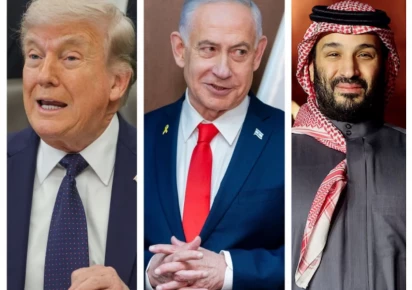
    US President Donald Trump has said that any future civilian nuclear agreement between the United States and Saudi Arabia will depend on the kingdom joining the Abraham Accords, the US-backed agreements aimed at normalising relations with Israel. Trump said Washington has no objection to Saudi Arabia developing civilian nuclear facilities as long as they are used only for peaceful purposes. He stressed that the proposed cooperation would focus on non-military nuclear energy, similar to civilian programmes in other countries. The proposed agreement would allow Saudi Arabia to enrich uranium and develop nuclear reactors with American technology. However, the deal reportedly does not require Riyadh to accept additional international inspections that are designed to detect undeclared nuclear activities. The absence of these extra safeguards has drawn attention because similar measures have been considered important in previous nuclear agreements. Saudi Arabia has been working for years to establish a civilian nuclear programme as part of its broader economic diversification strategy. The kingdom says nuclear energy will help reduce dependence on oil and meet future energy demand. Saudi leaders have also stated in the past that if Iran were to develop nuclear weapons, Riyadh would seek the same capability to maintain the regional balance. The latest remarks come as tensions between the United States and Iran continue to intensify. Iran’s Foreign Ministry warned American military personnel against carrying out attacks on civilian infrastructure. Tehran said targeting facilities such as bridges and power plants could amount to war crimes under international law. Iranian officials argued that following military orders would not protect individuals from legal responsibility if unlawful attacks were carried out. US Secretary of State Marco Rubio said Washington’s main objective remains preventing Iran from obtaining nuclear weapons. He accused Tehran of repeatedly violating agreements and said the Iranian government continues to support armed groups across the Middle East instead of focusing on its economy and people. Rubio also urged Yemen’s Houthi movement to avoid becoming more deeply involved in the conflict. He warned that further attacks could increase instability across the region and create additional security challenges. At the same time, Oman announced that it is working with Saudi Arabia, the United Nations and other regional partners to restart Yemen’s political peace process. Muscat called on all sides to avoid further escalation in the Red Sea and to protect international shipping routes. The Houthis claimed responsibility for missile and drone attacks on two Saudi oil tankers in the Red Sea. The group said the strikes were part of its maritime blockade campaign. Saudi authorities confirmed that one tanker was damaged and caught fire after the attack, while the status of the second vessel remained unclear. The attacks have raised fresh concerns about the security of one of the world’s busiest shipping lanes. Several commercial oil tankers have reportedly changed their routes to avoid the Red Sea, increasing transportation costs and raising fears of further disruption to global energy supplies. Elsewhere in the region, Bahrain activated emergency warning sirens following reports of a possible Iranian attack. Authorities urged residents to remain calm and move to safe locations while monitoring the situation. Jordan also said its air defence systems intercepted several missiles and drones approaching its airspace. The Jordanian military confirmed there were no casualties or damage and said security forces remain on high alert. Meanwhile, Iran’s Revolutionary Guard claimed it had carried out attacks on US military facilities in Jordan and Kuwait. The group alleged that it struck missile defence systems, military equipment and logistical sites. There was no immediate confirmation of those claims from either Jordan or Kuwait.

  • | |

    Salman Shahid claims seniors also annoy youngsters

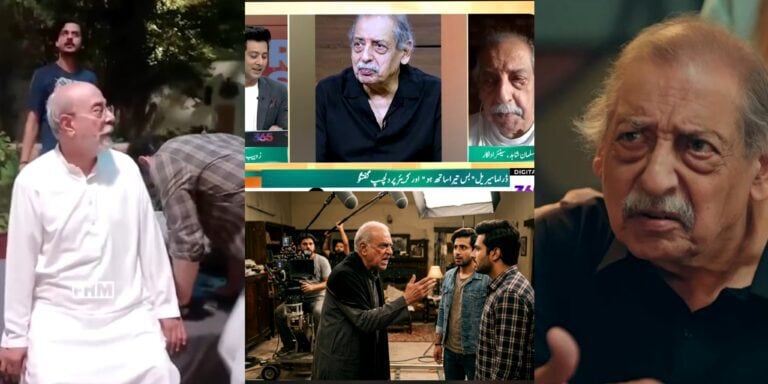
    The conversation sparked by Muhammad Ahmed’s recent remarks about the behaviour of junior actors on set has drawn a thoughtful and balanced response from veteran Pakistani actor Salman Shahid, who offered a perspective that many in the industry may have been thinking but had not yet said out loud. Shahid, who built his reputation through beloved comedy productions including Such Gup, Teen Bata Teen and Family Front before going on to appear in acclaimed dramas such as Seerhian, Aseer Zadi, Khuda Aur Mohabbat, Main Manto Nahi Hoon and Sher, appeared on Rise and Shine, hosted by Zohaib Hassan, where the conversation turned to Muhammad Ahmed’s complaints about junior actors on set. His response was measured, fair and grounded in his own experience of what set dynamics actually look like from the inside. “Listen, if juniors misbehave with seniors, there are also seniors who become unreasonable and behave the same way with younger actors,” he said. “It depends on a person’s nature. Sometimes, seniors also annoy juniors because they want to show their authority. They say things like, ‘You’re young, what do you know about acting? We’ve been doing this for so many years. You’re doing it wrong.’ So, this issue exists on both sides.” The point Shahid was making was not that Muhammad Ahmed’s concerns were invalid. It was that the problem is not generational but personal. Difficult behaviour on set is not exclusively a junior actor problem. It can come from anyone, regardless of how many years they have spent in the industry or how much respect they command. What made his remarks feel credible rather than defensive was the contrast he drew with his own approach to working life. He spoke with evident warmth about the aspects of set culture that he actively enjoys. “Personally, I love socialising,” he said. “I enjoy tea breaks and interacting with my co-stars on set. I really love it. It’s part of my social life, no matter what age my colleagues are. The image he painted was of someone who genuinely takes pleasure in the shared environment of a drama production, for whom the time between scenes is as much a part of the experience as the work itself. It was a reminder that sets are workplaces where people spend long hours together, and that the atmosphere on them is shaped by everyone present, senior and junior alike. Shahid is currently earning praise for his performance in the ongoing drama Bas Tera Saath Hu, which has resonated strongly with audiences. He is the son of legendary actress Begum Khursheed Shahid, is married to Tahira Ali, and has been a consistent and respected presence in Pakistani television for decades. His contribution to the current conversation about generational dynamics in the industry is characteristically grounded. He did not take sides. He simply told the truth.

Leave a Reply

Your email address will not be published. Required fields are marked *