oman proposes gulfbacked
|

Oman proposes gulf-backed plan to ease Strait of Hormuz tensions


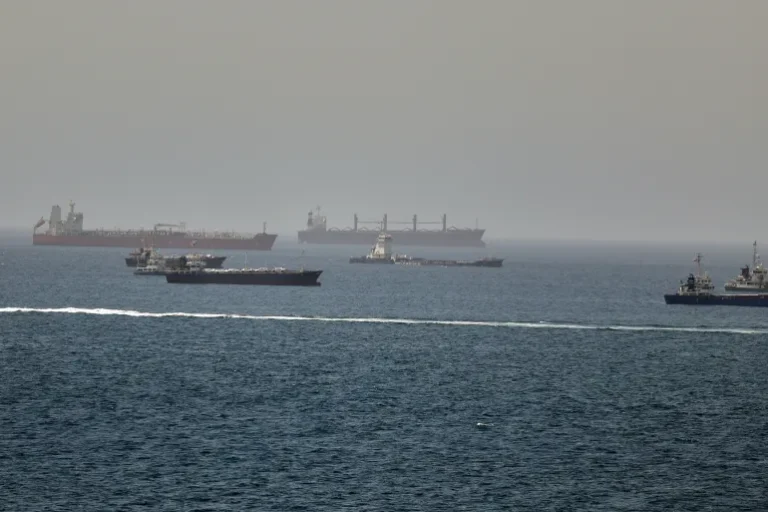
Oman has proposed a new framework for managing the strategically important Strait of Hormuz, with support from Gulf countries, according to a Gulf source and a Western diplomat who spoke to Reuters on Tuesday. The proposal includes a system under which ships using the waterway would be encouraged to make voluntary financial contributions rather than pay mandatory transit fees.

The initiative is aimed at easing tensions and restoring stability in one of the world’s busiest maritime trade routes following months of disruption caused by the conflict involving the United States, Israel, and Iran. A senior Iranian official told Reuters that Tehran has not yet responded to Oman’s proposal, which is intended to provide a foundation for a broader agreement to ensure the safe movement of commercial vessels through the strait.

The Strait of Hormuz is one of the most critical shipping lanes in the world, carrying around one-fifth of global oil and liquefied natural gas supplies before the conflict intensified. The route has become a focal point of regional tensions, with repeated incidents affecting international trade and energy markets.

Meanwhile, US President Donald Trump said there had been “good talks” involving Iran but warned that military action could resume if diplomatic efforts fail to produce results. Trump recently halted a planned two-week US bombing campaign, marking another major shift in his administration’s approach toward the conflict. Despite his comments, Iranian officials continue to deny that Tehran is preparing to restart negotiations with Washington.

Earlier this month, the United States launched a renewed military campaign aimed at reducing Iran’s influence over the Strait of Hormuz. Iran had effectively restricted access to the waterway following military strikes by the United States and Israel on February 28, allowing only Iranian vessels to move freely through the area.

Although a temporary agreement between Washington and Tehran led to the partial reopening of the strait last month, the arrangement quickly fell apart in early July. According to reports, Iran fired on ships using a navigation channel that it does not officially recognize, reigniting concerns about maritime security and the uninterrupted flow of global trade.

Iran has repeatedly stated that it wants to jointly oversee the Strait of Hormuz with Oman, which borders the opposite side of the narrow waterway. Tehran has also proposed charging vessels for navigation-related services. However, the United States argues that international ships should continue to enjoy unrestricted passage without being required to pay mandatory fees, maintaining that such charges would violate international law.

Under the proposal put forward by Oman, Iran would not have exclusive authority over the strait. Instead, management responsibilities would be shared, and any payments made by vessels would be entirely voluntary rather than compulsory, according to the Gulf source and the Western diplomat familiar with the discussions.

The proposed model is similar to the system used in Southeast Asia’s Strait of Malacca, where Indonesia, Malaysia, and Singapore invite shipping companies to make voluntary contributions. Those funds are used to support navigation safety, environmental protection, and search-and-rescue operations instead of functioning as mandatory transit charges.

The Omani initiative is being viewed as a possible compromise that could reduce regional tensions, safeguard international shipping, and help restore confidence in one of the world’s most strategically significant maritime corridors.

Similar Posts

  • |

    Toxic gas leak kills eight at Bangladesh shipyard

    At least eight workers were killed and five others were reported missing after toxic gas leaked from a vessel at a shipbreaking yard in Bangladesh on Friday. The incident occurred at the Ferdous Steel Shipbreaking Yard and Recycling Factory in Chittagong, a major hub for ship dismantling on the country’s southeastern coast. Witnesses said they heard cries from inside the facility before fellow workers rushed several affected employees to nearby hospitals. Police said eight people had died while a search operation was underway for those still unaccounted for. Authorities have formed an investigation committee to determine the cause of the accident and ordered a safety audit of the shipbreaking facility. Officials said the vessel involved had previously been used to transport liquefied natural gas. Although the yard was reportedly classified as a compliant facility, fire service officials raised concerns about whether proper safety procedures had been followed before dismantling work began. According to fire service officials, vessels must be completely cleared of hazardous gases before workers begin cutting them apart. They said workers who were closest to the gas leak died, while others farther from the affected area survived. Firefighters recovered three bodies from the site and rescued several workers who were found unconscious. The injured were transported to hospitals for treatment. The shipbreaking industry along Chittagong’s coast stretches for around 25 kilometres and provides employment to tens of thousands of people. Bangladesh is one of the world’s major shipbreaking centres, but the industry has repeatedly faced criticism over workplace safety, labour conditions and environmental risks. One of the workers killed in the accident was identified as Palash Jaladas. His family was left devastated by the tragedy, with relatives saying his wife, Bhoumika Jaladas, is eight months pregnant.

  • | |

    Tokyo’s shorts policy for office workers spa…

    Japanese men are showing more leg at work than ever this summer, as the Tokyo Metropolitan Government continues pushing employees toward casual attire that includes shorts alongside t-shirts and trainers. Tokyo Governor Yuriko Koike introduced the initiative, known as Tokyo Cool Biz, in April, aiming to build on her signature cooling campaign that has become a recognized annual tradition across the city each summer. Nearly four months into the programme, the newly permitted office shorts have drawn a mixed reaction from workers and commentators alike. Some people have welcomed the more relaxed dress code, saying it allows them to work comfortably despite the intense summer heat. Others argue the policy creates an unequal standard for women, who remain expected to wear tights even when showing part of their legs, while men can now go bare legged in shorts. A number of women have also described discomfort at having to see male colleagues’ leg hair in the office, a phenomenon some online commentators have labeled leg hair harassment. Noboru Watanabe, an environmental official with the Tokyo Metropolitan Government, said the goal is to give people more clothing options during severe heat rather than dictate what they must wear, adding that there should be no issue as long as workplace attire does not offend anyone. Casual dress has grown more common among Japanese workers in recent years, particularly at startups and technology companies, but this year’s government recommendation has made the shift more broadly acceptable across traditional workplaces as well. Even so, some men have reported feeling self conscious about exposing their leg hair for the first time in a professional setting. Dr. Akifumi Funatsu, director of Gorilla Clinic, said he has noticed a rise in clients visiting the clinic not purely for cosmetic reasons but out of concern for what he described as social etiquette when wearing shorts, suggesting the policy shift has begun influencing personal grooming habits among Japanese men beyond the office itself. The debate reflects a broader tension in Japan between longstanding workplace dress norms and growing efforts to modernize corporate culture in response to increasingly severe summer heat, with officials balancing calls for greater comfort against concerns about fairness between male and female employees navigating different expectations around appropriate office attire.

  • | | | |

    Iran, Oman make progress on Strait of Hormuz shipping talks

    Iran and Oman have reported progress in discussions aimed at ensuring safer shipping through the Strait of Hormuz amid the ongoing regional conflict. Iranian Foreign Ministry spokesman Esmaeil Baghaei said senior officials from both countries held talks in Tehran over two days to discuss arrangements for managing maritime traffic through the strategic waterway. According to Baghaei, the discussions focused on common principles and practical measures to maintain safe shipping while respecting the sovereignty of Iran and Oman, the two countries bordering the strait. He described the talks as useful and said progress had been made. Further political and technical consultations are expected to continue between the two sides. Baghaei also said there had been no change in the current traffic situation in the Strait of Hormuz. The development comes as tensions remain high between Iran, the United States and Israel. The waterway has become a major focus of the conflict because it is a critical route for global energy shipments. Iranian army spokesman General Abolfazl Shekarchi separately claimed that Washington had failed to achieve its objectives in the Strait of Hormuz and in weakening Iran. He described the situation for the United States as “chaotic and undesirable” and said Washington was apparently considering a new strategy. Shekarchi also suggested that any possible US withdrawal from the conflict could depend on Israel’s approval. Meanwhile, tensions have spread beyond the immediate battlefield. Iran summoned Ukrainian diplomats after Kyiv reportedly struck an Iranian vessel in the Caspian Sea, killing at least one sailor and injuring another. Ukraine said the operation targeted Russian vessels allegedly carrying military cargo linked to Iran. Ukrainian President Volodymyr Zelenskyy has also accused Russia of supporting Iran during the ongoing conflict.

  • |

    Moscow restaurant bomb blast kills three, injures …

    MOSCOW: A powerful explosion caused by a homemade bomb killed three people and injured at least 21 others outside an upscale restaurant in central Moscow on Saturday evening, prompting a major security operation and a high-level investigation by Russian authorities. According to Russia’s Anti-Terrorism Committee, the blast occurred shortly before 8pm local time near the Balzi Rossi Italian restaurant, located in one of Moscow’s iconic Stalin-era skyscrapers at Kudrinskaya Square. Officials said an unidentified woman carrying the explosive device attempted to enter the restaurant but was stopped by a security guard. Moments later, the bomb detonated, killing the woman, the security guard and a restaurant customer. Police said the injured suffered wounds of varying severity and were rushed to nearby hospitals, while emergency responders secured the area and searched for further threats. Video released by Russia’s state news agency RIA showed heavily armed security personnel and emergency crews surrounding the blast site, which was immediately sealed off as investigators gathered evidence. Authorities have not disclosed the identities of the victims or indicated who may have been behind the attack. Investigators are examining multiple possibilities as the probe continues. The incident comes amid heightened security concerns in Russia, more than four years after the escalation of the war in Ukraine. Earlier this year, Russia’s Federal Security Service (FSB) announced enhanced protection measures for senior military officials following a series of assassinations and attempted attacks that Moscow blamed on Kyiv. Meanwhile, Russian newspaper Kommersant, citing unnamed sources, reported that investigators suspect the explosive device may have been intended to target guests gathered on the restaurant’s outdoor summer terrace. The report also suggested the bomb could have been detonated remotely, raising the possibility that the woman carrying it may not have known she was transporting an explosive. The restaurant’s official website stated that it had been closed to the public on Saturday due to a private event, adding another layer of mystery to the incident. As forensic teams continue examining the scene, authorities have urged the public to avoid speculation while the investigation remains underway. The blast has once again highlighted ongoing security challenges in the Russian capital and raised fresh concerns about public safety in crowded urban areas.

  • Egypt secures energy alternatives after drone attack on Damietta Gas Vessel

    Egypt’s Prime Minister Mostafa Madbouly has announced that the country has secured alternatives to cover its energy needs following a drone attack on Wednesday that damaged a gas vessel at Damietta port. No group has claimed responsibility for the attack, and authorities are continuing their investigation, Madbouly added. The incident marks the latest escalation in maritime tensions that have spread across the Red Sea and eastern Mediterranean amid the wider Iran war. The attack on Damietta port comes as regional tensions continue to mount. In a separate development, Iran’s state media claimed strikes on Bahrain’s Sheikh Isa Airbase, while the Israeli army bombed a town in southern Lebanon. The United States has also issued new sanctions targeting support networks for Iran’s Mahan Air. The drone strike at Damietta adds to growing concerns over the security of energy infrastructure in the region, as attacks on shipping and energy facilities have become increasingly common since the outbreak of the US-Iran conflict. The Red Sea and surrounding waterways have seen a series of attacks on commercial vessels, with Yemen’s Houthi rebels targeting Saudi-linked shipping in what they say is solidarity with Palestinians. Egypt’s ability to secure alternative energy supplies will be critical in mitigating the impact of the attack on its domestic energy needs and potentially avoiding further economic disruption. The incident underscores the vulnerability of energy infrastructure in the region and the broader implications of the ongoing conflict for global energy markets.

  • |

    Peru and Mexico resume diplomatic relations after political dispute

    The diplomatic break occurred when Mexico granted political asylum to former Peruvian Prime Minister Betssy Chavez, who faced conspiracy charges regarding former President Pedro Castillo’s 2022 attempt to dissolve Congress. As part of the bilateral agreement to restore relations, Peru granted Chavez safe-conduct guarantees under the 1954 Caracas Convention on Diplomatic Asylum, enabling her to leave the Mexican Embassy in Lima and travel to Mexico. Peruvian Foreign Minister Carlos Espa confirmed she departed in good health. The Peruvian Ministry of Foreign Affairs maintained that no political persecution exists in the country and stated that granting safe-conduct does not waive Peru’s legal right to request Chavez’s extradition in the future. The diplomatic rapprochement follows commitments made by newly elected Peruvian President Keiko Fujimori ahead of her inauguration to normalize ties with Mexico, an initiative welcomed by Mexican President Claudia Sheinbaum.

Leave a Reply

Your email address will not be published. Required fields are marked *