ryan reynolds opens
| |

Ryan Reynolds opens up after fooling fans with sur…

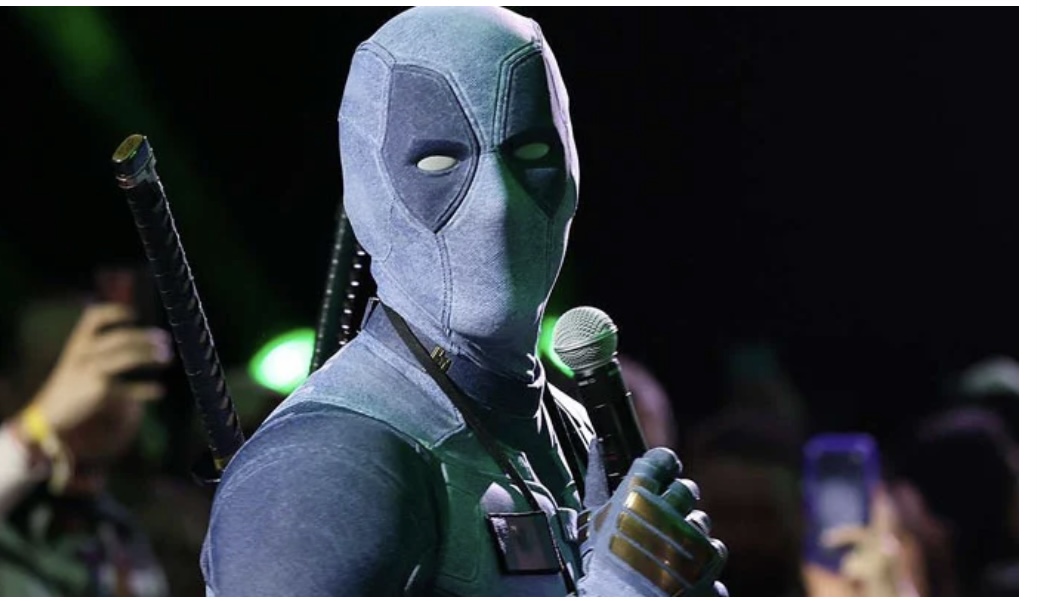
Ryan Reynolds has once again proven that his playful sense of humor extends far beyond the screen. The Deadpool star recently delighted fans by secretly attending San Diego Comic-Con dressed in his iconic red-and-black Deadpool costume, allowing him to blend into the crowd without anyone realizing the superhero walking among them was the actor himself. The prank quickly became one of the convention’s most talked-about moments. (people.com⁠)

After the event, Reynolds shared behind-the-scenes footage of the stunt on social media, giving fans a closer look at how he managed to pull off the surprise. The video showed the actor walking through packed convention halls, posing for photos with attendees and interacting with fellow Deadpool cosplayers, all while remaining completely anonymous behind the famous mask.

Reynolds admitted that it was a unique experience to witness fans celebrating the Marvel character from such a different perspective. Instead of appearing as a celebrity, he was able to enjoy Comic-Con as an ordinary attendee, observing the excitement and enthusiasm surrounding Deadpool without attracting attention himself. (people.com⁠)

The actor later reflected on the experience, explaining that blending into the crowd reminded him why Comic-Con remains such a special event for movie lovers. He praised the creativity of fans, many of whom spent months designing elaborate costumes inspired by superheroes, villains and pop culture icons. Reynolds also expressed his appreciation for the passionate community that has supported Deadpool since the character first appeared on the big screen in 2016.

The prank came just over a year after the blockbuster success of Deadpool & Wolverine, which reunited Reynolds with longtime friend Hugh Jackman and became one of the highest-grossing films of 2024. The movie earned praise for its humor, action and emotional moments while further cementing Deadpool’s place within the Marvel Cinematic Universe. (variety.com⁠)

Fans flooded Reynolds’ social media accounts with reactions after he posted the footage, with many admitting they had unknowingly stood next to the actor during the convention. Others joked that they missed the opportunity of a lifetime by failing to recognize the real Deadpool beneath the mask.

Known for his quick wit and clever online presence, Reynolds has built a reputation for surprising fans in unexpected ways. Whether promoting a new film or pulling off a lighthearted prank, the actor consistently finds creative ways to connect with audiences.

For Reynolds, the Comic-Con stunt was more than just a joke—it was a chance to experience fandom from the other side. By slipping into Deadpool’s suit and disappearing into the crowd, he was reminded of the joy that passionate fans bring to pop culture. Judging by the enthusiastic response, his secret appearance became one of Comic-Con’s most memorable moments, proving that sometimes the best superhero disguises really do work.
Similar Posts

  • | |

    FPAP, IPH hold breastfeeding policy dialogue

    LAHORE: Institute of Public Health Lahore and Rahnuma Family Planning Association of Pakistan joined hands to organize a Policy Dialogue on promoting Breastfeeding in connection with the World Breastfeeding Week 2026. The week is commemorated globally from 1-7 August to highlight the importance of breastfeeding. The house discussed strategies to improve breast feeding as only 45% of newborns in Pakistan were put to breast milk within the first hour of life, resulting in stunted growth and vulnerability to disease outbreaks. Moderated by Dean IPH Dr. Saira Azfzal, the event was joined by foreign dignitaries from the UKHSA, Chairman BoG IPH Prof Abdul Majeed Chaudhry, Executive Director Punjab Institute of Neuro Sciences & Principal General Hospital/PGMC Sardar Al Farid, former chairperson BoG Punjab Healthcare Commission Prof Atiya Mubarak, Head of Office WHO Punjab Dr. Jamshaid Ahmed, UNICEF Health Specialist Dr. Quratul Ain Ahmed, former Executive Director Health Services Academy Prof Shakila Zaman, WHO Technical Officer Dr. Irfan Ahmed, DGHS representative Dr. Zubair Hafeez as well as KEMU, Jinnah Hospital, SIMS and Ganga Ram experts including Prof Sobia Qazi, Prof Nadia Khursheed, Prof Munir Akhtar Saleemi, Dr Rameeza Kaleem Dr Asif Batani, Dr Mamoona, , Dr Ali Arshad, Prof. Dr Madeeha Rashid, Prof. Dr Muntaha, Dr Ammara Dr Amber Mustafa and a large number of students. Project Director GAVI RISE Rahnuma FPAP Sajjad Hafeez acknowledged IPH for joining hands with Rahnuma for a national cause. Highlighting this year’s theme “Breastfeeding for a Sustainable Start in Life: Strengthen What Works,” he said that Rahnuma-FPAP is one of the largest and oldest organizations in Pakistan, renowned for integrated package of mother & child health services, (ANC, safe deliveries PNC, vaccination, nutrition and family planning) at its country-wide network of facilities. Prof Sardar Al Farid highlighted barriers for mothers especially in office settings and need to designate workplace nursing stations. WHO representative Dr. Jamshaid elaborated key indicators (Early Initiation of Breastfeeding, Exclusive Breastfeeding and Continued Breastfeeding, highlighting that formula milk must not be marketed aggressively. UNICEF representative Dr. Quratul Ain highlighted that deliveries in Punjab under skilled birth attendants have improved to around 80%, yet the breastfeeding figures remain sub optimal. This requires integrating skilled counseling into routine family planning and reproductive health services.

  • | |

    Pakistan discovers high-grade lithium in Khairpur

    Pakistan has taken a significant step toward joining the global lithium supply chain after the discovery of high-grade lithium in Sindh’s Khairpur district, a development that could pave the way for the country’s first domestic lithium industry and strengthen its ambitions in clean energy and advanced manufacturing. The breakthrough comes as the Oil and Gas Development Company Limited (OGDCL) signed a strategic agreement with the Pakistan Institute of Nuclear Science and Technology (PINSTECH) to develop technology capable of extracting lithium from geothermal brine on a commercial scale. The agreement follows the successful identification of high-quality lithium in water produced from a well in Khairpur, raising hopes that Pakistan could eventually reduce its dependence on imported battery materials while creating a new high-value industrial sector. Officials familiar with the project said the collaboration will focus on designing an efficient and commercially viable extraction process. If successful, the initiative could lay the foundation for a local lithium value chain, supporting industries involved in electric vehicle batteries, renewable energy storage systems, and other high-tech applications. The discovery is also expected to attract interest from investors looking to capitalize on the rapidly growing global demand for lithium, a critical mineral used in rechargeable batteries that power electric vehicles, smartphones, laptops, and grid-scale energy storage systems. In another major development, authorities have expanded lithium exploration across Sindh. Plans are underway to investigate eight to ten additional wells in search of further lithium-rich geothermal brine deposits, increasing the likelihood of identifying commercially viable reserves. Energy experts believe Pakistan’s emerging lithium potential could diversify the country’s mineral resources, generate export opportunities, and create skilled employment if exploration results continue to be positive and commercial production becomes feasible. While further scientific studies and economic assessments are still required before large-scale production begins, the Khairpur discovery marks a milestone in Pakistan’s pursuit of critical minerals. Industry observers say sustained investment in research, technology, and infrastructure will be essential to transform the discovery into a competitive domestic lithium industry capable of supporting the country’s long-term energy transition and industrial growth.

  • Trip.com Terminates Cambodia Tourism Deal Amid User Privacy Backlash

    Global online travel agency Trip.com has suddenly canceled a recently signed partnership with Cambodia’s National Tourism Authority following a wave of user privacy concerns, primarily from customers in China and Thailand. The decision underscores growing public anxiety over data security and scam operations associated with Southeast Asia. Thailand Strengthens Tourism Collaboration with Trip.com The cooperation […]

  • |

    Singapore offers $55,000 per child to tackle birth crisis

    Singapore has announced a major expansion of financial support for families as the city-state struggles with a record-low birth rate and a rapidly ageing population. Prime Minister Lawrence Wong unveiled the new measures during his annual National Day Rally speech, saying the government wants to make it easier for Singaporeans who wish to have children to start and raise families. Under the revised package, families will receive nearly S$70,000, equivalent to about US$55,150, in direct financial support for each Singaporean child up to the age of 17. The assistance includes a S$10,000 payment at birth, while another S$10,000 will be provided to help with further education. The government plans to distribute the financial support over a child’s early years rather than concentrating most of the assistance around birth. Singapore will also expand parental leave, particularly for families with more children. The government intends to cover a greater share of the costs associated with extended leave, reducing the financial burden on employers and working parents. Housing support is another part of the initiative. Authorities plan to make it easier for families with children to purchase their first homes through subsidised housing schemes. The measures come as Singapore’s fertility rate continues to fall. The country’s total fertility rate dropped to a record 0.87 children per woman last year, compared with 0.97 in 2024. The figure is far below the estimated replacement level of 2.1 needed to maintain a stable population without relying on immigration. The demographic decline is becoming an increasingly serious challenge for Singapore. Longer life expectancy combined with fewer births means the country is rapidly moving towards an older population. Singapore is expected to enter the United Nations’ category of a “super-aged” society this year, when more than 21 per cent of its population is aged 65 or above. The proportion is expected to increase further, with one in four Singaporeans projected to be aged 65 or older by 2030. Wong acknowledged that financial incentives alone may not reverse the trend. Many younger Singaporeans are postponing parenthood because of concerns about financial stability, housing, careers and the responsibilities associated with raising children. Others are choosing not to have children. The prime minister said the government must be realistic about the limits of its policies and warned that the fertility rate is likely to remain below replacement level. With fewer births, Singapore’s working-age population could shrink while the number of elderly citizens continues to rise. This could place greater pressure on the younger population to support healthcare, pensions and other social services.

  • | |

    Hafiz Naeem calls rising levies ‘petrol bombs’…

    Jamaat-e-Islami Pakistan Ameer Hafiz Naeem-ur-Rehman has strongly criticized the government’s taxation and energy policies, accusing authorities of placing an unbearable financial burden on ordinary citizens. Addressing participants at a sit-in in Lahore, Hafiz Naeem said people were being economically crushed in the name of petroleum levies, describing the frequent increases in fuel costs as “petrol bombs” being dropped on the public. He said the government attributed rising petroleum prices to higher rates in the international market and argued that importing refined petroleum products had become increasingly expensive. However, he maintained that the resulting burden was ultimately transferred to consumers. The JI chief also criticized the condition of Pakistan’s oil-refining sector, saying successive governments had failed to modernize and upgrade refineries. He pointed out that motorcycle users and other ordinary consumers were also paying petroleum levies, while higher petrol prices eventually pushed up the cost of everyday goods. Hafiz Naeem described the petroleum levy as a form of taxation and argued that the existing system had little connection with the welfare of ordinary people. He also criticized the country’s electricity pricing structure, claiming that consumers were being charged heavily despite relatively low generation costs. He further warned that once an effective judicial system was established, those responsible for governance and financial decisions would face scrutiny. He said audits and trials would reveal the assets and financial dealings of those involved. Hafiz Naeem emphasized that the ongoing sit-in was not aimed at advancing the interests of any individual or political personality. He said the movement was being organized to raise the grievances of the public and demand relief from mounting economic pressures.

  • |

    Cambridge paper leak case: students hand over 17 papers evidence to NCCIA, but investigation still not complete

    Islamabad: The investigation into the alleged Cambridge A Level and O Level paper leaks has drawn fresh criticism after affected students claimed that they provided complete evidence, forensic details and technical assistance to the National Cyber Crime Investigation Agency (NCCIA), but the inquiry remains incomplete. Students associated with the Accountability4Cambridge movement said they made every possible effort to help NCCIA investigate the case and submitted evidence related to 17 leaked examination components. They claimed they even conducted their own forensic checks and prepared detailed records before handing them over to authorities. The students said their main demand was a quick investigation because their future depends on the final results. They wanted the matter resolved before results were announced so that affected students could receive relief if unfair practices had affected their grades. However, according to the students, NCCIA has still not completed its investigation. They claimed that the investigation officer assigned to the case has gone on training, causing further delay. The Accountability4Cambridge representatives said they submitted a complete evidence package to NCCIA, including 44 exhibits with verification details. They said the material was prepared carefully to help investigators identify where the papers were leaked and who was involved. The students said they tracked the movement of leaked papers and provided information about possible sources, online groups and communication channels where the leaked material was shared. Their evidence included details about WhatsApp numbers, Telegram groups and payment methods allegedly used to purchase the leaked papers. The students submitted the evidence directly to NCCIA’s forensic department and expected progress within days, but they were later informed that the assigned official was unavailable because he had gone for training. The controversy started after students alleged that Cambridge examination papers reached some candidates before the official exams, creating an unfair advantage for those who accessed them early. According to Accountability4Cambridge, around 17 examination components were leaked during the June 2026 examination series. They said Cambridge International acknowledged four of these components, while the remaining cases were still disputed. Students argued that a leaked paper could damage the grades of honest candidates because grade boundaries may change when some students score unusually high marks after seeing questions in advance. They said a student who worked honestly could lose university opportunities if their grades dropped because of unfair competition. The students also raised concerns about delays in the official response. The Senate Standing Committee on Federal Education had directed NCCIA to provide findings by July 21, 2026, but the deadline passed without a final report being submitted. The group said only an informal indication was given that findings would come later, while students continued waiting for answers. During their efforts, students met with various institutions, including the IBCC, Senate committees and NCCIA officials, and prepared documentation to support their claims. They said the evidence was not based only on screenshots but included detailed verification methods such as timestamps, recordings and technical information to support the authenticity of the leaked material. The students said they wanted authorities to identify the people responsible and ensure accountability instead of allowing the matter to continue without a clear conclusion. They also demanded stronger action from Cambridge, including transparency regarding how the leaks happened, where they originated and what action was taken against those involved. The students further demanded reforms in the examination system, including better protection of papers, separate arrangements for Pakistan and measures to prevent future leaks. They warned that the issue concerned not only marks but also the future of thousands of students who depend on Cambridge results for university admissions in Pakistan and abroad.

Leave a Reply

Your email address will not be published. Required fields are marked *