thailand8217s ancient monastery
|

Thailand’s ancient monastery earns Unesco World Heritage status

A historic Buddhist monastery in southern Thailand has been added to the Unesco World Heritage List, giving the country another globally recognized cultural landmark and providing stronger support for its long term preservation. The recognition marks an important milestone for Thailand as it is the first World Heritage site located in the country’s southern region.

The newly listed site is Wat Phra Mahathat Woramahawihan, located in Nakhon Si Thammarat province. The Thai Foreign Ministry announced that it is now Thailand’s ninth World Heritage site. Officials said the designation will help improve conservation efforts through closer cooperation between national authorities and local communities, ensuring the monastery remains protected for future generations.

The announcement was celebrated at the monastery with traditional ceremonies. Monks gathered to chant blessings while officials and visitors took part in the event by striking a ceremonial gong. Local media described the atmosphere as one of pride and celebration as the centuries old temple received international recognition.

According to Unesco, the monastery has served as one of the region’s leading Buddhist centers since it was established in the eighth century. Over the centuries, it has become an important place of worship, education, and cultural exchange. The temple complex is home to impressive stone stupas, a large reclining Buddha statue, and numerous standing and seated golden Buddha figures. Visitors can also see detailed sculptures and artistic depictions of guardian deities throughout the site.

The monastery reflects a rich blend of religious and cultural influences that shaped Southeast Asia over many centuries. Because of its location on the Thai peninsula between the Pacific and Indian oceans, it became a meeting point for traders, pilgrims, and scholars from across the region. Unesco noted that traditions and architectural styles from Brahmanism, Hinduism, Mahayana Buddhism, and Theravada Buddhism, along with influences from India, Sri Lanka, and Myanmar, are all visible in the site’s design and religious practices.

These different cultural traditions have been woven into the monastery’s buildings, ceremonies, and daily rituals, making it a valuable symbol of the region’s shared history. The site’s historical importance and unique cultural identity were key reasons behind its inclusion on the prestigious World Heritage List.

Thailand hopes the international recognition will also strengthen its tourism industry. World Heritage status often attracts more international visitors, helping local economies while raising awareness about the importance of preserving cultural landmarks. Tourism remains one of Thailand’s most important economic sectors, although visitor numbers have not yet fully recovered to levels seen before the Covid-19 pandemic.

Government figures show that tourist arrivals during the first half of this year were more than three percent lower than during the same period in 2025. Officials believe the addition of another World Heritage site could encourage more travelers to explore destinations beyond Thailand’s traditional tourist hotspots.

Wat Phra Mahathat Woramahawihan now joins a distinguished list of Thai World Heritage sites that includes the Historic City of Ayutthaya, the Thungyai Huai Kha Khaeng Wildlife Sanctuaries, and the Ancient Town of Si Thep. The latest recognition highlights Thailand’s rich cultural heritage while reinforcing efforts to preserve one of the country’s most significant religious and historical treasures for generations to come.

Similar Posts

  • | |

    Search teams recover body of American climber following fatal avalanche on Broad Peak

    Search and rescue teams in northern Pakistan have recovered the body of 39-year-old American mountaineer Mallory Geis following a massive avalanche on Broad Peak, the world’s 12th-highest mountain. The disaster struck a 10-member international expedition led by renowned British-Nepali climber Nirmal “Nims Dai” Purja at an altitude of approximately 7,000 metres in the Karakoram range. Pakistani military helicopters and ground units deployed to the site have secured the remains of three victims so far, including Geis, Omani climber Nadhira Ahmed Abdullah Al Harthy, and Nepali guide Pur Bahadur Gurung. The Alpine Club of Pakistan confirmed that bad weather and hazardous high-altitude conditions have severely complicated ongoing search efforts for the remaining missing team members. Aerial drone footage spotted several other expedition members swept nearly 1,000 metres downhill by the slide, though ground teams have yet to reach them due to the extreme terrain. Local authorities in Gilgit-Baltistan stated that recovered victims were transported to regional medical facilities for official identification procedures, while military helicopters remain on standby for further retrieval operations as weather permits.

  • | |

    Trump vows heavy strikes on Iran’s Pickaxe M…

    President Donald Trump said Monday that US forces will hit the Pickaxe Mountain area, located near Iran’s already heavily damaged Natanz uranium enrichment facility, very heavily in the near future. Trump had threatened the site last week, saying the United States was going to take out Pickaxe Mountain, a heavily fortified location tied to Iran’s nuclear program that contains two deeply buried tunnel complexes. He also said Tuesday that Tehran wanted to meet desperately, adding that Washington has no interest until Iran shows readiness to engage in a meaningful way. Facing mounting political pressure at home over rising gasoline prices since the war began, and with Iran having effectively closed the Strait of Hormuz, Trump defended the latest strikes as a response to the deaths of American service members killed in recent Iranian attacks. He wrote on social media Monday that Iran will pay many times over every time it kills an American soldier, saying he had passed the directive to Secretary of War Pete Hegseth, Joint Chiefs Chairman Daniel Caine and every military leader. The broader conflict has killed thousands of civilians, most of them in Iran and Lebanon, where Israeli forces have occupied part of the country following attacks by Hezbollah fighters who said they acted in solidarity with Tehran. Lebanese President Joseph Aoun met Trump at the White House Tuesday, thanking him for what he called a historic achievement in signing a Lebanon Israel framework agreement. Aoun said he had looked forward to the visit for a long time and that the region is due for stability and security. Trump said he would speak with Hezbollah if Aoun wanted him to, noting he has already communicated with the group through intermediaries in June and secured a pledge that it would not attack Israel, a first for any US president given Hezbollah’s designation as a terrorist organization. Trump also addressed threats from Yemen’s Houthi movement to block Red Sea shipping, saying the United States would take care of business if the group follows through on a naval blockade. Two oil tankers carrying Saudi crude toward Asia reversed course in the Red Sea Tuesday after Houthi threats, diverting toward the Suez Canal, though Saudi Arabia’s Red Sea port of Yanbu continued operating normally. The Houthis said Monday they were imposing an immediate maritime embargo against Saudi Arabia, citing what they called an unjust and oppressive siege imposed on Yemen for nearly 12 years. The Saudi led coalition in Yemen said it would respond with force and began protective measures for ships transiting the Bab el Mandeb Strait, a critical route for Saudi oil exports following the effective closure of Hormuz. Yemen’s defence minister said separately that the government’s army stood ready to end what he called the Houthi coup, while clashes between government forces and Houthi fighters have resumed in parts of the country. Iran’s Revolutionary Guards said two oil tankers exploded after attempting to pass through the Strait of Hormuz via an unsafe route, a claim that followed a similar Sunday statement describing an accident involving two vessels in the same area, though it remains unclear whether the incidents were connected. A separate vessel was struck by an unidentified projectile off Oman’s coast near the strait, according to the United Kingdom Maritime Trade Operations agency. Inside Iran, explosions were reported in Tabriz, Chabahar, Konarak, Bandar Mahshahr and Bandar Imam Khomeini, with one person killed and several wounded southwest of Tabriz, state media reported. Iran’s Guards said they targeted US aircraft at Jordan’s Aqaba airport with ballistic missiles, along with military assets at Kuwait’s Al Adiri camp and Ali Al Salem Air Base, and additional positions in Syria. Air raid sirens sounded repeatedly in Bahrain throughout Monday, and Kuwait’s army said early Tuesday that its air defenses had again intercepted Iranian drones. Kuwait also said Iran struck its power and desalination infrastructure for a fourth consecutive day, sparking fires at several critical facilities that authorities have since extinguished while damage assessments and repairs continue. The United Arab Emirates condemned Iranian strikes on Bahrain, Kuwait and Jordan as a flagrant violation of sovereignty and pledged full solidarity with the three nations. A separate vessel was struck by an unknown projectile off the UAE coast near Dibba, damaging its steering gear, though all crew members remained safe. Iranian state media quoted a military source as saying the Strait of Hormuz will stay closed as long as US strikes continue, with the source describing the waterway as fully under Iranian military control. Iran’s Guards also claimed a strike on central data infrastructure belonging to Amazon in Bahrain, a claim that could not be independently verified. Amid the widening conflict, the Association of Southeast Asian Nations called Tuesday for maximum restraint and an immediate halt to hostilities between Washington and Tehran, warning that continued fighting undermines mediation efforts and diminishes prospects for a peaceful resolution. A senior Iranian official said Tehran had received a proposal from mediators for a ten day ceasefire aimed at salvaging the interim agreement reached in June, though no further details were provided. Pakistani officials said Iran’s interior minister had asked Islamabad to resume its mediation role, and he later traveled to Pakistan for additional talks, continuing a diplomatic effort that Pakistan and Qatar have led since the earlier memorandum of understanding was signed. Separately, Britain’s new government faces pressure from Washington to maintain American access to strategic military bases including RAF Fairford and the Diego Garcia base on Chagos Island, according to a British newspaper report, with Trump said to be pressing new Prime Minister Andy Burnham on the issue shortly after Burnham took office this week.

  • | | |

    Pakistan defeat South Korea to clinch test series …

      ISLAMABAD:Pakistan’s national hockey team continued its impressive run by defeating South Korea in the third match of the four-Test series, securing an unassailable 3-0 lead and sealing the series with one game still to be played. The third Test, played at the Nasir Bunda Hockey Stadium in Islamabad, turned out to be an exciting contest filled with momentum shifts, dramatic goals, and a spirited comeback by the home side. Pakistan displayed resilience and determination, recovering from two separate deficits before claiming a memorable victory in front of the home crowd. South Korea made the stronger start and took the lead in the opening quarter. Their early pressure paid off in the 11th minute, when Lim Deun found the back of the net with a well-taken goal, giving the visitors a 1-0 advantage. Pakistan attempted to respond before the end of the first quarter but was unable to create a clear scoring opportunity. The second quarter saw Pakistan dominate possession and launch several attacks on the Korean goal. The hosts earned promising opportunities and repeatedly tested the opposition’s defence, but they failed to convert their chances into goals. South Korea remained organised at the back and successfully protected its narrow lead. As a result, neither side managed to score during the second quarter, and the visitors went into halftime leading 1-0. Pakistan finally restored parity in the third quarter when Hayat scored an important equaliser, lifting the spirits of both the players and the spectators. However, the celebrations were short-lived as South Korea responded quickly. Kim scored to put the visitors back in front, allowing Korea to end the third quarter with a 2-1 advantage. The fourth and final quarter produced the most thrilling action of the match, with a total of four goals scored. Pakistan came out with renewed energy and determination, pressing aggressively in search of another equaliser. Their persistence paid off as they erased South Korea’s lead and brought the match level once again. The visitors briefly regained the advantage by scoring another goal to make it 3-2 increasing the pressure on the Pakistani side. However, Pakistan refused to give up. During the final ten minutes, the home team produced an outstanding display of attacking hockey, dominating possession and creating multiple scoring opportunities. Pakistan’s relentless pressure eventually overwhelmed the Korean defence. The hosts not only equalised once more but also scored the decisive winning goal, completing a remarkable comeback. The Pakistani defence then held firm in the closing moments to preserve the lead until the final whistle, sealing another impressive victory. With this win, Pakistan secured a commanding 3-0 lead in the four-match Test series, ensuring the series title before the final fixture. The result reflects the team’s growing confidence and consistency, providing a major boost as it continues preparations for upcoming international competitions. Following the match, Pakistan Hockey Federation President Mohiuddin Wani distributed awards to the players in recognition of their performances. The ceremony was also attended by two legendary figures of Pakistan hockey, Olympians Samiullah and Hassan Sardar, who were present as special guests and applauded the team’s fighting spirit and successful series-winning performance.

  • |

    Israeli strikes kill two in Gaza as hospital medicine warehouses are destroyed

    Two Palestinians were killed in an Israeli air strike in Gaza on Saturday, while separate strikes destroyed warehouses storing medical supplies for Al Aqsa Martyrs Hospital, raising new concerns about access to healthcare in the territory as uncertainty continues over a possible agreement between Israel and Hamas. According to Palestinian health officials, the two people were killed in the Sheikh Radwan area of Gaza City. The Israeli military said the strike targeted Hamas fighters but did not provide further details about the operation or identify those killed. In another strike earlier the same day, two warehouses near Al Aqsa Martyrs Hospital in Deir al Balah were destroyed. Gaza’s Health Ministry said the buildings contained essential medicines and medical equipment used by the hospital to treat patients, including those receiving dialysis for kidney failure. Other supplies such as wound care materials and gauze were also stored there. The attack also damaged two additional medical storage facilities and the hospital’s outpatient clinic. Hospital officials said no injuries were reported among staff or patients during the incident, but they warned that the destruction of medical supplies would make it more difficult to provide treatment to those in need. Dr Khalil al Daqran, who works at the hospital, condemned the strike and said the destroyed warehouse contained critical medical resources needed for daily operations. He said the loss of the supplies would place further strain on healthcare services already struggling under difficult conditions. Witnesses said Israeli forces issued an evacuation warning before carrying out the strike. The Israeli military did not immediately comment on the attack targeting the warehouse complex. Under international humanitarian law, hospitals and civilian medical facilities are protected during armed conflict unless they are being used for military purposes. Israel has repeatedly accused Hamas and other armed groups of operating from within civilian infrastructure, including hospitals and surrounding buildings, an allegation Hamas has denied. Fatima Sharab, a displaced Palestinian staying in a nearby camp, said many families had chosen to shelter close to the hospital because they expected easier access to medical care if needed. She said the strike caused widespread destruction in the area and left many displaced people without shelter. The latest attacks come despite a ceasefire agreement reached last year through US mediation. Fighting and Israeli military operations have continued across Gaza in the months since. Palestinian health authorities say more than 1,200 people have been killed during that period, with many of the victims reported to be civilians, including women and children. Hamas has not regularly disclosed the number of its fighters killed. Attention is now focused on a possible breakthrough in negotiations to end the conflict. US President Donald Trump recently announced that Hamas had agreed to disarm as part of a broader peace initiative aimed at ending the war. However, Israeli Prime Minister Benjamin Netanyahu has not publicly confirmed whether Israel accepts the reported agreement. Israeli National Security Minister Itamar Ben Gvir has openly opposed the proposal, saying Israel should continue military operations and maintain its campaign against Hamas leaders. Meanwhile, Trump’s Board of Peace has released a roadmap outlining the final steps of its proposed plan, stating that Israel would halt military operations as part of the agreement if all parties move forward with its implementation.

  • | |

    Sindh e-transfer approves over 2,000 teachers

    The Sindh School Education Department has approved the transfer of 2,059 teachers under the first phase of its e-transfer system, aiming to improve teacher distribution and ensure better staffing in public schools across the province. According to an official notification issued in Karachi, the approved transfers include 1,625 applications under the general category and 434 applications under the mutual transfer category. The department approved transfers for a total of 2,059 teachers. Among them, 1,163 are male teachers, while 896 are female teachers. Officials said 644 teachers were transferred on the basis of the teacher-to-student ratio to address staffing imbalances in schools. Another 544 teachers received transfers based on their marital status. The notification further stated that 173 transfers were approved on medical grounds. In addition, 100 teachers were transferred due to tribal dispute-related reasons. Another 31 teachers were granted transfers because of physical disabilities. The department also approved 434 applications under the mutual transfer category, allowing teachers to exchange their postings with one another. According to the official statement, the e-transfer system has also helped improve the functioning of public schools. A total of 41 schools that were previously facing teacher shortages have become operational after teachers were posted through the transfer process. Education officials said the e-transfer system is designed to make the transfer process more transparent, efficient and merit-based. The digital system reduces manual intervention and ensures that transfers are processed according to approved criteria. The School Education Department expects the initiative to improve the availability of teachers in underserved areas and strengthen the overall quality of education in government schools across Sindh. Further phases of the e-transfer programme are expected to continue in line with departmental requirements.

  • |

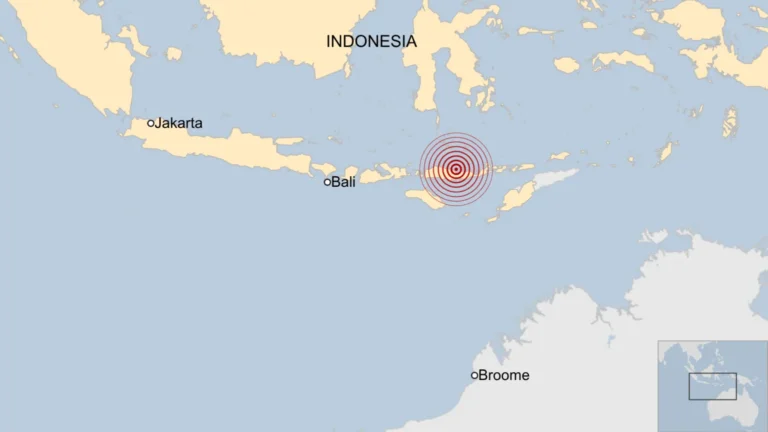
    Powerful 7.7 quake kills 20 in Indonesia

    At least 20 people have been killed after a powerful 7.7-magnitude earthquake struck Indonesia’s Flores Island early Saturday, triggering widespread panic, building damage and a series of strong aftershocks. The earthquake struck shortly before 5am local time at a depth of about 15 kilometres, according to Indonesia’s meteorological and geophysics authorities. The relatively shallow depth increased the potential for severe damage across affected areas. Indonesia’s disaster management authorities said several people were injured, with the figures still considered preliminary as rescue teams continue searching damaged buildings and assessing casualties. The strongest aftershocks included a 6.1-magnitude tremor, forcing residents to remain outdoors because of fears that weakened structures could collapse. Dramatic scenes were reported at the port of Maumere, where sections of a terminal building broke apart during the earthquake. A gangway leading to a ferry also collapsed, sending some passengers into the sea as people attempted to escape. East Nusa Tenggara Governor Emanuel Melkiades Laka Lena said some victims were killed while sleeping after rubble from collapsing structures fell on them. Residents described the earthquake as extremely frightening. People rushed out of their homes and moved towards safer areas, with many heading to higher ground after authorities issued a tsunami warning. The tsunami alert was later lifted about three hours after the earthquake when no significant rise in sea levels was detected. Authorities said around 2,000 people evacuated or moved to safer locations on their own during the warning. Officials reported fatalities in several provinces, including Sikka, Manggarai and East Manggarai. At least two people were seriously injured while 11 others suffered minor injuries. The earthquake also caused extensive structural damage. Initial assessments indicated that dozens of houses had been severely damaged along with healthcare facilities, places of worship, government buildings, an educational institution and a warehouse. Manggarai was identified as one of the worst-affected areas. Rescue and assessment teams are continuing to work in the region, although difficult mountainous terrain could make operations challenging. Authorities have urged residents to remain calm, avoid coastal areas and stay away from buildings that have been damaged or weakened by the earthquake and aftershocks.

Leave a Reply

Your email address will not be published. Required fields are marked *