trump vows heavy
| |

Trump vows heavy strikes on Iran’s Pickaxe M…

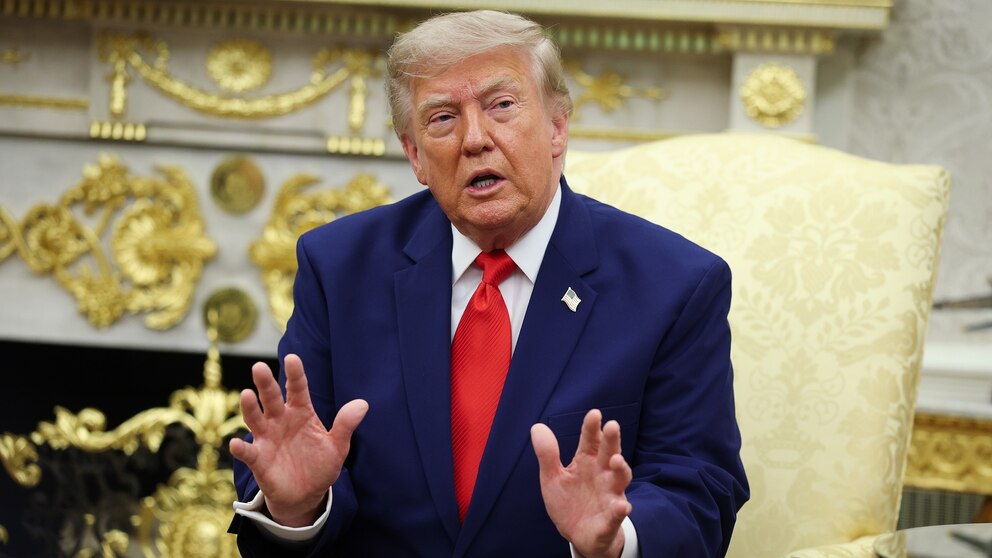
President Donald Trump said Monday that US forces will hit the Pickaxe Mountain area, located near Iran’s already heavily damaged Natanz uranium enrichment facility, very heavily in the near future. Trump had threatened the site last week, saying the United States was going to take out Pickaxe Mountain, a heavily fortified location tied to Iran’s nuclear program that contains two deeply buried tunnel complexes. He also said Tuesday that Tehran wanted to meet desperately, adding that Washington has no interest until Iran shows readiness to engage in a meaningful way.

Facing mounting political pressure at home over rising gasoline prices since the war began, and with Iran having effectively closed the Strait of Hormuz, Trump defended the latest strikes as a response to the deaths of American service members killed in recent Iranian attacks. He wrote on social media Monday that Iran will pay many times over every time it kills an American soldier, saying he had passed the directive to Secretary of War Pete Hegseth, Joint Chiefs Chairman Daniel Caine and every military leader.

The broader conflict has killed thousands of civilians, most of them in Iran and Lebanon, where Israeli forces have occupied part of the country following attacks by Hezbollah fighters who said they acted in solidarity with Tehran. Lebanese President Joseph Aoun met Trump at the White House Tuesday, thanking him for what he called a historic achievement in signing a Lebanon Israel framework agreement. Aoun said he had looked forward to the visit for a long time and that the region is due for stability and security. Trump said he would speak with Hezbollah if Aoun wanted him to, noting he has already communicated with the group through intermediaries in June and secured a pledge that it would not attack Israel, a first for any US president given Hezbollah’s designation as a terrorist organization.

Trump also addressed threats from Yemen’s Houthi movement to block Red Sea shipping, saying the United States would take care of business if the group follows through on a naval blockade. Two oil tankers carrying Saudi crude toward Asia reversed course in the Red Sea Tuesday after Houthi threats, diverting toward the Suez Canal, though Saudi Arabia’s Red Sea port of Yanbu continued operating normally. The Houthis said Monday they were imposing an immediate maritime embargo against Saudi Arabia, citing what they called an unjust and oppressive siege imposed on Yemen for nearly 12 years. The Saudi led coalition in Yemen said it would respond with force and began protective measures for ships transiting the Bab el Mandeb Strait, a critical route for Saudi oil exports following the effective closure of Hormuz. Yemen’s defence minister said separately that the government’s army stood ready to end what he called the Houthi coup, while clashes between government forces and Houthi fighters have resumed in parts of the country.

Iran’s Revolutionary Guards said two oil tankers exploded after attempting to pass through the Strait of Hormuz via an unsafe route, a claim that followed a similar Sunday statement describing an accident involving two vessels in the same area, though it remains unclear whether the incidents were connected. A separate vessel was struck by an unidentified projectile off Oman’s coast near the strait, according to the United Kingdom Maritime Trade Operations agency. Inside Iran, explosions were reported in Tabriz, Chabahar, Konarak, Bandar Mahshahr and Bandar Imam Khomeini, with one person killed and several wounded southwest of Tabriz, state media reported. Iran’s Guards said they targeted US aircraft at Jordan’s Aqaba airport with ballistic missiles, along with military assets at Kuwait’s Al Adiri camp and Ali Al Salem Air Base, and additional positions in Syria. Air raid sirens sounded repeatedly in Bahrain throughout Monday, and Kuwait’s army said early Tuesday that its air defenses had again intercepted Iranian drones.

Kuwait also said Iran struck its power and desalination infrastructure for a fourth consecutive day, sparking fires at several critical facilities that authorities have since extinguished while damage assessments and repairs continue. The United Arab Emirates condemned Iranian strikes on Bahrain, Kuwait and Jordan as a flagrant violation of sovereignty and pledged full solidarity with the three nations. A separate vessel was struck by an unknown projectile off the UAE coast near Dibba, damaging its steering gear, though all crew members remained safe.

Iranian state media quoted a military source as saying the Strait of Hormuz will stay closed as long as US strikes continue, with the source describing the waterway as fully under Iranian military control. Iran’s Guards also claimed a strike on central data infrastructure belonging to Amazon in Bahrain, a claim that could not be independently verified.

Amid the widening conflict, the Association of Southeast Asian Nations called Tuesday for maximum restraint and an immediate halt to hostilities between Washington and Tehran, warning that continued fighting undermines mediation efforts and diminishes prospects for a peaceful resolution. A senior Iranian official said Tehran had received a proposal from mediators for a ten day ceasefire aimed at salvaging the interim agreement reached in June, though no further details were provided. Pakistani officials said Iran’s interior minister had asked Islamabad to resume its mediation role, and he later traveled to Pakistan for additional talks, continuing a diplomatic effort that Pakistan and Qatar have led since the earlier memorandum of understanding was signed.

Separately, Britain’s new government faces pressure from Washington to maintain American access to strategic military bases including RAF Fairford and the Diego Garcia base on Chagos Island, according to a British newspaper report, with Trump said to be pressing new Prime Minister Andy Burnham on the issue shortly after Burnham took office this week.
Similar Posts

  • | |

    Elizabeth Hurley opens up about keeping long-dista…

    Elizabeth Hurley has offered a rare glimpse into her long-distance relationship with country music star Billy Ray Cyrus, sharing how the couple keeps their romance thriving despite living on opposite sides of the Atlantic. The actress and model, 61, spoke candidly in a new interview with E! News, revealing that distance has not weakened their bond since they began dating in early 2025. Hurley and Cyrus surprised fans when they confirmed their relationship last year. While many questioned how the pair would make a transatlantic romance work, the couple has continued to show that commitment and communication can bridge the miles between them. During the interview, Hurley said they remain deeply connected by making time for one another, no matter where they are in the world. The British actress explained that although she is based in England and Cyrus spends much of his time in the United States, they prioritize regular visits whenever their schedules allow. Instead of focusing on the distance, they make the most of every opportunity to be together, whether in the UK or the US. Hurley also revealed that modern technology plays a major role in keeping their relationship strong. Frequent phone calls, video chats, and daily messages help the couple stay involved in each other’s lives even when they are thousands of miles apart. She suggested that maintaining open communication has been one of the biggest reasons their romance continues to flourish. The model spoke warmly about Cyrus, describing their relationship as supportive and easy-going. She noted that they share similar values and enjoy spending quiet time together away from the spotlight. According to Hurley, they appreciate simple moments just as much as glamorous public appearances, allowing them to build a genuine connection despite their busy careers. Since making their romance public, the pair have occasionally shared photos together on social media, delighting fans with glimpses of their travels and time spent as a couple. Their relationship has attracted widespread attention because it brought together two stars from different entertainment worlds, but both have largely chosen to keep the details of their romance private. Hurley’s latest comments mark one of the few times she has spoken openly about their relationship. While she acknowledged that long-distance dating comes with challenges, she emphasized that mutual effort and trust make all the difference. As both stars continue to balance demanding careers, Hurley’s optimistic outlook suggests they are focused on making their relationship last. Her latest interview offers fans a rare but heartfelt look at how she and Billy Ray Cyrus have turned a transatlantic romance into a successful partnership, proving that love can thrive even when separated by an ocean.

  • | |

    Sunny Deol protects Shabana Azmi in Batwara 1947 trailer

    Veteran Bollywood actor Sunny Deol has unveiled the trailer for his upcoming historical drama Batwara 1947, offering audiences a powerful glimpse into a story set during the Partition of India in 1947. Released on Tuesday, July 28, the trailer showcases Deol in a striking new role as a man determined to protect humanity amid one of the darkest chapters in the subcontinent’s history. Sharing the trailer on social media, the 68-year-old actor wrote, “Har insaan ka pehla mazhab MAA hai (Every person’s first religion is a mother). #Batwara1947 Trailer Out Now. 14th August in cinemas near you.” The film is set against the backdrop of the 1947 Partition, when millions of people were displaced following the creation of India and Pakistan. The story follows a Muslim family that migrates to Lahore after independence and discovers that an elderly Hindu woman is still living in the house allocated to them. Sunny Deol plays Sikander Mirza, who arrives in Pakistan with his wife Hamida Mirza, portrayed by Preity Zinta, and their son Javed Mirza, played by Karan Deol. Upon reaching their new home, they meet an elderly Hindu woman, played by Shabana Azmi, who refuses to abandon the house where she has spent her entire life. As tensions rise and others attempt to force the woman out of the property, Sikander chooses compassion over hatred. Defending her against growing hostility, he delivers one of the trailer’s most memorable lines: “Hindu woman? She is a mother. Do not label her with Hindu-Muslim. Our first religion is mother! The first word that we speak is mother.” The emotional dialogue has resonated strongly with viewers, many of whom praised the film’s message of humanity above religious divisions. The trailer also highlights the violence, fear and forced migration experienced during Partition while emphasising themes of empathy, sacrifice and coexistence. Soon after the trailer’s release, social media users shared positive reactions. One viewer commented, “No religion can be good or bad, only human can be good or bad.” Another fan wrote, “Goosebumps Yar… Only Sunny Deol and Preity Zinta can give 100% justice to this Movie.” A third praised the film’s overall presentation, commenting, “A powerful, emotional, and thought-provoking trailer that promises a grand cinematic experience. With Rajkumar Santoshi’s direction, Sunny Deol’s powerful performance, A.R. Rahman’s unforgettable music, and a talented ensemble cast, Batwara1947 has all the ingredients to become one of the most impactful historical dramas of the year.” Directed by Rajkumar Santoshi, the film boasts an impressive cast featuring Sunny Deol, Preity Zinta, Shabana Azmi, Karan Deol, Ali Fazal, Abhimanyu Singh and Khushi Hajare. Academy Award-winning composer A.R. Rahman has provided the film’s music, adding to anticipation surrounding the project. Batwara 1947 is scheduled to release in cinemas on August 14, 2026, coinciding with Pakistan’s Independence Day. With its emotionally charged narrative and message of unity during a time of division, the film is already generating significant attention ahead of its theatrical release. 

  • | |

    Karachi sees drop in robbery, murder cases

    Karachi Police Chief Azad Khan has claimed that incidents of robbery and murder have declined across the city, saying the rate of vehicle and motorcycle snatching has fallen by 25%. Speaking during a visit to the Site Association of Industry office, Azad Khan said the latest results were encouraging. However, he added that the police wanted to achieve further improvements in the city’s security situation. The Karachi police chief said authorities were also taking cases of extortion seriously. He said he was personally monitoring such cases and assured the business community that no leniency would be shown towards extortionists and their associates. Azad Khan said many extortionists were still operating from outside the city. He claimed that police had information about them and their networks. He said their associates were allegedly intimidating citizens and businesspeople. Police would take action against anyone found involved in threatening or extorting residents, he added. The police chief stressed that peace in Karachi had been restored after considerable efforts. He said maintaining the city’s security was now a major responsibility. Azad Khan also linked security with Karachi’s economic stability. He said the city’s economic security was extremely important because a weak economy could lead to higher unemployment and crime. He said Karachi’s business community had an important role in the city’s economy. Ensuring a secure environment for businesses was therefore necessary for continued economic activity and investment. The Karachi police chief also spoke about his personal connection with the city. He said he had grown up in Karachi and felt that the city had a debt that needed to be repaid through public service. He acknowledged that the Sindh Police faced several challenges. However, he said efforts were continuing to improve law and order and provide better services to residents. Azad Khan also highlighted the increasing use of technology in policing. He said authorities had not waited for the completion of the Safe City project to introduce the e-challan system. The police would continue moving forward with technology rather than returning to traditional methods. He said the department was also exploring the use of artificial intelligence-based traffic signals. However, such systems required significant investment. The police chief said the authorities were making every effort to provide better public services. He also announced that a major plan was being prepared to tackle encroachments across Karachi. He said the removal of illegal encroachments would be addressed through a broader strategy. The police leadership’s comments come as Karachi continues to face challenges related to street crime, traffic management, extortion and urban development.

  • |

    Belgian authorities arrest Canadian intern on suspicion of spying at NATO military headquarters

    Belgian prosecutors have launched an investigation into a Canadian woman of Chinese origin arrested on suspicion of spying while working as an intern at NATO’s Supreme Headquarters Allied Powers Europe (SHAPE) in Mons, Belgium. The suspect’s workplace and residence inside the NATO military base were searched following a tip-off from NATO security services regarding suspicious behaviour, including asking unauthorised questions and loitering near alliance buildings. She has been remanded in pre-trial custody for one month on charges of espionage for a third country and membership of a criminal organisation. The incident has raised significant concerns over international security clearance procedures, which fall under the responsibility of an intern’s home nation, in this instance, Canada. Canadian Minister of Public Safety Gary Anandasangaree confirmed that national authorities will review their security screening protocols to determine how the breach occurred. Meanwhile, NATO officials stated that the alliance remains fully committed to safeguarding classified information and protecting personnel.

  • |

    Turkish parliament passes landmark law to advance PKK peace process

    Turkey’s parliament passed a law on Monday establishing a legal framework for the disbandment of the outlawed Kurdistan Workers’ Party (PKK), marking a major step toward ending a decades-old conflict that has killed tens of thousands. The legislation provides legal protections for many former militants who have not committed specific crimes and facilitates the suspension of prison sentences for some people convicted of PKK membership, paving the way for their reintegration into society. The law was approved by a 468-vote majority in the 600-seat parliament after securing support from President Tayyip Erdogan’s ruling AK Party, its nationalist MHP allies, and the pro-Kurdish DEM Party. This measure represents the most concrete step taken by Ankara in the peace process since jailed PKK leader Abdullah Ocalan called on the group in February 2025 to disarm and disband. Following Ocalan’s call, the PKK announced in May 2025 that it would end its armed struggle, leading to a symbolic ceremony in northern Iraq two months later where a group of militants burned their weapons. The PKK launched its insurgency in 1984, leading to a conflict that has killed over 40,000 people, placed a heavy economic burden on southeast Turkey, and fuelled decades of political and social division. This new legislation specifically addresses the long-standing question of how to manage thousands of PKK members as the organisation dismantles its military and organizational structures. The current public peace initiative began in October 2024 when MHP leader Devlet Bahceli unexpectedly suggested that Ocalan could address parliament to announce the PKK’s dissolution. A parliamentary commission established in August 2025 subsequently heard testimony from politicians, officials, and civil society groups before recommending legislation to oversee disarmament and reintegration. While the law addresses reintegration, it does not by itself resolve broader Kurdish demands regarding expanded political and cultural rights, anti-terrorism amendments, or the detention status of Ocalan. The Turkish government frames the initiative as a pathway toward creating a “terror-free Turkey,” whereas Kurdish politicians emphasize that achieving lasting peace requires broader democratic and legal reforms.

  • | |

    Cockroach movement demands release of detained pro…

    India’s youth led Cockroach protest movement called on authorities Monday to release all demonstrators detained during weeks of nationwide rallies, days after the campaign succeeded in forcing the resignation of the country’s education minister. The Cockroach Janta Party, an online organized group that has driven weeks of protests over exam paper leaks and other irregularities in India’s competitive examination system, said it had received reports of students being held in custody, particularly across the states of Assam, West Bengal and Bihar. In a statement, the group said any failure to release detained protesters or drop criminal cases against them would represent a breach of public trust, and warned it would take further action if its demand was not met. The statement followed the resignation two days earlier of Dharmendra Pradhan as education minister, a move that came after repeated failures in the administration of competitive exams fueled widespread anger among young Indians. The Cockroach Janta Party accused the government of going back on earlier assurances that protesters would not face punitive action. The movement has attracted millions of followers on social media since it launched in May under the leadership of Abhijeet Dipke, a 30 year old public relations graduate. Tens of thousands of demonstrators, most of them students, rallied last week in New Delhi and other cities across the country to demand Pradhan’s resignation and broader changes to the examination system. Protests in the capital turned violent on July 20 when demonstrators attempted to march from the Jantar Mantar protest site toward parliament. Police responded with tear gas and batons to break up the crowd, setting off clashes that led to a wave of detentions. The fallout from the crackdown carried into parliament on Monday, where opposition lawmakers repeatedly disrupted proceedings while demanding that the government address last week’s police response. Despite the disruptions, the government pressed ahead with introducing legislation in the lower house aimed at imposing tougher penalties for examination paper leaks. The protest movement has emerged as one of the most significant youth led political mobilizations in India in recent years, drawing comparisons to earlier waves of student activism that used social media to rapidly organize large scale demonstrations. Analysts say the swift resignation of a sitting cabinet minister underscores the growing influence such movements can wield when they combine online organizing with sustained street pressure, though the outcome of the current standoff over detained protesters remains uncertain as both sides continue to weigh their next steps.

Leave a Reply

Your email address will not be published. Required fields are marked *