|

Israeli strikes kill two in Gaza as hospital medicine warehouses are destroyed

Two Palestinians were killed in an Israeli air strike in Gaza on Saturday, while separate strikes destroyed warehouses storing medical supplies for Al Aqsa Martyrs Hospital, raising new concerns about access to healthcare in the territory as uncertainty continues over a possible agreement between Israel and Hamas.

According to Palestinian health officials, the two people were killed in the Sheikh Radwan area of Gaza City. The Israeli military said the strike targeted Hamas fighters but did not provide further details about the operation or identify those killed.

In another strike earlier the same day, two warehouses near Al Aqsa Martyrs Hospital in Deir al Balah were destroyed. Gaza’s Health Ministry said the buildings contained essential medicines and medical equipment used by the hospital to treat patients, including those receiving dialysis for kidney failure. Other supplies such as wound care materials and gauze were also stored there.

The attack also damaged two additional medical storage facilities and the hospital’s outpatient clinic. Hospital officials said no injuries were reported among staff or patients during the incident, but they warned that the destruction of medical supplies would make it more difficult to provide treatment to those in need.

Dr Khalil al Daqran, who works at the hospital, condemned the strike and said the destroyed warehouse contained critical medical resources needed for daily operations. He said the loss of the supplies would place further strain on healthcare services already struggling under difficult conditions.

Witnesses said Israeli forces issued an evacuation warning before carrying out the strike. The Israeli military did not immediately comment on the attack targeting the warehouse complex.

Under international humanitarian law, hospitals and civilian medical facilities are protected during armed conflict unless they are being used for military purposes. Israel has repeatedly accused Hamas and other armed groups of operating from within civilian infrastructure, including hospitals and surrounding buildings, an allegation Hamas has denied.

Fatima Sharab, a displaced Palestinian staying in a nearby camp, said many families had chosen to shelter close to the hospital because they expected easier access to medical care if needed. She said the strike caused widespread destruction in the area and left many displaced people without shelter.

The latest attacks come despite a ceasefire agreement reached last year through US mediation. Fighting and Israeli military operations have continued across Gaza in the months since. Palestinian health authorities say more than 1,200 people have been killed during that period, with many of the victims reported to be civilians, including women and children. Hamas has not regularly disclosed the number of its fighters killed.

Attention is now focused on a possible breakthrough in negotiations to end the conflict. US President Donald Trump recently announced that Hamas had agreed to disarm as part of a broader peace initiative aimed at ending the war. However, Israeli Prime Minister Benjamin Netanyahu has not publicly confirmed whether Israel accepts the reported agreement.

Israeli National Security Minister Itamar Ben Gvir has openly opposed the proposal, saying Israel should continue military operations and maintain its campaign against Hamas leaders. Meanwhile, Trump’s Board of Peace has released a roadmap outlining the final steps of its proposed plan, stating that Israel would halt military operations as part of the agreement if all parties move forward with its implementation.


Similar Posts

  • |

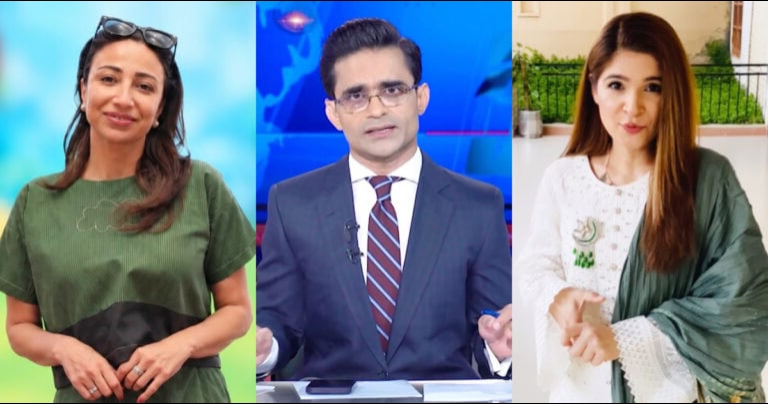
    Sharmeen Ali, Sunita Marshall, Saima Qureshi urge parents to raise self-sufficient kids

    Sharmeen Ali, Sunita Marshall and Saima Qureshi have spoken up about raising self-reliant children. They believe both sons and daughters should learn practical life skills from a young age. The three actors shared their thoughts on Nida Yasir’s morning show. They agreed that independence has nothing to do with gender. Every child should be able to take care of themselves. Every child should also help around the house. Sunita brought up safety concerns in cities like Karachi. She said these often limit how freely kids can move outdoors. Even so, she believes parents can still teach independence at home. Simple habits matter, she said. Making the bed. Cooking a basic meal. These small tasks add up over time. She also spoke about extracurricular activities. Her son manages rowing and tuition on his own schedule. That balance, she said, teaches real time management. Saima, who is raising three sons, shared a similar approach. She has her children handle their own chores. Washing dishes. Making tea. Ironing clothes. If the house needs dusting and help isn’t around, they step in too. Without early discipline, she said, kids won’t develop that habit later. Sunita added that chores are shared across her household. She takes a turn. Her husband, Hassan, takes a turn. The kids take their own turns too. Sharmeen agreed with both actors. She said chores should never be split by gender. Working mothers can’t always be present, she pointed out. That means kids need to solve problems on their own. She then reflected on her own journey. Learning to drive after her separation gave her real independence. Now, she wants to pass that same skill on to her 17-year-old daughter. The conversation also touched on how children are growing up today. The internet, they agreed, has made kids more informed than before. Saima recalled moments when her children corrected her after learning something new online. Sunita shared how her son taught himself detailed history facts from YouTube, long before school covered the same topics. Even with all this exposure, the actors were clear about one thing. Academics still come first. Screen time and hobbies, they said, should work more like rewards. Boundaries matter, and so does staying involved in a child’s daily life.

  • | | |

    Pakistan car sales jump 141% in July

    ISLAMABAD: Car sales in Pakistan recorded a strong increase in July 2026. Sales rose by 141.28% compared with the same month last year. According to data released by the Pakistan Automotive Manufacturers Association (PAMA), manufacturers sold 17,216 vehicles in July 2026. The figure was significantly higher than the sales recorded in July 2025. A total of 7,135 vehicles were sold during that month. The latest figures show that vehicle demand improved sharply at the beginning of the new financial year. The increase also indicates stronger activity in Pakistan’s automobile market. The year-on-year rise was recorded despite continued challenges facing the automobile sector. Higher vehicle prices and financing costs have affected the market in recent years. The latest sales figures, however, show a notable recovery in demand. Industry data also showed an increase in electric vehicle sales during July. The growth points to rising interest in electric vehicles in the local market. The increase in electric vehicle sales could also reflect changing consumer preferences. Buyers are gradually showing greater interest in newer and more fuel-efficient technologies. Automobile manufacturers and dealers are expected to closely monitor the trend in coming months. Sustained growth in sales could provide a positive signal for the broader automotive industry.

  • |

    Vedang Raina marks two months of ‘Maahi Ve Maapas Aaunga’

    Vedang Raina has left fans emotional after marking two months since the release of “Maahi Ve Maapas Aaunga.” The actor shared a nostalgic post reflecting on the film’s journey so far. Raina posted a behind-the-scenes photograph from the project, showing him in a traditional look during what appeared to be a break from filming. He used the moment to remind followers that the film is now available for streaming. In his caption, the actor noted that two months had already passed since the film’s release. That simple reminder was enough to trigger a wave of nostalgic reactions from fans online. Shortly after the post went live, social media users flooded the comments section with praise for both the film and Raina’s performance. Several fans described it as a beautiful movie, while others responded with heart emojis and messages of appreciation for the young actor. The emotional response didn’t stop there either. One fan jokingly said Raina could have waited a little longer before bringing up the film again, admitting the reminder brought back painful memories tied to the story. Another user referenced the character Keenu directly, highlighting just how much the role had resonated with audiences. The reaction suggests the film’s characters have left a lasting impression well beyond its initial release window. Fans appear to remain deeply attached to the story and its characters, even months after first watching it. Many used Raina’s latest post as an opportunity to revisit their favourite scenes and reflect on what made the film stand out for them. The continued engagement highlights how “Maahi Ve Maapas Aaunga” has managed to stay relevant in fans’ minds long after its theatrical or streaming debut. For Raina, the milestone post offered a simple but effective way to reconnect with an audience that clearly hasn’t moved on from the story just yet.

  • |

    Bigg Boss season 20 goes multilingual, confirms September premiere

    South Asia’s biggest reality TV franchise is making a comeback, and this time, the scale is unprecedented. JioHotstar and Colors TV confirmed on Tuesday that Bigg Boss is returning for its 20th season. They also revealed a new motion logo with a redesigned, multi-coloured eye, marking two decades of the show. The announcement clip kept things minimal, closing simply with “Bigg Boss coming soon.” The accompanying caption leaned into the show’s long run, calling it “still the most eye-conic one” two decades in, and promising the new season, “jald aa raha hai”. A specific premiere date has not been locked in yet. That, however, has not stopped fans from flooding social media with reactions. Comments ranged from pure excitement to specific demands, with several users asking producers to cast genuinely interesting contestants this time, rather than the same recycled reality-TV faces. The bigger story here, though, is the format shift. For the first time, JioStar will roll out six language editions simultaneously including Hindi, Tamil, Telugu, Kannada, Malayalam, and Bangla, all launching together across JioStar’s television network and its streaming platform, JioHotstar. It is a scale of rollout the show has never attempted before, effectively turning Bigg Boss into a pan-regional television event rather than a single-language phenomenon. Each regional edition will have its own celebrity host. Salman Khan continues his long-standing role anchoring the Hindi season, while the other editions bring in heavyweight names from their respective industries. Sourav Ganguly will front the Bangla version, Vijay Sethupathi takes charge of the Tamil edition, Nagarjuna leads the Telugu season, Kichcha Sudeepa hosts the Kannada edition, and Mohanlal fronts the Malayalam version. No official contestant list has been released, but speculations are already running wild online. Names being floated as possible participants include Jannat Zubair, Urfi Javed, Faisal Shaikh, Anjali Arora, Arbaz Patel, and rapper Santy Sharma, though none of this has been confirmed by the makers. With six simultaneous editions, a starry roster of hosts, and a September launch window, Bigg Boss Season 20 is shaping up to be the franchise’s most ambitious outing yet.

  • |

    Power sector circular debt rises by Rs364 billion in FY2025-26

    ISLAMABAD: Pakistan’s power sector circular debt increased by Rs364 billion during fiscal year 2025-26, highlighting persistent weaknesses in the electricity supply chain despite substantial government subsidies and efforts to contain the buildup of unpaid liabilities. According to the circular debt report for June 2026, the increase was significantly higher than the previous year, when the debt had risen by around Rs45 billion. The latest increase represents a surge of roughly 709% year-on-year in the annual flow of circular debt. The Power Division has not yet formally uploaded the one-page circular debt report for June 2026 on its official website. The latest figures indicate that structural problems, including distribution company inefficiencies, weak bill recovery, payment disputes and delays in tariff adjustments, continue to generate fresh liabilities in the power sector. The development comes despite the government’s efforts to contain the debt through budgetary support and subsidies. IMF target and government commitments The International Monetary Fund (IMF) had permitted Pakistan to record up to Rs400 billion in circular debt flow during the year, while simultaneously requiring the government to take measures to prevent the accumulation of new liabilities and eventually bring the flow down to zero. Under the IMF programme, the government has been relying on tariff adjustments, subsidy rationalisation and other reforms to improve the financial health of the electricity sector. However, the latest increase suggests that governance and operational problems remain a major obstacle to achieving a sustainable reduction in circular debt. The government provided approximately Rs302 billion in subsidies aimed at supporting the power sector and reducing the debt burden. However, the amount was insufficient to maintain the circular debt stock at the level of Rs1.614 trillion recorded at the end of June 2025. As a result, the debt stock recorded a net increase of around Rs61 billion during the year. The Power Division had earlier stated that the federal government allocated Rs893 billion for the power sector in the FY2025-26 budget. However, around Rs98 billion of the allocated amount was not released, affecting the government’s ability to reduce the outstanding liabilities. A Power Division spokesperson said that if the entire budgeted allocation had been released, the circular debt stock could have fallen further to around Rs1.577 trillion. The funding shortfall, according to the official, contributed to the Rs61 billion increase recorded during the year. Distribution companies remain a major source of losses Inefficiencies within power distribution companies continued to be one of the biggest contributors to the accumulation of circular debt. The government incurred approximately Rs262 billion in losses during FY2025-26 because of inefficiencies in distribution companies. The amount was only around Rs3 billion lower than the previous year, indicating that little progress has been made in addressing operational weaknesses. Another Rs64 billion was added to the circular debt because of lower electricity bill recoveries. Although significant, this amount was around 51% lower than the corresponding figure recorded in the preceding year. The figures underline the financial pressure created by electricity theft, transmission and distribution losses, weak collection systems and inadequate enforcement against non-paying consumers. Privatisation of distribution companies The government has initiated the process of privatising three relatively profitable distribution companies — Faisalabad Electric Supply Company, Gujranwala Electric Power Company and Islamabad Electric Supply Company. However, the proposed privatisation is not expected to immediately resolve the broader circular debt problem because a substantial portion of sector losses originates from other distribution entities. Earlier, the government had considered a model under which profitable distribution companies would be combined with loss-making entities before privatisation. The plan, however, was subsequently abandoned in favour of offering comparatively stronger companies separately. Experts have repeatedly argued that privatisation alone cannot eliminate circular debt unless the underlying issues of electricity theft, poor recoveries, governance and operational losses are addressed across the entire distribution network. K-Electric dispute adds to debt Payment disputes with K-Electric also contributed substantially to the increase. According to the report, approximately Rs194 billion was added to the circular debt because of non-payments by K-Electric. The company’s outstanding payments are linked to a dispute concerning the delayed finalisation of its multi-year tariff by the National Electric Power Regulatory Authority. The prolonged disagreement has created financial pressure throughout the power supply chain, adding to the accumulation of unpaid liabilities. In addition, around Rs75 billion was added to the circular debt because of delays in tariff adjustments. The government, meanwhile, made payments of approximately Rs129 billion against principal loans of the power sector. Without these payments, the annual circular debt flow could have exceeded Rs600 billion, according to the figures. The Power Division also benefited from a reduction of around Rs98 billion in the circular debt flow because of subsidy payments. Interest payments add further pressure Interest charges also contributed to the accumulation of liabilities, adding around Rs14 billion to the circular debt during the fiscal year. These financing costs ultimately increase the burden on consumers because the cost of servicing the sector’s outstanding liabilities is recovered through electricity bills. Consumer groups have frequently criticised the practice, arguing that households and businesses that regularly pay their electricity bills are effectively being charged for inefficiencies, theft and non-payment elsewhere in the system. Subsidies and burden on consumers The government’s continued reliance on subsidies has helped prevent an even larger accumulation of circular debt, but it has also placed pressure on the national budget. The power sector received hundreds of billions of rupees in subsidies during the year, while the government simultaneously pursued tariff increases and other measures intended to improve cost recovery. The contrast has raised questions about whether existing policies are addressing the underlying causes of circular debt or merely shifting the burden between consumers, the federal budget and power-sector entities. The government has also been under pressure to address similar financial problems in the gas sector. Although no comparable subsidy was provided for the gas sector, the authorities were expected to prevent a further increase in its circular debt. The government reportedly refrained from passing the full reduction in gas prices on

  • | | |

    Amir Muqam rejects Bilawal’s claims over AJK…

    Federal Minister for Kashmir Affairs Amir Muqam has strongly rejected Pakistan Peoples Party (PPP) Chairman Bilawal Bhutto Zardari’s allegations regarding the Azad Jammu and Kashmir (AJK) elections. He urged the PPP to accept the public mandate instead of questioning the election results. Addressing a Pakistan Muslim League-Nawaz (PML-N) public gathering in the Khawra area of Muzaffarabad, Muqam said the people of Mirpur had freely voted for the PML-N. He stated that the election outcome reflected the will of the people and should be respected by all political parties. Muqam said the PPP should review the reasons behind its electoral defeat instead of making accusations of rigging. According to him, the party should reflect on why voters chose another political party rather than blaming the election process. The federal minister also pointed out that the government and administrative setup in Azad Kashmir are under the influence of the PPP. He argued that, under such circumstances, allegations of election manipulation were difficult to justify. He maintained that political leaders should avoid making baseless claims and instead respect the democratic decision of the electorate. Responding to Bilawal Bhutto Zardari’s warning directed at the federal government, Muqam said repeated threats were not appropriate in a democratic system. He remarked that the PPP should remember it is itself part of the country’s political structure and continues to hold important constitutional positions. He further said that political stability should remain a priority and warned that if one government falls, the consequences could affect the entire political system. He stressed that responsible political leadership requires dialogue and respect for democratic institutions rather than confrontational statements. The exchange of remarks follows Bilawal Bhutto Zardari’s speech in Muzaffarabad, where he warned that if the AJK elections were manipulated or the public mandate was ignored, the federal government’s “countdown” would begin. Bilawal had alleged that any attempt to undermine the election results would have political consequences and called for transparency in the electoral process. The controversy has intensified political tensions following the AJK elections, with leaders from different parties exchanging criticism over the results. Earlier, Federal Minister for Planning Ahsan Iqbal also responded to Bilawal’s allegations. He questioned why the PPP accepted election results when it formed governments elsewhere but raised allegations of rigging after losing in Azad Kashmir. Iqbal urged the PPP leadership to respect the outcome of the elections and accept the decision made by voters. He said political parties should strengthen democratic traditions by honoring the people’s mandate regardless of the results.

Leave a Reply

Your email address will not be published. Required fields are marked *