iran defied plan
| | |

Iran defied plan to become ‘Venezuela’, says P…

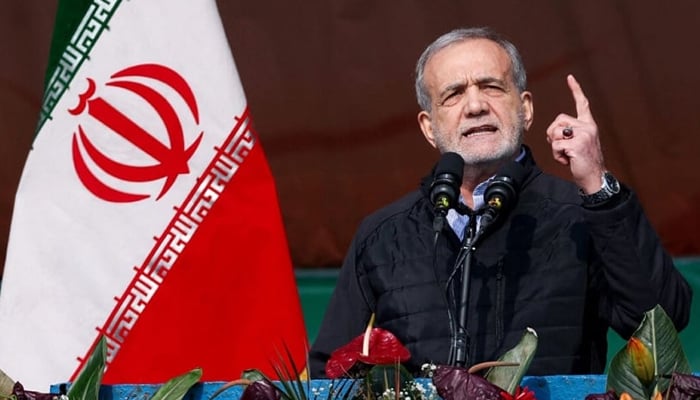
TEHRAN: Iranian President Masoud Pezeshkian has said his country is facing a difficult economic and military situation but has remained resilient, arguing that national unity prevented what he described as an attempt by Iran’s enemies to push the country towards a Venezuela-like crisis.

Speaking at a ceremony, Pezeshkian said Iran was operating under what he called illegal wartime conditions while continuing efforts to provide services and support to its people.

The president portrayed the country as facing simultaneous economic and security challenges, but said the Iranian public had remained united despite the pressure.

According to Pezeshkian, Iran’s opponents wanted to see the country weakened and destabilised. He argued that the unity of the Iranian people had instead helped Iran emerge as a stronger force.

“Today, we are in a state of economic and military war,” Pezeshkian said, while stressing that the government was continuing to work for citizens despite the difficult circumstances.

His comments came as Tehran has faced intense pressure over its economic situation and wider confrontation with the United States and its allies.

Pezeshkian said Iran’s adversaries had intended to turn the country into “Venezuela”, apparently referring to the severe economic and political difficulties that have affected Venezuela over the past decade.

He claimed that the plan had failed because Iranians had maintained a united position in the face of the challenges.

The president also referred to a memorandum of understanding reached amid the difficult circumstances. He said the agreement had been shaped by the country’s determination to protect its interests while seeking a way forward through diplomacy.

According to Pezeshkian, experts had described the memorandum as being based on “prudence, dignity and wisdom”. He argued that those criticising the agreement did not fully understand the circumstances surrounding it.

The remarks suggest that Iran’s leadership is attempting to present the agreement as a strategic decision rather than a concession under pressure.

Pezeshkian’s comments also come against the backdrop of signals that Tehran may be seeking a way to end its confrontation with Washington from a position it considers strong. Iranian officials have repeatedly stressed that any diplomatic arrangement must protect the country’s national interests and sovereignty.

For Pezeshkian, domestic unity remains central to navigating the crisis. He argued that despite economic hardship and military pressure, the country had avoided the collapse that its opponents allegedly expected.

The president’s message was therefore aimed not only at Iran’s external rivals but also at domestic critics of the memorandum.

As pressure on Iran continues, Tehran faces the difficult task of managing economic challenges while maintaining political cohesion and determining whether diplomacy can reduce tensions.

Pezeshkian’s latest remarks underline his argument that Iran’s resilience, rather than isolation, will shape the next phase of the country’s confrontation with its adversaries.
Similar Posts

  • | | |

    Imran Khan marks three years in jail

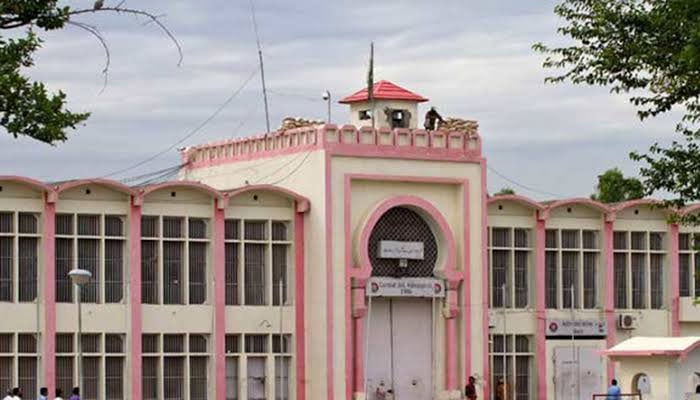
    Former prime Minister Imran Khan has completed three years in prison after his arrest in the Toshakhana case. He was taken into custody on August 5, 2023, shortly after a court convicted him in the case. Following his arrest, he was shifted from his residence in Zaman Park, Lahore, to District Jail Attock under strict security arrangements. Imran Khan remained at Attock Jail for one month and 21 days. During that period, security around the prison was tightened, while legal proceedings related to multiple cases against him continued in different courts. On September 26, 2023, the Islamabad High Court ordered his transfer from Attock Jail to Adiala Jail in Rawalpindi. Since then, he has remained detained at the facility, where he continues to face legal proceedings in several cases. Under the Pakistan Prison Rules, the former prime minister has been provided better-class facilities because of his status as a former head of government. He is being housed in a separate compound consisting of seven cells inside Adiala Jail. The designated area is secured and managed in accordance with prison regulations. During his three years in custody, Imran Khan has reportedly faced a number of health-related issues, including physical complications that have required medical attention from time to time. His legal team has on several occasions raised concerns about his health and requested appropriate medical care, while prison authorities have maintained that medical facilities are being provided in line with the law. Despite remaining behind bars, Imran Khan continues to be a central figure in Pakistan’s political landscape. Court hearings in various cases involving the former prime minister are ongoing, while his party, Pakistan Tehreek-e-Insaf (PTI), continues to pursue legal and political efforts regarding his release.

  • | |

    Overseas Pakistanis to verify Islamabad properties…

    MANCHESTER: British-Pakistani entrepreneur Shafiq Akbar has announced that an online property verification service in Pakistan will be launched next month, describing it as a major step towards protecting overseas Pakistanis from property fraud and restoring confidence in the country’s real estate sector. Speaking at an investment event in Manchester, Akbar said many overseas Pakistanis want to invest in Pakistan, whether to own a home, establish a base in the country or build long-term wealth. However, he said the biggest concern preventing many from investing is the fear of fraud and uncertainty over whether their investment will be secure. He said overseas Pakistanis need confidence that the promises made to them will be fulfilled, whether that is receiving ownership of a home or achieving the expected returns on their investment. “It is our responsibility, as Pakistanis, together with the Government of Pakistan and the private sector, to ensure their investments are protected,” he said. Akbar revealed that an online property verification service will be launched in Pakistan next month, allowing overseas buyers to verify the legal status and ownership of properties remotely before making a purchase. He said Pakistanis living in countries such as the UK will be able to check online whether a property in Islamabad has any legal, ownership or other issues before investing, helping them make informed decisions with greater peace of mind. He said the initiative is aimed at improving transparency in Pakistan’s real estate market and reducing the risk of fraudulent transactions, which have discouraged some overseas Pakistanis from investing. Highlighting Pakistan’s investment potential, Akbar said his experience over the past decade has convinced him that the country offers significantly greater growth opportunities than more mature economies. Comparing Islamabad with London, he said the Pakistani capital has witnessed remarkable infrastructure development over the past five to ten years, including new roads, underpasses, motorways, airport expansion and major public infrastructure projects. He said Pakistan’s growing population, expanding infrastructure and status as a developing economy continue to create strong long-term investment opportunities. Akbar also urged the Government of Pakistan to prioritise the protection of overseas Pakistanis’ investments by strengthening legal safeguards and providing greater security for investors. He said giving overseas Pakistanis confidence that their investments are safe would encourage them to invest back home with peace of mind. The online property verification service has yet to be launched, and further details regarding its implementation, regulatory oversight and the mechanism for verifying property records have not yet been disclosed.

  • | | |

    Lab report finds 176 substandard samples of oil, g…

    ISLAMABAD: A laboratory assessment has found that 176 out of 491 samples of packaged edible oil, ghee and milk failed to meet national quality standards. According to a statement issued by the Ministry of Planning, a total of 491 samples of packaged cooking oil, ghee and milk products were tested. Of these, 315 samples were found to comply with national standards, while 176 were declared substandard. The ministry said approximately 36% of the tested samples failed to meet the required quality standards. The assessment showed significant variations across different products. Of the 204 samples of vanaspati ghee tested, 98 were found to be below the required standards. Similarly, 40 out of 146 samples of blended cooking oil failed the quality assessment, while 26 of 104 samples of packaged liquid milk were declared substandard. The report also found quality concerns in milk powder, refined palm oil and refined canola oil. Eight of the 18 milk powder samples failed to meet national standards, while three of four refined palm oil samples were found to be substandard. In the case of refined canola oil, one out of 13 tested samples did not meet the required standards. The findings have highlighted concerns over the quality of commonly consumed food products and the need for stronger monitoring and enforcement to ensure that packaged edible oils, ghee and dairy products available in the market comply with national quality requirements.

  • |

    China proposes stringent cyberbullying legislation targeting AI abuse and platform accountability

    The Cyberspace Administration of China has released a draft law aimed at curbing cyberbullying, specifically addressing artificial intelligence-enabled harassment, deepfakes, and automated online abuse across the country’s digital platforms. The proposed legislation, which is open for public consultation until late August, introduces strict identity verification requirements for internet users before they can post content or access messaging services. Additionally, the measures place direct legal and operational responsibility on technology firms and artificial intelligence service providers, requiring them to actively trace, moderate, and remove harmful synthetic content or face severe administrative penalties, including fines reaching up to ten million yuan, platform suspensions, or license revocations. Under the proposed legal framework, judicial and law enforcement authorities will enforce criminal liability for individuals and entities using automated tools, coordinated troll networks, or synthetic media to conduct doxxing, defamation, or targeted harassment campaigns. The scope of the law extends to overseas organisations targeting individuals within China, whilst also mandating compulsory anti-cyberbullying education across schools and educational institutions. By targeting AI-driven psychological harm and emotional manipulation, regulators aim to establish robust emergency intervention mechanisms to protect minors and vulnerable demographics from emerging forms of digital harassment.

  • | |

    Islamabad’s Margalla trails to remain closed tom…

    The Islamabad administration has announced the closure of several popular hiking trails in the Margalla Hills for Thursday, August 13. According to the administration, Trails 2, 3, 4 and 5 will remain closed to the public throughout the day. The decision applies to visitors, hikers and other citizens who regularly use these trails for recreational activities. Officials also confirmed that the trail located behind Saidpur Village will remain closed on August 13. Citizens have been advised to avoid attempting to access the closed routes and to follow instructions issued by the local administration. The Margalla Hills trails attract a large number of residents and visitors, particularly in the morning and evening hours. The temporary closure is expected to affect routine hiking and recreational activities in the designated areas. The administration has urged citizens to cooperate with officials and avoid entering restricted locations until the trails are reopened.

  • | |

    England moves closer to eliminating Hepatitis C

      Glasgow: England is moving closer to becoming one of the first countries in the world to achieve the goal of eliminating hepatitis C, a viral infection that primarily affects the liver. According to the National Health Service (NHS), significant progress has been made in diagnosing and treating people living with the disease. So far, around 80 percent of known hepatitis C patients have successfully completed treatment, while deaths associated with the disease have fallen by 36 percent over the past decade. Health authorities say the progress is the result of increased testing, early diagnosis and wider access to treatment. Several initiatives have been introduced to identify people who may have hepatitis C without knowing that they are infected. Among these measures are blood testing in emergency departments, screening when patients register with general practitioners (GPs), and the provision of free home testing kits. These programmes have helped health authorities identify thousands of people who were previously unaware that they had the infection. Following diagnosis, patients have been referred for treatment, allowing many to receive medical care before the disease could cause more serious liver damage. Official figures show that more than 100,000 people have been diagnosed and treated for hepatitis C in England since 2015. Health experts say this represents a major step forward in the country’s efforts to eliminate the disease as a public health threat. Hepatitis C is caused by a virus that can lead to long-term liver damage if it remains untreated. In some cases, chronic infection can result in serious complications, including cirrhosis and liver cancer. However, advances in medical treatment have significantly improved the chances of recovery. Experts say modern antiviral medicines have transformed the treatment of hepatitis C. Patients generally take direct-acting antiviral medicines for between eight and 12 weeks. These treatments are highly effective, with approximately 95 percent of patients able to achieve a complete cure. The availability of effective treatment has also strengthened England’s ability to meet international targets for hepatitis C elimination. Health officials believe that combining widespread testing with rapid access to treatment can help identify remaining cases and prevent further transmission. The NHS has emphasized that finding people who have the virus but do not know they are infected remains an important part of the elimination strategy. Because hepatitis C can sometimes remain without noticeable symptoms for years, individuals may not seek medical attention until significant liver damage has already occurred. Routine and targeted screening therefore plays an important role in identifying cases at an earlier stage. The decline in deaths over the past 10 years is another indication of the progress made against the disease. A 36 percent reduction in hepatitis C-related deaths suggests that improved diagnosis and access to effective treatment are helping reduce the most serious consequences of the infection. With more than 100,000 people diagnosed and treated since 2015, and around 80 percent of known patients successfully treated, England is now considerably closer to its hepatitis C elimination target. Health experts say continued testing, early diagnosis, treatment and public awareness will be essential to maintain this progress. With modern medicines capable of curing around 95 percent of patients within a relatively short treatment period, England is increasingly well placed to become one of the countries leading global efforts to eliminate hepatitis C as a major public health concern.

Leave a Reply

Your email address will not be published. Required fields are marked *