makkah pact cements
| | | |

Makkah pact cements Pakistan-Türkiye-Saudi defenc…

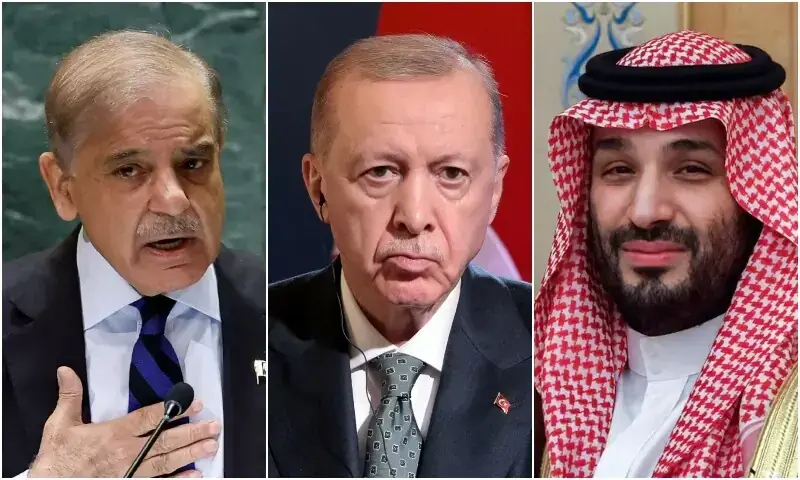
The newly signed defence agreement between Pakistan, Saudi Arabia and Türkiye marks a significant step towards formalising their longstanding security and strategic cooperation, while establishing a framework focused on collective defence and regional stability.

The trilateral partnership brings together three countries with strong historical, political, economic and defence ties. Their cooperation has grown over decades and is now being shaped into a more structured security framework amid a rapidly changing regional environment.

The agreement comes as conflicts, emerging security threats and evolving forms of warfare continue to reshape the strategic landscape. Supporters of the pact say closer coordination among the three countries can contribute to regional stability and strengthen their ability to respond collectively to security challenges.

Focus on defence and deterrence

The agreement has been described as defensive rather than offensive. Its central principle is collective security, under which an armed attack against one member is considered a threat to all three.

The arrangement is aimed at strengthening deterrence and reducing the possibility of conflict by demonstrating that aggression against one country could trigger a coordinated response from the other two.

The framework is not intended to target any particular country, according to the explanation of the agreement. Instead, it seeks to promote peace, stability and security through stronger defence cooperation.

Complementary strengths

Pakistan, Saudi Arabia and Türkiye bring different strategic capabilities to the partnership.

Pakistan contributes extensive military experience and defence expertise, including experience in managing complex security challenges. Saudi Arabia brings its strategic position in the region, economic strength and political influence. Türkiye contributes advanced defence technology, a growing defence industry and substantial industrial capabilities.

Together, these capabilities could provide the three countries with a broader platform for strategic coordination and defence preparedness.

The partnership could also encourage greater cooperation in areas such as military coordination, intelligence sharing, defence technology and strategic planning.

Pakistan’s regional role

The agreement also highlights Pakistan’s expanding engagement with different regional and global actors. Islamabad maintains strategic and diplomatic relations with Saudi Arabia and Türkiye while also engaging Iran, China, the United States and other international partners.

This network of relationships could allow Pakistan to play a constructive role in regional diplomacy and help facilitate communication among countries with differing interests.

The effectiveness of the trilateral framework, however, will depend on how consistently the three countries translate the agreement into practical cooperation.

Not a NATO-style alliance

The partnership has also been described as not a Muslim NATO and not a mechanism for providing nuclear protection to its members.

Instead, it is presented as a defensive arrangement designed to strengthen collective deterrence and security cooperation while supporting regional peace.

The agreement effectively formalises much of the strategic cooperation that Pakistan, Saudi Arabia and Türkiye have developed over the years.


Similar Posts

  • |

    US Forest Service chief reportedly pressed staff to deploy extra aircraft for fire near his Idaho ranch

    Michael Boren, the US Undersecretary of Agriculture for Natural Resources and Environment who oversees the US Forest Service, reportedly pressured agency staff to deploy additional aircraft to a small 7-acre wildfire burning near his private property in Idaho. According to agency communications and current and former Forest Service officials, the Cabin Creek fire began on 12 July 2026 in the Sawtooth National Forest due to an unattended campfire. Boren, who owns a 480-acre ranch in the nearby Sawtooth National Recreation Area, repeatedly contacted regional and national operations leadership to question why more aircraft were not assigned to the blaze. Flight data reveals that approximately nine aircraft—including air tankers, tactical planes, and helicopters—were dispatched to the small fire, with some assets diverted from other active wildfires in Idaho. Insiders noted that the emergency response was unusually heavy for a minor outbreak that ground crews could easily access and which posed no immediate threat to life or major infrastructure. In response, a spokesperson for the Department of Agriculture maintained that Boren merely reported the fire as any local landowner would and denied that he ordered or pressured staff to shift resources. The fire was fully contained by 15 July.

  • | | |

    PSX ends week on negative note, KSE-100 loses near…

    The Pakistan Stock Exchange (PSX) witnessed a bearish trend during the outgoing business week, with the benchmark KSE-100 Index losing 2,938 points as investor sentiment remained under pressure. The KSE-100 Index closed the week at 177,166 points, compared with its previous level. During the week, the index fluctuated within a range of 5,048 points, reaching a high of 181,158 points and falling to a low of 176,110 points. Trading activity remained substantial throughout the week, with around 4.22 billion shares changing hands at a total value of approximately Rs205 billion. Meanwhile, the market’s overall capitalization declined by Rs247 billion during the week, settling at around Rs19.88 trillion. The weekly performance reflects continued volatility in the stock market as investors closely monitor domestic economic developments and regional geopolitical conditions. Earlier, Pakistan’s benchmark stock index opened on a positive note on Friday, with strong buying interest across major sectors pushing the KSE-100 Index more than 800 points higher in the early trading session. At around 9:19am, the KSE-100 Index was trading at 177,399.75 points, recording a gain of 807.99 points, or 0.46%, compared with the previous close. The early-session rally reflected renewed investor interest in several key sectors of the market. Automobile assemblers, cement companies, commercial banks, fertiliser manufacturers, oil marketing companies (OMCs) and refineries remained among the prominent areas attracting buying activity. Several index-heavy stocks also traded in positive territory, providing support to the benchmark. Shares of Attock Refinery Limited (ARL), Mari Energies Limited (MARI), Fauji Fertilizer Company (FFC), Habib Bank Limited (HBL), Meezan Bank Limited (MEBL), National Bank of Pakistan (NBP) and United Bank Limited (UBL) were among the notable gainers during the opening phase. The positive start comes a day after the Pakistan Stock Exchange witnessed a volatile trading session amid concerns over geopolitical developments and elevated international oil prices. On Thursday, the KSE-100 Index lost 254.59 points, or 0.14%, to settle at 176,591.77 points. Selling pressure in several heavyweight stocks outweighed selective buying and kept the market in negative territory by the close. Investors are now closely monitoring developments in global financial markets, particularly movements in bond yields, oil prices and international geopolitical conditions, which could influence capital flows and market sentiment. Global markets remain under pressure The positive opening at the PSX came against a mixed backdrop in Asian markets, where several major stock indices remained on track for weekly declines. Investor sentiment globally continued to be affected by rising government bond yields and uncertainty surrounding inflation and fiscal conditions. A diplomatic stalemate in the Gulf region also contributed to a rise in oil prices, with crude prices reaching their highest level in about a month. Higher oil prices have renewed concerns over inflation, particularly for economies that rely heavily on energy imports. For Pakistan, movements in international crude prices remain particularly important because they can affect the country’s import bill, exchange-rate pressures and domestic inflation expectations. In the United States, Treasury yields resumed their upward movement after a brief respite following an unexpected intervention by the US Treasury on Wednesday. US Treasury Secretary Scott Bessent has indicated that the government could potentially expand its purchases of US Treasuries. He has also raised the possibility of fiscal consolidation as authorities seek to address concerns surrounding the country’s growing budget deficit. However, market participants remain cautious about the prospects of significant fiscal adjustment. Analysts have questioned whether sufficient expenditure reductions can be achieved to meaningfully narrow a budget deficit exceeding 6% of US gross domestic product. The rising cost of servicing government debt is another concern. Interest payments alone are estimated to have reached around $1.2 trillion during the year, highlighting the pressure created by elevated borrowing costs. Higher yields pose challenge for equities The continued increase in bond yields has broader implications for international equity markets. Higher yields can increase borrowing costs for governments and businesses while making fixed-income investments relatively more attractive. The impact is particularly significant for technology companies that are undertaking substantial borrowing to finance investments in artificial intelligence infrastructure and other capital-intensive projects. At the same time, higher interest rates increase the discount rate applied to future corporate earnings, potentially putting pressure on equity valuations. Asian markets reflected some of these concerns on Friday. Japan’s Nikkei index declined around 0.8%, taking its losses for the week to approximately 4.4%. South Korean and Taiwanese stocks managed modest gains during the session but remained lower on a weekly basis. Meanwhile, MSCI’s broadest index of Asia-Pacific shares excluding Japan advanced around 0.5%, indicating some selective risk appetite despite continued uncertainty in global markets.

  • | |

    ‘Rigging mastermind cries foul’: Maryam’s sh…

    Punjab Chief Minister Maryam Nawaz has strongly criticised the Pakistan Peoples Party (PPP) over its allegations of rigging in the Azad Jammu and Kashmir (AJK) elections. Maryam responded to criticism from PPP leaders in a social media post on Wednesday. She accused the PPP of being behind what she described as “subtle rigging” and questioned its decision to complain about electoral irregularities. “The mastermind of subtle rigging is crying foul over rigging,” Maryam said in her post. She then added a sarcastic question about when doomsday would arrive. Her remarks came after PPP Central Punjab General Secretary Hassan Murtaza accused the Pakistan Muslim League-Nawaz (PML-N) of manipulating the AJK election process. Speaking at a press conference in Lahore, Murtaza alleged that electoral rules had been repeatedly violated during the polls. He also criticised the role of the Election Commission. He claimed that the commission had acted like an election agent instead of performing its constitutional responsibilities. Murtaza accused the PML-N of setting a new example of electoral rigging. He said his party had been treated unfairly during the elections. The PPP leader also criticised the political activities of the PML-N leadership in AJK. Without directly naming Maryam Nawaz, Murtaza referred to her father, Nawaz Sharif. He said Sharif had gone to Kashmir and expressed a desire to become prime minister. Murtaza argued that if the PML-N leadership was now seeking the AJK premiership, it was only possible because of the PPP’s political role. He also defended Nawaz Sharif and said the PPP respected the former prime minister. Murtaza claimed that the PML-N had itself reduced Sharif’s political standing by offering him a position as chairman of an institution in Lahore while he was seeking the AJK premiership. The PPP leader then shifted his criticism to Punjab’s governance and public services. He claimed that thousands of acres of farmland between Shahdara and Muridke had been inundated. According to Murtaza, water had reached several feet in some agricultural areas. He said the damage was not caused by a major flood. Instead, he blamed a breach in a drain embankment. Murtaza also criticised the Punjab government’s claims about Lahore’s development. He argued that the city’s infrastructure remained vulnerable to heavy rainfall. He said several roads turned into what he described as drainage channels after only a few hours of rain. The PPP leader blamed government decisions for creating difficulties for citizens. He also criticised the import of one million metric tonnes of wheat. Murtaza claimed that the imported wheat was worth around Rs1 trillion. He questioned the government’s economic decisions and argued that citizens deserved better public services. He said taxes collected from the public should be used to provide essential facilities. He also called on the government to fulfil its responsibility toward citizens. The political dispute comes amid growing tensions between the PPP and PML-N over the AJK elections. PPP Chairman Bilawal Bhutto Zardari has also alleged irregularities in the first phase of the AJK elections. The PML-N, however, has rejected allegations of rigging and defended the election results. Maryam Nawaz has previously urged political opponents to accept defeat rather than make allegations of electoral manipulation

  • Thai Cabinet Approves First Draft Of Strict New Deportation Regulations

    BANGKOK, Thailand — The Thai Cabinet has officially approved the first draft of new deportation regulations, marking a significant step toward tightening controls on illegal immigration and expediting the removal of foreign nationals who violate the law. The move aims to establish a clear, efficient legal framework for deportations, addressing previous gaps in administrative coordination. […]

  • | |

    Former senator Mushtaq Ahmed Khan detained in Isla…

    Islamabad Police have detained former senator Mushtaq Ahmed Khan over alleged violations of Section 144 and other charges linked to a protest rally in the federal capital. According to police officials, authorities took Khan into custody after he allegedly participated in a rally without obtaining the required permission. Police also accused him of violating restrictions imposed under Section 144 and causing a disturbance during the gathering. The authorities said the action followed the enforcement of restrictions on public gatherings and demonstrations in Islamabad. Section 144 allows the administration to impose temporary restrictions on public assemblies and other activities in order to maintain law and order. Police officials maintained that the former senator had not secured official permission to hold the rally and that his participation in the gathering led to legal action. The exact circumstances surrounding his detention and the nature of the allegations will likely become clearer as the authorities proceed with the case. Mushtaq Ahmed Khan, who previously served as a senator, has remained active in public and political affairs. His detention comes amid continued scrutiny of public demonstrations and political gatherings in the capital, where authorities often impose restrictions to prevent disruptions and maintain security. Police have yet to disclose further details about the duration of Khan’s detention, the specific sections of law invoked against him, or whether authorities have formally registered a case. Further developments are expected as the situation unfolds.

  • | |

    Tech firms accused of destroying books after AI scanning

    Books are playing a major role in the rapid development of artificial intelligence. However, experts warn that the growing demand for printed books to train AI models is putting valuable knowledge and cultural heritage at risk. According to a British media report, several technology companies have started buying large collections of old books. The books are scanned using high-speed machines so their contents can be converted into digital data. The material is then used to train advanced artificial intelligence systems. The report claims that after the scanning process is completed, some companies discard or destroy the original printed copies. This practice has raised concerns among historians, librarians, and preservation experts, who fear that irreplaceable works may disappear forever. The project reportedly began around two years ago. In February 2024, a leading AI company hired a specialist with the task of collecting as many books as possible from around the world. The goal was to secure a vast collection of written material for AI training. Experts say the destruction of ordinary books is troubling, but the loss of historical or rare editions would be far more serious. They warn that once an original copy is destroyed, valuable physical features such as handwritten notes, bindings, paper quality, and printing techniques may be lost forever. These details are often important for researchers and historians. According to the report, AI companies are especially interested in books published before 2022. They believe these books contain mostly human-written content, making them more useful for training AI models. Newer online content is increasingly influenced by AI-generated text, which experts say could reduce the quality of future AI training. The growing use of books for AI development has also sparked debate over copyright, preservation, and ethics. Critics argue that technological progress should not come at the cost of destroying cultural and historical treasures. They are urging companies to preserve original copies after scanning them and work with libraries and archives to protect valuable collections for future generations.

Leave a Reply

Your email address will not be published. Required fields are marked *