pollution problem karachi

Pollution problem in karachi

By Baloch Khan

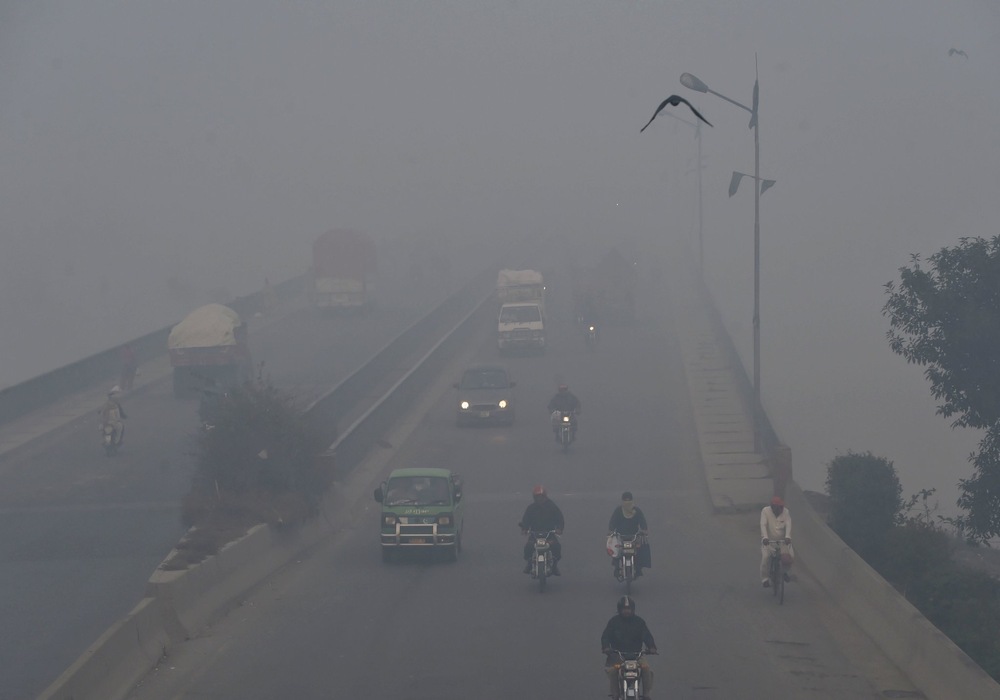
Through the pages of your newspaper, I want to draw attention to the serious problem of pollution in Karachi. The city is facing increasing air, water, and waste pollution due to smoke from vehicles, industrial emissions, garbage, and improper waste disposal.

Pollution is badly affecting the health of citizens. Many people are suffering from breathing problems and other diseases because of polluted air. Burning garbage and increasing traffic are making the environment more harmful.

I request the concerned authorities to take strict action against pollution. More trees should be planted, waste should be properly managed, factories should follow environmental rules, and citizens should be educated about keeping the city clean.

I hope your newspaper will highlight this important issue and the authorities will take immediate steps to solve it.

Similar Posts

  • Criminals on Pak Sar Zameen

    We call Pakistan Pak Sar Zameen, “the Land of the Pure.” But pure for whom? Tell me, honestly… pure for whom? For the criminals? For the rapists? For the child abusers? For the killers who walk our streets untouched by iron shackles or jail cells? Because it certainly does not feel pure for our children. The entire country is busy discussing India’s Jantar Mantar, an issue that we have no business obsessing over. Everyone knows what India should do, but everyone forgets what Pakistan must do. On that very same day, while the nation was distracted by a controversy across the border, six-year-old Dua was murdered in Karachi. Where was the collective scream? Where was the demand for change? And where were the changemakers? We have time to argue about borders, about politics, about things that do not touch our homes. But when a child is murdered in our own city, we scroll past, we sigh, we say “Inna Lillahi wa inna ilayhi raji’un,” and we move on. We move on! And Dua is not alone. In 2026, it feels like every other day another child loses their life. Six-year-old Muhammad Wali from Lea Market. Three-year-old Kulsoom from Quaidabad. Tomorrow, another child will be slaughtered. Another name will join the cemetery’s roll call. How many more parents will decorate graves instead of hearing the pitter-patter of their tiny feet? This is the lullaby that replaces safety in our children’s souls. Our children fall into open manholes because nobody bothers to close them. They are thrown from rooftops. They are abused until they cry, raped until they are wounded, murdered until their funerals become routine. Yet we choke on the same bitter question. Why are the murderers not swinging from ropes? Why are the rapists not rotting in cells? Why are the abusers not dragged through the streets until they beg for death? A nation is not judged by how boldly it sings the national anthem. It is not judged by the scale of its army or the height of its flags. It is judged by the number of tiny coffins that leave its homes. So I ask again: if this is truly the Land of the Pure, why are the purest souls in this country the ones who cry alone, die alone, and are forgotten alone?

  • Brain Drain: A Growing Challenge for Pakistan

    By Asma Qayyum Brain drain refers to the migration of highly educated and skilled professionals to other countries in search of better employment opportunities, higher salaries, quality education, advanced research facilities, and improved living conditions. This phenomenon has become one of Pakistan’s most serious development challenges, affecting the country’s economic growth and human capital. According to the World Bank, Pakistan is among the countries experiencing a significant outflow of skilled workers. Furthermore, official data from the Bureau of Emigration and Overseas Employment (BEOE) show that hundreds of thousands of Pakistanis leave the country each year for overseas employment, including a large number of educated professionals. This growing migration places additional pressure on vital sectors such as healthcare, engineering, education, and information technology. Several factors contribute to brain drain, including unemployment, low salaries, limited research opportunities, political instability, economic uncertainty, and poor working conditions. As a result, many talented individuals believe they can achieve greater professional success and a better quality of life abroad. The consequences of brain drain are far-reaching. Pakistan loses experienced doctors, engineers, teachers, researchers, scientists, and IT specialists whose knowledge and expertise are essential for national development. The departure of these professionals weakens public services, reduces innovation, and slows economic progress. According to the Bureau of Emigration and Overseas Employment, 762,499 Pakistanis officially left the country for overseas employment in 2025. Since 1971, more than 15 million Pakistanis have been registered for overseas employment through the bureau. These figures highlight the scale of the issue and the urgent need for effective policy measures. To reduce brain drain, the government should create more employment opportunities, improve salaries and working conditions, invest in research, innovation, and higher education, and provide incentives that encourage skilled professionals to remain in or return to Pakistan. A stable economy, merit-based opportunities, and professional growth are essential to retaining the country’s talented workforce. Pakistan’s greatest asset is its people. By investing in its skilled professionals and creating an environment where they can thrive, the country can transform brain drain into brain gain and build a stronger, more prosperous future.

  • Dasht is in danger

    By Meer Baloch Through your newspaper, I want to draw attention to the serious situation in Dasht. The people of Dasht are facing many problems, and they do not feel safe in their own area. There is a lack of proper security, police protection, hospitals, and other basic facilities. People are worried about their safety, especially women, children, and elderly people. The government should take immediate steps to improve security and provide basic facilities to the people of Dasht. I hope you will publish this issue in your newspaper so that the authorities can take notice and protect the people of Dasht.

  • Preserving Balochi Traditions

    By Aamina Asghar The Baloch are an ancient people with a rich culture that is distinct from many other cultures around the world. Whether it is their weddings or their way of life, everything about their culture is unique. Most particularly, Balochi weddings have their own beautiful traditions but many modern trends influenced by social media and other cultures are gradually replacing them. It is good to enjoy modern trends, but we should not forget our own traditions that identifies us in the world. The below I mention some of the keen factors affecting the culture: Our Culture Is Our Identity Baloch wedding traditions have been passed down by our ancestors. They tell the story of who we are and remind us of our rich cultural heritage. Culture is what identify us from any part of the world and make us look different from the native of that particular area. Traditional Balochi Dress Balochi brides and grooms wear beautiful traditional dresses with fine embroidery done by Baloch women’s hand. They are hand-made cloths. Nowadays, many people prefer modern designer clothes instead of traditional Balochi attire. The trend has been influenced from social media and is adopted by the living persons in their daily life. Wedding Customs Many families now arrange Mehndi ceremonies, Dholki events, dance performances, bridal shows, and other celebrations that were not traditionally part of Baloch weddings. As a result, our original customs are becoming less common. As a result, few young people know the traditional practices of Balochi Culture. Decoration Traditional Baloch weddings had simple decorations that focused on family, culture, and tradition. Today, expensive stage decorations, flower walls, and modern themes are becoming very popular, making the marriage more expensive. Upon seeing such things, everyone around the society expects such marriages to take place in future, badly affecting the poor people who cannot afford them and thus ends up insulting them in others’ eyes. Social Media Influence Many people copy what they see on social media without thinking about their own culture. It is good to know about other’s culture, but killing your own culture for others is never beneficial for the generation to come. Our culture should be preserved. Music and Celebration Traditional Balochi music and cultural celebrations should be encouraged because they keep our heritage alive. Sadly, very few people are well aware of Balochi singers. We respect other singers when it comes to our own Balochi singers who are preserving the language are never valued or recognized by majority of us. Thus, modern trends are not bad, but we should not allow them to replace our beautiful traditions. Baloch wedding traditions are an important part of our culture. Our dresses, music, customs, and celebrations reflect our identity, and we should respect and preserve them. This will help future generations understand the value of Balochi culture. Let us take pride in being Baloch, promote our traditions and show the world the beauty of our culture.

  • Pakistan: The Moment Frustration Met Patience

    Why would two nations that had been at war for months agree to let Pakistan carry their words to one another? The answer says a great deal about the place Pakistan has earned in the global hierarchy. Few countries are able to exchange views openly with both Tehran and Washington, yet Pakistan has built exactly that kind of standing through years of patient and balanced diplomacy. In Switzerland this June, that effort proved its worth. When the Iranian delegation grew frustrated and stepped away from the table, the negotiations might easily have collapsed. Instead, mediators from Pakistan and Qatar kept the channels open, passing messages between the two sides until the heat dissipated. The meeting at Burgenstock stretched on for eighteen hours, a test of patience that Pakistan met with gracious endurance. And what did it pocket for its own benefit? Nothing for itself. Its only aim was to silence the guns and keep the Strait of Hormuz open, so the wider world could feel some relief. Is that not the affirmation of a nation that proceeds in good faith? Credibility of this magnitude is not cultivated overnight. It is built progressively, through transparency and disciplined action, and in Switzerland, the world saw clearly that Pakistan possesses this cross-cultural credibility.

  • Request to Establish a Mental Hospital in Turbat

    By Muhammad Naseer The road construction project from Shaitump to Turbat Bazaar was initiated in 2022 with the hope of improving transportation and easing the daily commute for thousands of residents. Unfortunately, despite the passage of several years, the project remains incomplete. While one section of the road has been completed, the remaining stretch from Zong Ground to Turbat Bazaar is progressing at an extremely slow pace, causing growing inconvenience to the public. The prolonged delay has created numerous problems for commuters, shopkeepers, students, and pedestrians. In several places, piles of sand, gravel, and other construction materials have been left on the roadside for extended periods, narrowing the road and making it difficult for vehicles to pass safely. Pedestrians are forced to walk through dusty and uneven paths, exposing them to unnecessary risks and discomfort. The dust generated by the ongoing construction has become another major concern. It affects shopkeepers, residents, and road users alike, often causing irritation to the eyes and breathing difficulties, particularly for children, elderly people, and those with respiratory illnesses. During busy hours, traffic congestion becomes worse because of the restricted road space, increasing travel time and creating safety hazards. Development projects are meant to improve public life, but unnecessary delays diminish their intended benefits. If work is carried out efficiently and completed within the announced timeframe, both the public and local businesses can enjoy the advantages of improved infrastructure without prolonged hardship. The concerned authorities and the contractor are requested to accelerate the pace of construction, remove unnecessary construction materials from the roadside, and adopt effective measures to control dust during the remaining work. Timely completion of this important road project will not only provide relief to the people but also reflect a commitment to efficient public service. It is hoped that the relevant authorities will take immediate notice of this issue and ensure that the project is completed without further delay for the convenience and safety of the people of Turbat.

Leave a Reply

Your email address will not be published. Required fields are marked *