request establish mental

Request to Establish a Mental Hospital in Turbat

By Muhammad Naseer

The road construction project from Shaitump to Turbat Bazaar was initiated in 2022 with the hope of improving transportation and easing the daily commute for thousands of residents. Unfortunately, despite the passage of several years, the project remains incomplete. While one section of the road has been completed, the remaining stretch from Zong Ground to Turbat Bazaar is progressing at an extremely slow pace, causing growing inconvenience to the public.

The prolonged delay has created numerous problems for commuters, shopkeepers, students, and pedestrians. In several places, piles of sand, gravel, and other construction materials have been left on the roadside for extended periods, narrowing the road and making it difficult for vehicles to pass safely. Pedestrians are forced to walk through dusty and uneven paths, exposing them to unnecessary risks and discomfort.

The dust generated by the ongoing construction has become another major concern. It affects shopkeepers, residents, and road users alike, often causing irritation to the eyes and breathing difficulties, particularly for children, elderly people, and those with respiratory illnesses. During busy hours, traffic congestion becomes worse because of the restricted road space, increasing travel time and creating safety hazards.

Development projects are meant to improve public life, but unnecessary delays diminish their intended benefits. If work is carried out efficiently and completed within the announced timeframe, both the public and local businesses can enjoy the advantages of improved infrastructure without prolonged hardship.

The concerned authorities and the contractor are requested to accelerate the pace of construction, remove unnecessary construction materials from the roadside, and adopt effective measures to control dust during the remaining work. Timely completion of this important road project will not only provide relief to the people but also reflect a commitment to efficient public service.

It is hoped that the relevant authorities will take immediate notice of this issue and ensure that the project is completed without further delay for the convenience and safety of the people of Turbat.


Similar Posts

  • Youth Empowerment in Pakistan

    By Asma Qayyum Youth empowerment is the process of providing young people with the education, skills, opportunities, and confidence they need to contribute positively to society. Pakistan has one of the largest youth populations in the world. According to the Pakistan Bureau of Statistics (2023 Census), the country’s population is approximately 241.49 million, and around 64% of Pakistanis are under the age of 30. This large youth population has the potential to become Pakistan’s greatest strength if it is properly educated, skilled, and employed. Young people play a vital role in the social, economic, and political development of a country. Empowered youth become skilled professionals, innovators, entrepreneurs, and responsible citizens. Their energy, creativity, and ideas can boost productivity, reduce poverty, encourage innovation, and strengthen national development. However, Pakistan faces several challenges in empowering its youth. According to the Pakistan Bureau of Statistics, the national literacy rate is approximately 63%, while millions of children remain out of school. Furthermore, the Labour Force Survey (2024–25) reported an unemployment rate of 7.1%, making job creation one of the country’s greatest challenges. The United Nations Development Programme (UNDP) reports that nearly four million young Pakistanis reach working age each year, but only around one million new jobs are created annually. It also notes that many young people are neither in education, employment, nor training (NEET), limiting their ability to contribute to the country’s growth. The major challenges facing Pakistani youth include limited access to quality education, unemployment and underemployment, a shortage of technical and vocational training opportunities, poverty, unequal opportunities in rural areas, and limited support for entrepreneurship and innovation. To address these challenges, the government should invest more in education, technical and vocational training, and modern skill development. It should also create more employment opportunities, support youth entrepreneurship through training programs and financial assistance, and encourage young people to participate in community service, leadership initiatives, and civic engagement. At the same time, educational institutions and the private sector should work together to equip young people with the skills required for the modern job market. Youth empowerment is essential for Pakistan’s future. With millions of young people entering the workforce each year, investing in education, skills, innovation, and employment is not merely an option—it is a necessity. Empowering young people will strengthen Pakistan’s economy, reduce poverty, promote social stability, and build a more prosperous and peaceful nation. As the saying goes, “The youth of today are the leaders of tomorrow.”

  • Safe Playgrounds, Safer Communities

    Due to the lack of proper playgrounds, children and young people often use the grounds of nearby government schools for recreation and physical activity. There is nothing inherently wrong with this. In fact, physical activity is essential for children’s physical and mental health, fitness, and overall development. However, the absence of caretakers and other Class-IV staff in schools during the evening raises serious concerns about safety, discipline, and the protection of school property. Children and young people of different ages regularly gather in these playgrounds. To prevent any untoward incidents, the presence of responsible adults is essential. Having Class-IV staff or other designated personnel available during evening hours would not only reassure children and their parents, but also help to maintain discipline and safeguard school buildings, furniture, and other educational resources. A practical solution can be introduced to address this. The school administration should establish a sports committee comprising responsible members of the local community. The names, designations, and contact details of committee members should be properly recorded at the school, with a copy shared with the local police station. This would enable prompt communication with responsible committee members in the event of an emergency or any untoward situation. The matter requires immediate attention from both the district administration and the education department. Rather than discouraging children from using school playgrounds, the authorities should put in place a proper system of evening supervision at government schools. Such an arrangement would allow children to take part in healthy physical activities in a safe and disciplined environment, while also ensuring the protection of public property. Government school playgrounds are valuable community assets. With a modest and well-organised supervisory system, they can serve not only as spaces for physical activity but also as safe and constructive environments for the younger generation. Protecting these spaces and ensuring their safe use should therefore be a shared responsibility of the administration, schools, and the local community. Muhammad Iqbal Awan (Namal) Mianwali, Punjab (Educationist, Writer, Motivational Speaker)

  • Virat kholi and 2027 ODI World cup

    By Muhammad Naseer Virat Kohli’s possible presence in the 2027 ODI World Cup has already created excitement among cricket fans. After years of remarkable performances, Kohli has become one of the most respected ODI batters of his generation. He has openly reaffirmed his commitment to playing in the 2027 World Cup, giving fans hope that they may see him represent India in another major tournament. The 2027 World Cup will be especially important because it could be one of the final major international tournaments of his career. Kohli has already experienced the pressure and excitement of World Cups on several occasions. He was part of India’s 2011 World Cup-winning team and later became one of the tournament’s most consistent performers. His extraordinary ability to chase difficult targets has made him particularly valuable in ODI cricket. His experience could also provide important guidance to younger players entering their first World Cup. However, reaching 2027 will require maintaining fitness, form, and consistency over the coming years. Cricket is an unpredictable sport, and no player can guarantee what the future will bring. Nevertheless, Kohli’s determination suggests that he still has ambitions left to fulfil in the 50-over format. For millions of supporters, watching him in another World Cup would be an emotional experience. His presence could also add enormous attention to the tournament. More importantly, the younger generation could learn from his preparation, discipline, and approach to the game. Kohli has already achieved numerous individual milestones, but another World Cup triumph would add another memorable chapter to his career. India will have many talented players by 2027, so the final team selection will depend on form and fitness at that time. If Kohli remains at his best, his experience could be extremely valuable in a high-pressure tournament. The 2027 World Cup may therefore become not only a competition for India but also another stage in the remarkable story of one of cricket’s modern greats. Fans will undoubtedly hope to see his familiar number on the Indian jersey when the tournament begins. Whether he produces another unforgettable innings or simply guides younger teammates, his contribution could be significant. For now, the possibility of Virat Kohli playing in the 2027 ODI World Cup is enough to keep cricket lovers eagerly waiting for what could be another memorable chapter in his extraordinary career.

  • Afghanistan lost peace under the Taliban

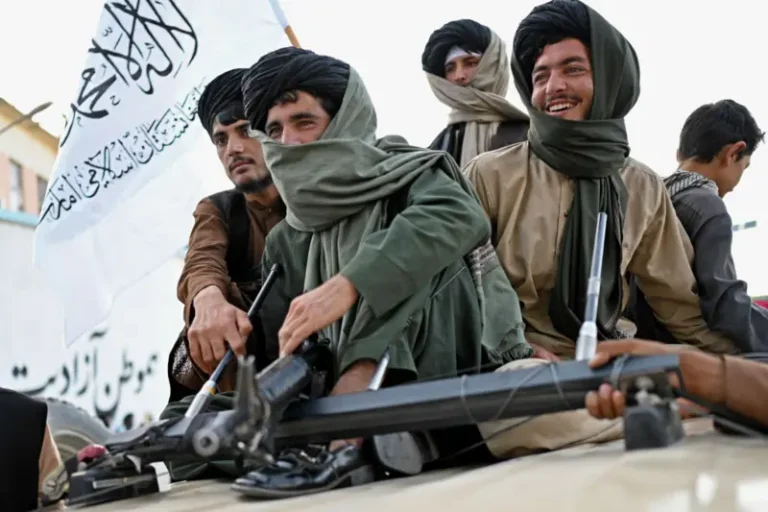
    By Kulsoom Amanullah When Taliban entered Kabul in Augusta 2021,the loss of peace in Afghanistan and the role of the Taliban in the country’s long and difficult history. Afghanistan has suffered from decades of war, political conflict, and instability. The Taliban have been an important part of this history, and their return to power in 2021 changed the lives of millions of Afghan people. The Taliban first emerged in Afghanistan in the 1990s and controlled most of the country by 1996. Their rule was known for strict religious policies and restrictions on many aspects of daily life. After the attacks of September 11, 2001, the United States and its allies invaded Afghanistan, and the Taliban government was removed from power. However, the conflict continued for many years. During this period, Afghan civilians experienced violence, displacement, poverty, and insecurity. In August 2021, the Taliban returned to power after the withdrawal of United States and allied forces. Since then, Afghanistan has faced many serious challenges. Although the level of large-scale fighting has decreased compared with some earlier years, peace is more than simply the absence of war. True peace requires safety, freedom, economic stability, education, and respect for the rights and dignity of all people. One of the most serious concerns under the Taliban has been restrictions on women’s and girls’ education and participation in society. Girls have faced severe restrictions on secondary and higher education, while women have also faced limitations on employment and public life. These policies have created deep concern both inside and outside Afghanistan. Education is essential for the development of any country, and denying opportunities to a large part of the population can make it harder for Afghanistan to achieve long-term progress. The Afghan people also face economic and humanitarian difficulties. Many families struggle with poverty and limited access to basic services. Years of war have weakened the country’s infrastructure and economy. The international community has provided humanitarian assistance, but Afghanistan still needs long-term solutions that can help its people live with dignity and hope. At the same time, it is important to remember that ordinary Afghan people are not responsible for the conflicts that have affected their country. They are the ones who have suffered the most from decades of violence and instability. Afghan families deserve the opportunity to live peacefully, earn a living, educate their children, and build a secure future. Afghanistan needs a peaceful and inclusive future. The Taliban, as the current rulers of the country, have a major responsibility to create conditions in which all citizens can live safely and with dignity. The rights of women and girls, access to education, economic development, and humanitarian needs should be given serious attention. The story of Afghanistan teaches us that lasting peace cannot be achieved through force alone. It requires dialogue, justice, education, cooperation, and respect for human rights. I hope that one day Afghanistan will move beyond its painful past and become a peaceful country where every citizen can live without fear and every child can dream of a better future.

  • Thank You for Giving Millions of Ordinary People an Extraordinary Voice

    By Syed Anwar Wasti For most of my life, I carried countless ideas, experiences, and stories within me. I wanted to write, share, and contribute—but I struggled to express myself. English was not my strongest language, I couldn’t type in Urdu, and many of my thoughts remained locked inside my mind. After living in the United States for more than four decades, I have witnessed many remarkable technological advances. Yet, in my personal opinion, few have transformed my life as profoundly as Artificial Intelligence—especially ChatGPT. Today, I can write articles, create blog posts, prepare speeches, develop video scripts, organize research, manage my website, and share my experiences with people around the world. Whether I am writing about my travels, my community, my business, or my personal reflections, AI has helped me turn ideas into words and words into meaningful conversations. What once required a team of writers, editors, and researchers can now be accomplished by one determined individual with the right tools. That is not just innovation—it is empowerment. Technology is most powerful when it gives ordinary people the opportunity to do extraordinary things. For me, AI has done exactly that. It has given me confidence, creativity, and, most importantly, a voice. Thank you for giving millions of ordinary people an extraordinary voice. Hats off to the brilliant minds behind ChatGPT and AI. May God bless you all, and may your work continue to benefit humanity for generations to come.

  • Losing Hope After Being Rejected

     By Granaz Assa Every student dreams of getting an opportunity to show their talent and prove their abilities. Schools and educational institutions regularly organize speech, debate, and other competitions to encourage students to discover their potential and build their confidence. These events are meant to inspire students and help them grow. However, there is an issue that is rarely discussed: the disappointment and loss of hope that many students experience after being rejected without being given a fair chance. Many students spend days or even weeks preparing for these competitions. They write and revise their speeches, practice repeatedly, and overcome their fear of speaking in front of an audience. They invest their time, energy, and emotions because they believe that their hard work will be recognized. Unfortunately, some students are rejected within just a few moments, sometimes before they even get the opportunity to present their speech. Such rejection can be deeply discouraging. While rejection is a natural part of life and no one can succeed every time, every student deserves a fair opportunity to demonstrate their abilities. If a student’s speech is weak, if their confidence is low, or if they need to improve their presentation skills, they should be informed of their mistakes with kindness and honesty. Constructive feedback helps students understand where they need improvement and motivates them to work harder. A student who knows their weaknesses can overcome them and return stronger in the future. On the other hand, rejecting students without any explanation or guidance only leaves them confused, disappointed, and hopeless. Instead of learning from the experience, they may begin to doubt their abilities. Such experiences can have a lasting impact on a student’s confidence. Many talented students stop participating in competitions because they fear facing rejection again. They begin to believe that their efforts have no value and that their voices do not matter. As a result, they lose the confidence to express themselves and miss opportunities to develop important communication and leadership skills. Educational institutions should remember that competitions are not only about selecting winners. They are also about encouraging learning, building confidence, recognizing potential, and helping every student grow, regardless of the final result. I have personally experienced this feeling. After being rejected without a chance to present my speech, I felt extremely hopeless and disappointed. I questioned whether all my hard work had been meaningless. However, I later realized that every student deserves encouragement, even if they are not selected. A few words of guidance and constructive feedback can restore confidence and inspire students to keep trying. By giving every participant a fair chance and treating them with respect, educational institutions can help students remain hopeful, determined, and ready to achieve greater success in the future.

Leave a Reply

Your email address will not be published. Required fields are marked *