governor visits swat

KP governor visits Swat blast victims, vows to fight terrorism

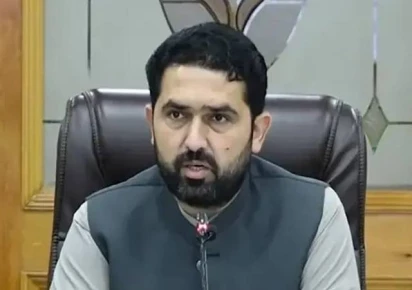
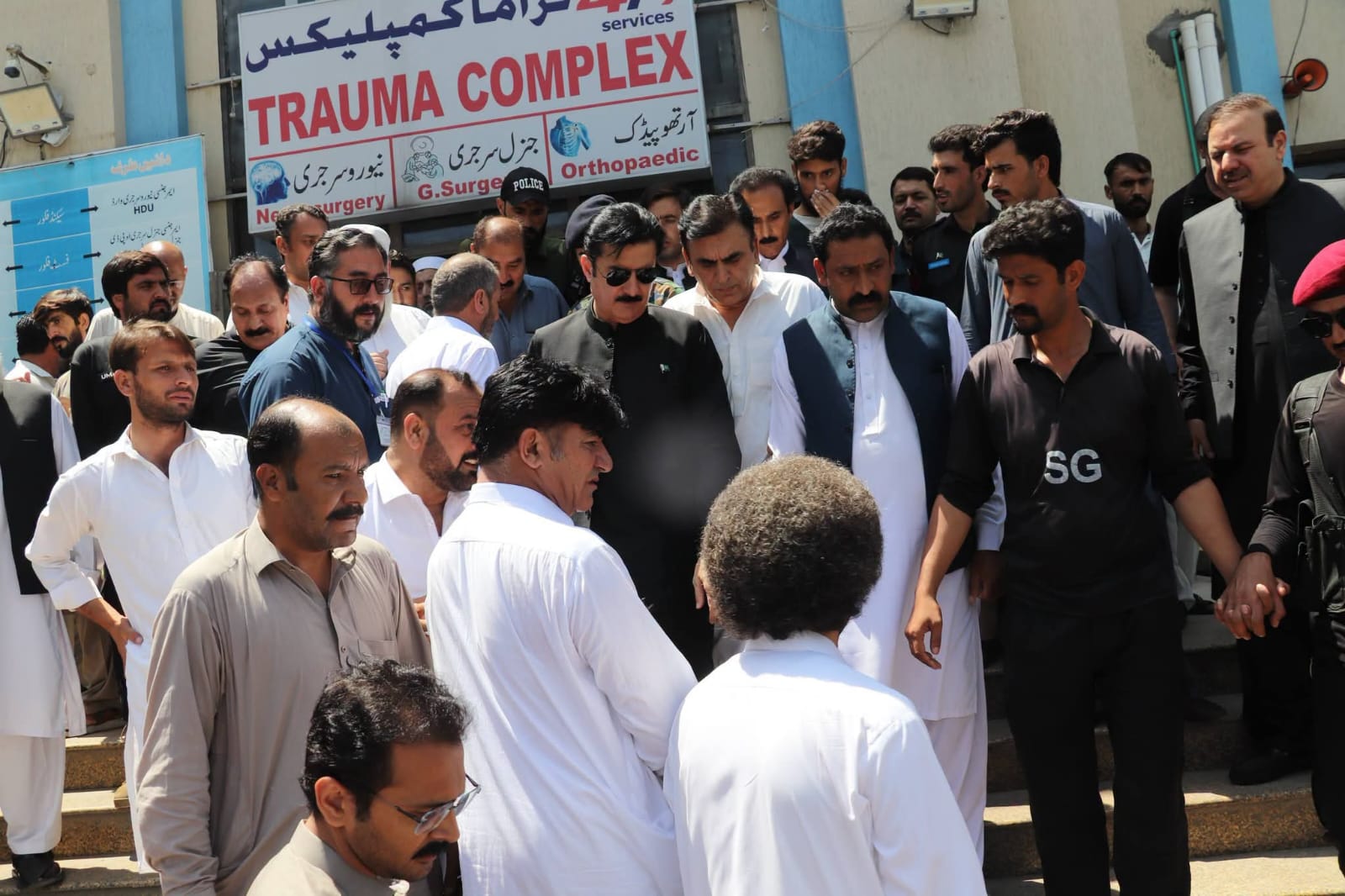
SWAT : Governor Khyber Pakhtunkhwa Faisal Karim Kundi on Tuesday visited Swat where he inquired after the victims injured in the recent suicide blast at Saidu Sharif Hospital, reaffirming the government’s resolve to eliminate terrorism and provide the best possible medical care to the wounded.

During his visit to the hospital, the Governor met the injured, prayed for their early recovery and expressed solidarity with the affected families.

Commissioner Malakand Masood Ahmad, Regional Police Officer (RPO) Syed Fida Hassan Shah, senior officials of the district administration, police and other relevant departments accompanied the governor.

Governor Kundi reviewed the medical facilities being provided to the injured and directed the hospital administration to ensure the best possible treatment for all victims.

He said the pain and suffering of those injured in the “cowardly terrorist attack” was shared by the entire province and the nation, adding that the government stood firmly with the affected families and would always remember the sacrifices of the martyrs and the injured in the fight against terrorism.

Later, the Governor visited the office of the RPO Malakand where he was briefed on the overall law and order situation in Malakand Division, ongoing counter-terrorism measures, police preparedness, security challenges and the strategy to combat terrorism.

He also offered prayers for the departed souls of the martyrs and patience for their bereaved families.

Talking to media, Governor Kundi paid tribute to the police and security forces for their bravery and steadfastness in combating terrorism over the years.

He said the country had yet to fully equip the police with modern weapons and the resources required to effectively tackle the menace, stressing that the federation, provinces and all political forces must demonstrate complete unity against terrorism.

The Governor alleged that terrorists were receiving support and facilitation from across the border and reiterated that Afghan territory should not be allowed to be used against Pakistan.

He further alleged that India and Israel were attempting to exploit Afghan soil against Pakistan and said the issue had been raised at international forums.

Governor Kundi said attacks on mosques, educational institutions and public places were completely against the teachings of Islam, adding that there would be no negotiations with terrorists and the state would confront them with full force.

He said Pakistan had successfully foiled India’s attempts to portray it as a terrorist state through effective diplomacy and added that the country’s constructive role in easing tensions between Iran and the United States had earned international recognition, reinforcing its image as a peace-loving country committed to regional peace and stability.

Similar Posts

  • | |

    President, PM vow action after Swat suicide blast

    ISLAMABAD: President Asif Ali Zardari and Prime Minister Shehbaz Sharif on Sunday strongly condemned the deadly suicide bombing in Kabal, Swat, expressing grief over the loss of lives and reaffirming the government’s commitment to eliminating terrorism. In separate statements, both leaders extended heartfelt condolences to the families of those killed in the attack and prayed for the departed souls. They also asked Allah Almighty to grant patience and strength to the bereaved families during this difficult time. President Zardari expressed deep sorrow over the tragedy and prayed for the speedy recovery of those injured in the explosion. He directed the relevant authorities to ensure that all injured victims receive the best possible medical treatment without delay. The president said terrorists would never succeed in weakening Pakistan’s peace, national unity or the writ of the state. He praised the sacrifices of Khyber Pakhtunkhwa Police and other law enforcement agencies, describing their bravery and commitment as a source of pride for the nation. He further called for a comprehensive investigation into the incident and directed authorities to identify those responsible for planning and carrying out the attack. He stressed that all perpetrators and their facilitators must be brought to justice. Prime Minister Shehbaz Sharif also condemned the suicide bombing and expressed profound grief over the loss of precious lives. He conveyed his sympathies to the families of the victims and prayed for the elevation of the martyrs’ ranks. The prime minister also wished a speedy recovery for those injured and instructed the relevant departments to provide them with the highest standard of medical care. Reaffirming the government’s resolve against militancy, Shehbaz Sharif said Pakistan’s fight against terrorism would continue until the menace was completely eradicated. He said those seeking to destabilise the country through acts of violence would not be allowed to succeed.

  • | |

    ML-1 railway modernisation project moves closer to…

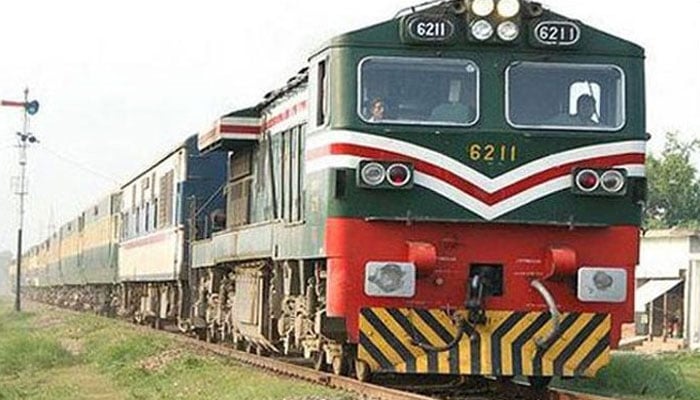
    LAHORE: Pakistan’s long-delayed Main Line-1 (ML-1) railway modernisation project has entered a crucial stage, with the government setting October 30, 2026, as the deadline for completing the ongoing review process and announcing plans to begin the second round of market consultations next month. The latest developments are expected to help resolve outstanding technical, financial and procedural matters and move the country’s largest railway infrastructure initiative towards formal implementation. The second round of market consultation is scheduled to commence on September 8. International experts, prospective investors and other relevant stakeholders will be consulted during the process to seek their views on project preparation, implementation arrangements, financing and the future course of the scheme. The consultations are considered an important step before the government proceeds towards the execution stage of the project, which has faced repeated delays over the years because of financing, technical and procedural challenges. Weekly reviews ordered Pakistan Railways Chairman Syed Mazhar Ali Shah chaired a high-level meeting at the railway headquarters on Saturday to review progress on ML-1. During the meeting, the chairman directed international design consultants, review consultants and senior railway officials to maintain close coordination and ensure that work on the project continues without unnecessary interruptions. He also ordered weekly progress reviews, instructing officials to identify unresolved matters at an early stage and take immediate steps to remove bottlenecks. The Karachi-Rohri segment received particular attention during the meeting as it has been identified as the first section to be developed under the revised ML-1 plan. Karachi-Rohri section According to official documents presented before the National Assembly, the Karachi-Rohri portion covers approximately 480 kilometres and has an estimated cost of $2.04 billion. Construction of the section is expected to take around three years once the project moves into the implementation phase. The government has engaged the Asian Development Bank (ADB) to arrange financing for this segment. Pakistan has also secured a $10 million Project Readiness Financing loan to support preparatory work required before full-scale implementation. The Karachi-Rohri corridor is strategically significant because it handles a substantial volume of both passenger and freight traffic. Its modernisation is therefore expected to provide an immediate improvement to the efficiency of the national railway network while creating a foundation for upgrades on the remaining sections. Government optimistic about launch Federal Minister for Railways Hanif Abbasi has expressed optimism that the flagship project could finally enter the implementation phase during the current year. The minister said progress on ML-1 had improved and that the government was working to ensure that the remaining requirements were completed within the agreed timelines. He said Prime Minister Shehbaz Sharif was closely monitoring the project and had directed the relevant authorities to ensure its completion according to schedule. According to the minister, ML-1 represents the foundation of Pakistan Railways’ long-term modernisation strategy. He said upgrading the railway corridor would help increase train speeds, improve passenger services and enhance the overall operational efficiency of the rail network. The minister also stressed that transparency, merit and competitive procedures would be followed during the project. He added that recommendations from international experts, market participants and technical consultants would be considered while finalising the implementation strategy. 1,726-km railway corridor The ML-1 project covers the modernisation of the 1,726-kilometre Karachi-Peshawar railway corridor, which serves as the backbone of Pakistan’s railway system. Under the rationalised plan, the corridor has been divided into five major sections:  Karachi-Rohri  Rohri-Multan Multan-Lahore Lahore-Rawalpindi Rawalpindi-Peshawar The government has estimated the total cost of the rationalised ML-1 project at approximately $6.66 billion. The scheme is intended to transform the existing railway infrastructure by improving track quality, signalling systems, operational capacity and train speeds. Higher speeds and improved capacity Earlier official plans for ML-1 envisaged allowing passenger trains to operate at speeds of up to 160 kilometres per hour on upgraded portions of the corridor. The project also includes improvements in axle-load capacity, rehabilitation and strengthening of railway tracks, modern signalling and communications systems, as well as doubling of single-track sections wherever necessary. These improvements are expected to reduce journey times and increase the number of trains that can operate on the corridor. For Pakistan Railways, the project is also viewed as an opportunity to strengthen freight operations and improve the movement of goods between the country’s major commercial centres and ports. Financing remains crucial Despite the renewed momentum, financing remains one of the most important requirements for taking ML-1 into full-scale construction. The government has been working with international development partners to secure funding for different components of the project, while the completion of technical studies, project documentation and financial arrangements remains essential before construction can begin. The ADB-backed Karachi-Rohri section is expected to serve as the starting point for the wider modernisation programme. Officials have previously indicated that preparatory work for the section could begin in 2026, provided the remaining financial and documentation requirements are completed. A long-awaited railway overhaul ML-1 has been discussed for years as a transformative project for Pakistan’s railway sector, but its implementation has repeatedly been delayed because of the scale of investment involved and disagreements over financing and project structure. The government’s decision to set a firm deadline for completing the review phase and hold another round of market consultations signals an effort to bring the project back on track. Regular monitoring by Pakistan Railways, engagement with international consultants and consultation with potential stakeholders are now expected to play a central role in finalising the project. If the remaining technical and financial hurdles are addressed according to the new schedule, the Karachi-Rohri section could become the first major construction phase of the broader ML-1 programme. The government believes that successful implementation of ML-1 would not only modernise the country’s ageing railway infrastructure but also improve passenger connectivity, strengthen freight transportation, reduce travel times and enhance the competitiveness of Pakistan Railways.

  • | |

    LHC judge steps aside from bail hearing in Libya b…

    LAHORE: Lahore High Court ( LHC) Justice Ghulam Sarwar Nihang has recused himself from hearing the post-arrest bail petition of a suspect allegedly linked to the Libyan boat tragedy. The case involving accused Shafaqat Ali was taken up by the Lahore High Court, where Justice Nihang informed the court that he had previously served as a member of the commission formed to investigate the Libya shipwreck. Given his previous involvement with the commission, the judge said he did not consider it appropriate to hear the bail petition concerning the same matter. The case record was subsequently referred to the Chief Justice of the Lahore High Court for further proceedings. During the hearing, the defence counsel argued that bail had already been granted to suspects in several similar cases and requested that Shafaqat Ali also be released on bail until the trial court reaches a decision. The case is part of investigations launched following the Libyan boat accident. The Federal Investigation Agency’s Mandi Bahauddin office has registered cases against suspects allegedly connected to the incident. In a related development, another accused, Muhammad Tahir, has also been granted post-arrest bail in the Libya boat tragedy case.

  • | |

     K-P CM denies ‘Imran Khan Rehai Force’ exist…

      Khyber-Pakhtunkhwa Chief Minister Sohail Afridi has told the Federal Constitutional Court (FCC) that no organisation called the “Imran Khan Rehai Force” has ever been formed, notified or made operational. In a statement submitted through K-P Advocate General Shah Faisal Uthmankhel, Afridi said no armed group, militant organisation, coercive structure or paramilitary setup exists or has ever been planned under that name. The statement came in response to a petition filed by Islamabad-based lawyer Malik Zaheer Ahmed through Advocate Ali Nawaz Kharal. The petition asked the court to declare any attempt to form or mobilise such a private force or militia illegal and unconstitutional under Articles 5, 17 and 256 of the Constitution and the Private Military Organisations (Abolition and Prohibition) Act, 1973. The FCC had sought Afridi’s response on April 1 and directed him to submit it within 10 days. The case will return for hearing on July 29 before a three-member FCC bench headed by Chief Justice Amin-ud-Din Khan. Afridi clarified that the initiative referred to as a “force” is actually the Imran Khan Rehai Aman Movement, which he described as a peaceful, unarmed and voluntary civic-political campaign. According to the statement, the movement seeks to raise public awareness about due process and the state’s responsibility to ensure fairness in criminal proceedings. Afridi maintained that the campaign supports the release of the PTI founder through lawful, democratic and constitutional means and has no connection with force, militancy or coercion.

  • CM orders full-scale flood relief operations across Punjab

    LAHORE – On the directions of Punjab Chief Minister Maryam Nawaz Sharif, relief operations are continuing in all flood-affected areas of the province, with the district administration and all relevant departments remaining fully mobilised. Officials from the district administration, the Provincial Disaster Management Authority (PDMA), Rescue 1122, Suthra Punjab, Health Clinic on Wheels, Field Hospitals, Livestock, Agriculture and other concerned departments are actively engaged in relief and rehabilitation efforts. Under the Chief Minister’s directives, flood victims in Muridke, Sheikhupura, Hakimpura, Ferozewala, Pathan Colony and other affected areas are being shifted promptly to safer locations and relief camps. Rescue 1122 teams are conducting rescue operations using boats, ensuring the safe evacuation of residents along with their essential belongings. The Chief Minister has also directed authorities to ensure the uninterrupted supply of medicines, food and other essential items for flood victims. Hygienically prepared meals are being provided three times a day breakfast, lunch and dinner to all affected families. On the instructions of Chief Minister Maryam Nawaz Sharif, Chairman CMIT Shoaib Mirza visited the flood-hit areas to review the provision of meals to the affected people. Flood victims expressed satisfaction over receiving three meals a day delivered directly to their doorsteps. In addition to cooked meals, dry milk and biscuits are also being distributed among the affected families as part of the ongoing relief efforts.

  • | |

    ECP backs Punjab polls from December 15

    The Election Commission of Pakistan has agreed in principle to hold long-delayed local government elections in Punjab between December 15, 2026, and January 15, 2027. The decision was reached during an ECP meeting chaired by Chief Election Commissioner Sikandar Sultan Raja on Thursday. The meeting was held to discuss the proposed schedule and preparations for local polls in the province. A Punjab government delegation attended the meeting. The delegation included Local Government Minister Zeeshan Rafiq, Mines and Minerals Minister Sardar Sher Ali Gorchani, Agriculture Minister Syed Muhammad Ashiq Hussain Shah and Education Minister Rana Sikandar Hayat. The Punjab chief secretary and senior local government officials were also present. The ECP was informed that the delimitation process for Punjab had been completed, clearing an important hurdle in preparations for the elections. Chief Election Commissioner Sikandar Sultan Raja stressed that elected local governments are a constitutional requirement under Article 140-A. He also pointed out that election authorities are legally required to conduct local government elections within the prescribed period after the expiry of elected local bodies. Punjab officials said the provincial government needed sufficient time to complete administrative preparations, arrange financial resources and deploy staff for the electoral process. The provincial government proposed the December 15 to January 15 window as the most suitable period for polling. Officials said school examinations would have concluded by then, allowing educational staff to be available for election duties. The government also cited weather conditions as a factor. Holding the elections during the proposed period could help avoid difficulties associated with heavy fog during other parts of the winter season. Punjab authorities further informed the ECP that they preferred conducting the elections in phases. Officials said phased polling would allow better security arrangements and make it easier for the administration to manage the large-scale electoral exercise. The ECP accepted the proposed timeframe in principle and directed the Punjab government to submit a detailed plan promptly if it wanted the elections to be conducted in multiple phases. The commission said the proposed arrangements could help move the province toward fulfilling its constitutional obligation of establishing elected local governments. The Punjab government has already allocated Rs12.52 billion for the local elections. It has also approved the recruitment of 900 Union Council secretaries to support the functioning of local bodies. Punjab has not held local government elections since 2015. The previous polls were conducted in several phases between October and December that year. The elected local councils began functioning in 2017 after mayors and chairpersons were selected through indirect elections. The local governments were dissolved in April 2019 by the then Punjab government before completing their full term. The Supreme Court subsequently ordered their restoration, and the councils eventually completed their tenure on December 31, 2021. Since then, local government elections have remained pending amid repeated changes to Punjab’s local government laws. Successive provincial administrations amended or replaced the relevant legislation, forcing the ECP to repeatedly revise its preparations and carry out fresh delimitation exercises.

Leave a Reply

Your email address will not be published. Required fields are marked *