
ml1 railway modernisation
| |

ML-1 railway modernisation project moves closer to…

LAHORE: Pakistan’s long-delayed Main Line-1 (ML-1) railway modernisation project has entered a crucial stage, with the government setting October 30, 2026, as the deadline for completing the ongoing review process and announcing plans to begin the second round of market consultations next month.

The latest developments are expected to help resolve outstanding technical, financial and procedural matters and move the country’s largest railway infrastructure initiative towards formal implementation.

The second round of market consultation is scheduled to commence on September 8. International experts, prospective investors and other relevant stakeholders will be consulted during the process to seek their views on project preparation, implementation arrangements, financing and the future course of the scheme.

The consultations are considered an important step before the government proceeds towards the execution stage of the project, which has faced repeated delays over the years because of financing, technical and procedural challenges.

Weekly reviews ordered

Pakistan Railways Chairman Syed Mazhar Ali Shah chaired a high-level meeting at the railway headquarters on Saturday to review progress on ML-1.

During the meeting, the chairman directed international design consultants, review consultants and senior railway officials to maintain close coordination and ensure that work on the project continues without unnecessary interruptions.

He also ordered weekly progress reviews, instructing officials to identify unresolved matters at an early stage and take immediate steps to remove bottlenecks.

The Karachi-Rohri segment received particular attention during the meeting as it has been identified as the first section to be developed under the revised ML-1 plan.

Karachi-Rohri section

According to official documents presented before the National Assembly, the Karachi-Rohri portion covers approximately 480 kilometres and has an estimated cost of $2.04 billion.

Construction of the section is expected to take around three years once the project moves into the implementation phase.

The government has engaged the Asian Development Bank (ADB) to arrange financing for this segment. Pakistan has also secured a $10 million Project Readiness Financing loan to support preparatory work required before full-scale implementation.

The Karachi-Rohri corridor is strategically significant because it handles a substantial volume of both passenger and freight traffic. Its modernisation is therefore expected to provide an immediate improvement to the efficiency of the national railway network while creating a foundation for upgrades on the remaining sections.

Government optimistic about launch

Federal Minister for Railways Hanif Abbasi has expressed optimism that the flagship project could finally enter the implementation phase during the current year.

The minister said progress on ML-1 had improved and that the government was working to ensure that the remaining requirements were completed within the agreed timelines.

He said Prime Minister Shehbaz Sharif was closely monitoring the project and had directed the relevant authorities to ensure its completion according to schedule.

According to the minister, ML-1 represents the foundation of Pakistan Railways’ long-term modernisation strategy.

He said upgrading the railway corridor would help increase train speeds, improve passenger services and enhance the overall operational efficiency of the rail network.

The minister also stressed that transparency, merit and competitive procedures would be followed during the project. He added that recommendations from international experts, market participants and technical consultants would be considered while finalising the implementation strategy.

1,726-km railway corridor

The ML-1 project covers the modernisation of the 1,726-kilometre Karachi-Peshawar railway corridor, which serves as the backbone of Pakistan’s railway system.

Under the rationalised plan, the corridor has been divided into five major sections:

  •  Karachi-Rohri
  •  Rohri-Multan
  • Multan-Lahore
  • Lahore-Rawalpindi
  • Rawalpindi-Peshawar

The government has estimated the total cost of the rationalised ML-1 project at approximately $6.66 billion.

The scheme is intended to transform the existing railway infrastructure by improving track quality, signalling systems, operational capacity and train speeds.

Higher speeds and improved capacity

Earlier official plans for ML-1 envisaged allowing passenger trains to operate at speeds of up to 160 kilometres per hour on upgraded portions of the corridor.

The project also includes improvements in axle-load capacity, rehabilitation and strengthening of railway tracks, modern signalling and communications systems, as well as doubling of single-track sections wherever necessary.

These improvements are expected to reduce journey times and increase the number of trains that can operate on the corridor.

For Pakistan Railways, the project is also viewed as an opportunity to strengthen freight operations and improve the movement of goods between the country’s major commercial centres and ports.

Financing remains crucial

Despite the renewed momentum, financing remains one of the most important requirements for taking ML-1 into full-scale construction.

The government has been working with international development partners to secure funding for different components of the project, while the completion of technical studies, project documentation and financial arrangements remains essential before construction can begin.

The ADB-backed Karachi-Rohri section is expected to serve as the starting point for the wider modernisation programme.

Officials have previously indicated that preparatory work for the section could begin in 2026, provided the remaining financial and documentation requirements are completed.

A long-awaited railway overhaul

ML-1 has been discussed for years as a transformative project for Pakistan’s railway sector, but its implementation has repeatedly been delayed because of the scale of investment involved and disagreements over financing and project structure.

The government’s decision to set a firm deadline for completing the review phase and hold another round of market consultations signals an effort to bring the project back on track.

Regular monitoring by Pakistan Railways, engagement with international consultants and consultation with potential stakeholders are now expected to play a central role in finalising the project.

If the remaining technical and financial hurdles are addressed according to the new schedule, the Karachi-Rohri section could become the first major construction phase of the broader ML-1 programme.

The government believes that successful implementation of ML-1 would not only modernise the country’s ageing railway infrastructure but also improve passenger connectivity, strengthen freight transportation, reduce travel times and enhance the competitiveness of Pakistan Railways.

Similar Posts

  • |

    20,000 flee as fast-moving wildfire engulfs British Columbia

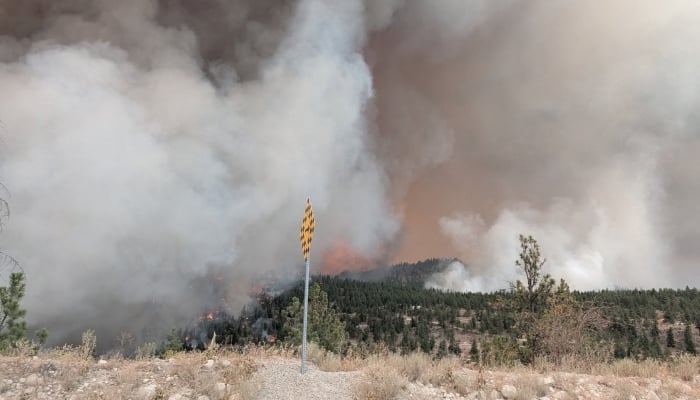
    VANCOUVER: More than 20,000 people have been forced to leave their homes in British Columbia as a fast-moving wildfire tore through communities around Okanagan Lake, prompting provincial authorities to declare a state of emergency. The Bald Range wildfire exploded in size within hours, driven by hot, dry and windy conditions, sending residents scrambling for safety and creating an increasingly dangerous situation for firefighters and emergency crews. The blaze had expanded to roughly 9,500 hectares (23,500 acres) by Saturday, according to Reuters. Premier David Eby announced the state of emergency on Saturday as more than 100 wildfires were burning across the province. The emergency declaration gives authorities additional powers to restrict travel, coordinate resources and secure accommodation for people displaced by the fires. Thousands ordered to evacuate The communities of Summerland and Peachland were among those heavily affected. Summerland, home to around 12,000 people, was placed under an evacuation order, while thousands more residents in surrounding areas were also told to leave. Officials have warned that conditions remain extremely dangerous, with rapidly changing winds and intense flames making it difficult to assess the full extent of the damage. A number of homes and other properties have already been destroyed, although authorities have yet to determine the total number of structures lost because some affected areas remain inaccessible. The wildfire has also disrupted essential services. Power outages have been reported, while Summerland issued a boil-water advisory after untreated water entered part of the system. Highway 97, an important transportation route through the region, was also closed as the fire threatened nearby communities. Residents rescued by helicopter The rapidly spreading flames left some residents trapped after escape routes became unsafe. Emergency crews used helicopters to reach people who could no longer evacuate by road, while search-and-rescue teams continued checking areas behind the fire lines for anyone who may have been left behind. The intensity of the fire has created exceptionally dangerous conditions. Officials said the blaze generated its own weather, including lightning, making firefighting operations even more challenging. Authorities are also investigating a possible wildfire-related death near Summerland. The Royal Canadian Mounted Police said hazardous conditions were making it difficult to confirm details immediately. Why the situation is so severe British Columbia entered the 2026 wildfire season with significant concerns about drought and unusually warm conditions. The BC Wildfire Service had warned earlier this summer that much of the province could experience elevated wildfire activity because of persistent drought, below-average snowpack and warmer-than-normal temperatures. The Okanagan was among the areas facing above-average drought conditions. The District of Peachland had already raised its local fire danger rating to extreme in July, warning that dry forests and grasslands could allow any new fire to spread rapidly. A growing national wildfire crisis The emergency in British Columbia is part of a wider wildfire crisis affecting Canada this summer. Thousands of firefighters are battling blazes across multiple provinces, while smoke from major fires has repeatedly affected air quality and visibility. For residents forced from their homes, the immediate priority remains safety as emergency crews work to contain the Bald Range fire. With flames moving quickly and weather conditions remaining difficult, officials continue to urge residents in threatened areas to follow evacuation orders and avoid returning until authorities declare it safe. For British Columbia, the latest disaster is another stark reminder of how quickly a wildfire can transform from a remote blaze into a community-wide emergency.

  • | |

    Nawaz Sharif appointed Lahore Heritage Board chair…

    League-Nawaz (PML-N) leader Nawaz Sharif has been appointed chairman of the Lahore Heritage Area Revival Board. The Punjab governor approved his appointment as head of the newly formed board. Nawaz Sharif will lead the board in his capacity as a Member of the National Assembly. The Punjab Local Government Department has formally issued a gazette notification confirming the appointment. The governor has also approved the immediate formation of the Lahore Heritage Area Revival Board. The body will focus on efforts to revive and preserve Lahore’s historic and heritage areas. The formation of the board is aimed at strengthening institutional efforts to protect the city’s historic character. It is also expected to support initiatives related to the restoration and revival of important heritage sites. With the official notification now issued, the board can begin its work under Nawaz Sharif’s leadership. Further details about its structure, responsibilities and planned heritage projects are expected to emerge as the board starts functioning.

  • | |

    Transporters join fuel dealers’ strike against d…

    Transport associations across Pakistan have announced support for the Petroleum Dealers Association’s demands and warned of a possible suspension of transport services following a planned shutdown of petrol pumps. The All Pakistan Public Transport Owners Association said public transport operations could also come to a halt if fuel stations close at midnight. Association President Nadeem Hussain said the transport sector would support the petrol dealers’ stance against the government’s policy of fixing petrol and diesel prices on a daily basis. He demanded that the government withdraw the daily fuel pricing mechanism, saying it has created uncertainty and increased financial pressure on transport operators. Hussain said frequent changes in fuel prices directly affect transport businesses because fuel is one of the biggest operating costs for public transport owners. He warned that a continued increase in petroleum prices could further burden both transporters and passengers. The Pakistan Mini Mazda Goods Transport Association also announced its support for the strike call by petrol station owners. Association President Sher Ali Chaudhry said mini Mazda vehicles would stop operating from midnight as part of the protest against daily increases in petroleum prices. He criticized the government’s decision to revise fuel prices regularly, saying it has made it difficult for transporters to manage expenses and maintain their services. Chaudhry said rising fuel costs have severely affected the transport sector, increasing operational expenses and reducing the income of vehicle owners and drivers. Both transport associations urged the government to reconsider the current fuel pricing policy and take steps to provide relief to transporters.

  • |

    Modi’s Education Minister quits as Indian yo…

    Indian youth protesters called off weeks of demonstrations and celebrated in the streets on Saturday after Education Minister Dharmendra Pradhan resigned and Prime Minister Narendra Modi’s government bowed to demands including calls to fix a cheating-prone exam system. The worst political crisis of Modi’s third term had peaked this week when thousands of protesters marched on parliament, with police using tear gas to control them. Young voters form a critical base of Modi’s Bharatiya Janata Party. But youths calling themselves “cockroaches” had taken to the streets since late June, after national exam papers were leaked forcing a resit which affected 2 million students and galvanised anger about the lack of prospects for young Indians. The resignation of Pradhan, the students’ primary demand, came as a surprise because Modi’s government had refused to fix the exam system. Celebrations erupted at the Jantar Mantar protest site in the capital Delhi, with thousands of youngsters chanting victory slogans and dancing. The youth-led Cockroach Janta Party movement, which spearheaded the demonstrations, said it would end its protests. “We have done it,” said Abhijeet Dipke, CJP’s founder, to loud cheers at the site. Youngsters shouted “Jai Hind” as the national anthem played on loudspeakers and sweets were distributed. Roads around the central business district of Connaught Place near the protest site were shut amid celebrations and a swelling crowd of thousands of protesters. Delhi Metro rail stations in and around the area that were closed for much of four days this week were also opened. “Young generation is here. This is a win for the constitution,” protester Tluanga Ralte said, walking with a copy of the Indian constitution at the protest site after Pradhan’s resignation. “We are not a lazy generation.” Pradhan, 57, a senior member of Modi’s BJP and the son of a veteran party leader, had been education minister since 2021. He is only the second minister to resign following a scandal since Modi came to power in 2014. Pradhan said he resigned to prevent anti-national forces from exploiting the situation. His resignation marks a significant victory for the youth-led movement, which has highlighted the systemic failures in India’s education system and the broader challenges facing young people in the country. The protests and their resolution reflect the growing political consciousness and mobilisation of India’s youth, who are increasingly demanding accountability and transparency from their leaders. The government’s concession to the protesters’ demands signals a recognition of the power of youth activism in shaping the country’s political landscape. The movement, which began as a response to exam paper leaks, has grown into a broader critique of the government’s education policies and its approach to addressing the concerns of young Indians. The victory at Jantar Mantar has inspired other youth movements across the country, with activists hoping that this momentum will lead to further reforms. The resignation of Pradhan represents a turning point in the relationship between the government and the younger generation, offering a glimmer of hope for a more responsive and accountable governance system in India. The celebrations in Delhi serve as a reminder of the power of peaceful protest and the importance of listening to the voices of the youth, who are the future of the nation. The coming months will be critical in determining whether the government will follow through on its promises to fix the exam system and address the broader concerns of India’s young population. The youth-led movement has shown that collective action can bring about change, and its legacy is likely to inspire future generations to continue fighting for their rights and aspirations. The resignation of Pradhan is a significant milestone, but the journey towards a more equitable and just education system in India is far from over. The country’s youth remain hopeful that this victory will pave the way for meaningful reforms and a brighter future for all.

  • | |

    Sahibzada Farhan overtakes Abhishek Sharma to claim no. 2 in ICC T20I rankings

    Pakistan’s opening batter Sahibzada Farhan has moved up to second place in the newest ICC Men’s T20I batting rankings, released on Wednesday. He has pushed past India’s Abhishek Sharma in the process. Farhan, who is 30 years old, now holds 848 rating points. That puts him just ahead of Abhishek, who slipped down to third place with 819 points. Abhishek’s drop followed a difficult stretch of form. He struggled during recent tours to Ireland, England, and Zimbabwe, and those low scores clearly took a toll on his ranking. At the very top, India’s Ishan Kishan remains untouched. He continues to hold the No. 1 spot with 910 rating points. Outside of the shakeup between Farhan and Abhishek, the rest of the top five batters stayed largely the same, with no major shifts to report. A little further down the list, India’s Tilak Varma made progress too, climbing two places to sit sixth overall. Meanwhile, England saw a small dip, as both Harry Brook and Jos Buttler each fell one spot. South Africa’s Dewald Brevis had reason to celebrate, breaking into the top 10 for the first time after advancing one position to land at 10th. Perhaps the most eye-catching move, though, belongs to a teenager. Fifteen-year-old Vaibhav Sooryavanshi jumped an astonishing 230 places, landing at 48th with 536 points. That leap comes right after he was named player of the series during Zimbabwe’s tour, a clear sign of his rapid rise in the format. Turning to the bowlers, Afghanistan’s Rashid Khan remains comfortably at the top of the T20I bowling charts. Pakistan’s Abrar Ahmed continues to hold second place, sitting on 736 points, while England’s Adil Rashid rounds out the top three. Further down the bowling table, Mohammad Nawaz stayed steady at 10th with 658 points. Fast bowler Salman Mirza also made a small gain, moving up one place to 15th. Not everyone rose, though. India’s Varun Chakaravarthy dropped three spots and fell out of the top 10 entirely. On the flip side, Australia’s Nathan Ellis had a good update, climbing into the top five bowlers with 675 rating points to his name.

  • | | |

    Indian cargo ship sinks after suspected attack nea…

    An Indian cargo ship sank in the Red Sea after suffering severe damage in a suspected maritime attack near Yemen’s western coast. The incident, which reportedly involved an explosive-laden boat or unidentified projectile, caused a powerful explosion and fire aboard the vessel before it eventually went down despite rescue efforts. According to international media reports, the cargo ship sustained extensive damage following the blast. Several crew members were injured during the incident, but no fatalities have been reported. The crew immediately initiated emergency procedures and alerted nearby maritime authorities, who responded with rescue operations. Authorities attempted to secure and tow the damaged vessel to a safe location. However, the ship’s condition deteriorated, and it eventually sank in the Red Sea. Medical assistance was provided to injured crew members, while rescue teams ensured the safe evacuation of everyone on board. India’s Ministry of External Affairs stated that the vessel was struck by an unidentified projectile, confirming that the cargo ship later sank. The ministry added that all crew members were safely rescued and no loss of life occurred. As of now, no group has officially claimed responsibility for the attack. However, the incident comes amid heightened security concerns in the Red Sea, where commercial shipping has faced repeated threats in recent months. Several previous attacks on merchant vessels in the region have been claimed by the Iran-backed Houthi movement, although no evidence has yet linked this specific incident to any particular group. The Red Sea has become one of the world’s most sensitive maritime routes due to ongoing regional tensions. Commercial vessels transiting the area have encountered increased security risks, prompting many shipping companies to strengthen safety measures or alter their routes. Recent months have also seen warnings and threats against ships passing through the Bab el-Mandeb Strait, a strategic waterway connecting the Red Sea with the Gulf of Aden. Disruptions in this corridor can have significant consequences for global trade, particularly the transportation of oil, gas, and other essential commodities. The Red Sea and Bab el-Mandeb Strait rank among the world’s busiest shipping lanes, serving as critical links between Europe, Asia, and the Middle East. Any disruption in these waters can affect international supply chains, increase shipping costs, and impact global energy markets. Investigations into the cause of the attack are expected to continue as maritime authorities gather evidence. Meanwhile, shipping companies and governments are closely monitoring the security situation in the region to ensure the safety of commercial vessels and international trade routes.

Leave a Reply

Your email address will not be published. Required fields are marked *