orders fullscale flood

CM orders full-scale flood relief operations across Punjab

LAHORE – On the directions of Punjab Chief Minister Maryam Nawaz Sharif, relief operations are continuing in all flood-affected areas of the province, with the district administration and all relevant departments remaining fully mobilised.

Officials from the district administration, the Provincial Disaster Management Authority (PDMA), Rescue 1122, Suthra Punjab, Health Clinic on Wheels, Field Hospitals, Livestock, Agriculture and other concerned departments are actively engaged in relief and rehabilitation efforts.

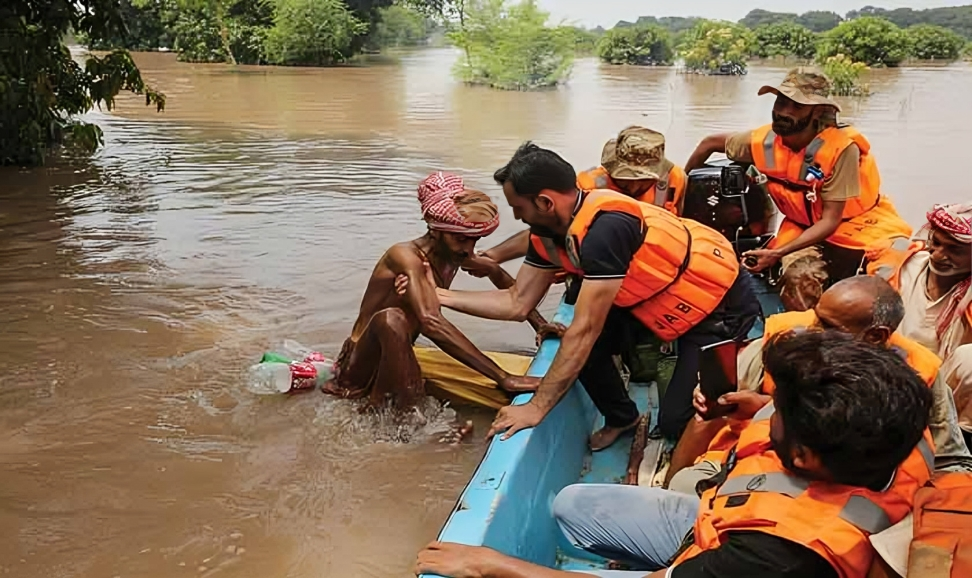
Under the Chief Minister’s directives, flood victims in Muridke, Sheikhupura, Hakimpura, Ferozewala, Pathan Colony and other affected areas are being shifted promptly to safer locations and relief camps. Rescue 1122 teams are conducting rescue operations using boats, ensuring the safe evacuation of residents along with their essential belongings.

The Chief Minister has also directed authorities to ensure the uninterrupted supply of medicines, food and other essential items for flood victims. Hygienically prepared meals are being provided three times a day breakfast, lunch and dinner to all affected families.

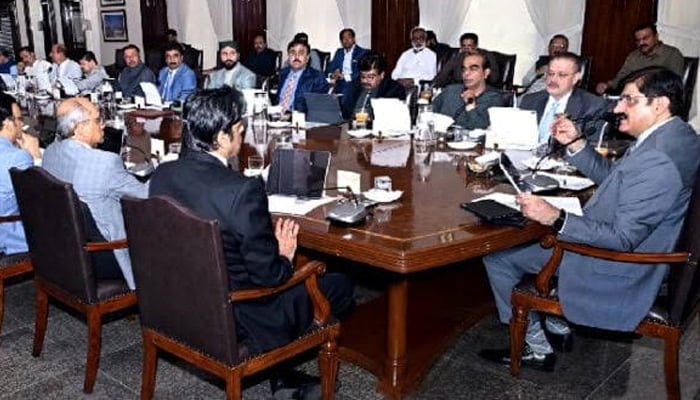
On the instructions of Chief Minister Maryam Nawaz Sharif, Chairman CMIT Shoaib Mirza visited the flood-hit areas to review the provision of meals to the affected people. Flood victims expressed satisfaction over receiving three meals a day delivered directly to their doorsteps.

In addition to cooked meals, dry milk and biscuits are also being distributed among the affected families as part of the ongoing relief efforts.

Similar Posts

  • Pakistani team wins 1 gold, 2 silver medals at Nuclear Olympiad

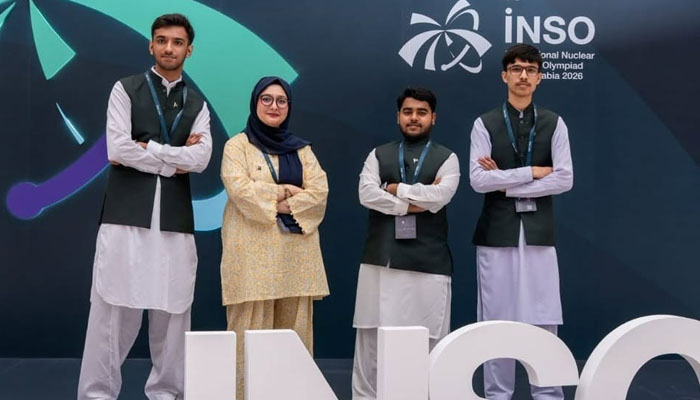
    The Pakistani team has won one gold and two silver medals at the International Nuclear Science Olympiad. The International Nuclear Science Olympiad was held in Jeddah from August 2 to 8 with 120 students and experts from 19 countries participating in the competition. Students from China, Japan, Russia, Türkiye, Malaysia, Indonesia and Saudi Arabia also took part. The Pakistan Atomic Energy Commission team won one gold and two silver medals. Muhammad Ali from Government College University Lahore won the gold medal while Muhammad Usman from FG Sir Syed College Rawalpindi won a silver medal. Seerat Fatima Bhatti from Nixor College Karachi also won a silver medal. According to a statement issued by the Pakistan Atomic Energy Commission, Pakistan will host the 4th International Nuclear Science Olympiad in 2027.

  • | | |

    Cancer patient girl stuck in Karachi traffic jam d…

    A young girl undergoing cancer treatment was reportedly caught in a Karachi traffic jam while her family was taking her to a hospital for a medical check-up on Thursday. According to local media reports, the girl and her family became stuck near Essa Nagri after residents staged a protest over prolonged electricity and water outages in the area. The demonstration resulted in severe traffic congestion and long queues of vehicles on surrounding roads. The girl’s family said they were taking her to hospital for a scheduled check-up when they became trapped in the traffic. According to the family, the child is suffering from chest cancer and had a urine bag attached to her at the time, making the delay particularly distressing. Residents said they had been facing shortages of both electricity and water for around 15 days. Frustrated by the prolonged disruption, they took to the streets to demand an improvement in basic services. The protest caused significant disruption to traffic movement in the area. The road connecting Gharibabad to Hasan Square was reportedly closed to traffic, with vehicles being diverted through Liaquatabad No. 10, Karimabad and an internal bypass near Gharibabad. Traffic heading from the Hasan Square U-turn was also diverted towards University Road and NIPA. Meanwhile, motorists travelling from Hasan Square towards Liaquatabad faced further congestion and delays. The incident has drawn attention to the difficult balance between residents’ right to protest over essential services and the impact such demonstrations can have on emergency and medical journeys. For the affected family, the traffic jam created an especially difficult situation because of the child’s medical condition and the need to reach the hospital on time. The case also highlights the broader consequences of prolonged civic service disruptions, which can affect not only daily commuters but also patients requiring urgent or scheduled medical care. Residents maintain that repeated power and water outages have left them with little choice but to protest. Authorities, meanwhile, face the challenge of resolving the underlying service complaints while ensuring that major roads remain accessible, particularly for ambulances and people travelling for medical treatment. The situation has once again highlighted Karachi’s traffic and infrastructure challenges, as protests and road closures can quickly cause widespread congestion across major routes.

  • | |

    Sindh records 76% drop in terrorism incidents in 2…

    KARACHI: Sindh Chief Minister Murad Ali Shah chaired a high-level meeting on the Counter Terrorism Department (CTD), where officials reviewed the province’s security situation, operational performance, investigations, infrastructure and future requirements. Sindh Home Minister Zia-ul-Hassan Lanjar, Chief Secretary Asif Hyder Shah, Home Secretary, Inspector General of Police Javed Alam Odho, Additional IG CTD Zulfiqar Larik and other senior officials attended the meeting. The meeting was informed that banned militant and insurgent organisations continue to pose a security challenge to Sindh. However, officials said terrorist incidents in the province had declined significantly during 2026. According to Home Minister Zia-ul-Hassan Lanjar, Sindh reported 37 terrorism incidents in 2025. The number fell to nine in 2026, representing a decline of around 76 per cent. The Sindh police chief told the meeting that seven of the nine terrorism cases reported this year had been traced and their investigations completed. Officials said the CTD conducted 918 intelligence-based operations across the province during 2026. These operations resulted in the arrest of 87 suspected terrorists, while four militants were killed in separate encounters. The briefing said the CTD had dismantled several militant networks allegedly involved in attacks on police personnel and sensitive installations. During a follow-up operation in Karachi, the department arrested a key suspect and an associate. Weapons and explosive material were also recovered from their possession. The suspects are allegedly wanted in several cases involving the targeted killing of police officers. According to the IG Sindh, more than 2,000 kilograms of explosive material were recovered during operations against militant networks. Four militants affiliated with banned insurgent organisations were also killed in encounters. The home minister said several planned attacks on law enforcement agencies and important installations had been foiled. He added that the CTD had also dismantled a network allegedly involved in attacks on railway tracks in northern Sindh. The operation helped prevent planned acts of sabotage, officials said. The meeting also reviewed progress in the investigation into the Karachi Training Centre attack. The police chief told the chief minister that nine suspects had so far been arrested in the case. A Joint Investigation Team has also been formed to conduct a detailed probe. Officials said several investigative sessions had been held during the inquiry and a number of alleged facilitators had been identified. The investigation is still under way. The meeting was also briefed on the performance of the CTD Fusion Centre. Officials said the centre had significantly improved the collection and analysis of intelligence as well as digital investigations. Hundreds of social media accounts allegedly linked to extremist activities have also been blocked or reported, according to the briefing. The Sindh home minister proposed additional resources for modern intelligence software and digital forensic tools. He also called for strengthening crime analytics platforms and systems equipped with artificial intelligence to improve the department’s ability to identify and respond to emerging security threats. The meeting was further informed that major projects for the development of CTD infrastructure across Sindh were under way. Officials said construction of a separate CTD complex in Sukkur had also begun under the province’s Annual Development Programme.

  • 15,000+ free heart surgeries completed under Punjab CM’s Programme

    Lahore – More than 15,000 free cardiac surgeries for children from Punjab and other parts of the country have been successfully completed since the launch of the Chief Minister’s Children Heart Treatment Programme in September 2024. The Hospital Management Information System (HMIS) developed by the Punjab Information Technology Board (PITB) has played a key role in the programme. The system has helped manage patients medical records, prepare patient lists, make electronic referrals to private hospitals and ensure timely coordination between public and private hospitals. This was revealed at a meeting chaired by PITB Chairman Faisal Yousaf at the Arfa Software Technology Park (ASTP). The meeting was briefed that HMIS is providing hospitals participating in the programme across Punjab with quick and easy access to patient records. This is helping doctors make better medical decisions while also making it easier for hospital administrations to monitor and coordinate patient treatment, referrals and other related matters. The digital system has also played an important role in making the patient referral and treatment process more organized, transparent and integrated. It has accelerated the exchange of information between hospitals and helped reduce unnecessary delays in treatment. Speaking on the occasion, PITB Chairman Faisal Yousaf said that the completion of more than 15,000 free heart surgeries for children was a major achievement of the Chief Minister’s programme. He said HMIS had played a significant role in speeding up, organizing and improving the treatment process through digital records, electronic referrals and effective coordination among hospitals. Faisal Yousaf further said that PITB would continue its support for promoting the use of modern digital technology in the healthcare sector to ensure the timely provision of quality medical facilities to citizens. He said that the effective use of digital systems in healthcare not only facilitates patient treatment but also improves hospital administrative efficiency, transparency and coordination among different institutions.

  • | | |

    AJK election first phase concludes, vote counting …

    Polling for the first phase of the Azad Jammu and Kashmir (AJK) Legislative Assembly elections concluded on Monday, with vote counting now underway across 13 constituencies in Mirpur Division. The first phase covered three districts — Mirpur, Kotli and Bhimber. Polling was initially scheduled to end at 5pm but was extended by one hour. Voting continued until 6pm to provide voters with additional time to cast their ballots. More than 1.4 million registered voters were eligible to participate in the first phase. The Election Commission had established 2,454 polling stations across the three districts. Of these, 597 polling stations were set up across four constituencies in Mirpur district. Kotli had 1,107 polling stations across six constituencies, while 608 polling stations were established in three constituencies of Bhimber. A total of 296 candidates, including nominees from the Pakistan Peoples Party (PPP), Pakistan Muslim League-Nawaz (PML-N), Istehkam-e-Pakistan Party and independent candidates, contested the 13 seats. Polling disrupted at some stations Although polling remained largely peaceful, some polling stations reported disruptions. In Kotli’s Aghaar Colony, voting continued at Polling Station 38. However, polling could not begin at Stations 36 and 37 because voters did not arrive. PPP AJK Election Cell in-charge Sardar Abdul Shakoor claimed that disturbances occurred at polling stations 119, 120 and 121 in LA-5 Barnala. He said polling was affected for some time. According to Shakoor, voting resumed after security forces reached the area. However, he said the polling process remained slow. The PPP also established a central election monitoring cell in Islamabad. Senior party leaders, including Sherry Rehman, Nadeem Afzal Chan, Shazia Marri, Sharjeel Memon and Saeed Ghani, monitored developments and remained in contact with election officials, district administrations and party candidates. Former National Assembly speaker Raja Pervez Ashraf expressed concern over alleged irregularities at different polling stations. He called for additional security personnel at sensitive locations, including Gulpur, Thurochi and Muhajir Camp. He urged the Election Commission to immediately and impartially investigate all complaints and ensure free, fair and transparent elections. Political leaders urge voters to participate PML-N candidate Chaudhry Tariq Farooq cast his vote at Polling Station 161 in Bhimber’s LA-7 constituency. Speaking after voting, Farooq said voter turnout was expected to be higher in rural areas than in cities. He also expressed confidence in the security and election arrangements in Bhimber. PPP Chairman Bilawal Bhutto Zardari, accompanied by his sister Aseefa Bhutto Zardari, appealed to voters in Mirpur to participate in the elections. In a video message, Bilawal urged people to leave their homes and exercise their right to vote if they wanted Kashmir’s future to be decided by its people. He also asked voters to support PPP candidates. PPP Karachi Division President Saeed Ghani described the election as a contest between the genuine issues of Kashmiris and what he called false promises. Ghani said Kashmiris needed political rights, ownership rights and employment opportunities. He criticised the focus on providing a limited number of buses, saying development should address wider public needs. PPP leader Nadeem Afzal Chan also raised concerns about alleged federal interference and the use of government resources during the elections. He demanded that the polls remain free, fair and transparent. He also called on the federal government to avoid any involvement that could influence the electoral process. PPP spokesperson Shazia Marri said the people of Kashmir would deliver their verdict through their votes. She said the party’s election symbol, the arrow, represented hope for the people of Mirpur. Police praise peaceful polling AJK police said the first phase of polling remained peaceful across Mirpur Division. A spokesperson for the AJK police chief said voters had rejected calls for unrest and instead chose to exercise their democratic right. Voters began arriving at polling stations soon after voting opened at 8am. AJK Inspector General of Police Liaquat Ali Malik thanked residents for cooperating with law enforcement agencies and helping maintain peace during the election. He warned that no individual, including political workers, would be allowed to take the law into their own hands. Mirpur Commissioner Raja Tahir Mumtaz and DIG Kamran Ali also visited Ward 16/17 in LA-3 to review the polling arrangements. The commissioner said polling had remained peaceful across Mirpur, Kotli and Bhimber. He urged voters to come out without fear and assured them that the administration had made arrangements for a secure environment. Security arrangements strengthened Authorities made extensive security arrangements for the elections. AJK Chief Election Commissioner Justice (retd) Ghulam Mustafa Mughal said legal action would be taken against anyone attempting to disrupt the voting process. AJK Chief Secretary Khushal Khan said state institutions were fully prepared to maintain peace during the elections. He said the people had rejected attempts to create disorder and demonstrated confidence in the democratic process.

  • | |

    Poor internet access threatens girls’ education …

    PESHAWAR: Poor internet connectivity is creating serious problems for girls pursuing education in the merged districts of Khyber-Pakhtunkhwa. Students in remote areas often struggle to attend online classes. They also face difficulties downloading study material and submitting assignments. For 16-year-old Khadija Bibi from Kurram district, finding an internet signal has become part of her daily life. During the summer holidays, she often leaves her home and climbs a nearby hill. She carries her mobile phone with her. She stands on the rocky slope and searches for a stronger signal. She uses the limited connection to download lecture notes and complete academic tasks. She also tries to attend online classes from the hill. However, the weak network frequently disconnects. This causes her to miss lessons and submit assignments late. Khadija is a BS Computer Science student at Benazir Women University Peshawar. She said unreliable internet had become one of the biggest challenges in her education. She said students in remote areas were being left behind as education increasingly depended on digital technology. The problem is not limited to Kurram. Thousands of girls across the merged districts face similar difficulties. The region already has several major education challenges. Poverty remains a serious obstacle. Insecurity has also affected access to education. Many areas also lack proper schools and other educational facilities. The digital divide has added another challenge. Several schools in the merged districts either do not have computer laboratories or have laboratories without working computers. Some also lack internet connections. This prevents students from gaining basic computer skills. It also makes online education difficult. Official data highlights the wider education crisis in the region. Benazir Income Support Programme data shows that 66 per cent of children in North Waziristan are out of school. The rate stands at 63 per cent in Bajaur. It is 61 per cent in South Waziristan. Mohmand and Khyber each record an out-of-school rate of 51 per cent. Kurram and Orakzai each have a rate of 47 per cent. Girls face additional difficulties because of limited access to technology. The Khyber-Pakhtunkhwa Women Empowerment Policy 2026-2030 highlights the scale of the digital divide. According to the policy, only 11 per cent of women in the merged districts have access to the internet. The female literacy rate is also extremely low. It stands at only 17 per cent. Education and digital inclusion advocates say poor infrastructure is a major reason for the situation. Weak mobile networks make internet access unreliable. Many families also cannot afford smartphones or regular internet packages. Some girls have to borrow phones from family members. This makes it difficult for them to attend online classes regularly. Access to technology is also affected by social restrictions. In some communities, families remain concerned about girls using mobile phones and the internet. Concerns about online safety and social pressure often result in restrictions. Cultural norms can also limit girls’ access to digital technology. Experts say improving internet coverage alone will not solve the problem. Girls also need greater freedom to travel to schools, universities and training centres. Better transport facilities could help students reach educational institutions more easily. It could also improve access to vocational training and employment opportunities. Experts have urged the provincial government and telecommunications authorities to give greater attention to the merged districts. They say residents should receive reliable internet services similar to those available in settled areas. Improved digital infrastructure could transform educational opportunities for girls in remote communities. Reliable internet would allow students to attend online classes without travelling long distances. They could access digital libraries and educational resources. They could also develop computer skills and participate in online training programmes. For students like Khadija, internet access is more than a technological facility. It is directly linked to education and future opportunities. Without reliable connectivity, many talented girls may continue to struggle despite their willingness to study. Addressing the digital divide therefore requires investment in telecommunications infrastructure, schools, digital devices and affordable internet services. It also requires efforts to remove social barriers that prevent girls from using technology.

Leave a Reply

Your email address will not be published. Required fields are marked *