pakistani team wins

Pakistani team wins 1 gold, 2 silver medals at Nuclear Olympiad

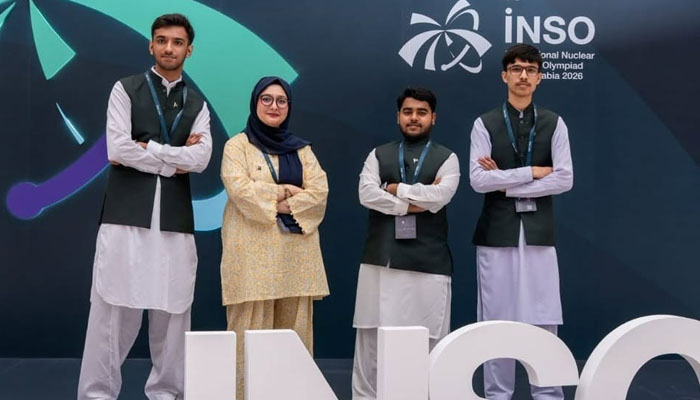
The Pakistani team has won one gold and two silver medals at the International Nuclear Science Olympiad.

The International Nuclear Science Olympiad was held in Jeddah from August 2 to 8 with 120 students and experts from 19 countries participating in the competition. Students from China, Japan, Russia, Türkiye, Malaysia, Indonesia and Saudi Arabia also took part.

The Pakistan Atomic Energy Commission team won one gold and two silver medals. Muhammad Ali from Government College University Lahore won the gold medal while Muhammad Usman from FG Sir Syed College Rawalpindi won a silver medal.

Seerat Fatima Bhatti from Nixor College Karachi also won a silver medal. According to a statement issued by the Pakistan Atomic Energy Commission, Pakistan will host the 4th International Nuclear Science Olympiad in 2027.

Similar Posts

  • | |

    Thailand Celebrates the Birthday of His Royal Majesty King Maha Vajiralongkorn

    Today, July 28th, 2026, the Kingdom of Thailand marks the birthday of His Royal Majesty King Maha Vajiralongkorn Phra Vajiraklaochaoyuhua, the tenth monarch of the Chakri Dynasty. Born on this day in 1952, His Royal Majesty has served as King since 2016, following in the footsteps of his late father, King Bhumibol Adulyadej the Great. […]

  • | |

    President Zardari approves civil awards for 355 pe…

    ISLAMABAD: President Asif Ali Zardari has approved civil awards for 355 Pakistani and foreign personalities in recognition of their outstanding services and achievements in various fields. The awards will be presented at a special ceremony on Pakistan Day, March 23, next year. The recipients include prominent figures from politics, public service, entertainment, sports, journalism, law enforcement, medicine and other sectors. Among the personalities from the entertainment industry, singers Tarannum Naz and Nisho Begum will receive the Sitara-i-Imtiaz. Actors Ghazala Kaifi, Sania Saeed and Maria Wasti, along with singer Zohaib Hassan, will be honoured with the Tamgha-i-Husn-i-Karkardagi. Singer Shiraz Uppal will receive the Tamgha-i-Imtiaz. In sports, shooter Kishmala Talat and former Test cricketer Sadiq Mohammad will be awarded the Tamgha-i-Husn-i-Karkardagi for their contributions and achievements. Several senior government officials and political figures have also been included in the awards list. Deputy Prime Minister and Foreign Minister Ishaq Dar, Interior Minister Mohsin Naqvi, Federal Ministers Ahsan Iqbal and Muhammad Aurangzeb, and Minister of State Bilal Azhar Kayani will receive the Nishan-i-Imtiaz. Director General Intelligence Bureau Fawad Asadullah, Attorney General Mansoor Usman Awan, Federal Board of Revenue Chairman Rashid Mahmood Langrial, Finance Secretary Imdadullah Bosal and Commerce Secretary Jawad Paul will receive the Sitara-i-Imtiaz. Chairman Pakistan Ulema Council Allama Hafiz Tahir Mahmood Ashrafi will be awarded the Tamgha-i-Imtiaz, while Federal Minister Engineer Amir Muqam will receive the Hilal-i-Imtiaz for public service. Zobia Khursheed Raja of Azad Kashmir will receive the Tamgha-i-Shujaat for her bravery in confronting rioters. She reportedly risked her life to rescue an injured police officer who was surrounded by rioters. A total of 46 martyrs of law enforcement agencies will be awarded the Sitara-i-Shujaat. Group Captain Asim Tariq Shaheed will also receive the same honour. Drug Regulatory Authority of Pakistan CEO Dr Ubaidullah will receive the Sitara-i-Imtiaz, while Punjab Saaf and Suthra Authority Director General Babar Sahib Din will be awarded the Tamgha-i-Imtiaz. Senior journalists Saleh Zafar and Haji Nawaz Raza will receive the Sitara-i-Imtiaz. Journalists Ammar Masood, Maria Zulfiqar, Adil Shahzeb and Hamad Hassan will be honoured with the Tamgha-i-Imtiaz. Two physicians associated with Quaid-e-Azam Muhammad Ali Jinnah, Dr Jal Ratanji Patel and Dr Jal Dabu, will be conferred the Nishan-i-Quaid-i-Azam posthumously. The list also includes prominent foreign figures. Saudi Prince Saud bin Naif will receive the Hilal-i-Pakistan, while Turkish Foreign Minister Hakan Fidan, Defence Minister Yasar Guler and Trade Minister Omer Bolat will each be awarded the Sitara-i-Pakistan. Dr Khalid Abbas Al-Asadi and Dr Paul Jacob Bhatti will receive the Tamgha-i-Imtiaz in recognition of their services.

  • |

    Mother, daughter killed in Lahore road crash

    A tragic road accident claimed the lives of a woman and her young daughter in Lahore’s suburban area of Manga Mandi after a passenger bus collided with their motorcycle. Another person riding the motorcycle sustained injuries in the crash. According to Rescue officials, emergency teams responded quickly to the scene and shifted the bodies of the deceased mother and daughter to the morgue for legal formalities. Rescuers also transported the injured victim to a nearby hospital, where doctors are providing medical treatment. Police said the bus driver fled the scene immediately after the accident, leaving the vehicle behind. Authorities have launched a search operation and are conducting raids to arrest the suspect. The incident has once again raised concerns about reckless driving and road safety in the city, as traffic accidents continue to claim lives on busy roads across Lahore. Police have started an investigation to determine the exact circumstances that led to the fatal collision.

  • | | |

    Field Marshal Asim Munir vows unrelenting war on t…

    Field Marshal Syed Asim Munir, Chief of Army Staff and Chief of Defence Forces, has reaffirmed Pakistan’s commitment to eliminating terrorism, saying security forces will continue intelligence-based and targeted operations until militant networks and their facilitators are completely dismantled. He made these remarks while addressing participants of the 20th National Workshop Balochistan during an interaction at the General Headquarters (GHQ) in Rawalpindi on Wednesday. The army chief said lasting peace in Balochistan can only be achieved through sustained efforts by the armed forces, law enforcement agencies and the unwavering support of the people. He stressed that operations against militant groups would continue with full determination to ensure long-term peace and stability across the country. Field Marshal Asim Munir said hostile elements backed by foreign interests have repeatedly attempted to create unrest in Balochistan, weaken national unity and disrupt peace. However, he maintained that such attempts would not succeed because of the professionalism of Pakistan’s armed forces and the resilience of the nation’s people. He reaffirmed that Pakistan remains determined to dismantle terrorist infrastructure wherever it poses a threat to the country’s security and the safety of its citizens. He said the state would continue taking decisive action against all groups involved in terrorism or supporting extremist violence. Highlighting the importance of Balochistan, the army chief described the province as a vital part of Pakistan with enormous natural resources and a resilient, patriotic population. He said the people of Balochistan are the province’s greatest asset and play a key role in the country’s future. He also pointed to ongoing development projects being carried out by the federal and provincial governments, saying these initiatives are aimed at improving infrastructure, creating economic opportunities and enhancing the quality of life for local communities through an inclusive development strategy. During the interaction, the army chief praised the contributions of civil society, academics, media professionals and the youth in promoting national harmony and supporting efforts for lasting peace and development in Balochistan. He emphasized that unity, resilience and collective national resolve are essential for overcoming challenges and ensuring Pakistan’s continued progress.

  • | |

    Khwaja Asif says Mohsin Naqvi is government’s mo…

    ISLAMABAD: Defence Minister Khawaja Asif has stirred fresh political debate after claiming that Interior Minister Mohsin Naqvi is the most powerful minister in the federal government and, in several matters, is not even answerable to Prime Minister Shehbaz Sharif. Speaking during a television interview on Monday, Asif delivered unusually candid remarks about Naqvi’s role in the current administration, suggesting that the interior minister operates outside the conventional framework of the federal cabinet. According to Asif, Naqvi has remained largely absent from the government’s routine decision-making process despite holding one of the country’s most influential portfolios. He said he had seen the interior minister attend only “two or three” cabinet meetings since the government took office. The defence minister also questioned Naqvi’s parliamentary presence, claiming the interior minister had appeared in Parliament only seven or eight times. He suggested that if a minister with such influence was publicly expressing dissatisfaction with the existing governance structure, it reflected poorly on the entire government. “If Mohsin Naqvi himself is complaining about the system, then perhaps we should simply go home,” Asif remarked, underscoring what he described as deep institutional weaknesses. His comments came in response to Naqvi’s recent statement warning that Pakistan’s current administrative structure had become too weak to effectively address the country’s long-standing challenges. The interior minister had argued that if the existing governance model continued unchanged, Pakistan could still be facing the same problems a decade from now. He maintained that creating new administrative units or provinces had become essential for improving governance, accelerating development and delivering public services more efficiently. Naqvi said the existing system had outlived its usefulness and was no longer capable of resolving the country’s growing administrative and governance issues. Asif’s remarks have added a new dimension to the ongoing debate over institutional reforms and the balance of power within the federal government. His observations also highlight differing perspectives within the ruling coalition on how Pakistan’s governance challenges should be addressed. The exchange between the two senior ministers is likely to fuel further political discussion, particularly over proposals to create new provinces and reform the country’s administrative framework—an issue that has periodically resurfaced in Pakistan’s political discourse but has remained politically contentious for years.

  • |

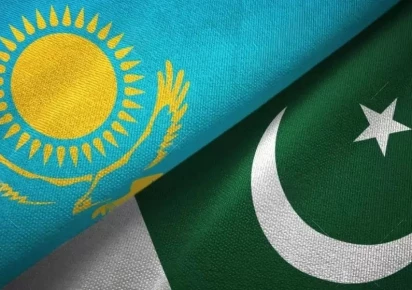
    Pakistan, Kazakhstan agree to accelerate trade and agricultural cooperation

    ISLAMABAD: Pakistan and Kazakhstan have agreed to speed up the implementation of previously signed agreements and memorandums of understanding (MoUs), with both sides seeking to convert existing commitments into practical trade, investment and business opportunities. The understanding was reached during a meeting between Federal Minister for National Food Security and Research Rana Tanveer Hussain and Kazakhstan’s Ambassador to Pakistan Yerzhan Kistafin in Islamabad, where the two sides reviewed a broad range of issues related to agriculture, food security, connectivity, farm mechanisation and private-sector cooperation. According to the Ministry of National Food Security and Research, the meeting focused on identifying areas where bilateral cooperation could produce commercially viable projects and contribute to stronger economic relations between the two countries. Rana Tanveer Hussain said agriculture represented one of the most promising areas for expanding Pakistan-Kazakhstan relations, particularly given the potential for increased trade in agricultural commodities, machinery and technology. The minister stressed that bilateral agreements should move beyond formal commitments and result in concrete projects that could benefit businesses and farmers in both countries. He also called for closer coordination among government departments, research institutions, agricultural organisations and the private sector to facilitate investment and technology transfer. Joint agriculture working group to meet in Kazakhstan Pakistan and Kazakhstan also agreed to hold the next meeting of their Joint Working Group on Agriculture in Kazakhstan. The forum is expected to assess progress on previously identified areas of cooperation and explore additional opportunities in agricultural trade, food security, mechanisation and related fields. The proposed meeting is also expected to provide a platform for officials and private-sector representatives to discuss practical barriers to trade and develop proposals aimed at increasing agricultural exchanges between the two countries. Kazakhstan, meanwhile, showed interest in supplying wheat to Pakistan. Pakistani authorities agreed to examine the proposal while taking into account factors including the prevailing price, quality standards and reliability of supply. The development comes as Pakistan continues to explore ways to diversify its sources of food commodities and strengthen trade relationships with Central Asian economies. Pakistan seeks greater access for agricultural exports During the discussions, Pakistan highlighted the export potential of several agricultural products, including mangoes, guava, dates, bananas, potatoes and onions. The Pakistani side expressed interest in securing greater access for these products in Kazakhstan and other Central Asian markets. Improved market access, the officials noted, could create new opportunities for Pakistani growers, exporters and agribusinesses. The two sides also discussed the importance of improving transport and logistics infrastructure to support agricultural trade. Connectivity was identified as a critical factor in expanding commercial relations, particularly through proposed rail and regional transportation routes linking Central Asian countries with Pakistan. Better transport links could reduce freight and transit costs, improve the movement of perishable agricultural goods and provide businesses in both regions with access to new markets. Mechanisation offers new area of cooperation Agricultural mechanisation was also identified as an area with considerable potential for joint ventures and investment. Particular attention was given to affordable tractors and agricultural machinery that could be used by small and medium-sized farmers. Cooperation in this field could help improve farm productivity while creating opportunities for manufacturers and investors from both countries. The Pakistani side also emphasised the importance of exchanging agricultural technology and research expertise, saying stronger institutional links could support innovation and improve agricultural productivity. The minister underscored the need for closer engagement between research organisations, agricultural institutions and business communities so that technical cooperation could be translated into commercially sustainable ventures. Kyrgyzstan supports stronger Pakistan business ties Separately, Pakistan’s private sector has also taken steps to deepen economic engagement with another Central Asian country, Kyrgyzstan. Kyrgyzstan’s Chargé d’Affaires Aibek Tilebaliev held a meeting with Federation of Pakistan Chambers of Commerce and Industry (FPCCI) President Atif Ikram Sheikh, during which the two sides discussed bilateral trade, investment and direct business-to-business contacts. The participants agreed that stronger interaction between companies from Pakistan and Kyrgyzstan would be essential for expanding bilateral commerce and identifying new investment opportunities. Atif Ikram Sheikh welcomed the increasing high-level engagement between the two countries, saying that considerable potential existed to expand trade and investment but that greater efforts were needed to convert this potential into actual business activity. He suggested that a Pakistani business delegation could visit Kyrgyzstan under the FPCCI platform to explore commercial opportunities, establish direct contacts with local companies and develop partnerships in different sectors. Joint Business Council proposed A key outcome of the meeting was agreement to accelerate the establishment of a Joint Business Council between Pakistan and Kyrgyzstan. The proposed council is expected to provide a formal platform for representatives of the two countries’ business communities to discuss trade barriers, investment opportunities, market access and potential joint ventures. Both sides agreed to expedite the necessary steps for setting up the council. Sheikh also highlighted the importance of regional forums, particularly the Shanghai Cooperation Organisation (SCO), in facilitating greater economic integration among member states. He said the platform could be used more effectively to promote trade, investment and business-to-business cooperation across the region. Tilebaliev reaffirmed Kyrgyzstan’s interest in strengthening economic and commercial relations with Pakistan. He stressed that more frequent and direct interaction between business communities would be important for translating political goodwill into tangible economic gains. The parallel initiatives involving Kazakhstan and Kyrgyzstan reflect Pakistan’s broader efforts to deepen economic engagement with Central Asia. Improved connectivity, stronger private-sector links and greater agricultural and industrial cooperation could provide new avenues for Pakistani exporters while opening opportunities for investment and regional trade.

Leave a Reply

Your email address will not be published. Required fields are marked *