lilli tagger wins
| |

Lilli Tagger wins first WTA singles title with impressive Prague Open Triumph


Eighteen-year-old Austrian tennis star Lilli Tagger has achieved a major milestone in her young career by winning her first-ever WTA singles title at the Prague Open. The rising talent delivered an outstanding performance in the final, defeating Ukraine’s Daria Snigur in straight sets, 7-6(3), 6-2, to secure the championship.

The victory also earned Tagger a place in Austrian tennis history, as she became the first player from Austria to win the singles title at the Prague Open. Her remarkable achievement marks a significant breakthrough and highlights her growing reputation as one of the sport’s most promising young players.

The championship match began with a difficult challenge for Tagger. Daria Snigur started strongly and quickly established a commanding 5-2 lead in the opening set, putting the Austrian teenager under considerable pressure. Despite facing a set point, Tagger remained calm and composed, refusing to let the match slip away.

Showing impressive mental strength, she fought back by winning three consecutive games to level the score and force a tiebreak. Once the tiebreak began, Tagger took control with confident shot-making and consistent play, winning it 7-3 to claim the opening set.

The momentum from the dramatic comeback carried into the second set, where Tagger displayed complete control over the match. She served exceptionally well, producing nine aces throughout the contest while combining powerful groundstrokes with aggressive baseline play. Her attacking style kept Snigur under constant pressure, allowing Tagger to comfortably win the second set 6-2 and seal the biggest victory of her career.

Tagger’s journey to the Prague Open title featured several impressive performances against strong opponents. In the semifinals, she overcame Czech favorite Barbora Krejcikova in a hard-fought three-set match, demonstrating resilience, determination, and the ability to perform under pressure.

Throughout the tournament, Tagger showcased an aggressive playing style built around powerful groundstrokes, confident serving, and relentless attacking tennis. Her performances reflected the guidance of her coach, former French Open champion Francesca Schiavone, whose experience has played an important role in the young Austrian’s development.

Following her victory, Tagger addressed the crowd during the trophy presentation and expressed her appreciation for the support she received throughout the tournament. She described the week as unforgettable and thanked the fans for creating an incredible atmosphere that motivated all the players during the competition.

The Austrian teenager also shared an emotional message for her family, who were present to witness her historic triumph. She explained that her parents usually watch her matches from home but had traveled to support her in Prague. Tagger credited them for their constant encouragement and sacrifices, saying that her achievements would not have been possible without their unwavering support.

Winning the Prague Open has also had a significant impact on Tagger’s world ranking. Following her breakthrough success, she is expected to climb nearly 30 places in the WTA rankings, allowing her to enter the world’s top 50 for the first time in her career. The achievement represents another major milestone and reflects her rapid progress on the professional tennis circuit.

At just 18 years of age, Lilli Tagger has already demonstrated the qualities of a future star. Her composure under pressure, powerful playing style, and determination throughout the Prague Open suggest she has the potential to compete regularly at the highest level. As she continues her professional journey, tennis fans around the world will be watching closely to see what the talented Austrian can accomplish next.

Similar Posts

  • | |

    More than 100 aftershocks hit Japan after powerful…

    Japan’s south‑western Kyushu region has been rattled by more than 100 aftershocks following Tuesday’s powerful earthquake that left at least 13 people dead and many others in critical condition. Rescue teams are working in extreme heat to search for survivors trapped under rubble in Kumamoto prefecture, where a paper factory and a shopping mall were among the worst‑hit sites. The Aeon Mall in Kashima suffered an explosion shortly after the quake, killing three people and injuring several others. Three remain missing as crews continue to sift through debris. Prime Minister Sanae Takaichi described the situation as “truly a race against time,” with thousands sheltering in evacuation centres and widespread power outages reported. The Japan Meteorological Agency has warned residents to remain vigilant, saying strong aftershocks with seismic intensity up to 7 could strike in the coming days. The quake struck Kumamoto at 16:27 local time (07:27 GMT) and caused significant damage across the region. In Yatsushiro City, two people were found without signs of life at a factory, while nine others remain unaccounted for. Officials say the scale of destruction is still being assessed, but the combination of collapsed buildings, fires and aftershocks has left communities deeply shaken.

  • |

    Morocco commits to repatriating unaccompanied minors following mass migration into Ceuta

    The Moroccan government has announced its willingness to collaborate with Spain and European authorities to identify and repatriate unaccompanied minors who crossed into the Spanish North African enclave of Ceuta during a recent surge in border crossings. According to state news agency MAP, King Mohammed VI directed the interior and foreign affairs ministries to coordinate the identification and safe return of the young migrants to their families in Morocco. The official statement follows diplomatic discussions aimed at addressing the logistical and legal challenges surrounding under-age migrants, who cannot be immediately turned back under standard border control agreements. The initiative comes in the wake of a massive border influx that saw tens of thousands of individuals attempt to enter European territory on foot and by sea. Spanish officials estimated that 72,000 migrants crossed the border during the height of the crisis, while Moroccan estimates placed the figure closer to 40,000. Although the vast majority of adult migrants have since returned or been repatriated to Morocco, local authorities in Ceuta report that at least 1,100 unaccompanied minors remain in government reception facilities. The diplomatic agreement marks a pivotal step toward relieving pressure on regional welfare services in Ceuta while establishing formal bilateral protocols between Rabat and Madrid to ensure child protection standards are met during repatriation procedures.

  • |

    England on track to eliminate hepatitis C by 2030

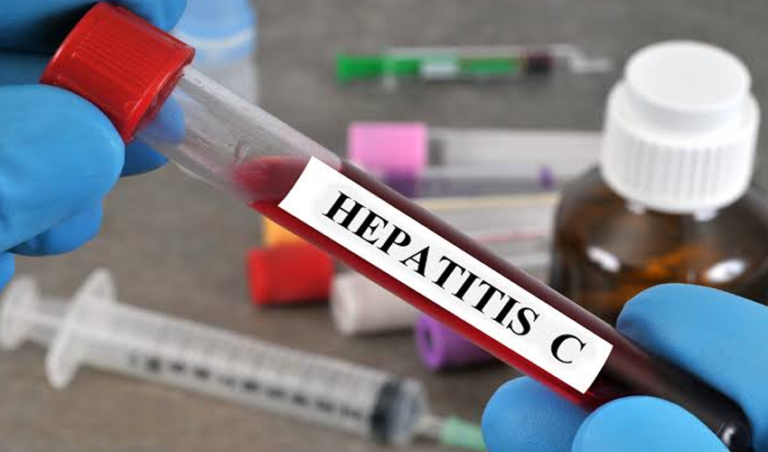
    More than 100,000 people in England have received potentially life-saving treatment for hepatitis C in the past decade, as the NHS steps up efforts to eliminate the virus as a public health threat by 2030. New NHS figures show that more than 100,000 people have been diagnosed and treated since pioneering antiviral medicines were introduced in 2015, putting England among a handful of countries that have already exceeded the World Health Organisation benchmark of treating 80% of known hepatitis C cases. (NHS England) Hepatitis C is a viral infection that can damage the liver and, if left untreated, can lead to serious and potentially life-threatening conditions including cirrhosis, liver failure and liver cancer. The infection can remain undetected for years because many people experience no noticeable symptoms until significant liver damage has already occurred. However, modern treatment has transformed the disease. A free course of antiviral tablets lasting between eight and 12 weeks can cure more than 95% of cases. The NHS says effective treatment could reduce the number of people requiring liver transplants by 80% over the next decade, while also reducing cases of liver cancer and cirrhosis. Deaths from hepatitis C have already fallen by 36% over the past ten years. (NHS England) NHS urges people at risk to get tested The latest figures have prompted the NHS to urge people who may be at greater risk of having undiagnosed hepatitis C to order a free and confidential home-testing kit. Those particularly encouraged to test include people who have moved to England from certain Eastern European countries, anyone who has had a tattoo abroad, and people who currently use or have previously used injectable drugs. Adults born in Ukraine, Romania, Estonia, Latvia, Poland, Albania, Lithuania, Bulgaria, Czechia and Slovakia are also being urged to test. The NHS says some people from these countries may have been exposed to the virus through medical or dental procedures before 1991, when modern sterilisation standards were introduced. The free home-testing service is designed to reach people who may not otherwise come into contact with drug and alcohol services, sexual health services, GPs or A&E departments. Thousands of hidden cases identified The NHS has significantly expanded hepatitis C testing over the past five years. A first-of-its-kind programme offering hepatitis C testing to patients having blood tests in participating A&E departments has identified around 1,900 previously undiagnosed cases since 2022. GP practices are also asking new patients whether they received a blood transfusion before 1996, helping identify people who may have been infected through the contaminated blood scandal. The treatment programme was made possible on a large scale following a landmark 2019 agreement between the NHS and pharmaceutical companies Gilead Sciences, MSD and AbbVie, which enabled access to modern curative treatments. (NHS England) ‘Determined to finish the job’ Professor Frankie Swords, NHS national medical director, said hepatitis C could cause serious harm including liver failure and cancer, while many people could remain unaware they have the virus. He said treating more than 100,000 people in a decade was a major achievement but stressed that the NHS would continue looking for people with undiagnosed infections. “England is now leading the world in the mission to eliminate this disease and on course to beat the WHO’s 2030 target,” Professor Swords said. He added that the NHS was “determined to keep up the momentum and finish the job”. “With hepatitis C curable in more than nine out of ten cases, we are committed to finding and treating everyone who needs support,” he said. (NHS England). Patient urges others to take the test Among those treated is 65-year-old Paul Eatwell from Blackburn, Lancashire, who discovered he had hepatitis C after routine liver-function tests following a change of GP. His new doctor ordered additional tests, including screening for hepatitis C. Paul said he initially could not believe the result because he had no symptoms and could not understand how he might have contracted the virus. The precise source of his infection was never established, although possible risk factors included surgery in South Africa several decades ago. He said the specialist team helped answer his questions and reassured him about the condition. Paul said treatment was far less difficult than he had imagined, involving one tablet a day for 12 weeks and several blood tests. He urged anyone who believes they may have been exposed to hepatitis C to get tested, saying that knowing their status could provide peace of mind. ‘Leading the world’ Health and Social Care Secretary Yvette Cooper said the progress demonstrated the impact of NHS treatment and prevention programmes. She said hepatitis C was now curable in the vast majority of cases and described the UK’s progress as part of efforts to “wipe out this disease for good”. “This is exactly the kind of preventative, forward-looking healthcare that we want the NHS to deliver across the board – catching illness earlier, easing pressure on hospitals, and giving people the chance to live longer, healthier lives,” Cooper said. (NHS England. Dr Sema Mandal, deputy director of Blood Safety, Hepatitis, STIs and HIV at the UK Health Security Agency, said the sharp fall in cases since 2015 demonstrated the impact of expanded testing and access to modern treatments. She said treating more than 100,000 people in ten years had brought England closer than ever to eliminating hepatitis C as a public health threat. The Hepatitis C Trust also called for continued long-term investment to maintain the progress made by the national programme, particularly among marginalised communities that can face barriers to healthcare. Rachel Halford, chief executive of The Hepatitis C Trust, said continued funding would be essential to ensure people at greatest risk were not left behind. Hepatitis B remains a challenge While England’s progress against hepatitis C is described as world-leading, health authorities stress that elimination of viral hepatitis as a whole also includes hepatitis B. Further work is therefore required to improve diagnosis and access to treatment for people living with hepatitis B. A national

  • | |

    Report details Trump’s covert aircraft switc…

    President Donald Trump quietly switched planes while departing a NATO summit in Turkey last month as part of an elaborate security maneuver designed to counter a possible Iranian threat, according to a US media report. The report said Trump boarded Air Force One in full public view before being discreetly transferred to a separate military aircraft with the help of a catering truck used to shield the movement from onlookers. Journalists and some White House staff traveling with the delegation reportedly had no idea at the time that Trump had already been moved off the plane. Officials said security teams had identified a credible Iranian threat involving a possible missile strike against the aircraft. During the Ankara summit, Trump had described Iran as the country’s top target. According to the report, Trump had traveled to Turkey aboard a newer Boeing 747-8 previously donated by Qatar, but chose to depart on the older Air Force One instead, saying at the time it was “for old time’s sake.” Footage released on July 9 showed Trump boarding the presidential aircraft at Ankara airport before being secretly transferred to a smaller C-32A military jet, a modified Boeing 757 typically used to transport the vice president. Defense Secretary Pete Hegseth reportedly boarded the C-32A through a separate exterior entrance as part of the effort to keep the flight’s appearance routine. Journalists and staff who boarded Air Force One were told to lower their window shades during the departure. While in the air, Trump spoke with reporters on board and acknowledged concerns about threats from Iran, though he made no mention of the earlier switch between aircraft. Explaining why passengers had been asked to keep their windows lowered during the flight from Turkey, Trump said the flight carried added risk “because of the sleazebags we have to deal with.” A previous report had already raised questions about security risks tied to the Qatari donated jet, noting that the Secret Service had urged Trump to change planes during his return from the NATO summit. The United States has spent months upgrading the $400 million Boeing 747-8 to bring it up to presidential standards, while older Air Force One aircraft carry laser based countermeasures designed to disrupt the guidance systems of incoming missiles.

  • |

    Trump threatens to declare Strait of Hormuz US territory amid ongoing Iran conflict

    US President Donald Trump has threatened to declare the Strait of Hormuz a US territory as his administration struggles to conclude the war with Iran nearly six months into the conflict. Speaking during a speech at a police academy on Long Island, New York, Trump stated that he would soon designate the strategic waterway as US territory, pointing to the ongoing American blockade of Iranian shipping and ports as justification. The Strait of Hormuz serves as a crucial chokepoint for global trade, through which approximately a fifth of the world’s seaborne oil supplies typically pass, and it remains an internationally navigable strait bordered by Iran and Oman. Responding to the statements on social media, Iranian Deputy Foreign Minister Kazem Gharibabadi rejected the claims, asserting that Tehran would not be intimidated by threats or a show of force, and maintaining that the opening or closing of the strait remains strictly under Iranian authority. The ongoing conflict has driven a sharp rise in global fuel prices, forcing working Americans to pay significantly more at the pump. Trump defended the higher costs during his address, arguing that paying extra for gasoline is acceptable to prevent Iran from acquiring nuclear weapons. Meanwhile, peace talks between the two nations remain at an impasse, with Tehran steadfastly refusing to reopen the waterway unless the US completely lifts sanctions, compensates Iran for war damage, and unconditionally releases its frozen assets.

  • |

    Indonesia quake kills 48, thousands left desperate…

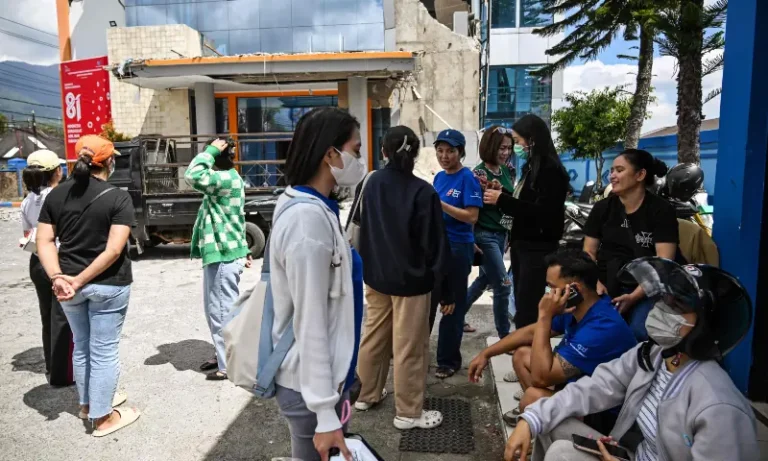
    RUTENG: Thousands of frightened residents on Indonesia’s Flores island remained in temporary shelters on Sunday as rescue teams raced to deliver food, water and medical supplies following a powerful magnitude-7.7 earthquake that killed dozens and left widespread destruction across the region. The earthquake struck off the northern coast of Flores early Saturday, triggering landslides, damaging homes and public buildings and cutting electricity and communications in several areas. The latest reports put the death toll at more than 50, with at least 100 people injured, while thousands of residents have been displaced. The disaster was followed by hundreds of aftershocks, deepening fears among residents who were already reluctant to return to damaged homes. Authorities said around 5,000 people initially fled their houses, while the number sheltering in evacuation centres later rose to more than 9,000. For many survivors, the immediate concern is basic necessities. “We need food, drink, medicines, and diapers for the children,” resident Umri told AFP, describing how he and others spent the night on a hill because they were too afraid to return home. Another resident, Nurhidayati, said memories of the devastating 1992 Flores earthquake had made the latest disaster even more terrifying. She said she remained traumatised by the previous tragedy and did not dare go back home. Rescue Efforts Face Major Obstacles Emergency crews have been working through collapsed structures and rubble while heavy machinery clears roads blocked by landslides. Some of the hardest-hit communities remain difficult to reach because of damaged roads, power failures and disrupted telecommunications. Indonesia has deployed military and police personnel, helicopters, aircraft and rescue vessels to support the emergency response. Authorities are also sending large quantities of food and other relief supplies to affected communities. The destruction has extended beyond residential areas. Hundreds of houses have been badly damaged, while schools, health facilities and government buildings have also suffered. In Ruteng, damaged hospital facilities forced patients to be moved into tents outside the building. Despite the difficult conditions, medical workers have continued treating patients. In one particularly dramatic case, doctors performed an emergency Caesarean section in a storage room after parts of the hospital were damaged. Both the mother and baby were reported safe. Tsunami Warning Lifted The earthquake briefly triggered fears of a tsunami after residents reported the sea retreating from parts of the coastline. Authorities issued a tsunami warning, but it was later lifted after monitoring showed no major destructive wave threat. Waves of around 1.6 metres were nevertheless recorded in some coastal areas. Officials have urged residents to remain vigilant and avoid entering damaged buildings because continuing aftershocks could cause weakened structures to collapse. A Region Used to Earthquake Tragedies Flores lies within Indonesia’s highly active seismic zone, part of the Pacific “Ring of Fire”, where several tectonic plates meet and powerful earthquakes are common. The island has painful memories of the past. A major earthquake in 1992 triggered a tsunami that killed roughly 2,500 people. The latest disaster has once again exposed the vulnerability of communities living in earthquake-prone areas, particularly where roads, hospitals and communication networks are limited. International assistance is also being prepared. The European Union has offered its Copernicus satellite system to help authorities map affected areas and support search-and-rescue operations. For now, the priority remains simple: finding survivors, reaching isolated communities and keeping thousands of displaced families safe as Flores waits for the ground to finally settle.

Leave a Reply

Your email address will not be published. Required fields are marked *