trump threatens declare
|

Trump threatens to declare Strait of Hormuz US territory amid ongoing Iran conflict

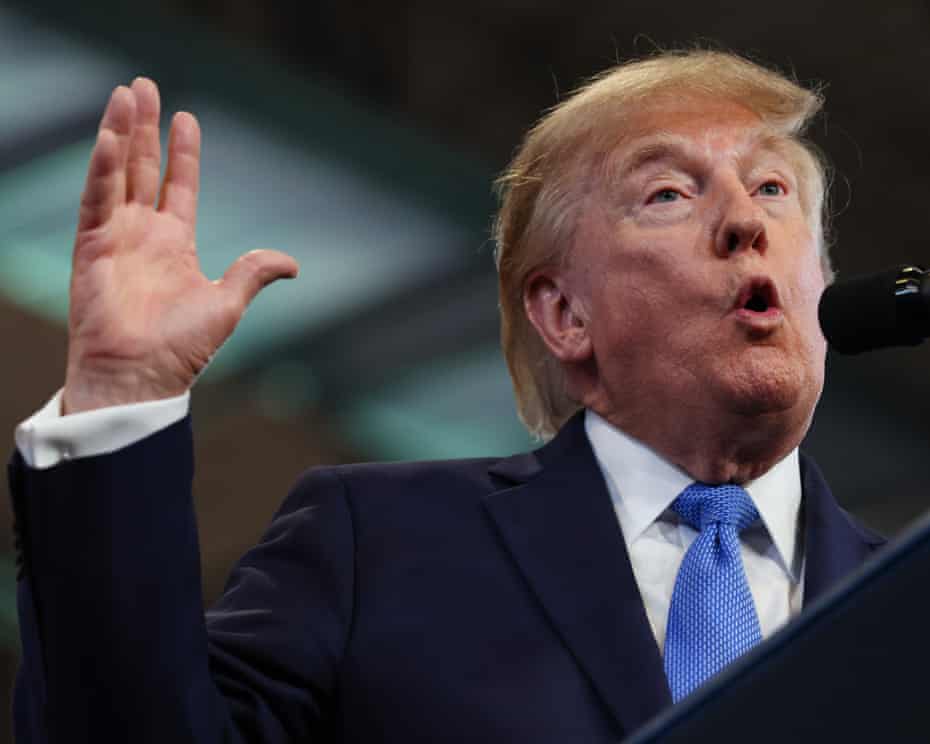
US President Donald Trump has threatened to declare the Strait of Hormuz a US territory as his administration struggles to conclude the war with Iran nearly six months into the conflict. Speaking during a speech at a police academy on Long Island, New York, Trump stated that he would soon designate the strategic waterway as US territory, pointing to the ongoing American blockade of Iranian shipping and ports as justification.

The Strait of Hormuz serves as a crucial chokepoint for global trade, through which approximately a fifth of the world’s seaborne oil supplies typically pass, and it remains an internationally navigable strait bordered by Iran and Oman. Responding to the statements on social media, Iranian Deputy Foreign Minister Kazem Gharibabadi rejected the claims, asserting that Tehran would not be intimidated by threats or a show of force, and maintaining that the opening or closing of the strait remains strictly under Iranian authority.

The ongoing conflict has driven a sharp rise in global fuel prices, forcing working Americans to pay significantly more at the pump. Trump defended the higher costs during his address, arguing that paying extra for gasoline is acceptable to prevent Iran from acquiring nuclear weapons. Meanwhile, peace talks between the two nations remain at an impasse, with Tehran steadfastly refusing to reopen the waterway unless the US completely lifts sanctions, compensates Iran for war damage, and unconditionally releases its frozen assets.

Similar Posts

  • | |

    Pakistan, FAO strengthen partnership to boost food…

    Pakistan and the Food and Agriculture Organization (FAO) have reaffirmed their commitment to expanding cooperation in food security, climate resilience, sustainable agriculture, and livestock development. The renewed partnership aims to address the growing challenges posed by climate change while supporting Pakistan’s long-term agricultural and economic development. The commitment was made during a meeting held in Islamabad between Federal Minister for National Food Security and Research Rana Tanveer Hussain and a delegation from the FAO led by Deputy Regional Representative for Asia and the Pacific, Robert Simpson. The discussions focused on strengthening existing partnerships and accelerating the implementation of projects designed to improve agricultural productivity and food systems across the country. During the meeting, Rana Tanveer Hussain emphasized that Pakistan remains one of the countries most vulnerable to the impacts of climate change, despite contributing only a minimal share to global greenhouse gas emissions. He stressed that unpredictable weather patterns, floods, droughts, and rising temperatures continue to threaten agricultural production, food availability, and the livelihoods of millions of farmers. The minister called for enhanced technical assistance from the FAO and urged the timely implementation of ongoing development initiatives. He highlighted the importance of adopting modern farming practices, improving water management, and strengthening institutional capacity to help Pakistan build a more resilient agricultural sector. Rana Tanveer Hussain also outlined the government’s key priorities for the agriculture sector. These include improving food safety standards, strengthening Sanitary and Phytosanitary (SPS) systems to boost agricultural exports, expanding livestock development programs, and increasing livestock exports to international markets. He further stressed the need to reduce Pakistan’s dependence on imported wheat and edible oil by increasing domestic agricultural production and promoting sustainable farming practices. The FAO delegation reaffirmed its continued support for Pakistan’s agricultural development agenda. Robert Simpson assured the minister that the organization would continue working closely with the government to mobilize financial resources from international financial institutions and development partners. The funding is expected to support climate adaptation projects, food security initiatives, and sustainable agricultural development across the country. The meeting reflects the shared commitment of Pakistan and the FAO to building a resilient and sustainable food system capable of addressing future challenges. By strengthening cooperation and investing in climate-smart agriculture, both sides aim to improve food security, enhance rural livelihoods, and promote sustainable economic growth for the benefit of future generations.

  • |

    Priyanka Chopra’s mother reacts to Kriti Sanon’s outfit controversy

    Indian actress Kriti Sanon’s Raksha Bandhan advertisement became the centre of an online debate over clothing, cultural traditions and expectations surrounding women’s appearance during festivals. The discussion gained further attention after Madhu Chopra, mother of Priyanka Chopra Jonas, shared her views on personal choice, dignity and dressing appropriately for different occasions. Speaking at the Women Building Cinema Together event in Mumbai, Madhu acknowledged that individuals should have the freedom to make their own choices. However, she stressed that personal freedom should also be balanced with awareness of the occasion and respect for other people’s values. “My body, my choice is right, but woh daayra zaruri hai,” Madhu said while discussing the issue. She explained that although people have the right to decide what they want to wear, there is also a need to consider the setting and maintain a certain level of dignity. According to her, clothing choices can be personal while still taking into account the cultural or social environment in which a person appears. Madhu also referred to the way her children dress for professional commitments. She said that her children, including Priyanka, wear different kinds of outfits depending on their work and personal preferences. However, she added that clothing should also be aesthetically suitable for the occasion. “My kids also wear such clothes, for work and because they like wearing but I also feel, they need to look good aesthetically as per the occasion,” she said. Her comments came amid criticism surrounding a Raksha Bandhan campaign by jewellery brand GIVA featuring Kriti Sanon. The advertisement showed Kriti in an Indo-Western outfit while celebrating the festival by tying a rakhi to her onscreen brother as well as her pet dog. The campaign quickly attracted criticism on social media, with some viewers questioning whether the actress’s outfit was appropriate for a festival associated with family traditions and cultural values. The debate soon expanded beyond the advertisement itself, with people discussing whether women should be expected to follow particular dress codes during traditional celebrations. Following the backlash, GIVA removed the advertisement from its social media platforms. The jewellery brand later clarified that it respected Indian culture, traditions and festivals and said that there had been no intention to hurt anyone’s sentiments through the campaign. Kriti subsequently addressed the controversy through her Instagram Stories. Rather than focusing on the clothes featured in the advertisement, the actress highlighted the emotional meaning behind Raksha Bandhan. She argued that the festival should primarily be understood through the relationships, affection and emotions shared between loved ones. “The essence of festivals is not in the clothes you wear; it is in the emotions and meaning you attach to the traditions,” Kriti wrote. The actress also spoke about her own relationship with her sister and the role her pets play in her life. She described Raksha Bandhan as a celebration of care, protection, love and prayers for the wellbeing of family members. Kriti further questioned the tendency to judge women primarily through their clothing during traditional occasions. She suggested that culture and traditions should not be reduced to the clothes a woman chooses to wear, particularly when the deeper meaning of a festival lies in relationships and emotions. The contrasting perspectives from Kriti and Madhu kept the conversation going online. While Kriti focused on personal choice and the emotional significance of festivals, Madhu emphasised the importance of balancing individual freedom with the nature of the occasion and respect for cultural values. The controversy ultimately became part of a wider discussion about how women are viewed during traditional celebrations and whether their clothing should determine how respectfully they are perceived. It also highlighted the continuing debate between personal expression and cultural expectations, particularly when celebrities and brands use traditional festivals in advertising campaigns.

  • |

    KP cabinet approves tax exemptions for merged districts, Malakand

    PESHAWAR: The Khyber Pakhtunkhwa government has approved a package of measures aimed at providing tax relief to businesses and industries operating in the province’s merged tribal districts and Malakand Division, while also expanding welfare and education initiatives. According to Khyber Pakhtunkhwa Information Minister Shafiullah Jan, the provincial cabinet has endorsed exemptions from certain provincial taxes for service providers and industries operating in areas previously covered by the Federally Administered Tribal Areas (FATA), Provincially Administered Tribal Areas (PATA) and Malakand Division. Under the decision, service providers operating in the former FATA, PATA and Malakand areas will be exempted from provincial sales tax on services. Industries established in these regions will also receive relief from withholding sales tax. The government said the tax measures were intended to encourage investment, facilitate businesses and support economic activity in areas that have historically faced developmental and infrastructure challenges. Ehsaas Nawaz funding increased The cabinet also approved a significant increase in the financial allocation for the Ehsaas Nawaz programme. According to the information minister, the programme’s funding has been raised from Rs3 billion to Rs5 billion. The increase is expected to provide additional financial support under the government’s welfare initiatives and expand the programme’s reach among deserving segments of the population. Ashra Rahmat Lil-Aalameen programme approved The provincial cabinet also approved arrangements for observing Ashra Rahmat Lil-Aalameen (PBUH) across Khyber Pakhtunkhwa. The celebrations will formally begin from the first day of Rabi-ul-Awwal, with the cabinet approving a schedule for programmes to be organised across the province. The initiative is expected to include a range of activities aimed at highlighting the teachings, life and message of the Holy Prophet Muhammad (PBUH). Education sector measures Several decisions concerning education were also approved during the cabinet meeting. The provincial government sanctioned funds for schools and colleges in various districts to address educational requirements and improve facilities. The cabinet also approved a system for providing textbooks according to the semester system up to Grade 5. In another major education-related decision, the cabinet approved the provision of 100 percent free textbooks for students from Grade 9 to Grade 12. The measures are aimed at reducing the financial burden on students and their families while improving access to educational resources, particularly for students enrolled in government institutions. Public-private partnership legislation The cabinet further approved the Khyber Pakhtunkhwa Public Private Partnership Authority Bill 2026 for enactment. The proposed legislation is intended to establish a formal framework for public-private partnerships in the province and facilitate greater participation of the private sector in development projects. The government believes stronger public-private cooperation can help mobilise investment, improve service delivery and accelerate infrastructure development across Khyber Pakhtunkhwa.

  • | | |

    IHC judge urges lawyers to improve courtroom condu…

    Islamabad High Court (IHC) Justice Khadim Hussain Soomro has expressed serious concern over the conduct of lawyers in the federal capital. He urged the leadership of the legal community to take steps to improve professional behaviour in courts. The judge made the remarks during the hearing of a case in which Supreme Court Bar Association President Haroon Rashid appeared before the court. Justice Soomro said he felt deeply disappointed after observing the attitude of some lawyers in Islamabad. He said lawyers were expected to cooperate with the court and maintain a respectful environment during proceedings. The judge observed that lawyers in Islamabad did not provide the level of assistance that he expected. He said the behaviour he had witnessed was painful and disappointing. Justice Soomro also referred to his background. He said he belonged to a village where people did not behave in such a manner. He remarked that even in his hometown, people showed greater respect while communicating with one another. “I came here to learn, but I did not learn anything,” the judge said while expressing his disappointment over the situation. He further criticised the manner in which some people spoke in the courtroom. He said it was regrettable to see people using inappropriate or disrespectful language during legal proceedings. Justice Soomro asked the Supreme Court Bar president to take up the matter with lawyers’ representative bodies. He urged him to visit the bar council and bar association and advise lawyers to maintain professional standards. The judge stressed that Islamabad was the federal capital. He said lawyers practising in the capital should demonstrate responsible and professional conduct. Addressing Haroon Rashid, Justice Soomro said he was the president of one of the country’s largest and most influential bar associations. He asked him to play an active role in guiding lawyers and improving the atmosphere in courts. The judge’s remarks highlighted the importance of discipline, mutual respect and cooperation between lawyers and judges. He said a healthy courtroom environment was essential for the smooth administration of justice.

  • | | | |

    US strikes IRGC bases after Iran missile attack

    The Middle East moved a step closer to a broader regional conflict after the United States launched large-scale airstrikes against dozens of Islamic Revolutionary Guard Corps (IRGC) facilities across Iran in retaliation for Tehran’s ballistic missile attack targeting American forces stationed in the region. According to the US Central Command (CENTCOM), the operation targeted military command centers, drone infrastructure, weapons depots and other strategic IRGC installations during a coordinated two-hour campaign. US officials said the strikes were intended to weaken Iran’s ability to threaten American troops, commercial shipping lanes and allied Gulf nations. Iranian state media reported that at least three people were killed during strikes on Qeshm Island, while authorities vowed that the country would continue defending its territory against what it described as “American aggression.” The crisis quickly spread beyond Iran’s borders. Jordan announced that its air defence systems intercepted five missiles following Iran’s confirmed launch toward US military installations in the kingdom. Washington maintained that all missiles directed at American bases were successfully intercepted, preventing casualties among US personnel. In another major development, US and Saudi forces carried out coordinated strikes against Iran-backed armed groups operating in eastern Iraq after drone attacks launched from Iraqi territory targeted Saudi oil facilities. The joint operation marked the first publicly acknowledged military action conducted together by Washington and Riyadh against Iran-aligned militias. Regional instability deepened further after a fire broke out aboard a US-owned gas storage tanker at Egypt’s Mediterranean port of Damietta. Although maritime security experts suggested the blaze may have resulted from a drone strike, Egyptian officials confirmed only the fire and said investigations into its cause were continuing. The latest escalation comes against the backdrop of months of confrontation between Iran, the United States and Israel. Fighting resumed after disputes over the strategically important Strait of Hormuz ended a short-lived ceasefire reached in June. US President Donald Trump reiterated that America would respond decisively to attacks on its forces while insisting diplomatic efforts remained active. However, continued military exchanges around the Strait of Hormuz have complicated negotiations and increased concerns over global energy supplies. Iran has claimed it targeted three tankers attempting to pass through what it called an unauthorized route in the strait, while rejecting an Omani-backed proposal supported by Gulf states for joint management of the crucial waterway. The conflict has also rattled global energy markets, with Brent crude prices climbing above $90 per barrel before easing later in trading. Meanwhile, Iraq’s Iran-backed Popular Mobilisation Forces said at least 20 of their fighters were killed in the US-Saudi strikes, prompting Baghdad to condemn the attacks as a violation of its sovereignty while urging all armed groups to halt cross-border military operations. Saudi Arabia has also intensified diplomatic efforts, with Defence Minister Prince Khalid bin Salman meeting US Vice President JD Vance in Washington to urge restraint. Saudi officials reportedly warned that expanding military operations against Yemen’s Houthis and Iran-backed militias in Iraq could trigger unpredictable consequences across the Middle East, highlighting growing fears that the conflict could widen even further.

  • |

    Modi vows tough punishment as exam leak protests intensify

    Indian Prime Minister Narendra Modi has promised strict action against those involved in examination paper leak scandals, making his first public comments since nationwide student protests erupted over alleged irregularities in the country’s examination system. In a statement shared on social media, Modi said the future and welfare of India’s youth were of the highest importance. He assured students that the government would take firm action against those responsible for examination fraud and announced plans to establish fast-track courts to ensure speedy trials in paper leak cases. The prime minister said no one would be allowed to jeopardise the future of young people for personal gain. He pledged that all those found guilty of manipulating examinations or leaking question papers would face strict legal consequences. His statement came after thousands of students and young people gathered in New Delhi to protest against repeated examination paper leaks and demand greater transparency in the education system. Demonstrators have also been calling for the resignation of the country’s education minister, accusing the government of failing to prevent repeated examination scandals. The protests have been organised by the Cockroach Janta Party (CJP), a movement that emerged through social media and has rapidly gained support among students and young voters across India. Initially launched as a satirical online campaign, the movement has expanded into a nationwide platform highlighting concerns over examination fraud, unemployment, and opportunities for young people. Tensions escalated earlier this week when large crowds attempted to march towards Parliament during the opening of the monsoon session. Police stopped the protesters by using tear gas and baton charges to disperse the crowds. Clashes later broke out after some demonstrators threw stones at security personnel, resulting in injuries on both sides. According to official figures, at least 178 people, including police officers and security personnel, were injured during the violence. Several protesters also sustained injuries as confrontations continued in different parts of the capital. The latest demonstrations are among the largest youth-led protests seen in New Delhi in recent years. The movement has drawn widespread public attention and increased pressure on the government to restore confidence in India’s examination system. Public anger has grown following a series of examination controversies across the country. One of the biggest scandals involved the leak of a national medical entrance examination paper, forcing more than two million candidates to retake the test. Another controversy related to the online evaluation of high school examinations involving nearly two million students has further raised concerns about fairness and transparency. Students argue that repeated paper leaks are destroying merit and reducing confidence in the education system. Many believe honest candidates are being unfairly affected by corruption and poor oversight in the examination process.

Leave a Reply

Your email address will not be published. Required fields are marked *