student protests intensify
|

Student protests intensify over exam paper leaks in India

Student protests against repeated examination paper leaks have intensified across India, with growing anger among young people and an increasingly active anti-government campaign on social media.

Thousands of students marched toward Parliament in New Delhi on July 20, demanding the resignation of Education Minister Dharmendra Pradhan. The demonstration reportedly turned tense as police and protesters clashed, with reports claiming that more than 100 students suffered injuries during the unrest.

Police officials have rejected allegations that officers used excessive force against the protesters. However, several videos recorded by students and shared widely on social media appear to show police personnel using batons and tear gas and dealing harshly with demonstrators. The footage has further fueled public anger and drawn attention to the growing student movement.

The protests have since spread beyond the capital, with demonstrations reported in cities including Mumbai, Bengaluru, Patna, Lucknow and Aizawl. Student groups say they will continue their campaign until the authorities address their concerns and meet their demands.

The Cockroach Janta Party (CJP), which is leading the student movement, has called for sustained protests over the issue. The group has demanded the resignation of Education Minister Dharmendra Pradhan, assurances that authorities will not file cases against students who took part in the demonstrations, and financial compensation for the families of students who allegedly died by suicide after examination papers leaked.

The controversy has also gained significant momentum online. Young Indians have turned to memes, short videos and satirical posts to criticize the government and question its handling of examination leaks. Social media discussions have also included calls for the education minister to step down, with some posts targeting the ruling Bharatiya Janata Party (BJP) over the issue.

The protests come amid wider concerns about the integrity of competitive examinations in India, where millions of students rely on national and state-level tests for admission to universities and access to government jobs. Repeated allegations of paper leaks have raised questions about examination security and fairness, while students have expressed frustration over the disruption to their academic and career plans.

Prime Minister Narendra Modi has also responded to the growing protests. In a post on X, he addressed the issue for the first time and said that nothing matters more than the welfare and future of the country’s young people.

The student movement continues to put pressure on the government, as protesters demand stronger measures to prevent examination paper leaks and greater accountability from officials. With demonstrations spreading to multiple cities and the issue gaining traction on social media, the controversy has emerged as a significant challenge for the Indian government.

Similar Posts

  • | | |

    UK lawmaker suing Musk’s xAI seeks order to stop Grok generating sexualized images

    Jess Asato of Britain’s governing Labour Party says Grok users created fake images of her, including a video of her ‘being chloroformed and prepared for a sexual assault’ after she publicly criticized Elon Musk and Grok

  • |

    Congo Ebola outbreak surpasses 1,000 deaths at record pace

    Data from the Ministry of Health in the Democratic Republic of the Congo reveals that the ongoing Ebola outbreak declared on 15 May has killed over 1,000 people in just over two months. This marks the fastest-spreading outbreak of the virus on record, reaching 1,000 fatalities nearly three times quicker than the 2014–2016 West Africa epidemic. As of Tuesday, the country has recorded 2,536 confirmed cases and 1,033 deaths, with the case fatality rate standing at 40 per cent. Unlike the 2014–2016 epidemic driven by the more common Ebola virus, the current surge is caused by the rare Bundibugyo virus, for which there are no approved vaccines or targeted therapeutic treatments. The outbreak remains largely concentrated across five eastern provinces near the Ugandan border. Health officials warn that the peak may still lie ahead due to late patient presentations, initial delays in identifying the strain, and a high proportion of new cases emerging outside monitored contact lists.

  • |

    Indian Software engineer allegedly beaten to death by in-laws over domestic dispute

      A 31-year-old software engineer was allegedly beaten to death by his in-laws following a domestic dispute at his home in India, according to allegations made by his family. The deceased, identified as Viney Gupta had been married to a woman named Rekha for around three and a half years. Rekha is a housewife, and the couple had twin children—a son and a daughter. Viney worked as a software engineer in Noida and reportedly earned more than Rs6 million annually. According to Viney’s mother, the incident began with an argument between the couple over giving medicine to one of their children. The disagreement reportedly escalated after Viney raised his voice, causing Rekha to become angry. Following the heated exchange, she allegedly left the house and returned around 10 minutes later accompanied by members of her family. Viney’s family alleged that Rekha arrived with her two brothers, sister-in-law, father, uncle and another man. They claimed that the group entered the house and began assaulting Viney. The family further alleged that Viney’s mother was away at the time the alleged attack began, as she had gone to arrange water and tea for the visitors. According to the allegations, the attackers repeatedly assaulted Viney, strangled him and struck him on the chest with their hands and feet. His family members said they attempted to intervene and save him, but the alleged assault continued. Viney’s father said that the couple had been experiencing disagreements over minor issues for some time. The family had reportedly hoped that the problems could be resolved through discussion and reconciliation. However, he alleged that the situation eventually escalated into violence, resulting in Viney’s death. The deceased’s family has alleged that Rekha and six to seven other people were involved in the incident. They have also accused the suspects of conspiring to kill Viney. Police have arrested four suspects in connection with the case. Those arrested reportedly include Viney’s wife Rekha, her two brothers and another accused person. The investigation into the circumstances surrounding Viney’s death is continuing. Police are expected to question the arrested suspects and examine the allegations made by both sides to determine what led to the fatal confrontation. The case has drawn attention to the escalation of domestic disputes into serious violence, while the exact circumstances surrounding Viney’s death will be established through the ongoing police investigation.

  • | |

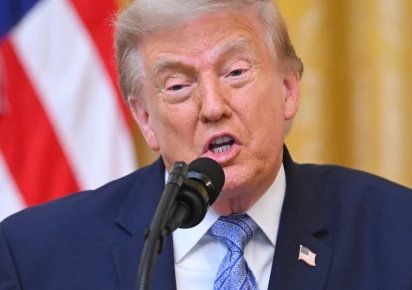
    Trump halts Iran strike, pushes for deal

    US President Donald Trump has announced that he is postponing plans for a new military strike against Iran, saying he is giving diplomacy another opportunity to resolve tensions over Tehran’s nuclear programme and restore navigation through the Strait of Hormuz. In a statement posted on his social media platform, Trump said Iran, along with other countries in the Middle East, had requested additional time to finalize an agreement aimed at reopening the strategic waterway and addressing international concerns over Iran’s nuclear activities. Trump said he had agreed to suspend military action for the time being, provided that negotiations lead to a rapid and meaningful agreement. He added that the decision was made in the interest of regional stability, global security and the future prosperity of Iran. He also claimed that Israel supports the diplomatic approach, although Israeli officials had not publicly commented on the statement. Despite the temporary pause, tensions remain high across the region. Iranian officials warned that any military action by the United States or its allies would trigger an immediate and decisive response. Tehran maintained that it would defend its sovereignty against any form of aggression. Iranian Foreign Minister Abbas Araqchi held separate telephone conversations with senior officials from Pakistan, Türkiye and Saudi Arabia to discuss the rapidly evolving regional situation. During the talks, he warned that any attack on Iran would have serious consequences for regional peace and stability. Araqchi also stressed that Iran would respond proportionately if the United States, Israel or any regional country participated in military action against Iranian territory. The discussions focused on preventing further escalation and encouraging diplomatic efforts to avoid a wider conflict. Meanwhile, Saudi Crown Prince Mohammed bin Salman also held talks with President Trump to seek clarification on Washington’s plans regarding Iran. Although officials confirmed that the conversation took place, no further details were released. Iranian media affiliated with the country’s security establishment warned that attacks on Iran’s energy infrastructure could result in retaliatory strikes against oil and gas facilities across the Gulf region. The warning has heightened concerns among energy producers and international markets. President Trump acknowledged that negotiations remain difficult and admitted that his confidence in reaching an agreement has weakened. However, he said his administration continues to pursue diplomatic engagement before considering further military action. Senior US officials remain involved in efforts to secure a negotiated settlement. The conflict has already had a significant impact on global energy markets. Fighting between US, Israeli and Iranian forces has disrupted regional stability and increased uncertainty over international oil supplies. The Strait of Hormuz remains one of the world’s most important shipping routes for crude oil exports. Continued security threats have reduced commercial shipping through the passage, raising concerns over global energy supplies and increasing pressure on oil prices. Analysts say prolonged instability in the Gulf could further affect international markets if diplomatic efforts fail. Rising oil prices have already placed additional economic pressure on many countries dependent on imported energy. Regional security concerns have also expanded beyond the Strait of Hormuz. Maritime authorities reported separate incidents involving commercial vessels near Oman, including damage to a tanker after it was struck by an unidentified projectile. Another vessel reported a nearby explosion but escaped without damage.

  • |

    US war on iran costs $37.5bn so far: Pentagon

    The United States has spent 37.5 billion dollars on its war against Iran to date, US Defence Secretary Pete Hegseth told lawmakers at a Senate Appropriations Committee hearing in Washington, while calling on Congress to approve additional funding for the conflict. The statement comes six months ahead of midterm elections, where Democrats lead in public opinion polls and are attempting to link the unpopular war with broader economic affordability concerns. Hegseth stated that the 37.5 billion dollar figure covers specific operational aspects of the war as well as anticipated expenditures through September 30, though the exact calculations used by the Pentagon were not detailed. The funding request follows President Donald Trump’s call for nearly 90 billion dollars in supplemental funding last month, primarily for the Iran conflict, setting up legislative friction with lawmakers who express frustration over the war’s trajectory and communication. Both Democratic and Republican members of Congress criticised the administration for a lack of transparency since US and Israeli military operations against Iran began on February 28. Senator Patty Murray warned that the president’s severe threats against civilian infrastructure risk war crimes and a prolonged conflict, while Senator Kirsten Gillibrand criticised contradictory statements from the administration regarding the duration and scope of the war. Hegseth warned lawmakers that without an urgent influx of capital, military training operations would need to be curtailed. Chairman of the Joint Chiefs of Staff General Dan Caine acknowledged that while service members would receive their pay, the Pentagon could face challenges covering equipment maintenance and investments in future capabilities due to strains on its nearly 1 trillion dollar budget. In response, Hegseth urged Congress to approve not only the supplemental package but also a 1.5 trillion dollar defence budget for 2027, describing any failure to fund the department at that level as the single greatest threat to national security. The appeal for funds follows the breakdown of a fragile ceasefire earlier in the month, leading to daily reciprocal strikes between US and Iranian forces. US troop casualties have risen to 18 killed and approximately 430 injured, including 100 wounded since July 7, though the Pentagon noted that 96 per cent of those injured have returned to active duty. Meanwhile, President Trump has threatened to expand targets to include Iranian energy plants, bridges, the Kharg Island oil hub via ground forces, and the deep-underground Pickaxe Mountain nuclear-linked facility, stating that a strike on the mountain site would occur in the near future.

  • | | | |

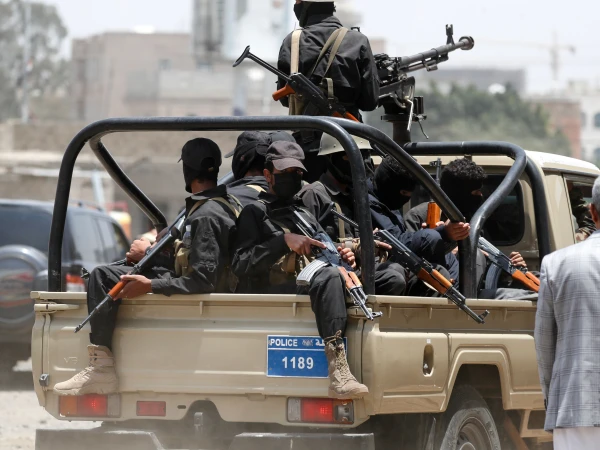
    Houthis strike Yemen forces, 10 killed in Marib

    MARIB: At least 10 people, including eight members of Yemen’s government-aligned security forces and two civilians, were killed in fresh Houthi attacks in the oil-rich Marib province, raising fresh concerns over a possible escalation in the country’s fragile security situation. According to local officials and military sources, Houthi fighters targeted positions held by forces loyal to Yemen’s internationally recognised government with missiles and drones. The attacks reportedly struck several military locations in Marib, a strategically important province that has remained a major focal point in Yemen’s long-running conflict. The latest violence comes despite a significant reduction in large-scale fighting across Yemen in recent years. The renewed attacks have therefore sparked concerns that the relative calm could be disrupted and that low-intensity clashes could once again develop into broader military confrontations. Reports also indicated that Houthi attacks in Marib and neighbouring Hadramout on Friday resulted in additional casualties, suggesting that the latest violence may be part of a wider increase in militant activity across government-held areas. Marib holds particular strategic importance because of its oil and gas resources as well as its location. Control of the province has long been a key objective for both the Yemeni government and the Houthis. The latest strikes have added to fears of a new escalation in Yemen, where years of conflict have already caused a severe humanitarian crisis. Any renewed fighting around Marib could carry wider consequences because of the province’s economic resources and military significance. The Houthis, who control large parts of northern and western Yemen including the capital Sanaa, have been involved in a prolonged conflict with government forces and their allies. The fresh deaths underline the continuing fragility of Yemen’s security environment and could test efforts to preserve the relative calm that has emerged after years of intense fighting.

Leave a Reply

Your email address will not be published. Required fields are marked *