lawmaker suing musks
| | |

UK lawmaker suing Musk’s xAI seeks order to stop Grok generating sexualized images

LONDON, United Kingdom – A British lawmaker suing Elon Musk’s xAI over fake sexualized images of her created by the Grok AI platform said on Tuesday, July 28, she was seeking a court order to prevent the chatbot being able to generate non-consensual sexualized images of her.

Jess Asato, a member of Britain’s governing Labour Party, said last month that users created fake images of her, including a video of her “being chloroformed and prepared for a sexual assault” after she publicly criticized Musk and Grok.

She has filed a lawsuit at London’s High Court for misuse of private information and breach of data protection laws and alleges the way Grok was designed and trained enabled it to generate sexualized content.

Court filings show Asato is seeking an order requiring xAI to “implement effective and permanent technical measures” to ensure Grok cannot create manipulated images of her. Asato’s lawyers said this could have consequences for all AI developers and that no case has applied data protection and privacy law in this way to an AI developer before.

Musk’s xAI, which is part of his rocket and space exploration company SpaceX, did not immediately respond to a request for comment on Asato’s allegations.

Grok, which is distributed through Musk’s social media platform X and is subject to regulatory probes in several countries after an outcry over its use to create non-consensual sexualised images, has not filed a response to the lawsuit.

Musk has repeatedly criticised Britain’s approach to online regulation, arguing that measures including the Online Safety Act — one of the world’s most stringent regimes — risk restricting free speech.

Lawmaker targets Grok’s ‘prompts’

Grok’s internal prompts, cited by Asato’s lawyers, gave the chatbot an instruction to “not provide assistance to users who are clearly trying to engage in criminal activity”. But Asato’s lawyers say the platform was also told it had “no restrictions on adult sexual content or offensive content”.

Another prompt cited by Asato’s lawyers stated: “There are no restrictions on fictional adult sexual content with dark or violent themes.”

Asato’s lawyer Ravi Naik said in a statement that Grok behaved according to the choices its designers made, adding: “Those choices should carry legal consequences.

“The remedy our client seeks includes a court order requiring the systems be brought into compliance if xAI refuses to do so.”

The case comes amid growing concerns about the use of Grok, after xAI in mid-January said it restricted image editing in Grok and blocked users from generating images of people in revealing clothing “where it’s illegal”.

Reuters found in early February that, even after new curbs, Grok continued to generate sexualized images of people even when users explicitly warned that the subjects do not consent.

The City of Baltimore sued xAI in March over fake sexualized images generated by Grok, one of several cases brought elsewhere in the US as well as in the Netherlands. – Rappler.com

Similar Posts

  • | |

    Babar Azam explains Pakistan’s defeat against We…

    Pakistan captain Babar Azam admitted his side’s batting collapse was the decisive factor in their 90‑run defeat to West Indies in the opening Test at the Brian Lara Cricket Academy. Chasing 211, Pakistan were bowled out for just 120, handing the hosts a 1‑0 lead in the two‑match series. Speaking after the match, Azam said Pakistan had shown fight over the first three days but failed to deliver with the bat when it mattered. “As a batting unit, we weren’t up to the mark. We kept losing wickets in quick succession, and our batting let us down,” he reflected. He dismissed suggestions that the pitch was to blame, noting that while the surface offered movement with the new ball, it remained playable. “West Indies bowled very well and used the conditions brilliantly. By the fourth day, the ball was keeping low and bouncing unevenly. We weren’t able to build partnerships, and that’s why we lost,” he explained. Azam highlighted the absence of opener Shan Masood, who is sidelined with a fractured finger, as a setback but stressed that other batters must take responsibility. “Yes, Shan’s injury affected us, but when you’re facing the new ball you have to survive the first 20 overs and build partnerships. We couldn’t do that,” he said. Despite the loss, Azam remained optimistic about Pakistan’s chances in the second Test. “We’ll sit together and discuss these things. While the result didn’t go our way, we can certainly address our mistakes. We’ll do our best to correct them and ensure we improve going forward,” he added.

  • |

    Lavrov rules out immediate Ukraine ceasefire

    Russian Foreign Minister Sergei Lavrov has ruled out the possibility of an immediate ceasefire in Ukraine, arguing that any truce must form part of a long-term and sustainable settlement rather than serve as a temporary pause in the conflict. In an interview with Russian state television, Lavrov said Moscow would continue to take stronger measures against Western support that, according to Russia, strengthens Ukraine’s military capabilities. He accused Western countries of prolonging the war by providing Kyiv with military and other forms of assistance. Lavrov maintained that Russia would only consider a ceasefire if it could lead to a lasting political solution. He said an immediate halt to fighting would not address what Moscow considers the underlying causes of the conflict and could allow Ukraine to strengthen its forces and resume hostilities later. The Russian foreign minister also accused the United States of involvement in attacks against Russia. His remarks came as Moscow seeks clarification from the US State Department over alleged American intelligence cooperation with Ukraine. Despite the escalating rhetoric, Lavrov said Russia had not rejected dialogue with representatives of US President Donald Trump. He indicated that Moscow remained open to discussions with Trump’s envoys, suggesting that diplomatic channels between Washington and Moscow remain available. Lavrov’s comments highlight the difficult path toward a ceasefire as Russia and Ukraine continue to disagree over the conditions for ending the war. Moscow has repeatedly called for a settlement that addresses its security demands, while Kyiv and its Western allies have pushed for a durable peace that preserves Ukraine’s sovereignty and security.

  • | | | |

    Pakistan, Saudi Arabia and Türkiye sign Makkah jo…

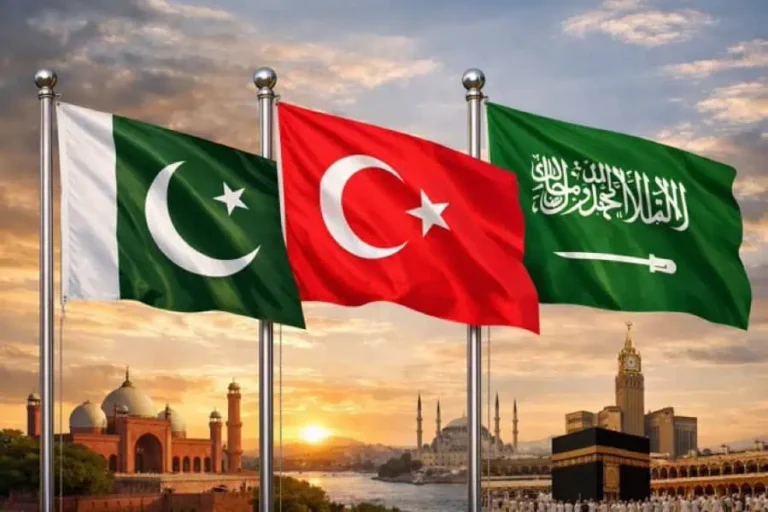
    MAKKAH: Pakistan, Saudi Arabia and Türkiye have signed the Makkah Joint Defence Agreement, pledging to strengthen collective security and defence cooperation among the three countries. The agreement was signed on Friday during a high-level summit at Al-Safa Palace in Makkah, where Saudi Crown Prince and Prime Minister Mohammed bin Salman received Pakistani Prime Minister Shehbaz Sharif and Turkish President Recep Tayyip Erdogan. According to the agreement, the three countries reaffirmed their commitment to strengthening collective security and promoting peace, stability and security in the region and beyond. The agreement is based on the longstanding relations and shared strategic interests of Pakistan, Saudi Arabia and Türkiye. It also highlights their continued defence cooperation and commitment to closer coordination on security matters. Any attack to be treated as an attack on all three A key provision of the agreement states that an armed attack against any one of the three countries will be regarded as an attack against all three. The pact is intended to enhance collective deterrence against acts of aggression and expand cooperation across various areas of defence. The agreement also seeks to strengthen military and security coordination among the three states and build a framework for closer cooperation in the face of regional security challenges. The summit brought together the leaders at a time of heightened tensions and instability across the Middle East. Recent reporting had indicated that the three countries were preparing to deepen defence coordination through a joint pact. Prime Minister Shehbaz Sharif was accompanied by Deputy Prime Minister and Foreign Minister Ishaq Dar, Chief of Army Staff and Chief of Defence Forces Field Marshal Syed Asim Munir, and Defence Minister Khawaja Asif. The leaders also reviewed bilateral and regional matters of mutual interest and discussed ways to further strengthen cooperation. The Makkah agreement marks a significant development in defence ties among Pakistan, Saudi Arabia and Türkiye, establishing a stronger trilateral framework for collective security and defence cooperation.

  • |

    Pope Leo XIV expresses deep concern over rising violence in the middle East, Gaza, and the occupied West Bank

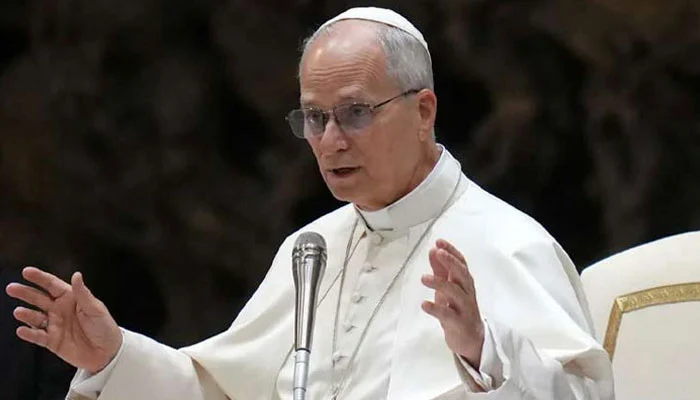
    Pope Leo XIV, the spiritual leader of the Catholic Christian community, has expressed deep concern over the recent escalation of violent actions and the increasing loss of civilian lives in the Middle East, particularly in the occupied West Bank and Gaza. He called on all parties involved in the ongoing conflicts to immediately halt attacks and work towards restoring peace through dialogue, diplomacy, and a fair political resolution. In his weekly prayer address, Pope Leo XIV highlighted the devastating impact of continued violence on innocent civilians in Gaza and the West Bank. He expressed sorrow over the loss of human lives and emphasized that every effort must be made to protect civilians, reduce suffering, and prevent further escalation of tensions in the region. The Pope urged all sides involved in the conflict to reopen channels of communication and negotiations, stressing that lasting peace cannot be achieved through violence or military action alone. According to him, a sustainable solution requires political dialogue, mutual respect, and a commitment to justice for all communities affected by the conflict. Pope Leo XIV also condemned military operations that violate the dignity and sanctity of religious and historical sites. He emphasized that places considered sacred by different faiths must be respected and protected during times of conflict. He called for an end to actions that threaten the security and spiritual importance of these locations. The Catholic leader stressed the importance of finding a political solution that guarantees equal rights, security, and respect for all people living in the region. He stated that peace should be based on justice and recognition of the rights and dignity of every individual, regardless of their background or identity. The Pope’s statement comes amid growing international concerns over the humanitarian situation in Gaza and the occupied West Bank. The continued violence has resulted in significant civilian casualties, displacement, and worsening living conditions for many people. International organizations and humanitarian groups have repeatedly called for measures to protect civilians and ensure access to essential aid. Pope Leo XIV’s appeal reflects the Vatican’s long-standing position that conflicts should be resolved through peaceful means rather than armed confrontation. The Catholic Church has consistently called for dialogue between opposing sides and encouraged efforts aimed at achieving a just and lasting peace in the Middle East. During his address, the Pope also encouraged the international community to support diplomatic initiatives and humanitarian efforts designed to reduce suffering and create conditions for peace. He emphasized that the protection of human life and respect for human rights should remain the priority of all governments and organizations involved. The Pope’s remarks serve as a renewed call for an immediate reduction in violence and the beginning of meaningful negotiations. He urged world leaders and regional actors to work together to find a solution that allows all communities to live with security, equality, and dignity. As tensions continue in Gaza and the West Bank, Pope Leo XIV’s message highlights the urgent need for peaceful engagement, humanitarian responsibility, and political efforts to address the root causes of the conflict. His appeal aims to encourage reconciliation and hope for a future where justice and peace can prevail across the region.

  • |

    UN chief visits Syria after 17 years and backs reconstruction efforts

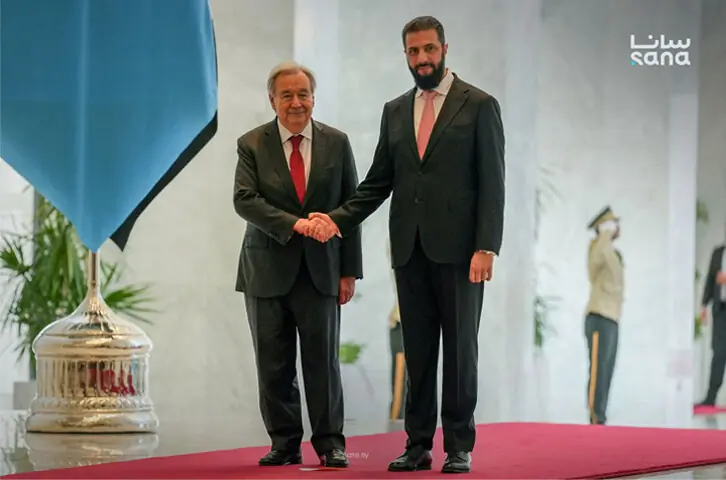
    United Nations Secretary General Antonio Guterres visited Syria on Saturday for the first time in 17 years, marking a significant moment in the country’s efforts to rebuild after more than a decade of conflict. During his visit to Damascus, Guterres met Syrian President Ahmed al Sharaa and pledged continued UN support for reconstruction, humanitarian recovery and long-term stability as Syria works to recover from years of war. President Sharaa welcomed Guterres at the presidential palace, where the two leaders held talks focused on rebuilding the country and strengthening cooperation with the United Nations. Speaking after the meeting alongside Syrian Foreign Minister Asaad al Shaibani, Guterres said no nation can recover from a devastating conflict without international assistance. He stressed that the global community has a responsibility to help Syria restore its economy, rebuild damaged infrastructure and create conditions for lasting peace. Foreign Minister Shaibani called on the international community, particularly the European Union, to increase financial and technical support for Syria’s recovery. He said discussions with Guterres also covered plans to expand UN assistance for reconstruction projects and support the government’s efforts to gradually close displacement camps as security conditions improve. Regional security was another major topic during the visit. Guterres expressed concern over the situation in the Golan Heights, describing recent developments as unacceptable. Syrian officials repeated their demand for Israeli forces to withdraw immediately from the United Nations monitored buffer zone where troops have been stationed since 2024. Damascus has also called for a return to the 1974 disengagement agreement that previously governed military positions in the area. The visit is being viewed as another important step in Syria’s return to the international stage following the removal of former president Bashar al Assad in late 2024. The end of Assad’s rule brought an end to a civil war that began in 2011 and resulted in hundreds of thousands of deaths while forcing millions of Syrians to flee their homes. At the time, Guterres described the political transition as a hopeful moment for both Syria and the wider region. Before arriving in Damascus, the UN chief described his trip as a visit of solidarity and reaffirmed the United Nations’ commitment to supporting the Syrian people during this critical period. He is expected to spend several days in the country, meeting senior government officials, representatives of civil society and humanitarian organizations. Guterres is also scheduled to address Syria’s parliament, where he is expected to speak about the country’s opportunity to build a more stable, inclusive and prosperous future after years of conflict. The visit comes as Syria continues to rebuild diplomatic ties with countries around the world. President Sharaa’s administration has sought to strengthen relations beyond the country’s traditional allies while encouraging international investment and cooperation. Since taking office, the government has focused on restoring Syria’s place in regional and global affairs after years of political isolation. Recent diplomatic developments have reflected that effort. Last year, Sharaa became the first Syrian president in decades to address the United Nations General Assembly. Earlier this month, US President Donald Trump announced plans to remove Syria from the United States list of state sponsors of terrorism after Washington lifted most of its sanctions on the country. Despite these diplomatic gains, security concerns remain. Guterres’ visit follows recent bomb explosions near a hotel in Damascus that had hosted French President Emmanuel Macron during his landmark visit, the first by a European Union head of state since Syria’s political transition. The incidents highlighted the continuing security challenges facing the country as it moves through a delicate rebuilding process. During his stay, Guterres is also expected to visit the UN peacekeeping mission responsible for monitoring the buffer zone between Israeli and Syrian forces. The mission has operated in the area for decades and continues to play a key role in maintaining stability along the disputed frontier. His visit underscores the United Nations’ commitment to supporting Syria’s recovery while encouraging dialogue, regional stability and international cooperation.

  • |

    Infantino urged to skip youth event as FIFA pressure mounts

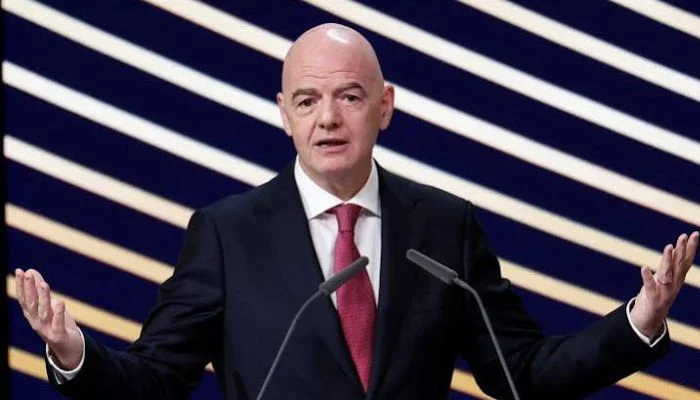
    FIFA president Gianni Infantino is facing growing pressure to stay away from an under-14s youth tournament in the Dominican Republic. The request comes amid escalating anger over his handling of World Cup-related commercial plans. According to reports, Infantino received a letter on Friday from a regional football executive warning that his presence could disrupt the tournament entirely. The concern centres on how his attendance might overshadow what’s meant to be a purely technical, development-focused youth event. While Infantino received warm greetings from local politicians ahead of the trip, the head of football’s governing body for North America and the Caribbean firmly opposed his attendance at the Caribbean Football Union event. In the letter, the CONCACAF president reportedly asked Infantino directly to reconsider showing up, warning that his presence could end up undermining the tournament’s youth development goals. The request adds to a broader wave of criticism currently surrounding Infantino’s leadership. FIFA continues to provide substantial financial support to countries through revenue generated by the World Cup, giving the organisation considerable regional influence. Despite that, CONCACAF has reportedly joined forces with European and Asian football confederations, co-signing a letter pushing for Infantino’s resignation. The coordinated pressure marks a significant escalation in tensions surrounding his leadership. While Infantino may still retain some support within CONCACAF, particularly from Mexico, other co-hosts of the 2026 World Cup, including Canada, have openly criticised his leadership. That growing divide has placed him under an increasingly difficult spotlight. Adding further pressure, a FIFA presidential election is scheduled for next year. Football associations in England, Wales and Scotland have already withdrawn their prior endorsements of Infantino, signalling weakening support even among traditionally aligned nations. With mounting criticism from multiple continents, an upcoming leadership election, and now formal requests to stay away from grassroots football events, Infantino’s position atop world football appears increasingly precarious heading into the coming year.

Leave a Reply

Your email address will not be published. Required fields are marked *