babar azam explains
| |

Babar Azam explains Pakistan’s defeat against We…

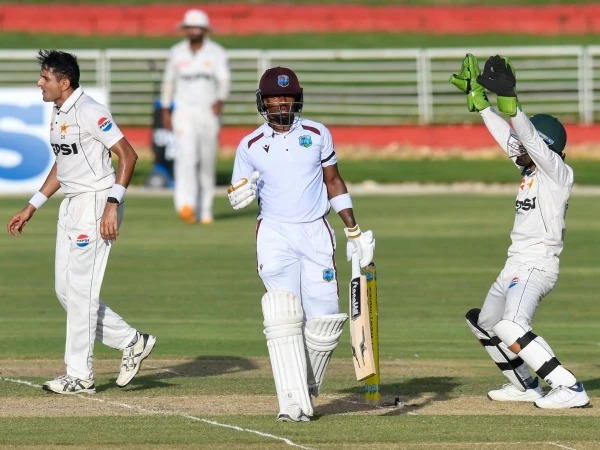
Pakistan captain Babar Azam admitted his side’s batting collapse was the decisive factor in their 90‑run defeat to West Indies in the opening Test at the Brian Lara Cricket Academy. Chasing 211, Pakistan were bowled out for just 120, handing the hosts a 1‑0 lead in the two‑match series.

Speaking after the match, Azam said Pakistan had shown fight over the first three days but failed to deliver with the bat when it mattered. “As a batting unit, we weren’t up to the mark. We kept losing wickets in quick succession, and our batting let us down,” he reflected.

He dismissed suggestions that the pitch was to blame, noting that while the surface offered movement with the new ball, it remained playable. “West Indies bowled very well and used the conditions brilliantly. By the fourth day, the ball was keeping low and bouncing unevenly. We weren’t able to build partnerships, and that’s why we lost,” he explained.

Azam highlighted the absence of opener Shan Masood, who is sidelined with a fractured finger, as a setback but stressed that other batters must take responsibility. “Yes, Shan’s injury affected us, but when you’re facing the new ball you have to survive the first 20 overs and build partnerships. We couldn’t do that,” he said.

Despite the loss, Azam remained optimistic about Pakistan’s chances in the second Test. “We’ll sit together and discuss these things. While the result didn’t go our way, we can certainly address our mistakes. We’ll do our best to correct them and ensure we improve going forward,” he added.

Similar Posts

  • |

    US President Donald Trump backtracks on promise allowing Ukraine to produce Patriot missiles

    US President Donald Trump has walked back his previous offer to grant Ukraine a license to domestically produce Patriot interceptor missiles, stating during a Cabinet meeting at Camp David that the United States has “not agreed” to share the technology. Trump expressed caution over transferring sensitive defense hardware, warning that “they can someday turn on you” and emphasising the need to safeguard advanced military systems. The reversal comes just three weeks after Trump publicly promised Ukrainian President Volodymyr Zelensky at a NATO summit in Ankara that Washington would grant Kyiv the manufacturing rights to build the air defense interceptors. Although Zelensky recently stated after a White House visit that the production licensing had been approved, Trump clarified that no final commitment has been made. The decision arrives as Kyiv faces intensified Russian drone and ballistic missile strikes, with Ukrainian military officials warning that critical shortages of Patriot interceptors are severely compromising their air defense capabilities.

  • | |

    PM Shehbaz orders stronger push to create youth jo…

    Prime Minister Shehbaz Sharif has directed the government to take coordinated and effective steps to expand employment opportunities for young Pakistanis under the National Youth Employment Policy. Chairing a meeting in Islamabad on Tuesday to review progress on the policy, the prime minister said providing decent jobs to the country’s skilled and talented youth remained a key priority of the government. He called for a comprehensive strategy involving relevant ministries and institutions to ensure the policy delivers practical employment opportunities. He also stressed the need to focus on skills development, particularly for young women, so they can compete for emerging jobs in both Pakistan and international markets. The prime minister directed authorities to give special attention to employment opportunities for young people in Balochistan and Khyber-Pakhtunkhwa. Officials briefed the meeting on reforms introduced in the National Vocational and Technical Training Commission (NAVTTC) and the Small and Medium Enterprises Development Authority (SMEDA). The reforms are aimed at connecting Pakistan’s skilled workforce with the changing requirements of local industries and international employers. NAVTTC is working to help Pakistani workers obtain internationally recognised certifications and improve their language skills for overseas employment. Training programmes are also being aligned with market demand to increase the chances of young people securing jobs abroad. The meeting was informed that the Digital Youth Hub is providing information about employment opportunities in Pakistan and overseas through a single platform. Youth Development Cells are also being established in educational institutions to offer career counselling, guidance and information about skills and employment opportunities. Shehbaz Sharif ordered the launch of an awareness campaign so that young people can better understand the benefits and opportunities available under the National Youth Employment Policy. Chairman of the Prime Minister’s Youth Programme Rana Mashhood briefed the meeting on progress made under the government’s directives. Deputy Prime Minister Ishaq Dar, Planning Minister Ahsan Iqbal, Economic Affairs Minister Ahad Khan Cheema, Information Minister Attaullah Tarar, Climate Change Minister Musadik Malik, IT Minister Shaza Fatima Khawaja and other senior officials also attended. The government has recently increased its focus on preparing young Pakistanis for a changing labour market through technical education, information technology, artificial intelligence and entrepreneurship. The prime minister has also stressed greater access to quality education and skills training, particularly for disadvantaged youth. Under the youth employment policy, the government has set a target for women to make up 35 per cent of the labour force, while at least 10 per cent of the allocation is intended for startups.

  • |

    Salman Khan urges students to stay calm amid NEET protest

    Bollywood superstar Salman Khan has shared an important message amid the ongoing student protests over the alleged NEET examination paper leak, urging students to remain calm and reassuring them that the matter is receiving attention at the highest level. In a statement posted on his Instagram account, the actor addressed students participating in demonstrations related to the controversy surrounding the national medical entrance examination. He emphasized that the education and safety of young people should remain the country’s top priority. Salman Khan encouraged students not to let the situation create additional stress for themselves or their families. According to the actor, students should avoid unnecessary anxiety and trust that the authorities will investigate the matter thoroughly. He also referred to the Prime Minister’s public remarks on the issue, saying that he believes strict action will be taken against anyone found responsible for the alleged examination paper leak. Salman expressed confidence that those involved would be held accountable through the legal process. The actor appealed to students to return home and focus on their well-being while allowing the authorities to complete their investigation. He said that students should prioritize their health and avoid placing further emotional strain on their parents during this difficult period. In the same message, Salman Khan also addressed education reform activist Sonam Wangchuk, who has reportedly been observing a hunger strike for nearly 25 days. Speaking directly to Wangchuk, Salman requested that he end his fast, saying that enough time had passed and that continuing the hunger strike could put his health at serious risk. While acknowledging Wangchuk’s commitment to raising awareness through peaceful protest, the actor suggested that preserving his health was equally important. Salman added that if public demonstrations become necessary again in the future, Wangchuk could always continue his activism. However, he said he did not believe there was a need to prolong the hunger strike at the present moment In a light-hearted remark, the Bollywood star even offered to send food from his own home if Wangchuk agreed to end his fast, a gesture that quickly drew attention across social media. This was Salman Khan’s second public appeal on the issue within 24 hours. Earlier, he had also expressed concern over the alleged irregularities in the NEET examination process and stressed the importance of protecting students’ interests while ensuring that the investigation proceeds fairly and transparently. The NEET controversy has triggered widespread demonstrations in different parts of India, with students demanding a transparent inquiry into the alleged paper leak. Protesters have called for accountability, stricter measures against those responsible, and reforms aimed at safeguarding the credibility of the country’s examination system. The alleged paper leak has sparked a broader debate about the integrity of competitive examinations, with students and education advocates urging authorities to strengthen security measures and restore confidence in the examination process. As the investigation continues, the issue remains one of the most closely watched education-related developments in India, with thousands of students hoping for a fair resolution and stronger safeguards for future examinations.

  • | | |

    AJK PML-N chief rejects PPP rigging allegations, c…

    Pakistan Muslim League-Nawaz (PML-N) Azad Jammu and Kashmir (AJK) President Shah Ghulam Qadir has strongly rejected the Pakistan Peoples Party’s (PPP) allegations of election rigging, describing the claims as “baseless” and insisting that the election results genuinely reflect the will of the people. Addressing party office-bearers and workers from across Azad Jammu and Kashmir, as well as representatives of Kashmiri refugees from Indian Illegally Occupied Jammu and Kashmir (IIOJK) residing in Pakistan, Qadir congratulated supporters on what he described as a decisive electoral victory for the PML-N. He said the party was preparing to establish a stable government in AJK under the leadership of former Prime Minister Nawaz Sharif, Prime Minister Shehbaz Sharif, and Punjab Chief Minister Maryam Nawaz. According to Qadir, the upcoming government will focus on accelerating development projects and improving public welfare across the region. Highlighting the party’s previous tenure, Qadir said that infrastructure and development initiatives undertaken by the PML-N in AJK demonstrate its commitment to serving the people. He added that the party remains determined to address public concerns and deliver essential services at the grassroots level. With the final phase of polling in Rawalakot Division scheduled for August 10, Qadir appealed to party workers to maintain peace, cooperate with election authorities, and help ensure a smooth electoral process. He expressed confidence that voters in Rawalakot would extend their support to the PML-N, predicting a strong electoral performance in the division. Responding to criticism from opposition parties, Qadir reiterated that the elections in Mirpur Division, Muzaffarabad Division, and the 12 refugee constituencies reserved for Kashmiris from IIOJK settled in Pakistan were conducted in a free, fair, and transparent manner. He argued that the election results clearly demonstrated public confidence in the PML-N. Qadir also criticised the PPP, suggesting that the party should focus on addressing governance challenges in Sindh rather than questioning the electoral process in AJK. The meeting was attended by several senior PML-N leaders, including AJK Legislative Assembly member Raja Muhammad Riasat Khan, former minister Sardar Farooq Sikandar, Kashmir Council member Malik Muhammad Hanif, and other party officials, who congratulated Qadir on the party’s performance in the recently concluded phases of the AJK elections.

  • |

    Pakistan’s trade deficit widens 26% in July as imports surge

    ISLAMABAD: Pakistan’s trade deficit increased by 26% during the first month of the fiscal year 2026-27, mainly driven by a sharp rise in imports, according to the latest data released by the Pakistan Bureau of Statistics (PBS). The widening gap between imports and exports highlights growing pressure on the country’s external trade position at the beginning of the new fiscal year. Imports increased by around 19% in July, with higher purchases recorded across several major categories, including food products, machinery, transport equipment, textiles, agricultural inputs and metals. According to the PBS data, the country’s food import bill reached $805.4 million in July 2026, equivalent to more than Rs224 billion. The increase reflects continued reliance on imported food products and essential raw materials to meet domestic demand. Among food items, imports of milk, cream and food products prepared for infants rose by 25% to $18.7 million. Pakistan also imported significant quantities of spices, soybeans, palm oil and pulses during the month. Sugar imports were also recorded during July, with the country importing around 112 metric tonnes, adding to the overall food import bill. Machinery imports rise sharply Machinery emerged as one of the major contributors to the increase in the import bill. Machinery imports jumped by 41% to $1.31 billion during July compared with the corresponding period. The increase covered a wide range of equipment used in key sectors of the economy. Imports included machinery for power generation, offices, textile manufacturing, agriculture, construction and telecommunications. The rise in machinery imports could indicate increased demand for equipment and investment-related goods across different industries, although it also contributed significantly to the expansion of the overall trade gap. Vehicle imports register strong growth Imports of transport equipment, including vehicles, also witnessed substantial growth during the month. The import bill for the category increased by 40% to $420 million. The increase in vehicle and transport-related imports added further pressure to the country’s import expenditure, particularly as several other major import categories also recorded double-digit growth. Textile-related imports increase Pakistan’s textile sector also recorded higher imports during July. Imports of textile-related products, including raw cotton, increased by 15% to $680 million. The rise in raw cotton and other textile inputs indicates continued demand from the country’s large textile manufacturing and export industry. Since the textile sector remains a major contributor to Pakistan’s exports, higher imports of production inputs can also be linked to industrial activity. Agricultural inputs and chemicals Imports of agricultural machinery, equipment and chemicals increased by 23%, taking the combined import bill for the category to more than $1 billion. The increase comes as demand remains high for inputs and equipment required by the agriculture sector. Higher imports of such goods can support domestic production but simultaneously add to the country’s foreign exchange requirements. Metals import bill also rises The country also witnessed a significant increase in imports of metals, including gold, iron and steel. Imports under the category increased by around 23%, while the import bill for precious metals alone crossed $730 million. The broad-based rise across food, machinery, transport, textiles, agricultural inputs and metals suggests that the increase in imports was not confined to a single sector. The latest figures indicate that controlling the trade gap will remain an important challenge for policymakers during the new fiscal year. While higher imports of machinery, industrial inputs and agricultural equipment may support economic activity, a sustained increase in imports without a corresponding rise in exports could place additional pressure on Pakistan’s external account.

Leave a Reply

Your email address will not be published. Required fields are marked *