pope leo xiv
|

Pope Leo XIV expresses deep concern over rising violence in the middle East, Gaza, and the occupied West Bank

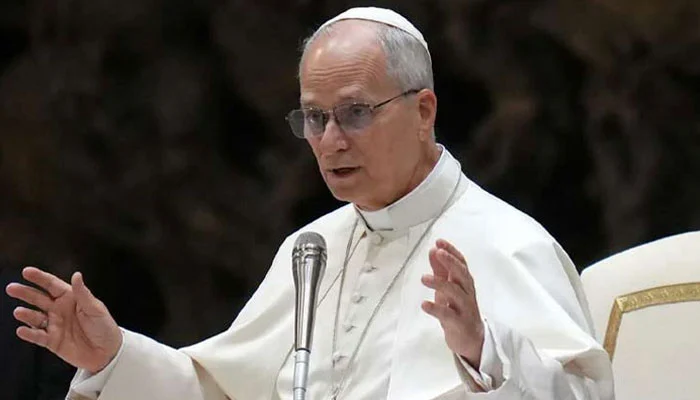
Pope Leo XIV, the spiritual leader of the Catholic Christian community, has expressed deep concern over the recent escalation of violent actions and the increasing loss of civilian lives in the Middle East, particularly in the occupied West Bank and Gaza. He called on all parties involved in the ongoing conflicts to immediately halt attacks and work towards restoring peace through dialogue, diplomacy, and a fair political resolution.

In his weekly prayer address, Pope Leo XIV highlighted the devastating impact of continued violence on innocent civilians in Gaza and the West Bank. He expressed sorrow over the loss of human lives and emphasized that every effort must be made to protect civilians, reduce suffering, and prevent further escalation of tensions in the region.

The Pope urged all sides involved in the conflict to reopen channels of communication and negotiations, stressing that lasting peace cannot be achieved through violence or military action alone. According to him, a sustainable solution requires political dialogue, mutual respect, and a commitment to justice for all communities affected by the conflict.

Pope Leo XIV also condemned military operations that violate the dignity and sanctity of religious and historical sites. He emphasized that places considered sacred by different faiths must be respected and protected during times of conflict. He called for an end to actions that threaten the security and spiritual importance of these locations.

The Catholic leader stressed the importance of finding a political solution that guarantees equal rights, security, and respect for all people living in the region. He stated that peace should be based on justice and recognition of the rights and dignity of every individual, regardless of their background or identity.

The Pope’s statement comes amid growing international concerns over the humanitarian situation in Gaza and the occupied West Bank. The continued violence has resulted in significant civilian casualties, displacement, and worsening living conditions for many people. International organizations and humanitarian groups have repeatedly called for measures to protect civilians and ensure access to essential aid.

Pope Leo XIV’s appeal reflects the Vatican’s long-standing position that conflicts should be resolved through peaceful means rather than armed confrontation. The Catholic Church has consistently called for dialogue between opposing sides and encouraged efforts aimed at achieving a just and lasting peace in the Middle East.

During his address, the Pope also encouraged the international community to support diplomatic initiatives and humanitarian efforts designed to reduce suffering and create conditions for peace. He emphasized that the protection of human life and respect for human rights should remain the priority of all governments and organizations involved.

The Pope’s remarks serve as a renewed call for an immediate reduction in violence and the beginning of meaningful negotiations. He urged world leaders and regional actors to work together to find a solution that allows all communities to live with security, equality, and dignity.

As tensions continue in Gaza and the West Bank, Pope Leo XIV’s message highlights the urgent need for peaceful engagement, humanitarian responsibility, and political efforts to address the root causes of the conflict. His appeal aims to encourage reconciliation and hope for a future where justice and peace can prevail across the region.

Similar Posts

  • | |

    US revokes over 600 visas in crackdown on birth to…

    The United States has revoked more than 600 visas from foreign nationals over the past month as part of a sweeping campaign against birth tourism operations, the State Department announced Wednesday. Secretary of State Marco Rubio said on social media that American citizenship is not for sale, accusing criminal organizations of profiting by coaching foreign nationals to defraud the visa system and forge documents in order to secure citizenship for their children. He said these networks have systematically exploited weaknesses in US immigration law for financial gain. The State Department recently launched a dedicated Birth Tourism Prevention Task Force tasked with identifying and dismantling these networks. Rubio said the unit will continue reviewing the activities of visa holders to put an end to what he called a heinous abuse of national law, and said the department intends to use every tool available to dismantle birth tourism networks and protect the integrity of American citizenship. The crackdown follows an executive order President Donald Trump signed on August 6 that describes birth tourism as a calculated exploitation of immigration policy and casts it as a threat to national security. The order gives the State Department and the Department of Homeland Security authority to permanently bar entry and revoke documentation for individuals found to be facilitating these schemes. Trump signed two executive orders on August 6 in a narrower attempt to limit birthright citizenship, again testing a constitutional provision even after the Supreme Court rejected an earlier version of his effort. Curbing birthright citizenship has remained one of the central goals of Trump’s broader immigration crackdown, with the White House specifically targeting birth tourism, in which pregnant foreign nationals travel to the United States specifically to give birth on American soil. Following the Supreme Court setback on June 30, Trump initially urged Congress to pass legislation addressing the issue before ultimately turning to executive orders instead, a route that allows the administration to set policy directly but carries less legal weight than legislation passed by Congress.

  • | | |

    Global oil prices drop 12% in three days, Pakistan…

    Pakistani consumers have yet to benefit from a sharp decline in global oil prices, despite international petroleum markets recording a fall of up to 12% over the past three days. The continued high fuel prices have added to the financial burden on households already struggling with rising inflation. Over the last 12 days, fuel prices in Pakistan have increased significantly, with diesel becoming Rs. 65.08 per litre more expensive and petrol rising by Rs. 25.10 per litre. The increases followed the federal government’s decision on July 17 to introduce a daily fuel price adjustment mechanism in line with international market trends. On July 17, petrol was priced at Rs. 310.71 per litre, while high-speed diesel was available at Rs. 323.30 per litre. As of July 29, petrol is being sold at Rs. 335.81 per litre, whereas diesel has climbed to Rs. 388.38 per litre, marking one of the steepest short-term increases in recent years. Although consumers witnessed two minor reductions in petrol prices during this period, the relief was limited. Petrol prices were cut by Rs. 0.35 per litre on July 21 and by Rs. 1.00 per litre on July 27. Diesel prices, however, have not been reduced since the daily pricing mechanism came into effect. International oil markets experienced a sustained upward trend after July 17, contributing to higher domestic fuel prices. However, between July 25 and July 28, global petroleum prices fell sharply, with reports indicating a decline of approximately 12% across major international benchmarks. Despite this significant drop in global prices, Pakistani consumers have not yet received any corresponding reduction at the pump. The absence of immediate relief has sparked concerns among motorists and businesses, particularly those heavily dependent on transportation and logistics, where fuel costs directly affect operating expenses. Economists note that lower international oil prices, if sustained, could create room for a reduction in domestic fuel prices in the coming days. Any adjustment, however, will depend on several factors, including exchange rate movements, government taxes and levies, freight costs, and the pricing formula adopted by the authorities. With inflation continuing to squeeze household budgets, many consumers are hoping the recent decline in global oil prices will soon translate into lower petrol and diesel prices in Pakistan, easing transportation costs and reducing pressure on the overall cost of living.

  • | |

    France wildfires force 150,000 to evacuate amid he…

    A relentless heatwave has triggered massive wildfires across southwestern France, forcing around 150,000 people to evacuate as flames swept through forests and threatened homes in one of the country’s most popular tourist destinations. French authorities ordered the complete evacuation of Cap Ferret, a renowned coastal resort, after fast-moving fires engulfed nearly 47,000 acres of forest. Officials said more than 100 homes had been damaged as firefighters continued battling the blaze under extreme weather conditions. The rapidly spreading fire has prompted an extensive emergency response, with President Emmanuel Macron directing the French military to assist firefighting teams in containing the flames and protecting nearby communities. The crisis has also spread beyond France. In neighboring Spain, authorities declared the country’s first-ever national emergency over a wildfire near Madrid, highlighting the growing impact of the ongoing heatwave across southern Europe. According to media reports, the Spanish wildfire has destroyed more than 43 homes, while approximately 19,000 residents living in mountainous areas west of Madrid were ordered to evacuate. More than 2,000 emergency personnel, supported by 10 firefighting aircraft, have been deployed to contain the flames. Officials warned that soaring temperatures, dry vegetation and strong winds have created ideal conditions for wildfires, making firefighting operations increasingly difficult. The latest disaster comes only weeks after France experienced one of its deadliest heatwaves in recent years. According to the country’s national public health agency, 21,674 deaths were recorded between June 17 and July 2, compared with an expected 15,910 deaths under normal conditions. The agency said the period saw 5,764 excess deaths—an increase of 36% above normal mortality levels—underscoring the severe health impact of prolonged extreme heat. Climate experts have repeatedly warned that rising global temperatures are increasing the frequency and intensity of heatwaves and wildfires across Europe. As emergency crews continue to battle the blazes in France and Spain, authorities remain on high alert, warning residents that worsening weather conditions could fuel further fires in the coming days.

  • |

    Seven killed, including two police officers, in crash during pursuit near Middlesbrough

      MIDDLESBROUGH: Seven people, including two police officers, have died in a serious road crash during a police pursuit involving a “suspicious” vehicle travelling in the wrong direction on a dual carriageway in northeastern England. The collision occurred at around 3:39am BST on the A66 in South Bank, near Middlesbrough in Teesside. Cleveland Police said the crash involved a marked police vehicle and a Volkswagen Passat. According to police, the marked police car had been travelling in the correct direction on the road when the collision occurred. Emergency services rushed to the scene, but all occupants of both vehicles were pronounced dead at the location. Cleveland Police Chief Constable Victoria Fuller expressed her condolences to the victims and their families, saying that no one should leave their home without being able to return safely, including police officers who serve and protect their communities. The force said the families of those identified had been informed and were being offered specialist support. Fuller described the incident as a tragedy that would have a profound impact on communities across Cleveland and the wider policing family. The Independent Office for Police Conduct (IOPC), the police watchdog, has launched an investigation into the circumstances surrounding the crash. The watchdog said that, based on information available at the early stage of the inquiry, Cleveland Police had spotted a suspicious vehicle and a pursuit subsequently began. Investigators will examine the circumstances leading up to the pursuit, including why the vehicle was considered suspicious, how the pursuit developed and what happened immediately before the fatal collision. The A66 is one of the main roads running through the Teesside region. The area surrounding the crash site includes a number of industrial buildings and factories. Following the incident, the road was closed in both directions between Normanby Road and Church Lane. Police said the closure was expected to remain in place for the rest of the day while emergency crews and investigators worked at the scene. Police vehicles and officers could be seen along the road as a major emergency response continued. Motorists were advised to avoid the area and use alternative routes. The North East Ambulance Service said it deployed 14 ambulance resources as part of the major emergency response. Despite the efforts of emergency responders, several patients died at the scene. The ambulance service expressed its condolences to everyone affected by the tragedy and thanked those who worked through the night in response to the crash. Cleveland Police said a significant number of emergency service vehicles remained at the scene and urged members of the public not to speculate about the circumstances while the investigation was still developing. Home Secretary Shabana Mahmood described the incident as “devastating” and expressed her support for Cleveland Police as officers worked to identify everyone involved. She paid tribute to police officers who put their safety at risk every day to protect the public and offered her condolences to the victims’ families, friends, emergency responders and the wider police community. Local MP Anna Turley also expressed deep sadness over the deaths. She extended her sympathies to the families and loved ones of those who lost their lives and thanked emergency services personnel who worked throughout the night. The investigation remains ongoing, with authorities expected to examine forensic evidence, witness accounts and other information to establish the exact sequence iof events that led to the fatal crash.

  • |

    Eggs fly in Kosovo parliament as political crisis …

    PRISTINA: Kosovo’s parliament descended into chaos after opposition lawmaker Time Kadrijaj threw eggs toward acting Prime Minister Albin Kurti during a heated session, highlighting the deep political divisions gripping the country. Kadrijaj, a member of the Alliance for the Future of Kosovo, reportedly threw four eggs in Kurti’s direction while shouting “shame” as lawmakers debated the stalled formation of parliamentary institutions. The dramatic confrontation prompted security personnel and other lawmakers to intervene, and the session was suspended. The incident came after Kurti asked lawmakers for additional time to continue negotiations before proposing a candidate for the speaker of parliament. Kosovo has remained caught in a political deadlock following the June snap elections, with disagreements among political parties preventing the new institutions from being fully established. Kurti’s request for more time has angered opposition parties, which argue that the constitutional deadline has already expired. They have questioned the legality of continuing the parliamentary session under the circumstances. The confrontation inside parliament underscored the increasingly tense political atmosphere in Kosovo, where repeated disagreements have delayed key constitutional and institutional processes. Despite the disruption, Kurti appeared to remain composed. Reports said he indicated that he was willing to face criticism if it helped bring political rivals to the negotiating table. The political impasse follows June’s parliamentary election, in which Kurti’s Vetëvendosje movement emerged as the largest political force but failed to secure enough support to move forward without cooperation from other parties. Kosovo has experienced repeated political instability in recent years, with disagreements over the formation of institutions contributing to uncertainty over the country’s political direction. The egg-throwing incident has now become a striking symbol of that frustration, turning an already tense parliamentary dispute into an extraordinary scene that quickly attracted international attention. For Kosovo, however, the bigger issue remains unresolved: whether political parties can overcome their differences and break the institutional deadlock before the crisis deepens further.

Leave a Reply

Your email address will not be published. Required fields are marked *