humble appeal let

A Humble Appeal: Let Us Not Waste the Blood of Our…

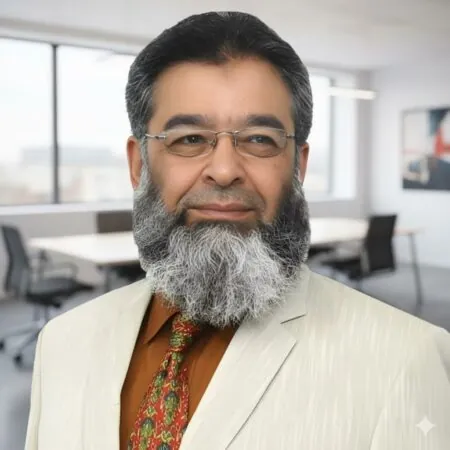
By Malik Khuda Bakhsh Awan, retired Inspector General of Punjab Police and former IG of Azad Jammu & Kashmir

&

Engineer Arshad H. Abbasi, water and energy expert who has served in KPK and AJK,

We write this not as critics sitting comfortably at a distance, but as two servants of this soil who have spent our working lives in the very regions now aflame with unrest — one of us measuring the water and energy that could have irrigated peace in KPK and AJK, the other commanding police lines in Punjab and standing watch over the mountains of Azad Kashmir. What we have seen convinces us of one thing above all: the fire in Balochistan, AJK and the erstwhile KPK is serious, but it is not yet beyond our control. It can still be reversed — if the Government of Pakistan acts with the courage to match the sacrifice already being offered on our behalf.

Before we offer a single suggestion, we must first bow our heads. Every day, a young Jawan somewhere in Balochistan or the tribal belt tightens his boots before dawn, not knowing if he will return. Every week, a Frontier Corps patrol walks into an ambush it did not seek, and an FC officer’s name is added to a list none of us wants to grow longer. Every month, policemen in Quetta, Muzaffarabad and Peshawar guard checkposts that other citizens simply drive past without a thought. From the newest recruit to the most senior general, our security forces have offered blood, limb and years away from their families to hold this country together. Their courage is not in question. Their commitment is not in doubt. What we owe them now is not more praise — it is a strategy worthy of their sacrifice.

That is the entire purpose of this letter. We do not want the martyrdom of our Army, Police and FC personnel to be spent on a war that could have been shortened, or avoided, by decisions made in Islamabad rather than only on the battlefield. History offers us hard evidence that this is possible, even in conflicts far older and far bloodier than ours.

Lessons the world has already paid for, so we don’t have to. Colombia fought a Marxist insurgency for fifty years, financed by drugs and kidnapping — arguably a longer and more entrenched war than anything Pakistan faces today. Peace came in 2016 not because the state finally won every battle, but because it paired security operations with land redistribution for poor farmers and a transitional justice system that let fighters confess their crimes in exchange for reduced sentences, rebuilding public trust along the way.

In Northern Ireland, three decades of sectarian killing between republicans and unionists ended largely because international partners poured investment into the poorest, most neglected border towns — the very places where despair had made paramilitary recruitment easy — while a new power-sharing government guaranteed both communities an equal, transparent voice.

Sierra Leone’s civil war was fuelled by “blood diamonds.” It was tamed not merely by defeating the rebels but by legalising and regulating small-scale mining so that ordinary mining communities, not warlords, earned the benefit, backed by an internationally certified transparent supply chain and a strengthened anti-corruption commission.

And in our own neighbourhood, the Philippines faced a decades-long Muslim separatist insurgency in Mindanao. It was calmed considerably by granting the Bangsamoro region genuine fiscal autonomy — its own revenue powers and a guaranteed development grant — replacing a corrupt, clan-captured funding system with one that visibly reached ordinary people.

The pattern across every one of these conflicts, each objectively worse than what we face today, is the same. Peace did not arrive purely from military victory. It arrived when governments paired continued security pressure with transparent governance and genuine economic opportunity, so that the incentive to pick up a gun simply fell away.

Our humble suggestions to the Government- First, unemployment among our youth is, in our respectful assessment, the single biggest driver of unrest in Balochistan, AJK and the tribal districts. A young man with a trade, a wage and a future does not need the BLA or the TTP to promise him meaning; he already has it. We therefore urge the government to treat job creation in these regions not as a welfare afterthought but as a core national-security investment, on par with any military allocation.

Second, we ask for financial transparency in how resources from these very regions — gas, minerals, hydropower, forests — are spent. When local people can see, in plain terms, where the revenue from their own land goes, resentment gives way to ownership.

Third, we ask for genuine, verifiable inclusion — local land and mining rights regularised in favour of communities rather than absentee interests, block grants that reach tehsil and union council level without being intercepted along the way, and reconstruction that is co-designed with elders and local government rather than imposed from a distant secretariat.

Fourth, we ask for a dignified, well-resourced path for demobilisation and reintegration wherever it is possible — vocational training, stipends and honest employment for those willing to lay down arms, so that today’s militant does not become tomorrow’s freelance criminal.

Fifth, and we say this with the greatest respect, every federal minister must spend a minimum of fifteen days, physically present, in Balochistan, AJK and KPK each year — not for a photo opportunity at a heavily guarded circuit house, but sitting with local elders, visiting FC and police posts, and looking our Jawans in the eye. A soldier who sees his federal government only through television screens begins to wonder if Islamabad remembers he exists. When a minister walks the same ground our forces are dying to defend, it tells every Jawan, every FC sepoy, every constable that his sacrifice is seen, valued and shared by those who lead him. This single change of habit would do more for morale on the front line than any speech delivered from the capital.

Sixth, no government promise of transparency will be believed unless it is verifiable in real time. We recommend a public mobile application, available to every citizen in these three regions, that shows development and security-related spending as it happens — project by project, rupee by rupee, district by district. Let a young man in Turbat, Muzaffarabad or Miranshah open his phone and see, with his own eyes, that the money meant for his tehsil actually reached it. Nothing disarms a militant recruiter faster than a citizen who can prove, on his own screen, that his government is honest with him.

We say all this with humility, not authority. We are not asking the government to soften its resolve against terrorism; our security forces must, and will, continue to defend the state with full force. We are simply asking that this force be matched, blow for blow, with an economic and governance offensive — so that every sacrifice our Jawans and officers make on the ground is reinforced, not wasted, by decisions made in the capital.

We would deem it the highest honour—and a sacred duty—to place our collective lifetime of experience at the service of the State, should the Honourable Prime Minister deem it fit to call upon us.

Our humble request is to bring together veteran military commanders, seasoned police officers, distinguished Pakistan Administrative Service (PAS) leaders, respected Frontier Corps (FC) veterans, credible political figures, revered tribal elders, leading educationists, and foremost intellectuals, writers, and poets from Balochistan, Khyber Pakhtunkhwa, and Azad Jammu & Kashmir. The commission must stand ready to form a listening commission to engage the grievances of our people with an open heart and an unyielding commitment to truth. We seek neither office, title, nor credit. Our sole objective is to see the youth of Balochistan, AJK, and the erstwhile FATA choose a dignified livelihood over a weapon, and to ensure that the sacred blood shed by our martyrs finally secures an enduring peace.

Pakistan has never lacked for courage. What it needs now is the wisdom to build on that courage before more of it is spent.
Similar Posts

  • The Unleashed Furies

    This 14th of August, as the green and white flags go up from Karachi to Khyber and the air fills with the crackle of fireworks, there is a question every young Pakistani must ask themselves: what exactly are we celebrating? Is it merely the fact that a nation was born at the stroke of midnight 79 years ago? Or is it something far more demanding — the unfinished promise of that birth, the dream that millions carried across blood-soaked borders, the conviction that Pakistan would be not just a homeland, but a beacon? Nisid Hajari’s book Midnight’s Furies does not let us off easy. It drags us back to the raw, unvarnished truth of 1947 — and in doing so, it hands our generation something precious: the tools to understand who we are, where we came from, and what we still owe to those who paid the ultimate price for our freedom. Hajari wrote that on 9 August 1947, a train pulls out of Delhi bound for Karachi, 800 miles away. Onboard are Muslim clerks and officials who had served the British-run government of India with distinction. With them are their families, their ribbon-tied files, their children’s toys, their prayer rugs, and the gold jewellery that represented their life’s savings. They are not refugees fleeing in panic. They are pioneers, volunteers for a great experiment — the world’s first modern Muslim nation. As the train whistles out of Delhi, cheers of “Pakistan Zindabad!” drown out the engine. These men and women believe they are building something unprecedented. Something magnificent. They never arrive. Sikh saboteurs — soldiers in all but name, their tiny community having supplied the Indian Army with fighting men far beyond their numbers — have laid gelignite charges along the tracks. The mine detonates. The Pakistan Special shudders. And in that moment, the euphoria of independence meets the savagery of Partition. Hajari, who spent over a year buried in archives across New Delhi, London, and Washington, D.C., reconstructs this tragedy not from myth but from the “demi-official record” — the diaries, army sitreps, embassy cables, and informant reports that tell the real story. And the real story is this: Pakistan was born not in a garden of roses, but in a furnace. The arithmetic of that furnace defies comprehension. One British official, working from casualty reports, put the dead at 200,000. Others, accounting for disease, starvation, and exposure, insist the figure exceeds one million. At least 14 million people were uprooted — the largest forced migration in human history. Western Pakistan was virtually emptied of Hindus and Sikhs; Indian Punjab lost almost all its Muslims. This was carnage on a scale unseen until Rwanda 1994. Yet here is what Hajari forces us to confront: the killing lasted only six weeks. The violence was contained. What was not contained — what metastasised — was the psychological wound. In those weeks, something broke between India and Pakistan that has never been repaired. Leaders on both sides began suspecting each other of complicity in genocide. Mutual mistrust pushed infant nations to war within a year. And Pakistan, flooded with refugees, its economy and bureaucracy teetering on collapse, developed what Hajari calls a ‘deep-seated paranoia’ about its larger neighbour that shapes our politics to this very day. Hajari’s book is unsparing about the failures of leadership that turned Partition’s trauma into perpetual conflict. Nehru and Jinnah — the very architects of freedom — allowed vanity, prejudice, and petty dislike to poison the well. Nehru’s reckless declaration in August 1946 that a strong government would make the Muslim League’s movement “go down” — what Viceroy Wavell called tossing “a match onto dangerously dry kindling” — helped trigger the Great Calcutta Killing, the dress rehearsal for Partition’s horrors. Five thousand dead. Ten to fifteen thousand maimed. The Statesman newspaper, grasping for words, called it “a fury” — a word from mediaeval history. This Independence Day, let us do something radical. Let us honour the dead not by reliving their fears, but by fulfilling their hopes. Jinnah’s address to the Constituent Assembly on 11 August 1947 was crystal clear: ‘You are free; you are free to go to your temples, you are free to go to your mosques or to any other place of worship in this State of Pakistan.’ He envisioned a secular nation where religion was private, not political. Where Hindus, Muslims, Sikhs, and Christians would be equal before the law. Where the state would be a servant of all its citizens, not a weapon of the majority. Hajari’s book ends on a note of hard-won wisdom: ‘Only once those mistakes are properly understood and acknowledged, perhaps, will India and Pakistan begin to bridge the vast and dangerous gulf that still divides them.’ Understanding does not mean surrender. Acknowledgement does not mean apology. It means maturity. It means the confidence to say: we know our history, we honour our sacrifices, and we refuse to let the furies of 1947 dictate our future. So when the flag goes up this 14th August, let it mean something new. Let it mean that Pakistan is done being defined by what it fears. Let it mean that we are ready to be defined by what we build — by our universities and our hospitals, our clean rivers and our fair courts, our poets and our scientists, our daughters who dream without limits and our sons who know that strength comes from justice, not just arms.

  • Tashkent, My Second Home: How Shavkat Mirziyoyev R…

    I have a confession to make before I make an argument: I am not a neutral observer of Uzbekistan, and I have never pretended to be. My grandmother was born in Bukhara, and something of that inheritance has stayed with me my whole life, quietly, the way a language half-learned in childhood never fully leaves you. When I finally visited Uzbekistan as an adult, I did not feel like a foreign visitor taking in unfamiliar streets. I felt something closer to what my grandmother must have felt looking at me — an unearned, uncomplicated warmth that asked nothing in return. I have come to understand that feeling as the quiet, private secret of belonging to a place through blood rather than through a passport. Tashkent is, in every way that matters to me, my second home. It was in that spirit, long before he held the office he holds today, that I once had the chance to meet and listen to Shavkat Mirziyoyev. He was not yet President of Uzbekistan when I encountered him, and I remember being struck less by any title he carried than by the scale of what he was already thinking about out loud: an economic vision that did not stop at Uzbekistan’s borders, a water and energy strategy built for the whole of Central Asia, and a sense — unusual in a region that had spent decades looking inward — that Uzbekistan’s future was inseparable from the future of its neighbors, and ultimately from the future of Asia itself. I did not know, at the time, that I was listening to a future head of state. I knew only that I was listening to someone thinking at a scale most officials never attempt. That background should not surprise anyone who looks closely at his biography. Mirziyoyev is, by training, an irrigation engineer. He graduated in 1981 from the Tashkent Institute of Irrigation and Melioration with a degree in mechanical engineering, and went on to earn a doctorate in technical sciences — a foundation in water management and applied engineering, not in the abstractions of political theory. I find something quietly reassuring in that. A leader who has spent his formative years thinking about the physical realities of water — how it moves, where it is wasted, how a system either functions or fails on the ground — tends to bring a different discipline to the running of a country than one who has only ever studied power itself. When he took the presidential oath on 14 December 2016, he inherited a country that had spent decades in careful, deliberate isolation under his predecessor, Islam Karimov. What he has built since is, by any honest measure, one of the most consequential transformations Central Asia has seen in a generation. Mirziyoyev dismantled that isolation almost immediately. Borders that had been tense and heavily restricted with Kyrgyzstan and Tajikistan were resolved through negotiation rather than standoff. Trade and cross-border travel, once treated with suspicion, were opened. And rather than settling for improved bilateral relations, he proposed something more ambitious still: formalizing the informal annual summits among Central Asian leaders into a standing “Community of Central Asia,” with a rotating presidency and a permanent secretariat, built around shared trade, water management, transport infrastructure, and coordinated engagement with Afghanistan. It is the kind of regional architecture Central Asia lacked for the entire post-Soviet period, and it is very hard to picture it emerging under any of his predecessors. The economic numbers now validate what, in that early conversation, still sounded like ambition rather than achievement. Uzbekistan implemented $43.1 billion in foreign investment in its most recent reporting period, of which $38.2 billion arrived as foreign direct investment — a 24 % surge over the prior year, and enough to make Uzbekistan the largest recipient of accumulated FDI stock in Central Asia, ahead of Kazakhstan. FDI absorption climbed from $19.5 billion in 2023 to $31.9 billion in 2024 before reaching this year’s historic peak, with a single record quarter bringing in $1.7 billion in net balance-of-payments inflows. China remains the leading investor at $17.1 billion, followed by Russia at $4.8 billion, with Turkey, Saudi Arabia, Germany, the UAE, and the United Kingdom all expanding their footprints. The capital is not concentrated in one sector either: energy and renewables lead at $7.1 billion, including ACWA Power’s $2.4 billion wind installation in Karakalpakstan, alongside major investment in agriculture, construction, and mining. The country’s foreign reserves stood at roughly $63.75 billion as of June 2026, after peaking above $77 billion earlier in the year, while real GDP grew 7.7 % in 2025 and is projected to hold near 6.8 % through 2026. None of this happened by accident. Uzbekistan built nearly a thousand Free Economic Zones offering genuine tax relief and simplified customs. It collapsed business registration into a single electronic government portal, cutting the cost of starting a company to roughly $27. It fully liberalized its currency and removed the foreign exchange barriers that once made profit repatriation a genuine deterrent to investors. This is not a country hoping investors will come. It is a country that examined, line by line, every friction that had historically kept them away, and removed it. But the achievement I find most remarkable is geographic, because geography is the one obstacle policy alone usually cannot solve. Uzbekistan is one of only two doubly landlocked countries on Earth — a nation whose neighbors are themselves landlocked, placing it about as far from open water as any country can be. For most of its history, that was treated as a permanent constraint. Mirziyoyev has instead treated it as an engineering problem to be solved, which is precisely how an irrigation engineer would see it. The Trans-Afghan Railway, first proposed by Uzbekistan in 2018 and finally formalized in a trilateral framework agreement signed with Afghanistan and Pakistan in July 2025, will run roughly 650 kilometres from Termez on the Uzbek border through Mazar-i-Sharif, Kabul, and Logar, crossing into Pakistan

  • Lessons from South Korea

    South Korea is one of the most remarkable countries in the world. Shortly after the mid-20th century, South Korea was one of the poorest countries in the world. According to World Bank, it had a per-capita gross domestic product (GDP) of roughly 159 USD in 1960. The Helen Kellogg Institute For International Studies (University of Notre Dame) points out that South Korea’s per-capita income in early 1960 was lower than Haiti, Ethiopia and Yemen and over 40% of the South Korea’s population was suffering from absolute poverty. However, with right public policy actions implemented in the right direction, South Korea was among the most rapidly growing economies in the world by the start of 21st century. Do you know that South Korea had exponentially increased its per-capita GDP to 12,710 USD (in 2000) that then sky-rocketed to over USD 36000 in 2025? A question that one would ask is, what formed the basis of this rapid economic growth and a resulting reduction in poverty in South Korea? A World Bank report “Republic of Korea: Four decades of equitable growth” points out that South Korea has experienced rapid economic growth in 1990, where its real GDP grew by over 5 percent each year except 1998. Absolute poverty decreased incredibly in South Korea during 1975 – 2001. Those who remained poor were either had low educational achievements or were unemployed or underemployed. In 1975, South Korea earned USD 12.4 billion through trade that then skyrocketed to a trade volume of USD 314.6 billion in 2002. Thus, in a span of 27 years, trade volume of South Korea increased over 25 times which is nothing less than a remarkable success story. A journey that helped South Korea to achieve rags-to-riches status in 3 decades time. In my opinion, education made a significant difference in South Korean society and made it more socially resilient to meet the challenges of today and tomorrow. As we all know that with education and the use of common sense, we make better life choices that then helps us is attaining better results for us and our families. Do you know that South Korean society is one of the most educated societies in the world? As per Organization for Economic Co-operation and Development (OECD), over 58% of masses in South Korea has tertiary education. In-fact, South Korea performed better than Luxembourg, Australia, Norway, Netherlands and several other countries when it comes to percentage of masses (25 – 64 years) who have completed tertiary education in 2025. Highly educated masses mean highly qualified labour that can help any country in commencing sustainable social and economic development over a sustained period. We all are familiar with Samsung Electronics and the leading role it plays in connecting countries and people across the globe. Do you know that Samsung Electronics is a South Korean company? In 2025, Samsung Electronics declared a revenue worth a whooping USD 233.3 billion. Similarly, Hyundai Motor Co., Ltd is another South Korean motor vehicles and parts manufacturing company. According to Forbes, in 2025, Hyundai Motor Co., Ltd declared a financial revenue worth a whooping USD 128.4 billion including a profit of USD 9.1 billion. Hyundai Motor Company pointed out that it sold over 4 million vehicles worldwide out of which close to a million vehicles were electrified vehicles. Likewise, Kia Corporation is South Korea’s oldest motor vehicles manufacturing company and has a capacity to produce over 1.4 million vehicles each year. Kia Corporation has over 40,000 employees and normally reports an annual revenue of over USD 17 billion each year.  LG Electronics is another South Korean tech giant that reported a revenue of USD 62 billion in 2025. Finally, SK Hynix Inc is another South Korean company that manufactures semiconductor products and had reported an annual revenue of USD 51.2 billion in 2025 with profits over USD 18 billion. It is crucial to mention here that SK Hynix Inc is among the largest memory chip manufacturer’s in the world and acts as a rival to Samsung. Moreover, it is an important memory supplier to Apple and the components supplied by SK Hynix Inc are widely used in iPhone, iPad and MacBooks. Carnegie Endowment for International Peace reports that South Korea’s gross domestic product (GDP) was USD 1.71 trillion in 2023 and its per-capita GDP was USD 33,121. Do you know that in 2020, South Korea invested USD 112.9 billion on domestic research and development (R&D). Globally, it stood on fifth position when it comes to spending on R&D. Top spending on R&D in 2020 was commenced by United States with USD 720.9 billion, followed by China with USD 582.8 billion, Japan with USD 174.1 billion and Germany with USD 143.4 billion. Despite commencing rapid social and economic development, South Korea has not compromised on environmental conservation. According to The Korea Times newspaper, South Korea planted roughly 10 billion trees from 1960 to 1980. As a direct result of this, Korea Forest Service (KFS) reported that South Korea’s forest growth rate exponentially increased from 50 cubic meters per hectare in 1990 to 148 cubic meters per hectare in 2015. Thus, in a span of 25 years, forests in South Korea observed nearly 3 times increase in growth rate. It serves as an excellent example that we can commence economic growth, eradicate absolute poverty and conserve environment simultaneously. The already discussed example shatters the paradigm that we must compromise and degrade environment to commence economic growth. A successful reforestation program in South Korea proves the fact that we can commence economic growth and protect environment simultaneously. Do you know that trees are the most inexpensive carbon capture and storage devices? Moreover, healthy forests help us to decrease the concentration of carbon dioxide gas in atmosphere, mitigate climate change, prevent biodiversity loss, avoid landslides and provide clean air and water by decreasing pollution. We must understand this basic fact that for our commenced economic growth to be sustainable, we must preserve and protect environment. In-fact, Sustainable Development has 3 pillars

  • From steel to semiconductors and back

    It is widely believed that the more things change, the more they remain the same. For nations to stand on their own feet, the basics have to be covered; it is the lesson of history which must never be ignored. Steel has always been considered the basic building block of advancement. Pakistan started off well in producing its metals. In the decade of the sixties, the Kalabagh Iron deposit was upgraded by the German Krupp Wrenn process to be later converted into steel. Germans are known for thoroughness; they produced VW cars with the local metal. The powerful import lobby prevailed and the Pilot Plant was shut down. Precious time was lost. Finally, in the decade of the seventies the Soviet Union came to our help. The Pakistan Steel Mills project was started outside Karachi at Port Qasim. In the decade of the eighties Pakistan started producing its own steel based on imported ore and coal. The plan was to gradually replace the imported raw materials with the indigenous. At its peak the mill produced about 3 MTPY ( Million Tons per year ) against a national demand of 5 MTPY. Instead of increasing capacity, the plant was shut down in the year 2015. Coming from a family of technologists, I opted for Metallurgical Engineering. I wanted to join Pakistan Steel Mills ( PSM ) which was recruiting students for education and training in USSR. But instead, I landed in the USA where I completed my masters study from the College of Mines University of Arizona ( U of A ). Arizona was considered the world Copper Capital with several mines around. In the decade of the seventies an organization was established at the federal level called Resource Development Corporation ( RDC ) with its head office in Karachi while PUNJMIN ( Punjab Mineral Company ) covered Punjab where Kalabagh and Chiniot Iron deposits were located. It was RDC that launched the first Copper-Gold project at Saindak through its subsidiary SML ( Saindak Metals Limited ) in the year 1992. I was closely associated with this project as the bench studies were conducted in Tucson by a consulting firm by the name of MSME ( Mountain States Mineral Enterprise ). Till my master’s level, mining remained my focus. After graduating in 1981 when I returned in 1983 to start my doctoral program in Arizona, mining had been replaced by high-tech Silicon based Semiconductors. Research was focused on electronic materials. Silicon was produced from Silica Sand on which Integrated Circuits ( ICs ) were built. Metals like Aluminum, Titanium, Gold and Copper were being used. Then came the Solar Cells which Pakistan had produced in the decade of the seventies but missed opportunity due to lack of commercial linkages. While the Semiconductors and Solar batteries are in great demand, the material needs have increased manifold. Mining is back with a bang. Without basic raw materials, the technological advancements are not possible. I have gone full circle in my own career, and so have the technological advancements. From Steel to Copper, then Silicon based Semiconductors followed by mining and gasification of Coal. As a nation, we have missed several opportunities. Catch-up is possible through Leap-Frogging which is widely used by late entrants. China and India have adopted this approach effectively. The crusade should start with a Minerals Development roadmap. PMDC ( Pakistan Mineral Development Corporation ) and PUNJMIN can take the lead. Most of our mineral deposits remain un-tapped which can be developed to meet our needs. Self-sufficiency in Steel and Copper is achievable. Even lithium is available to produce batteries. Minerals are the basic building blocks of the nation which have been ignored. High grade Silica Sand is available in the north to produce Solar Cells and Semiconductors. India has made major investments in the high-tech Semiconductor sector. In the recently held Mining Conference in Karachi, it was agreed to expand the operations at Thar to meet our energy and fertilizer needs after gasification of the Black Gold. Basics have to be covered; advancement cannot be achieved through imports and borrowing. The party should finally come to an end for nation building to start.

  • Europe experiences what Pakistan has been facing f…

    For decades, Pakistan has been living with extreme heat. Every summer, temperatures rise above 50°C in parts of Sindh and Balochistan, and cities across Punjab and southern Pakistan face prolonged heatwaves that make daily life a struggle for survival. Agricultural workers, construction labourers, sanitation staff and traffic police continue working under the blazing sun, often without adequate rest, shade, drinking water or legal protection. Heat has long been an occupational hazard in Pakistan, but, unfortunately, it has rarely received the policy attention it deserves. Now, Europe is confronting an extreme heat that Pakistan has experienced for years recorded above 50°C. The recent heatwave across Europe has pushed temperatures above 40°C in Germany, France, Italy, Spain and several other countries. Heat warnings have become routine, hospitals have reported sharp increases in heatstroke cases, schools have closed, transport systems have been disrupted, and governments have activated emergency response plans. The crisis has revealed that no country, regardless of its wealth or technological advancement, is immune to the accelerating consequences of climate change. The difference is that Europe’s heat emergency is still treated as an exceptional event, whereas in Pakistan extreme heat has become almost routine. Every year, millions face dangerous temperatures with little expectation of institutional support. When temperatures exceed 50°C in Jacobabad, Dadu, Sibi and surrounding districts, headlines fade within days even though the suffering continues for months. Pakistan has already paid a heavy price for climate inaction. The 2015 Karachi heatwave claimed well over a thousand lives within a few days, overwhelming hospitals and exposing serious weaknesses in disaster preparedness. Later investigations identified prolonged power outages, water shortages and the absence of coordinated emergency planning as major contributors to the tragedy. The disaster should have transformed national preparedness for future heatwaves. Instead, progress has been uneven and largely confined to a few urban centres. The devastating floods of 2022 offered another painful lesson. Although Pakistan contributes less than one percent of global greenhouse gas emissions, it suffered one of the worst climate disasters in its history, affecting more than 33 million people, destroying homes, schools, hospitals and agricultural land, and causing economic losses worth billions of dollars. The catastrophe exposed Pakistan’s vulnerability to climate extremes, ranging from floods to droughts and heatwaves. A long-term climate adaptation has failed to keep pace with rapidly increasing climate risks. Yes, climate change is not an environmental issue. It is a public health crisis, to be very clear, it is an economic challenge and a labour rights issue. Thousands of outdoor workers continue to perform physically demanding jobs during the hottest hours of the day without mandatory heat safety standards. Lost productivity, rising healthcare costs, declining crop yields, and growing pressure on electricity and water systems are becoming defining features of Pakistan’s summers. Europe’s current experience should be seen as a lesson that climate friendly cannot be built only after disasters occur. Infrastructure must be redesigned for rising temperatures, cities need more trees and green spaces instead of endless concrete, early warning systems must reach vulnerable communities, and labour laws should guarantee rest breaks, access to drinking water and protection for outdoor workers during extreme heat. Schools, hospitals and public buildings should also be adapted to withstand prolonged periods of extreme temperatures. For developed countries, the heatwave exposes the limits of relying solely on emissions reduction without making sufficient investments in climate adaptation. For Pakistan, it is another warning against repeating the cycle of learning lessons only after each catastrophe. The country’s climate history from Karachi’s deadly heatwave to the unprecedented floods of 2022 offers painful experiences of the cost of delayed action. The climate crisis no longer belongs to the future or to any single region. It is unfolding across continents, exposing both rich and poor nations to unprecedented risks. Europe is now discovering what Pakistan has known for years: extreme heat is not merely uncomfortable. It is deadly, economically destructive and socially unequal. The real question is no longer whether another climate disaster will arrive, but whether governments will finally learn from the ones that have already occurred.

  • Freedom of Expression or Freedom to Spread Disorde…

    As a journalist, my entire professional life has been dedicated to defending freedom of expression, civil liberties, and an independent press. Throughout more than two decades in journalism, I have firmly believed that the right to express one’s views is a fundamental human right, protected not only by Pakistan’s Constitution but also by the Universal Declaration of Human Rights and the laws of most democratic nations. However, no right in any civilized society is absolute. Every freedom comes with responsibility. When freedom is divorced from responsibility, it ceases to be a force for reform and instead becomes a source of disorder. That is why every mature democracy has established legal and ethical boundaries to ensure that freedom of expression serves the public interest rather than undermining it. The rise of social media has revolutionized the flow of information. Today, an ordinary citizen possesses communication power that was once reserved for major media organizations. A smartphone, a short video, and a single click can spread information, allegations, or opinions across the globe within minutes. Used responsibly, this technology promotes transparency, accountability, and public awareness. Used recklessly, without verification or evidence, it can inflict irreparable damage on individuals, institutions, and society. The recent controversy involving the University of the Punjab illustrates this challenge. A video circulated on social media in which serious allegations were made against several faculty members. Shortly after the video surfaced, the university administration issued an official statement rejecting the allegations and referred the matter to the police, the Cyber Crime Investigation Agency, and other relevant authorities for investigation. The episode also exposed another troubling aspect of today’s digital environment. Several freelance vloggers and social media accounts amplified the allegations, yet many failed to present the university’s official response with equal prominence. One of the fundamental principles of journalism is to provide all concerned parties with an opportunity to present their position before public opinion is shaped. Based on the information currently available and my own research, the viral video did not publicly present independently verifiable evidence supporting the allegations. Nor has it been established that a formal written complaint was submitted through the university’s prescribed grievance mechanism before the video was released. If the ongoing investigation establishes otherwise, those findings must be accepted with the same commitment to fairness and truth. Equally important is ensuring that the investigation is not limited solely to the allegations themselves. If it is established that any individual or group deliberately misled students, orchestrated a coordinated campaign, or exploited social media to damage the reputation of an institution or its members, those responsible should also be held accountable under the law. Conversely, if the allegations are substantiated, the complainants deserve full justice without discrimination. Accountability must apply equally to everyone. This case extends far beyond a single university. It reflects the growing problem of irresponsible social media usage. Increasingly, individuals bypass legal forums, institutional complaint mechanisms, and investigative authorities, choosing instead to take their grievances directly to social media. Within minutes, a viral post can shape public opinion, damage reputations, and, in many cases, allow the “court of social media” to pronounce its verdict long before any formal investigation has concluded. Such a trend blurs the line between freedom of expression and irresponsible expression. Recognizing these risks, many developed countries have introduced stricter regulations governing digital platforms. The European Union’s Digital Services Act (DSA) and Digital Markets Act (DMA) require major technology companies to act swiftly against illegal content, terrorist propaganda, child sexual abuse material, counterfeit products, and other harmful content. These laws also require greater transparency in algorithms, stronger user protections, and comprehensive risk assessments, with violations carrying multi-billion-euro penalties. The United States follows a different constitutional model. While the First Amendment provides broad protection for freedom of speech, this does not mean that every form of online content is beyond regulation. Social media companies continue to enforce community standards against hate speech, incitement to violence, terrorism-related content, child exploitation, financial fraud, and other unlawful activities. Several U.S. states are also developing legislation addressing AI-generated deepfakes, child online safety, and digital privacy. In Pakistan, the Prevention of Electronic Crimes Act (PECA) provides the principal legal framework for addressing cybercrime. However, concerns have repeatedly been raised by political parties, journalists, and human rights organizations regarding aspects of its implementation. This underlines the importance not only of effective legislation but also of its transparent, impartial, and constitutional enforcement. The rapid rise of artificial intelligence, deepfake technology, disinformation, and organized online propaganda has made responsible journalism and responsible social media use more important than ever. Freedom of expression remains the cornerstone of every democratic society, but using that freedom to damage individuals or institutions without credible evidence serves neither journalism nor democracy. Pakistan, like many other countries, faces the challenge of preserving free expression while preventing the misuse of digital platforms. The objective should never be to silence legitimate criticism or suppress dissent. Instead, it should be to ensure that freedom is exercised with honesty, evidence, and accountability.   Freedom of expression is the soul of democracy. Yet when it is separated from truth, integrity, and responsibility, it no longer remains freedom—it becomes disorder. A civilized society is one where the law protects those who speak the truth while holding accountable those who knowingly spread falsehoods. That balance represents the true spirit of free expression and remains the hallmark of every democratic, civilized, and dignified nation.    

Leave a Reply

Your email address will not be published. Required fields are marked *