humble appeal let

A Humble Appeal: Let Us Not Waste the Blood of Our…

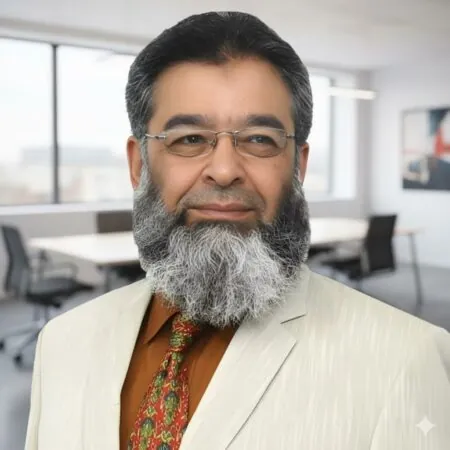
By Malik Khuda Bakhsh Awan, retired Inspector General of Punjab Police and former IG of Azad Jammu & Kashmir

&

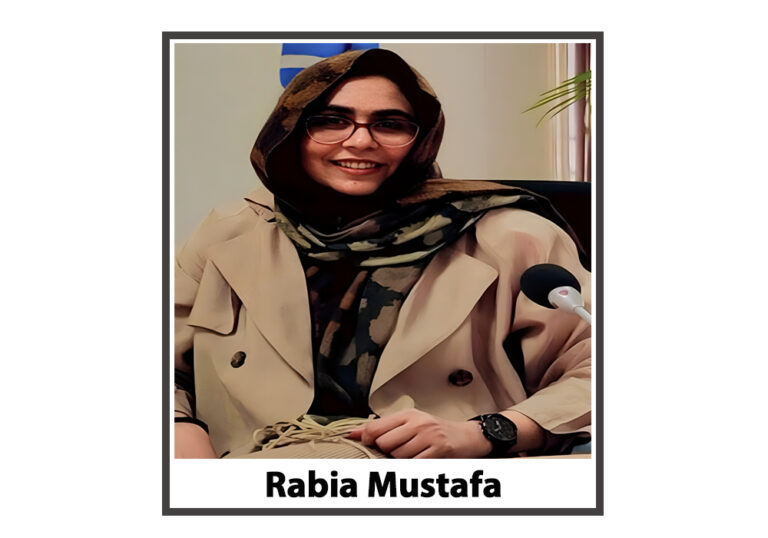
Engineer Arshad H. Abbasi, water and energy expert who has served in KPK and AJK,

We write this not as critics sitting comfortably at a distance, but as two servants of this soil who have spent our working lives in the very regions now aflame with unrest — one of us measuring the water and energy that could have irrigated peace in KPK and AJK, the other commanding police lines in Punjab and standing watch over the mountains of Azad Kashmir. What we have seen convinces us of one thing above all: the fire in Balochistan, AJK and the erstwhile KPK is serious, but it is not yet beyond our control. It can still be reversed — if the Government of Pakistan acts with the courage to match the sacrifice already being offered on our behalf.

Before we offer a single suggestion, we must first bow our heads. Every day, a young Jawan somewhere in Balochistan or the tribal belt tightens his boots before dawn, not knowing if he will return. Every week, a Frontier Corps patrol walks into an ambush it did not seek, and an FC officer’s name is added to a list none of us wants to grow longer. Every month, policemen in Quetta, Muzaffarabad and Peshawar guard checkposts that other citizens simply drive past without a thought. From the newest recruit to the most senior general, our security forces have offered blood, limb and years away from their families to hold this country together. Their courage is not in question. Their commitment is not in doubt. What we owe them now is not more praise — it is a strategy worthy of their sacrifice.

That is the entire purpose of this letter. We do not want the martyrdom of our Army, Police and FC personnel to be spent on a war that could have been shortened, or avoided, by decisions made in Islamabad rather than only on the battlefield. History offers us hard evidence that this is possible, even in conflicts far older and far bloodier than ours.

Lessons the world has already paid for, so we don’t have to. Colombia fought a Marxist insurgency for fifty years, financed by drugs and kidnapping — arguably a longer and more entrenched war than anything Pakistan faces today. Peace came in 2016 not because the state finally won every battle, but because it paired security operations with land redistribution for poor farmers and a transitional justice system that let fighters confess their crimes in exchange for reduced sentences, rebuilding public trust along the way.

In Northern Ireland, three decades of sectarian killing between republicans and unionists ended largely because international partners poured investment into the poorest, most neglected border towns — the very places where despair had made paramilitary recruitment easy — while a new power-sharing government guaranteed both communities an equal, transparent voice.

Sierra Leone’s civil war was fuelled by “blood diamonds.” It was tamed not merely by defeating the rebels but by legalising and regulating small-scale mining so that ordinary mining communities, not warlords, earned the benefit, backed by an internationally certified transparent supply chain and a strengthened anti-corruption commission.

And in our own neighbourhood, the Philippines faced a decades-long Muslim separatist insurgency in Mindanao. It was calmed considerably by granting the Bangsamoro region genuine fiscal autonomy — its own revenue powers and a guaranteed development grant — replacing a corrupt, clan-captured funding system with one that visibly reached ordinary people.

The pattern across every one of these conflicts, each objectively worse than what we face today, is the same. Peace did not arrive purely from military victory. It arrived when governments paired continued security pressure with transparent governance and genuine economic opportunity, so that the incentive to pick up a gun simply fell away.

Our humble suggestions to the Government- First, unemployment among our youth is, in our respectful assessment, the single biggest driver of unrest in Balochistan, AJK and the tribal districts. A young man with a trade, a wage and a future does not need the BLA or the TTP to promise him meaning; he already has it. We therefore urge the government to treat job creation in these regions not as a welfare afterthought but as a core national-security investment, on par with any military allocation.

Second, we ask for financial transparency in how resources from these very regions — gas, minerals, hydropower, forests — are spent. When local people can see, in plain terms, where the revenue from their own land goes, resentment gives way to ownership.

Third, we ask for genuine, verifiable inclusion — local land and mining rights regularised in favour of communities rather than absentee interests, block grants that reach tehsil and union council level without being intercepted along the way, and reconstruction that is co-designed with elders and local government rather than imposed from a distant secretariat.

Fourth, we ask for a dignified, well-resourced path for demobilisation and reintegration wherever it is possible — vocational training, stipends and honest employment for those willing to lay down arms, so that today’s militant does not become tomorrow’s freelance criminal.

Fifth, and we say this with the greatest respect, every federal minister must spend a minimum of fifteen days, physically present, in Balochistan, AJK and KPK each year — not for a photo opportunity at a heavily guarded circuit house, but sitting with local elders, visiting FC and police posts, and looking our Jawans in the eye. A soldier who sees his federal government only through television screens begins to wonder if Islamabad remembers he exists. When a minister walks the same ground our forces are dying to defend, it tells every Jawan, every FC sepoy, every constable that his sacrifice is seen, valued and shared by those who lead him. This single change of habit would do more for morale on the front line than any speech delivered from the capital.

Sixth, no government promise of transparency will be believed unless it is verifiable in real time. We recommend a public mobile application, available to every citizen in these three regions, that shows development and security-related spending as it happens — project by project, rupee by rupee, district by district. Let a young man in Turbat, Muzaffarabad or Miranshah open his phone and see, with his own eyes, that the money meant for his tehsil actually reached it. Nothing disarms a militant recruiter faster than a citizen who can prove, on his own screen, that his government is honest with him.

We say all this with humility, not authority. We are not asking the government to soften its resolve against terrorism; our security forces must, and will, continue to defend the state with full force. We are simply asking that this force be matched, blow for blow, with an economic and governance offensive — so that every sacrifice our Jawans and officers make on the ground is reinforced, not wasted, by decisions made in the capital.

We would deem it the highest honour—and a sacred duty—to place our collective lifetime of experience at the service of the State, should the Honourable Prime Minister deem it fit to call upon us.

Our humble request is to bring together veteran military commanders, seasoned police officers, distinguished Pakistan Administrative Service (PAS) leaders, respected Frontier Corps (FC) veterans, credible political figures, revered tribal elders, leading educationists, and foremost intellectuals, writers, and poets from Balochistan, Khyber Pakhtunkhwa, and Azad Jammu & Kashmir. The commission must stand ready to form a listening commission to engage the grievances of our people with an open heart and an unyielding commitment to truth. We seek neither office, title, nor credit. Our sole objective is to see the youth of Balochistan, AJK, and the erstwhile FATA choose a dignified livelihood over a weapon, and to ensure that the sacred blood shed by our martyrs finally secures an enduring peace.

Pakistan has never lacked for courage. What it needs now is the wisdom to build on that courage before more of it is spent.
Similar Posts

  • Why rigging and violence in Pakistani Kashmir?

    Elections are currently being held in Pakistani-administered Kashmir (POK), and their results have already become controversial at the very first stage. Gilgit-Baltistan, which is essentially also part of Kashmir, held elections recently. Bilawal Bhutto Zardari’s Pakistan Peoples Party (PPP) won there, while the Istehkam-e-Pakistan Party also received some seats, and the Pakistan Muslim League-Nawaz (PML-N) won fewer seats. Despite this, the PML-N accepted the results and fully cooperated in the formation of the government. In the first phase of elections in Mirpur, however, the PML-N won nine seats, while Bilawal’s PPP secured four. Despite winning four seats, the PPP immediately began raising allegations of rigging. Even more painful is the fact that these elections have been marked by bloodshed. During clashes surrounding the long march of the banned Awami Action Party, one Rangers personnel was killed and five police officers were confirmed injured. The Awami Action Committee, meanwhile, claims that its protesters came under firing, resulting in the deaths of 14 of its workers. The number of people killed or injured from the Awami Action Committee has not been officially confirmed. However, if government personnel have been killed and injured, it is reasonable to assume that protesters also suffered casualties. The question now is what should be made of the rigging allegations being levelled by the PPP and Bilawal Bhutto Zardari. If one side refuses to accept the election results and uses such harsh language against the other side, could the situation not deteriorate further? From a strategic perspective, it would have been better to hold the entire election on a single day. The total number of voters is not so large that the process needed to be stretched out in this manner. The second phase is scheduled for August 2, followed by the third phase on August 10, as if this were a battlefield. Bilawal should also think beyond repeatedly raising the issue of rigging. At present, his own party is in power in Kashmir. The deputy commissioners, assistant commissioners and other officials were appointed by the ruling party. So who has greater opportunities to influence elections—the ruling party or the opposition? Nawaz Sharif and Maryam Nawaz conducted an effective election campaign during the final days. However, the writer believes it was not befitting of a three-time elected Pakistani prime minister to say words to the effect of: “I will ask my brother Shehbaz Sharif to make me the prime minister of Kashmir, and I will solve all its problems.” Instead, he should have said that whichever member from their party is elected to the assembly, he and his party would fully cooperate with that representative in resolving the problems of the people of Kashmir. Maryam Nawaz also sent air-conditioned buses for the people of Kashmir, but they were stopped on the instructions of the Election Commission. Nevertheless, the message reached the people of Kashmir that the PML-N was in a position to do something to address their deprivation. This thinking could help the PML-N achieve further success in the next two phases as well. But the real decisions, after all, remain in the hands of those who possess the power and influence. In our country, writing and speaking the truth has become extremely difficult. There is immense pressure not only from powerful circles but also from violent and extremist mindsets. Their proxies can be found roaming freely in the streets. In normal states, something that would be considered ordinary or insignificant was used as a pretext to shut down the country’s largest media organisation, Geo, for two weeks. This alone gives an idea of the pressure facing the Jang newspaper and the national media. For this reason, the writer says he tries to avoid writing about national and domestic affairs and mostly focuses on international issues. Even there, however, he has to be careful not to write anything critical of China, Iran or certain other countries. Likewise, he says he cannot write anything supportive of India, Israel or certain other countries that might highlight a positive aspect or truth about them. This, he says, is the pressure he faces every moment. When it comes to Indian-administered Kashmir, we can freely write and speak about alleged government abuses without facing difficulty or objection. We can exaggerate as much as we want and add as much colour as we like. The violent militants there are portrayed as victims under all circumstances. But when it comes to our own Kashmir, we are expected to portray the movement for public rights as anti-state, Indian-sponsored and terrorist, regardless of how strongly its members insist that they are simply demanding rights for ordinary people. The organisation is not even named after any military or jihadist group. It is called the Jammu and Kashmir Joint Action Committee. It consists of local Kashmiri traders, transporters, workers, students and lawyers. These are ordinary citizens of the region. They demand rights for ordinary Kashmiris. They speak against rising inflation and call for reductions in the prices of wheat and flour. They oppose excessive privileges for the elite, misuse of public resources and corruption. They also demand an end to what they consider unjust taxes. Despite this, the organisation has not only been banned, but its workers have allegedly been arrested and subjected to violence in ways that are deeply disturbing. While witnessing all this, writers like us sometimes adopt deliberate ignorance and tell the members of the Awami Action Committee: “You make allegations against our sacred institutions. How could they possibly commit excesses against you?” We are told that these institutions are the reason this small part of Kashmir remains with us. We are also told that they have kept the Kashmir issue alive so that the entire region can eventually be recovered. Therefore, according to this argument, their praise and appreciation are justified. If, according to protesters, 30 or 35 people have so far been killed and around 300 injured during demonstrations, then we are also told to consider how many of our security personnel have

  • Biodegradation of plastic- the way forward

    By Saman Aftab Since the world has deliberated a lot to find a workable solution of plastic pollution, it is imperative to underscore the significance of most promising eco- friendly solutions to curb the plastic menace. The non-degradable nature of synthetic plastics is contaminating terrestrial and aquatic eco systems. Moreover, the disastrous effects of microplastics (extremely tiny plastic pieces) on human nervous system development, hormonal balance and reproductive system are becoming evident with scientific research. Hence, plastic pollution has become a grave concern not only for the environment but also for human health. It is a well-documented fact that the current strategies to deal with disposing of synthetic plastic are not sufficient to get rid of this man made pollution. Landfilling is littering the water bodies as the leachate escaping from the landfills causes the contamination of water. Similarly, incineration (burning of plastic waste) leads to air pollution in turn causing several health hazard in the surroundings. Even, recycling of plastic seems to be highly expensive when dealing with enormous amounts of mix plastic wastes in developing countries like Pakistan. However, as a bioremediative strategy, biodegradation holds promising prospects. Biodegradation of plastic simply means the use of microorganisms (including bacteria and fungi etc.) that have the capability of degrading petroleum based plastic in such a manner that would render the synthetic plastic degraded in the environment. Such microbial strains are present ubiquitously in those environments where plastics are dumped such as landfills. The researchers have not only isolated such strains but also managed to produce genetically modified bacteria/fungi capable of easily degrading synthetic plastics. Even the microbial enzymes of such microorganisms have been employed for such purposes as to study the intricacies of the biodegradation process only to make it more effective in the future. Pakistan is one of the countries where the use and misuse of plastic allows the environment to host such microbial strains capable of decomposing plastic in abundance. Having keen interest in this topic, I myself have isolated and identified several bacterial and fungal strains in my research work of MPhil titled “Biodegradation of plastics by locally isolated microorganisms”. Moreover, I have contributed a chapter on “Role of microbes in microplastic removal and its health effect on human health” in a book titled “Advanced treatment technologies for the removal of microplastics in wastewater”. Similarly, I have authored another chapter on “The role of microbial enzymes in the degradation of plastics- a sustainable tool for waste management” in an Elsevier book titled “Plastic waste valorization”. Hence, in my humble opinion, the optimization of biodegradation process can be exploited in an industrial setup where synthetic plastics would be degraded in the same manner as biological/microbiological systems are used to treat industrial wastewater. The scientists around the world are working day and night to come up with innovative strategies of plastic waste removal without deteriorating our environment. China, for example is working to convert mix plastic waste into hydrogen fuel but that is too expensive for the time being. In our country we hear about the banning of single use plastic specifically polyethylene shopping bags from our policy makers on and off. However, its enforcement never takes into effect. In fact, since hundreds and thousands of people are associated with the industry of plastic production, it is not wise to disrupt this supply chain abruptly without providing people with other feasible options. The introduction of biodegradable plastic as an alternative is overrated. The biodegradable plastic has shown to last much longer in the environment than what it promises and its production cost makes it too expensive to replace conventional plastic in the market. Whereas, Biodegradation of plastic still offers much hope to tackle plastic pollution. The dearth of resources and governmental assistance is the only hindrance, otherwise Pakistan has the potential to streamline an effective plastic waste management plan pivoted around biodegradation and become a global leader in this regard. I request the authorities to pay attention and incentivize researchers to explore this area of research for national good in particular and international benefit in general. Even if the unlikely consensus on plastic production cap is reached, still the world will need to streamline the process of plastic waste management. And, out of all plastic waste management techniques including incineration, landfilling and recycling, biodegradation is the most ecofriendly process of getting rid of hazardous plastics. The governments all across the globe must encourage their researchers to explore plastic degrading microorganism and optimize the process of biodegradation to get effective outcomes. The writer has done MPhil in Microbiology from GCU Lahore

  • The memories we never really lose

    Readers might have noticed my infatuation with the past. I often relate my childhood experience to a modern day issue. I often drag my school or university days when I write about today’s youth. I love my past, but sometimes what worries me the most is what if these memories disappear or fade gradually. As we age, our memory becomes weak and we start forgetting the past events. Occasionally, I struggle to remember the name of someone who I met a couple of weeks ago. I still have several friends who narrate a two decade old event with minute detail. I envy their brain health. Now I find this excellent blog on Minute Mirror site which says something that gave me real comfort. It said forgotten memories may not be gone at all. They may just be sleeping. Scientists studied fruit flies, of all creatures, and found something remarkable. When they placed these tiny flies back in an environment similar to where a memory first formed, that memory came alive again. It was not dead. It was only quiet, waiting for the right door to knock on. Now I am no scientist, friends. I am just a man who spends too much time looking backward. But when I read this, something in my chest loosened up a little. Because I always feared that my old memories were leaking out of me, drop by drop, the way water leaks from a cracked clay pot. I feared that one day I would wake up and my childhood street would be gone from my mind, my mother’s voice reading me stories would be gone, the smell of my school canteen would be gone. But this research tells a gentler story. It tells me that memory is not a candle that simply burns out. It is more like a lamp switched off in a room I stopped visiting. The lamp is still there. The bulb still works. I only need to walk back into that room, and somehow, the light comes on again. Think about it, friends. Have you ever caught a scent, maybe of rain falling on dry earth, and suddenly you are eight years old again, standing on your grandmother’s veranda? Have you ever heard an old song on the radio and felt your whole childhood come rushing back in one breath? That is not magic. That is your brain finding the right key for a door it had quietly locked. Of course, the article is honest enough to admit that scientists still do not fully understand everything. Sometimes the brain brings back memories that are not entirely true. It mixes things up. It adds a little color here, removes a little detail there. Human memory, unlike a fruit fly’s, is a complicated thing. But even with its flaws, I find this idea beautiful. Our memories are patient. They do not vanish just because we stop visiting them. They simply wait. I think of my old friends, the ones who can recall an event from twenty years ago as if it happened yesterday. I used to envy them, thinking their brains were simply built better than mine. Now I wonder if maybe they just keep walking back into those old rooms more often than I do. Maybe remembering is not only about a strong brain. Maybe it is about visiting. So here is what I plan to do, friends. I plan to walk old streets again. I plan to visit my old school gate, even if it now sells mobile phone covers instead of candy. I plan to play those old songs my father used to hum while shaving in the morning. I plan to open every quiet room in my mind, one by one, and let the light back in. Because somewhere in me, my mother is still calling me in for dinner. Somewhere in me, my school bell is still ringing. Somewhere in me, a boy is still running home before the streetlights come on. They are not gone. They were only sleeping. And tonight, God willing, I intend to wake every single one of them up.

  • Refill the Aral Sea First: A Life Spent Watching W…

    I have stood on the dry floor of the Aral Sea, and I can tell you that no photograph prepares you for it. It is not a desert in the way the Sahara is a desert, ancient and self-consistent. It is a wound — a seabed still faintly shaped like the water that used to cover it, salt crusted white across the sand, rusting fishing trawlers stranded kilometres from any shore, and children playing in the hulls of boats their grandfathers once sailed to catch sturgeon. It is, without exaggeration, the worst environmental tragedy I have ever witnessed with my own eyes. And I have spent thirty years of my life witnessing tragedies of water, in one direction or the other. The Aral Sea was once the fourth-largest inland body of water on Earth, spread across more than 68,000 square kilometres between what is now Uzbekistan and Kazakhstan, fed for centuries by the Amu Darya and Syr Darya rivers. Soviet planners diverted those rivers at massive scale to irrigate cotton fields, and the sea began to die — slowly at first, then catastrophically. More than ninety percent of it is gone. What remains has splintered into four smaller lakes covering barely 3,500 square kilometres. The fishing economy that once fed the region collapsed entirely. The exposed seabed, laced with agricultural pesticide residue and salt, now rises on the wind as toxic dust that settles on crops and in human lungs hundreds of kilometres away. Villages that once sat on the water’s edge now sit stranded in a dead landscape, and the world, for the most part, has forgotten this happened at all. That forgetting is its own quiet tragedy. I did not come to this subject as a tourist of disaster. I have spent three decades campaigning for the preservation of the Himalayan glacier system, including a sustained, and ultimately unsuccessful, effort to see the Siachen Glacier converted into a demilitarised peace park — a proposal grounded in a simple technical fact: Siachen is melting faster than almost any glacier on Earth, in significant part because of the sustained military presence stationed on its ice. I made the case, repeatedly, that removing that military footprint would slow a specific, measurable source of glacial loss, feeding directly into the Indus watershed that sustains hundreds of millions of people downstream. I did not succeed. The glacier continues to melt. The troops remain. I say this not as a complaint but as an honest accounting: I have given a large share of my working life to glacier preservation, and by the plainest measure — ice mass — I have not stopped the loss. That failure has not left me cynical. It has left me convinced that the scale of the response has to match the scale of the crisis, and that we have consistently chosen the smaller response. I think about this every time I look at the Maldives. It is a nation of low coral islands, its highest natural point barely more than two metres above sea level, and it is not speaking in metaphor when its own government has warned that the country could become uninhabitable, and eventually vanish beneath the waves, within this century if sea-level rise is not slowed. I do not think most people outside the region understand how literally existential that threat is. This is not a country that will lose some coastline. This is a country that could, within the lifetime of children alive today, cease to have any land at all. That is the other half of the water crisis I have spent my life watching, and it is the mirror image of the Aral. Where the Aral Sea disappeared because rivers were mismanaged and diverted without thought for the consequences, the oceans are rising because the atmosphere has absorbed decades of greenhouse gas emissions, and the ice sheets and glaciers that once held the planet’s frozen water in reserve are releasing it. Through most of the twentieth century, global sea levels rose at roughly 1.4 millimetres a year — barely perceptible within a human lifetime. Between 2006 and 2015, that rate had already accelerated to roughly 3.6 millimetres a year, and it continues to climb. A rise measured in inches sounds trivial until you understand what it does: it turns rare storm surges into routine flooding, drowns wetlands that once buffered coastal cities, backs up drainage systems and rivers, and makes what used to be called a hundred-year flood into a fixture of ordinary life. New York and Miami already experience “sunny-day flooding,” where nothing more than an unusually high tide sends seawater into city streets with no storm at all. Shanghai, Bangkok, Kolkata, Mumbai, and Dhaka — cities holding tens of millions of people and trillions of dollars of infrastructure — face the same mechanism at a scale that could displace populations larger than most countries. And the danger does not arrive gently. In July 2025, an 8.8-magnitude earthquake off Russia’s Kamchatka Peninsula — among the ten strongest ever recorded — sent tsunami warnings racing across the Pacific, triggering evacuations from Russia to Japan to Hawaii to the western coast of the United States. It was, by fortune more than design, a disaster the world mostly escaped. Scientists have been explicit that higher baseline sea levels make the next such event, and the next cyclone, more destructive than the last one would have been at a lower starting point. We are not simply facing more disasters. We are facing the same disasters arriving on a stage that has been quietly raised beneath them. I do not believe these two crises — a vanished inland sea and a rising global ocean — are separate stories. I believe they are the same failure, viewed from opposite ends of the same hydrological system: a civilisation that has never learned to treat the planet’s water as a single, finite, interconnected balance, to be managed with foresight rather than reordered by short-term convenience and corrected only after

  • The Gen-Zs and the Cockroach Party (CJP)

    The moment started with a comment of a supreme court judge calling the unemployed Genz’s as “cockroach” when they were demanding to address the weakness of the system where there were almost 2 million students who are going to make an attempt to pass through the examination to prequalify, as the doctors. but the worst is what happened. Finally, despite that the Indians government paid an attention on their education system, they simply call that Genz’s as a cockroach. Historically, they need to understand that a cockroach can survive in the worst environment. Coming back to the topic, what happened in Indian education system, was a leakage of the NEET exam in the shape of a guess paper. Which was based on the fake pillars where for 2024 all that important papers were leaking with the advanced version of so-called guesses paper. 135 questions out of total 185 questions were exactly based on the same guess paper which was drafted by the person who exactly formatted the questionnaire of this NEET exam. Vice President Pakistan- China Joint Chamber Total democratic system of India which is ruthlessly dealing with the sentiments of Genz’s who lost their lives by committing suicide. India so-called, the largest democracy of the world, is even not being able to control its most acknowledgeable area, the medical studies. India claims that they are producing the most doctors globally. But how not we supposed to check their systems? Is that they are coming through the proper channels? Out of 2 million students who attempt this NEET exam every year, almost 120000 students can be qualified as doctor. But the leakage of this questionnaire globally, who will rely at the doctor degree of this community? It has come to our attention that their entire educational structure has already collapsed and been terminated internally. The matter cannot be settled with the resignation of their Education Minister Dharmendra Pradhan who is only a part of that culprit syndicate which was operating among the Indian society form decades. The matter not only for the medical students, is that their system like the engineers, lawyers and other technical areas that have already been destroyed but the system. How India can claim that they are the global technical man power supplier? This have exposed India with its education system globally, who is going to trust that the fake degrees to the favorable students have been provided, is that the degrees really have the global value where every one sure that the leaders of BJP were also directly involved in this scam. Even the local media of India have identified that who are the culprits and beneficiaries for this scam. What I want to emphasize, the weakness of the system where everything is being unjustified and the privilege class at the basis of castism are the biggest beneficiaries. This have exposed a so-called system who is the beneficiary of this castism, and keeping that majority suppressed for the centuries. Even the democratic system of India is based on hollow cast. Where there is no space for the lower cast but still their claim to be the biggest democracy in the world is questionable. Where the majority is being ruled but the minority from centuries. Dalits under the savage rule of Indian castism are suffering with the disaster. They are Still being called untouchable with the dominance of the castism which is consistently trying to to promote its so-called elite class. Is that the India is willing to release the data for its sectorial, religious, a. nd scheduled cast who are under a constant pressure in all his century as a lower-class citizens? How this Modi government is going to make denial for that paper which was leaked on the first week of May? and was going to be as a facilitating tool for the students, with a money in their pocket. It have also been published that how his paper was properly scanned and was sent against money to the people who were already in a position to manipulate the system. That means the so-called upper class, the privilege class have their ways to dominate the system. But i will come back to my topic is that all that education system of India was already manipulated from decades, this is something have shown up recently? But how about the past? India who was claiming to produce most CEOs in the worl, have totally been failed. How about the Sundar Pachai degree, is there any certification that his degree was not formulated? It is not only a question mark on an education system rather than a system which was manipulating globally. This paper leak have a very viable question to the world. Not only for the doctors, engineers, pilots, IT experts under this system got a very big question mark. The level of corruption where these students were demonstrating was not only on a partial side to be an anti-BJP. But they were accusing a system adopted but the Phanatic ideology of RSS, where there is no space for the minorities and schedule cast. The acceptance of the resignation of India’s Education Minister, Dharmendra Pradhan, by Prime Minister Narendra Modi is being viewed by many as holding him accountable not only for jeopardizing the future of countless students but also for the student suicides allegedly linked to the examination controversy. Is that Indian judicial system is enough powerful to go for a revenge? By confirming the resignation of their education minister, Indian Prime Minister have clearly shown his weakness. this is a crack in an ideology created by the Indian elite in last one and a half decade.

  • The Reality of the Struggle, Two States, One Playb…

    In both Pakistan and India, what citizens are resisting is no longer standard party politics, it is the structural weaponization of the state. In India, political movements that emerged from populist or anti-corruption roots, like the Cockroach Party,  Aam Aadmi Party, along with regional dissenters, activists, and journalists, have faced arbitrary arrests, custodial pressures, and continuous raids by central agencies. In Pakistan, the state’s military-civilian establishment has used mass roundups, military trials for civilians, social media blackouts, and political bans to strip away electoral mandates and crush dissent. The torture, surveillance, and intimidation targeted at ordinary organizers and political workers across both borders mirror each other. The state’s goal in both contexts is identical, to make the cost of resistance so high that the public submits out of sheer exhaustion. Is It Time to Change? The short answer is, It is long overdue, but swapping rulers will change nothing. For decades, the public in both nations has been trapped in a cyclical trap. In Pakistan, people rally behind one party to remove the military-backed regime, only for the new government to use the exact same military apparatus to crush the next opposition. In India, hyper nationalism and state control have been normalized to the point where institutional checks, courts, enforcement agencies, and investigative bodies have lost their neutrality. If “change” simply means voting in a different political party while leaving the underlying security state and unchecked executive powers intact, the fascism simply changes its coat. True change requires dismantling the tools of authoritarianism, not just replacing the hands holding them. To actually break this cycle of state suppression in South Asia, three fundamental shifts must take place from the ground . As long as investigative agencies, financial crime bureaus, and intelligence services answer directly to political  bosses, they will be used as weapons of torture and political elimination. The primary demand of any genuine popular movement must be strict, legally enforced operational independence for courts, election commissions, and law enforcement.Parties, whether AAP, Cockroach Party, PTI, Congress, or regional blocs, are vehicles, not saviors. Authoritarian regimes thrive on divide-and-rule tactics, convincing one group to applaud when their political rival is jailed. The public must build non-partisan civil fronts where an attack on any citizen’s fundamental right, journalist’s freedom, or political worker’s safety is met with collective public outrage, regardless of party allegiance.Fascist narratives in South Asia rely heavily on manufactured enemies, hyper nationalist rhetoric, and national security panics to justify state overreach. Resistance movements break this spell when they relentlessly ground the conversation in tangible economic survival,inflation, labor rights, land grabs, and local self-governance. When the public realizes that state coercion is being used to mask economic failure, the moral authority of the regime collapses. The resilience of the people in both countries is undeniable, they continue to take to the streets despite jail, violence, and state power. But for that resilience to yield real liberation, the focus must shift from merely fighting for individual leaders to systematically dismantling the legal and institutional machinery that makes fascism possible in the first place.

Leave a Reply

Your email address will not be published. Required fields are marked *