six militants killed
| |

Six militants killed in Mastung security operation

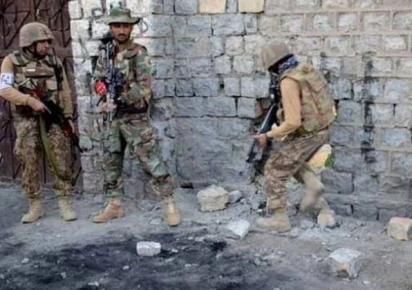
Six suspected militants were killed and several others, including male and female suicide bombers, were arrested during an intelligence-based operation carried out by security forces in the Khad Kocha area of Mastung district, Balochistan, on Thursday.

The operation was conducted as part of the ongoing Operation Shaban, a joint counterterrorism campaign involving the Pakistan Army, Frontier Corps (FC) and Balochistan Police. The campaign was launched after the terrorist attack on the Mangi Dam Police Station and continues in different parts of the province to eliminate militant networks.

According to official sources, security forces launched the raid after receiving credible intelligence about the presence of militants in the area. During the operation, troops surrounded the suspected hideouts and engaged the militants in an exchange of fire.

Officials said six militants were killed during the operation, while several others were taken into custody. Those arrested included alleged facilitators as well as male and female suicide bombers who were reportedly planning future attacks. Security personnel also destroyed multiple militant hideouts and recovered a large cache of weapons, ammunition and explosives from the site.

The military said security forces have intensified intelligence-based operations across Balochistan to dismantle terrorist networks and prevent attacks on civilians and security personnel. Officials maintained that such operations would continue until militant infrastructure is completely dismantled.

Interior Minister Mohsin Naqvi praised the security forces for the successful operation and commended their professionalism and courage. He said the forces had once again foiled the plans of militants attempting to spread violence and instability in Balochistan.

He added that the government’s resolve to eliminate terrorism remains unwavering and that the entire nation stands with the armed forces and law enforcement agencies in their efforts to restore peace and stability.

The latest operation came only hours after unidentified gunmen attacked a vehicle carrying members of the judiciary on the National Highway in Mastung. A district and sessions judge and his security guard were killed in the attack, while an additional sessions judge and another person suffered serious injuries. Security forces later cordoned off the area, launched a search operation and established checkpoints to trace the attackers.

The operation also follows another series of intelligence-based raids carried out a day earlier, during which security forces killed 10 suspected militants and arrested two female suicide bombers along with a facilitator in different areas of Balochistan.

Similar Posts

  • | | |

    PM Shehbaz orders scientific system to assess tax …

    Prime Minister Shehbaz Sharif has directed the Federal Board of Revenue (FBR) to develop a scientific and comprehensive method to assess tax potential in different sectors of the economy. The new system is aimed at improving tax collection. It will also help identify sectors with untapped revenue potential. The government wants to strengthen tax administration and reduce tax evasion. The prime minister issued the directives during a meeting on FBR reforms in Islamabad on Wednesday. He directed the FBR to work with the power sector to identify businesses and individuals involved in the informal economy. Authorities will also identify those suspected of avoiding taxes. Shehbaz instructed officials to take legal action against people and businesses found involved in tax evasion. The prime minister said improvements in the FBR’s monitoring system were already producing results. He pointed out that sugar production data had matched FBR records for the first time in Pakistan’s history. He described the development as an important sign of improved monitoring and tracking. Shehbaz praised FBR Chairman Rashid Mahmood Langrial and his team for their efforts. He also appreciated taxpayers and businesses that were following tax laws. The prime minister said the government had provided maximum possible support to export-oriented and domestic industries. He said the government would continue facilitating businesses while ensuring compliance with tax regulations. He directed the FBR chairman and senior officials to spend the first week of every month in Karachi. They will meet business representatives and address their concerns. Shehbaz also ordered the expansion of digital production monitoring. He directed officials to make tracking systems operational in the textile, beverages, steel, poultry, edible oil and ghee, and tyre sectors by December. He also stressed that appointments and transfers within the FBR must be made strictly on merit. The prime minister praised the new system for evaluating officers. He said merit and transparency must remain central to FBR reforms. He directed authorities to prepare a list of high-performing officers. The best-performing officials will be considered for awards on Independence Day. Shehbaz also ordered an immediate third-party audit of customs bonded warehouses. The audit will examine the warehouses and identify possible irregularities. Officials will then be required to take corrective measures where necessary. The meeting was informed about progress on production tracking systems and human resource reforms. Officials said tracking systems were already fully operational in the sugar, cement, tobacco, tiles and fertiliser sectors. Work in five additional sectors was also nearing completion. These sectors have an estimated tax potential of more than Rs700 billion. Officials said tracking systems were also being developed for nine other production sectors. These sectors are estimated to have an additional tax potential of around Rs560 billion. The prime minister directed authorities to complete indirect tax tracking across the production sector by the end of the year. The meeting also reviewed reforms in the FBR’s workforce. Newly recruited officers are receiving specialised training. Existing officers are also undergoing training. The programmes have been designed around merit and performance. Officials said the training modules were aligned with international standards and Pakistan’s tax requirements. A new performance evaluation system has also been introduced. Under the system, high-performing officers can receive recognition. Officials who fail to meet performance standards can face penalties. The government has also appointed 957 third-party auditors. The move is intended to improve transparency and strengthen tax-related processes. Recruitment of 280 goods evaluators is also under way. The evaluators will work under the customs faceless assessment system. The meeting also discussed measures to reduce unnecessary tax disputes. A Case Scrutiny Committee is being established for this purpose. The committee will determine whether tax cases should proceed based on their merits. Officials also provided an update on Alternative Dispute Resolution Committees. By June 2026, 152 out of 377 applications had been resolved within 90 days. The process resulted in the recovery of Rs54 billion in tax revenue. Digital reforms also reviewed Prime Minister Shehbaz Sharif separately reviewed progress on the national digital vision. He ordered immediate measures to make the newly established Sky47 AI national central data centre available to federal government institutions. The prime minister said the initiative would help modernise government services. He said citizens would eventually be able to use a single digital identity to access multiple public services. These services could include government document verification, banking, healthcare and transfers. The prime minister said a central national data centre would bring information from federal institutions together. He said this would reduce the need for separate data centres. It could also help save public resources. Shehbaz said the national digital vision was important for building a more integrated society. He highlighted three key areas of the programme. These include the digital economy, digital citizen services and digital government services. He directed authorities to initially focus on health, agriculture, utilities, housing and small and medium-sized enterprises. The aim is to ensure that citizens begin receiving improved digital services as quickly as possible. Officials said digital implementation was already under way in agriculture, food, health, energy, housing and SMEs. Work has also started in 14 additional priority sectors. The housing component will introduce a central identification number for public and private properties. The SME component will create an integrated system of unique legal identities for businesses. The government believes these measures can improve transparency and economic activity. Shehbaz also ordered an early meeting of the National Digital Commission. The meeting will include key stakeholders. Provincial governments will also be consulted. The commission was established under the Digital Nation Pakistan Act 2025. It is chaired by the prime minister and includes the chief ministers of all provinces. The prime minister said consultation with federal and provincial institutions was essential for effective implementation. He also stressed the importance of international standards and global best practices.

  • | |

    Pakistan SMA symposium 2026 held in Islamabad, bri…

      Islamabad: The Pakistan SMA Symposium 2026, organised by STRIVE – Strive Eradication of Disability Foundation, was held at Serena Hotel Islamabad, bringing together leading doctors, professors, researchers, medical experts, academics, civil society representatives, volunteers and families affected by Spinal Muscular Atrophy (SMA). The symposium focused on raising awareness about SMA, promoting early diagnosis, discussing modern treatment options, genetic screening, medical research and the challenges faced by patients and their families. The gathering also provided an important platform for medical professionals and researchers to exchange views on the future of SMA care and research in Pakistan. Chief Health Sector Reforms Unit (HSRU) Khyber Pakhtunkhwa Dr Syed Ejaz Ali Shah, Chairman Zakat and Ushr Council Khyber Pakhtunkhwa Imtiaz Khan, and Chairman STRIVE Muhammad Yasir Khan were among the prominent participants. Doctors, medical specialists, researchers, representatives of civil society, SMA-affected families and people associated with different walks of life also attended the event. A notable feature of the symposium was the participation of professors, heads of departments and academic experts from various universities in Islamabad and Rawalpindi. The experts shared their views on SMA, genetic disorders, medical research, recent developments in treatment and the future direction of medical science. Researchers working on SMA at the international level also participated in the symposium. Experts and researchers from Poland, the United Kingdom and other European countries joined the gathering, giving the Pakistan SMA Symposium an international academic and research dimension. The participation of foreign researchers provided an opportunity to strengthen links between ongoing efforts in Pakistan and international research and developments in the field of SMA. Participants stressed the importance of greater cooperation between Pakistani institutions and international research communities to improve knowledge, diagnosis and care for people living with rare diseases. Addressing the gathering, Chief HSRU Khyber Pakhtunkhwa Dr Syed Ejaz Ali Shah paid tribute to parents and families of SMA patients for their continued struggle and resilience. He said the efforts of families working for the better lives and futures of their children deserved recognition and appreciation. Dr Shah emphasised that awareness about complex and rare diseases such as SMA must be accompanied by effective support for patients and their families. He highlighted the importance of collective efforts involving healthcare professionals, families, government institutions and other stakeholders. Chairman STRIVE Muhammad Yasir Khan said SMA was not merely a medical condition but had become a wider struggle requiring the combined efforts of patients, parents, doctors, researchers, government institutions, media, civil society and social organisations. He said STRIVE was working to take awareness about SMA to different parts of the country, promote early diagnosis, encourage research and help create better pathways for patients to access treatment and necessary healthcare facilities. Yasir Khan also announced that STRIVE would organise a major SMA Summit on October 30 and 31, 2026, at Tulip Marquee Islamabad. He said the proposed summit would be one of the largest gatherings of its kind in Pakistan and would bring patients, parents, doctors, medical specialists, national and international researchers, policymakers, universities, civil society organisations, volunteers and other relevant stakeholders together under one roof. During the symposium, speakers discussed the symptoms of Spinal Muscular Atrophy, the importance of timely diagnosis, genetic screening, modern treatment, patient care, research and future strategies for addressing SMA in Pakistan. Doctors and researchers emphasised that early diagnosis, proper medical guidance and access to modern treatment can play an important role in improving the quality of life of children and individuals affected by SMA. They also stressed the need for greater public awareness so that families can recognise the condition and seek appropriate medical advice at an early stage. Participants observed that Pakistan requires further efforts in public awareness, medical facilities, genetic diagnosis, research and policymaking related to SMA. Strengthening these areas, they said, could help provide better support to children living with the condition and their families. The symposium also highlighted the importance of building stronger cooperation between universities, healthcare institutions, researchers, policymakers and international organisations. Such collaboration, participants said, could help Pakistan benefit from global scientific developments while encouraging local research into rare diseases. At the conclusion of the event, participants expressed their commitment to expanding awareness, research and advocacy for the rights and needs of people affected by SMA. They stressed the importance of developing stronger links between government institutions, universities, the medical community, media, civil society, patients and their families. The organisers said the Pakistan SMA Symposium 2026 was more than a single event, describing it as an important step towards creating a collective voice and sustained movement for greater awareness, research, early diagnosis and improved support for SMA patients in Pakistan. The gathering also reflected growing efforts by medical professionals, researchers, families and civil society organisations to place rare diseases on the national health agenda and to promote a more informed, inclusive and supportive healthcare environment for affected individuals and their families.

  • |

    Rihanna shares emotional Barbados homecoming with her children

    Rihanna, whose full name is Robyn Rihanna Fenty, recently gave fans a touching glimpse into a family trip to her childhood home in Barbados, sharing how meaningful it was to return to the place where she grew up with her own children. On Tuesday, August 11, the 38-year-old singer, entrepreneur, and businesswoman shared a three-slide carousel on Instagram featuring moments from her getaway with her children. The photos offered fans a rare look at the superstar enjoying time with her family while revisiting a place that holds deep personal significance. Reflecting on the emotional experience, Rihanna described how surreal it felt to return to her roots as a mother. She recalled growing up as a young girl in Westbury and now being able to introduce her children to “Rihanna Drive,” a street named in her honor on Westbury New Road in St. Michael. “One minute I feel like that kid from Westbury… the next minute I’m bringing my own kids back to ‘Rihanna Drive,’” Rihanna wrote in the caption. She continued by expressing her amazement at how unexpectedly life can come full circle. “Trippy how life works! And the Glory STILL and WILL ALWAYS belong to the Almighty Creator!!!” she added. The heartfelt post quickly attracted attention from Rihanna’s millions of followers, many of whom celebrated the special family moment. Fans expressed their excitement at seeing the global music icon embrace motherhood while also sharing a meaningful part of her childhood with her children. One fan described the moment as incredible, while another called it a beautiful example of life coming full circle. Others praised Rihanna for allowing her children to experience the place where she grew up and highlighted how special it must be for them to understand their mother’s journey. The Barbados visit also comes as Rihanna and her longtime partner, A$AP Rocky, continue to balance their busy professional lives with raising their young family. During a recent appearance on The Jason Lee Show, A$AP Rocky opened up about their parenting routine and explained that the couple receives support from their mothers as well as nannies. Rihanna and A$AP Rocky have welcomed three children together. Their first son, RZA, was born in May 2022. The couple later welcomed their second son, Riot, in August 2023. In September 2025, they expanded their family once again with the arrival of their daughter, Rocki. For Rihanna, returning to Westbury with her children appears to have been more than just a family getaway. It represented a powerful connection between her past and present, allowing her to revisit the place that shaped her while creating new memories with the next generation of her family.

  • | |

    Dar highlights growing momentum in Pakistan-Russia…

    ISLAMABAD: Deputy Prime Minister and Foreign Minister Ishaq Dar has welcomed what he described as positive progress in relations between Pakistan and Russia. Dar made the remarks during a meeting with Russian Ambassador to Pakistan Albert Khorev in Islamabad on Tuesday. According to the Foreign Office, the two sides discussed bilateral relations and regional developments. Dar stressed the importance of maintaining the current momentum and expanding cooperation between the two countries. The foreign minister called for greater collaboration in key areas. He also emphasised the need for regular high-level engagement to further strengthen ties between Islamabad and Moscow. Dar said Pakistan remained committed to resolving regional disputes through dialogue and diplomatic efforts. He maintained that negotiations were the most effective way to address differences and promote peace and stability in the region. The meeting comes as Pakistan and Russia continue efforts to broaden their relationship beyond traditional areas of cooperation. Economic engagement has emerged as an important part of the bilateral relationship. Earlier this year, Energy Minister Awais Ahmed Khan Leghari said Pakistan and Russia had agreed to work towards an Economic Cooperation Programme extending until 2030. The programme is expected to provide a framework for expanding economic engagement and strengthening cooperation in areas of mutual interest. Officials have also been working to improve people-to-people contacts. A recently signed readmission agreement is expected to contribute to smoother visa arrangements and facilitate greater interaction between citizens of the two countries. Pakistan’s engagement with Russia is also taking place against the backdrop of wider regional changes. Islamabad has repeatedly emphasised the importance of diplomatic engagement and cooperation for addressing regional challenges. Dar’s latest meeting with the Russian ambassador reflects Pakistan’s efforts to maintain regular high-level contacts with Moscow and explore opportunities for deeper bilateral cooperation.

  • New Lao River Water Station to Secure Clean Tap Water for Chiang Rai Residents

    CHIANG RAI — The Thai government is launching a major project to protect the long-term water safety of Chiang Rai residents. A brand-new water production station will be built to draw fresh water from the Lao River instead of the Kok River. Deputy Prime Minister Songsak Thongsri announced the plan during an official site visit […]

  • |

    Google DeepMind exec admits AI extinction risk is “not zero

    Lila Ibrahim, Google DeepMind’s Chief AI Readiness Officer, will not put a number on the odds of AI wiping out humanity. She is not dismissing the possibility either. Speaking to Fortune, she said the risk is “not zero,” admitting that anything more specific would just be guesswork on her part. Ibrahim was among those who signed the Center for AI Safety’s 2023 statement, alongside co-founders of Anthropic and OpenAI. That statement argued AI extinction risk deserves the same global priority as nuclear war and pandemics. Three years on, she still believes staying silent on existential risk would be irresponsible. She feels this way especially now, given how far the technology has advanced since then. Some of her peers sound even more alarmed. Geoffrey Hinton, often called the “godfather of AI,” estimates a 10% to 20% chance of extinction within the next three decades. Anthropic’s Dario Amodei has gone further, putting the odds of things going “really, really badly” at around 25%. These warnings are not new either. Physicist Stephen Hawking, who used AI tools himself, raised similar concerns long before ChatGPT even existed. Ibrahim compares the situation to the pandemic, pointing out that the worst risks rarely arrive the way people expect. She noted that entire industries failed to properly weigh risk during earlier tech shifts, including the rise of the internet and social media. She is just as sceptical of the optimistic predictions floating around. Elon Musk recently told The Economist that money will stop mattering by 2036, imagining a future of cheap abundance and universal high income once robots take over most jobs. Jeff Bezos has predicted millions of people living in space by 2045. Sam Altman, meanwhile, envisions new job opportunities specifically for graduates working in space. Ibrahim isn’t convinced by either scenario, arguing that AI simply is not developing fast enough to make these predictions realistic anytime soon. Rather than debating far-off futures, Ibrahim says she is more focused on using AI to tackle problems happening right now. She pointed to climate change and industrial pollution as areas where the technology could make a real difference. She was also clear that AI’s benefits should not be limited to a handful of powerful companies. For her, that is just as important as managing the risks.

Leave a Reply

Your email address will not be published. Required fields are marked *